







Question: please help Question 1 (1 point) en Assuming that the wavelengths are the same, which will have a higher wave speed? O the wave with
please help
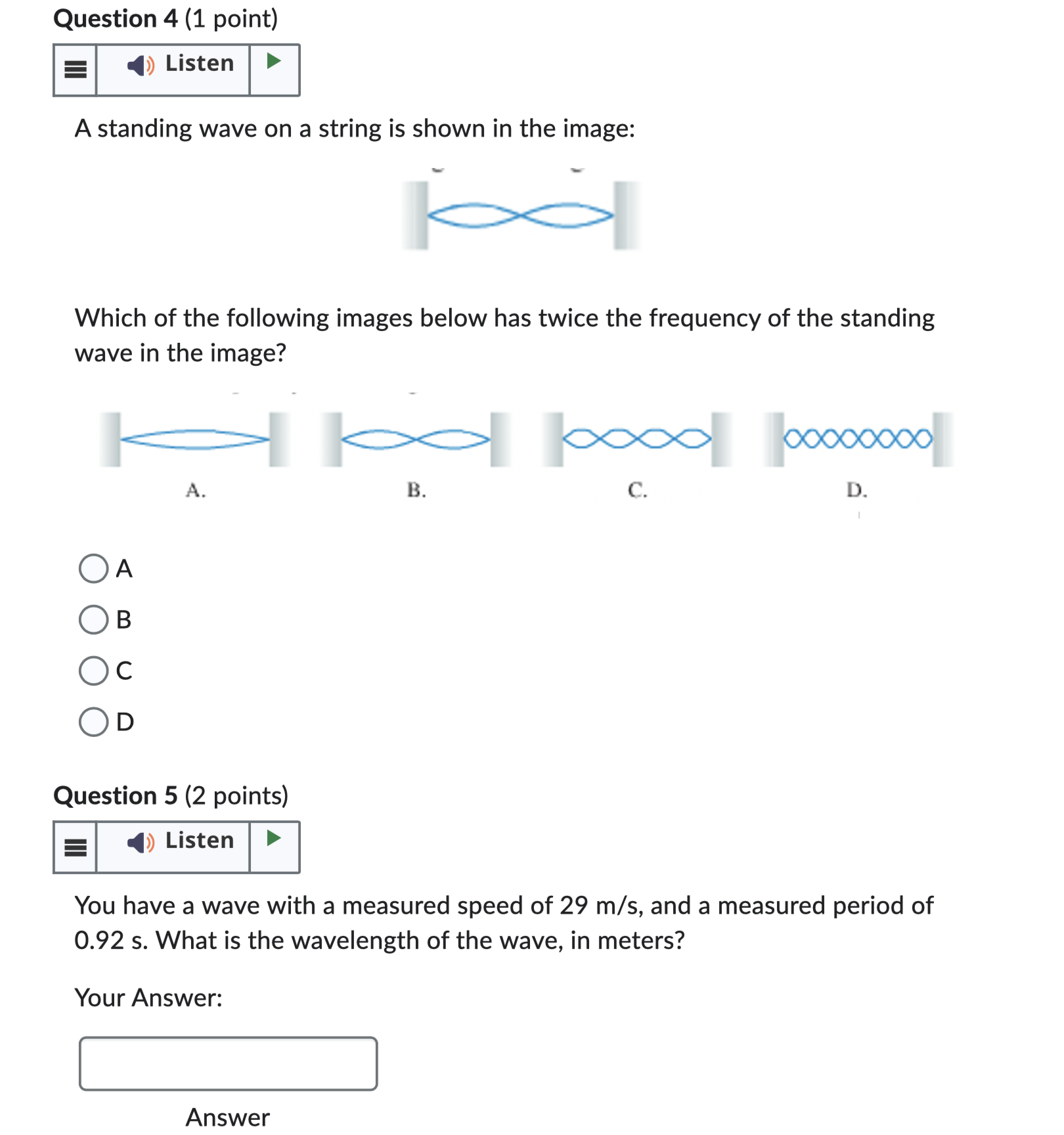
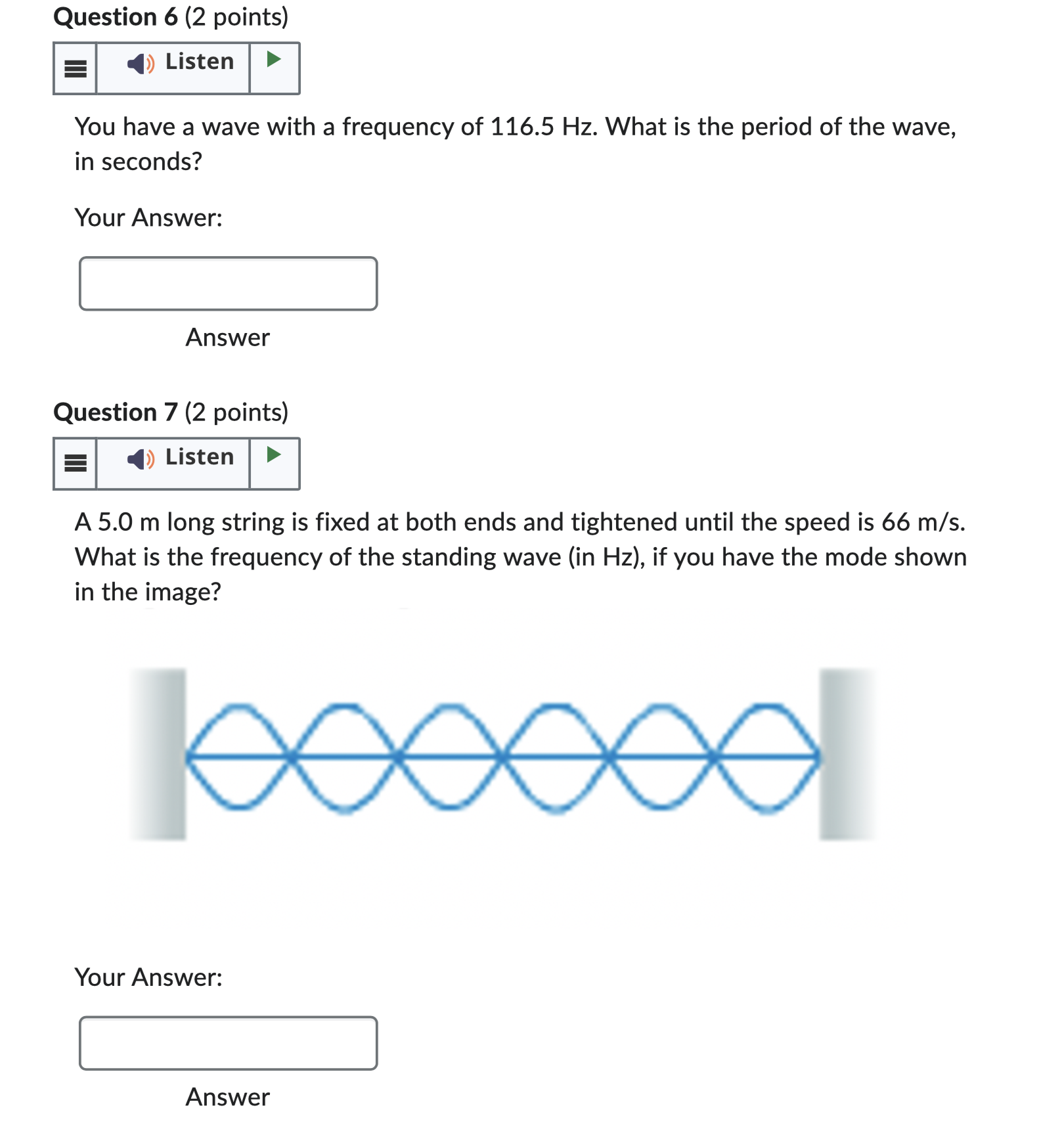
Question 1 (1 point) en Assuming that the wavelengths are the same, which will have a higher wave speed? O the wave with the higher frequency 0 the wave with the lower frequency 0 the speeds are the same for all frequencies Question 2 (1 point) E 4)) Listen i Assuming the frequencies are the same, which will have a higher wave speed? O the wave with the lower wavelength 0 the speeds are the same for all wavelengths O the wave with the higher wavelength Question 3 (1 point) E- Assuming that both the frequency and the wavelength are the same, which wave will have the higher wave speed? O the speeds are the same for any amplitude. O the wave with the lower amplitude O the wave with the higher amplitude Question 4 (1 point) en A standing wave on a string is shown in the image: b \\- <:>
Step by Step Solution
There are 3 Steps involved in it

Get step-by-step solutions from verified subject matter experts
 Study Help