Question: Please help with questions 1-7 on case study Syllabus The following is adapted from Fortune magazine, 21 June 1999 an Outcomes Quizzes Modules dar BiBlueButton
Please help with questions 1-7 on case study
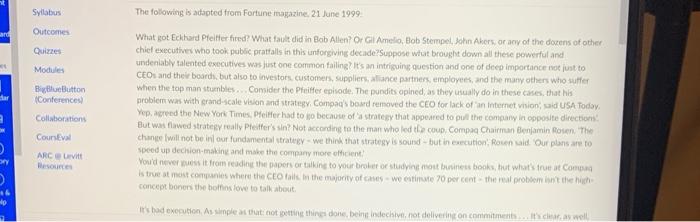
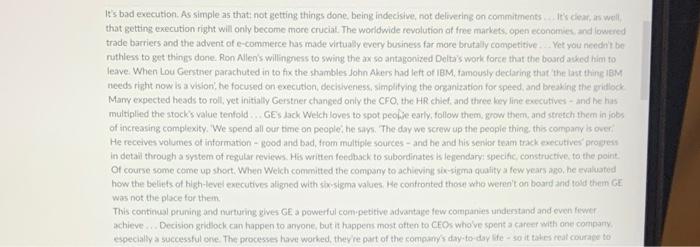
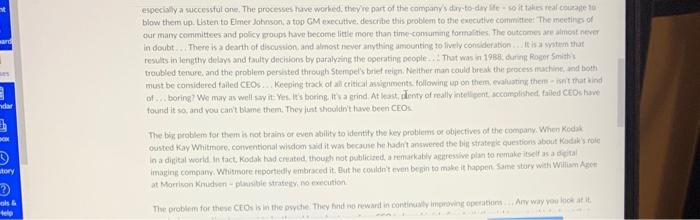
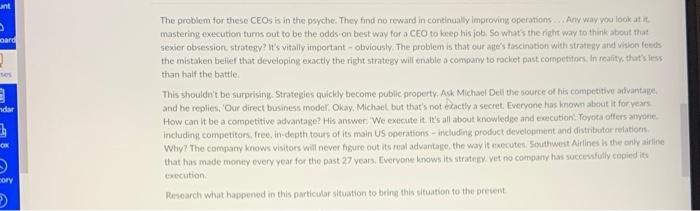
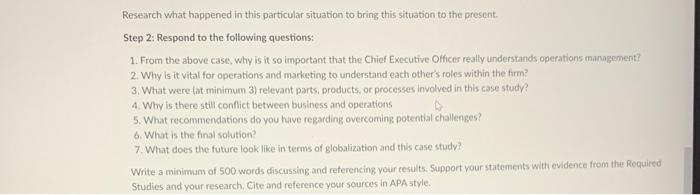
Syllabus The following is adapted from Fortune magazine, 21 June 1999 an Outcomes Quizzes Modules dar BiBlueButton (Conferences Collaborations What got Eckhard Pfeiffer fred? What fault did in Bob Allen Or Gil Amelio, Bob Stempel ohn Akers, or any of the dozens of other chief executives who took public pratfalls in this unforgiving decade?Suppose wat brought down all these powerful and undeniably talented executives was just one common failing it's an intriguing question and one of deep importance not just to CEOs and the boards, but also to investors, customers, suppliers, aliance partners, employees, and the many others who suffer when the top man stumbles Comider the Pfeiffer episode. The pundits opined, as they usually do in these cases, that his problem was with grand-scale vision and strategy Compags board removed the CEO for lack of an internet vnion, said USA Today, Yep, greed the New York Times, Peter had to go because of a strategy that appeared to pull the company in opposite directions But was flawed strategy really Pletfer's sin? Not according to the man who led the coup Compaq Chairman Benjamin Rosen. The change will not be in our fundamental strategy - we think that strategy is soundbutin execution Rouen said. Our plans are to speed up dechion-making and make the company more efficient You never us it from reading the prior tilking to your broker or studyin most business books, but what's truet Com is true most companies where the CEO tail in the majority of cases we estimule 70 per cent the real problem in the hich concept bones the boffins love to talk about Courseval ARC vitt 6 wp it's bad execution Assimple tut not etting things done, being indeche. not delivering on commentar as well It's bad execution. As simple as that not getting things done, being indecisive, not delivering on commitments in der as well that getting execution right will only become more crucial. The worldwide revolution of free markets, open economies, and lowered trade barriers and the advent of e-commerce has made virtually every business far more brutally competitive Yet you needn't be ruthless to get things done. Ron Allen's willingness to swing the ax so antagonized Delta's work force that the board asked him to leave When Lou Gerstner parachuted in to fix the shambles John Akershad left of IBM famously declaring that the last thing IBM needs right now is a vkion he focused on execution decisiveness, simplifying the organization for speed and breaking the pridlock Marry expected heads to roll, yet initially Gerstner changed only the CFO, the HR chietand three key linie executives - and he has multiplied the stock's value tenfold GEs lack Welch loves to spot peolje early, follow them grow them, and stretch them in jobs of increasing complexity. We spend all our time on people he says. The day we screw up the people thing this company is over He receives volumes of information - Rood and bad, from multiple sources - and he and his senior team track executive progress in detail through a system of regular reviews. His written feedback to subordinates k legendary specific, constructive to the point, Of course some came up short When Weich committed the company to achieving six sigma quality a few years wone waluated how the beliets of high-level executives aligned with sistema values. He contronted those who weren't on board and told them GE was not the place for them This continual pruning and nurturing gives GE a powerful competitive advantage few companies understand and even fewer achieve Decision gridlock can happen to anyone, but it happens most often to CEOs who ve spent a career with one company especially a successful one. The processes have worked, they're part of the company's day-to-day We - so it takes real courage to especially a successful one. The processes have worked, they're part of the company's day-to-day so it takes real courage 1 blow them up. Listen to Elmer Johnson a top GM executive, describe this problem to the executive committee The meetings of our many committees and policy groups have become little more than time-comum ng formalities. The outcomes are almost ever in doubt. There is a dearth of discussion and most never anything mounting to lively consideration them that results in lengthy delays and faulty dechions by paralyzing the operating people. That was in 1988 din Roger Smith troubled tenure, and the problem persisted through Stempel's brief reign. Neither man could break the process machine and both must be comidered failed CEOs. Keeping track of all criticalmente following up on them at them in that kind of boring? We may as well say it: Yes its boring. It's a grind At least, denty of really intellient accomplished failed CEOs have found it so, and you can't blame them. They just should have been CEO dar The broblem for them is not brains or even ability to identify the key problems or objectives of the company. When Kodak ousted Kay Whitmore, conventional wisdom said it was because he hadn't answered the straten questions about Kadak's role In a digital world. In fact, Kodak had created though not publicada remarkably actressive plan to remake itself a detal Imaging company. Whitmore reportedly embraced it. But he couldn't even begin to make it happen. Same story with William AB at Morricon Knudsen palestrate execution tory vols & tele The problem for the CEO is in the psyche They find moreward in continuity improving operation Any way you un ard 3 09 The problem for these CEOs is in the psyche They find no reward in continually improving operations. Any way you look at it. mastering execution turns out to be the odds on best way for a CEO to keep his jobs So what's the right way to think about that sexier obsession strategy? It's vitally important - obviously. The problem is that our site's fascination with strategy and vision fonds the mistaken belief that developing exactly the right strategy will enable a company to rochet past competitors. In reality, that's bess than half the battle This shouldn't be surprising Strategies quickly become public property, Ask Michael Dell the source of his competitive advantage and he replies, 'Our direct business moder. Okay, Michael, but that's not exactly a secret. Everyone has known about it for years How can it be a competitive advantage? His answer. We execute it. It's all about knowledge and execution: Toycita offers anyone including competitors, free in-depth tours of its main US operations including product development and distributor relations Why? The company knows visitors will never higure out its real advantage the way it executes, Southwest Airlines is the only that has made money every year for the past 27 years. Everyone knows its strategy, vet no company has successfully copied its secution ndar } CORY Research what happened in this particular situation to bring this situation to the present Research what happened in this particular situation to bring this situation to the present Step 2: Respond to the following questions: 1. From the above case, why is it so important that the Chief Executive Officer really understands operations management? 2. Why is it vital for operations and marketing to understand each other's roles within the form? 3. What were lat minimum 3) relevant parts, products, or processes involved in this case study? 4. Why is there still conflict between business and operations 5. What recommendations do you have regarding overcoming potential challenges? 6. What is the final solution? 7. What does the future look like in terms of globalization and this case study? Write a minimum of 500 words discussing and referencing your results. Support your statements with evidence from the Required Studies and your research, Cite and reference your sources in APA style









 Study Help