Question: Please I need a support and help regarding creating a discussion response that follows answering the questions below. Discussion Prompt: Workplace resistance and conflict occur
Please I need a support and help regarding creating a discussion response that follows answering the questions below.
Discussion Prompt:
Workplace resistance and conflict occur in various forms, from strikes and protests to internal disputes over working conditions. Workers resist in different ways?through unions, legal actions, or informal acts of defiance?while organizations may respond through negotiation, policy changes, or disciplinary actions.
For this discussion, share an example of workplace resistance or conflict. Your example can come from:
News & Current Events: Strikes, labor disputes, union movements, employee activism.
Media & Pop Culture: TV shows, movies, books, or documentaries depicting workplace struggles.
Personal Experience: Conflicts you have observed or experienced in a work setting.
Your Response Should Address the Following:
Describe the Example: Provide background on the workplace conflict or resistance you chose. Who was involved, and what was at stake?
Analyze the Causes: What factors contributed to the conflict? Consider workplace policies, management decisions, economic conditions, discrimination, or power dynamics.
Discuss the Outcomes: What was the result of this conflict? Did it lead to change, negotiation, or continued struggles? What impact did it have on the workers, management, or industry?
Apply Sociological Concepts: Incorporate at least two key concepts from the weekly readings (e.g., worker agency, exploitation, power dynamics, collective resistance, alienation, workplace surveillance, or emotional labor). Cite at least two sources from this week's course materials.
Policy Reflection: Consider what policies or structural changes could have prevented or resolved this workplace conflict.
REFERENCES THAT MIGHT BE HELPFUL FOR THIS DISCUSSION RESPONSE:
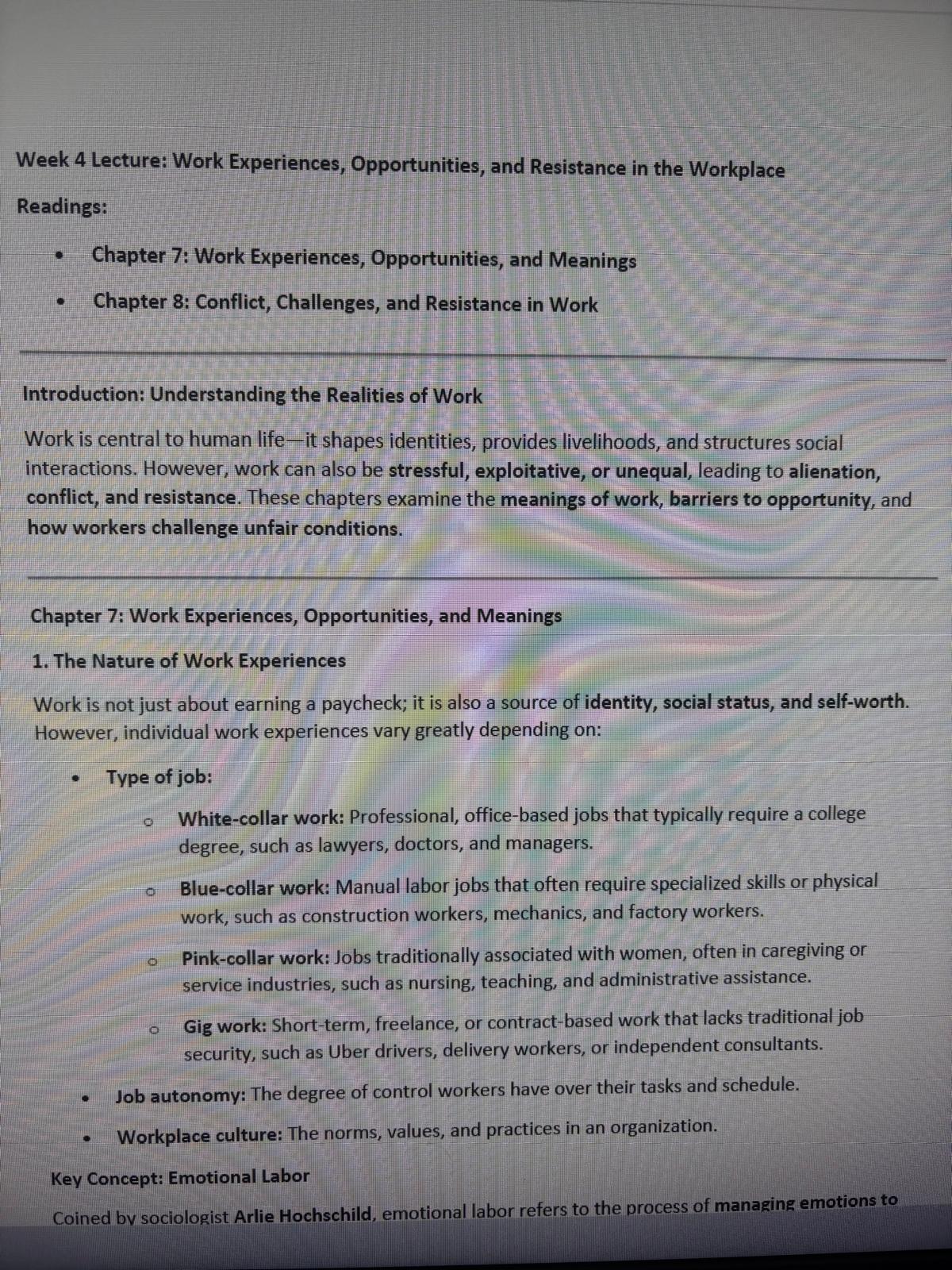
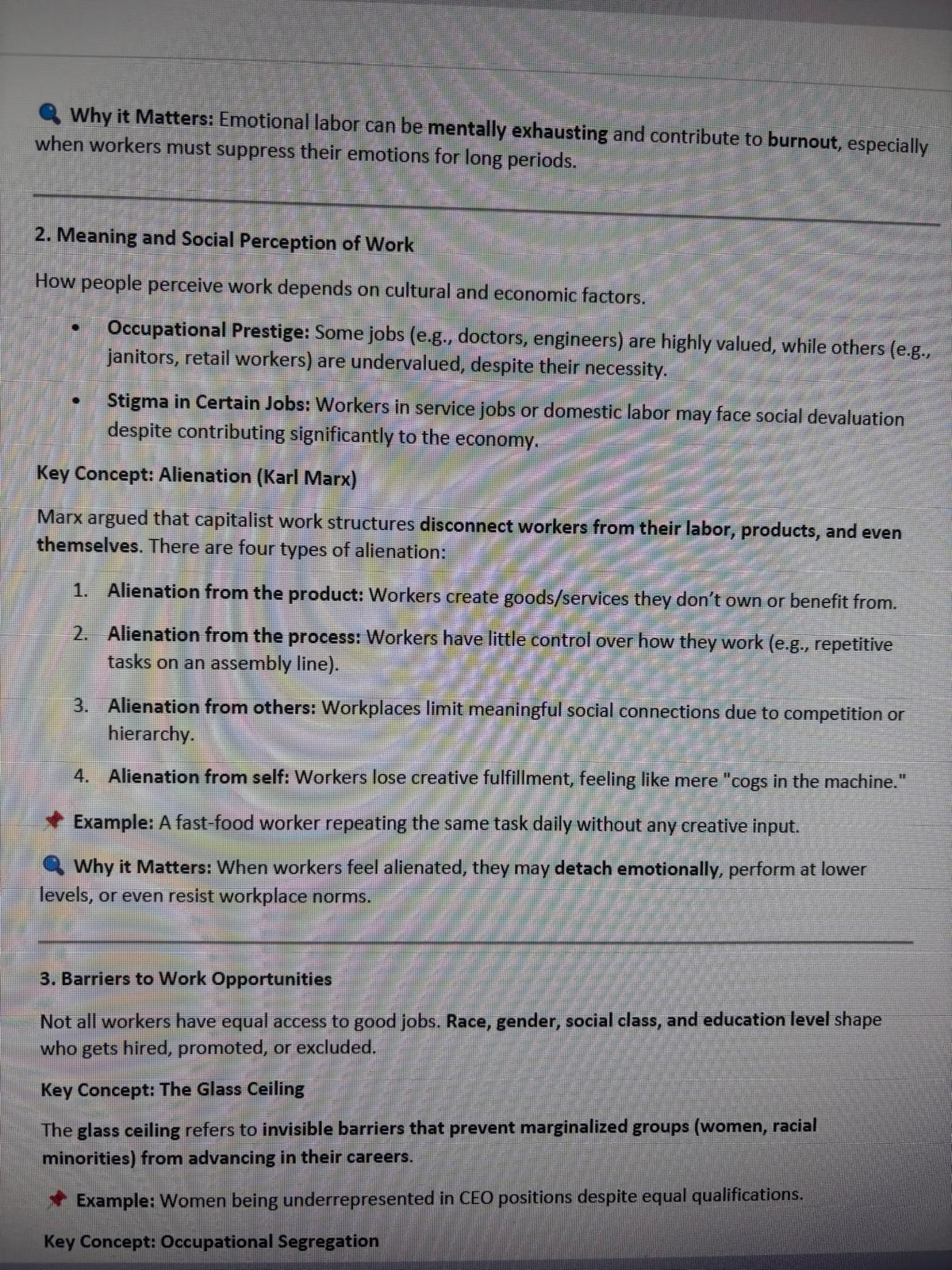
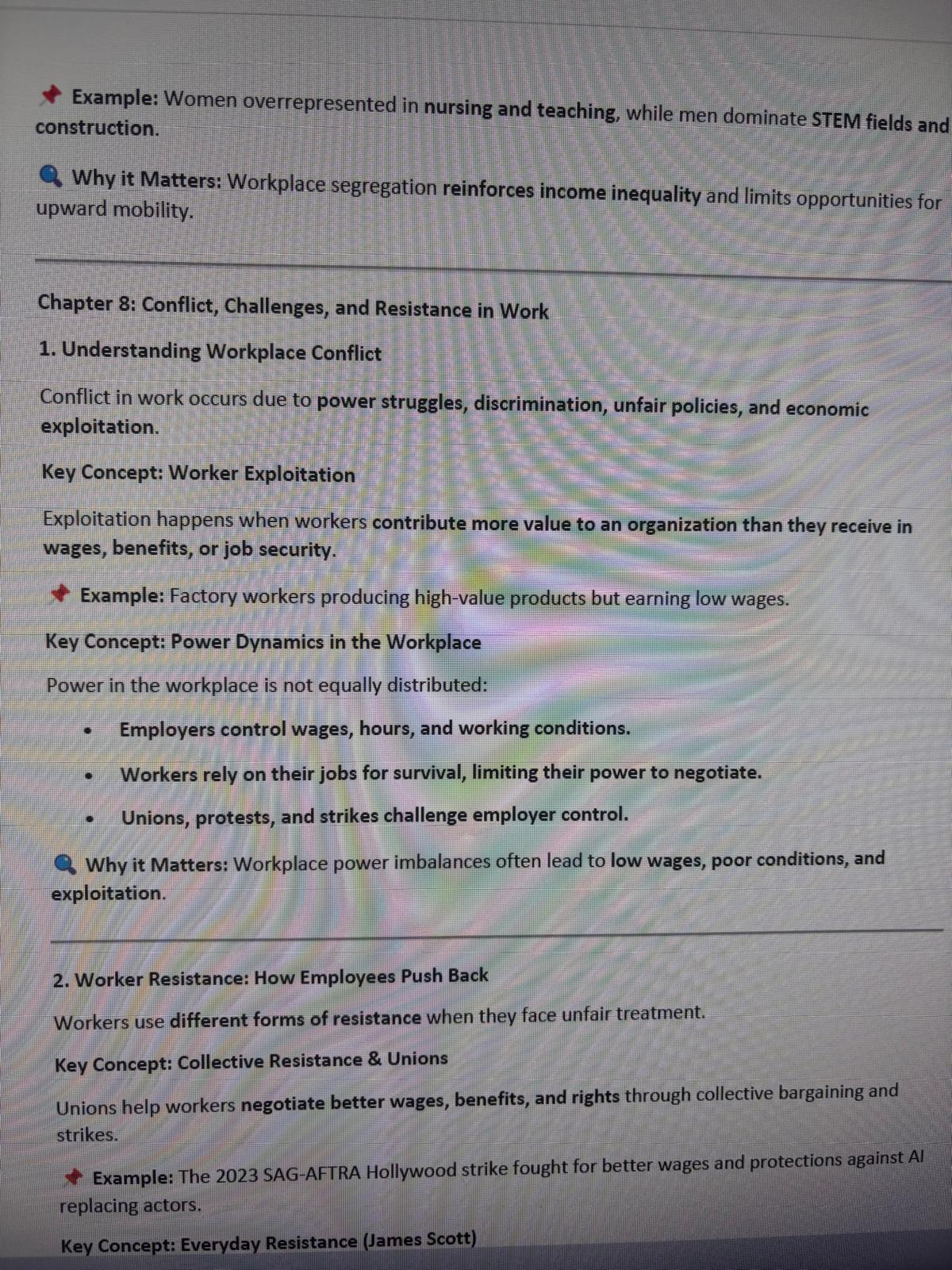
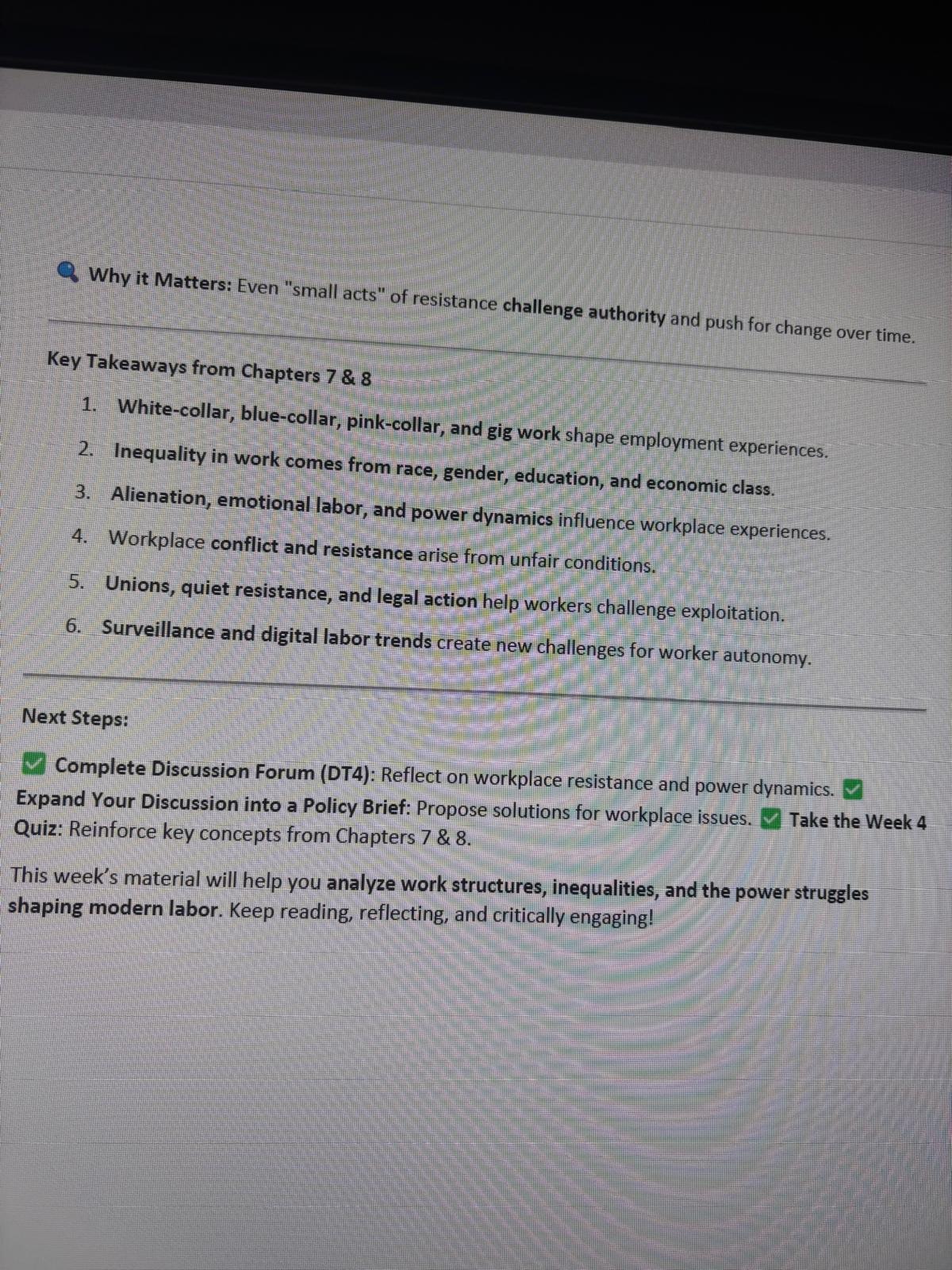
Week 4 Lecture: Work Experiences, Opportunities, and Resistance in the Workplace Readings: . Chapter 7: Work Experiences, Opportunities, and Meanings . Chapter 8: Conflict, Challenges, and Resistance in Work Introduction: Understanding the Realities of Work Work is central to human life-it shapes identities, provides livelihoods, and structures social interactions. However, work can also be stressful, exploitative, or unequal, leading to alienation, conflict, and resistance. These chapters examine the meanings of work, barriers to opportunity, and how workers challenge unfair conditions. Chapter 7: Work Experiences, Opportunities, and Meanings 1. The Nature of Work Experiences Work is not just about earning a paycheck; it is also a source of identity, social status, and self-worth. However, individual work experiences vary greatly depending on: Type of job: o White-collar work: Professional, office-based jobs that typically require a college degree, such as lawyers, doctors, and managers. Blue-collar work: Manual labor jobs that often require specialized skills or physical work, such as construction workers, mechanics, and factory workers. o Pink-collar work: Jobs traditionally associated with women, often in caregiving or service industries, such as nursing, teaching, and administrative assistance. O Gig work: Short-term, freelance, or contract-based work that lacks traditional job security, such as Uber drivers, delivery workers, or independent consultants. . Job autonomy: The degree of control workers have over their tasks and schedule. Workplace culture: The norms, values, and practices in an organization. Key Concept: Emotional Labor Coined by sociologist Arlie Hochschild, emotional labor refers to the process of managing emotions toWhy it Matters: Emotional labor can be mentally exhausting and contribute to burnout, especially when workers must suppress their emotions for long periods. 2. Meaning and Social Perception of Work How people perceive work depends on cultural and economic factors. . Occupational Prestige: Some jobs (e.g., doctors, engineers) are highly valued, while others (e.g., janitors, retail workers) are undervalued, despite their necessity. Stigma in Certain Jobs: Workers in service jobs or domestic labor may face social devaluation despite contributing significantly to the economy. Key Concept: Alienation (Karl Marx) Marx argued that capitalist work structures disconnect workers from their labor, products, and even themselves. There are four types of alienation: 1. Alienation from the product: Workers create goods/services they don't own or benefit from. 2. Alienation from the process: Workers have little control over how they work (e.g., repetitive tasks on an assembly line). 3. Alienation from others: Workplaces limit meaningful social connections due to competition or hierarchy. 4. Alienation from self: Workers lose creative fulfillment, feeling like mere "cogs in the machine." Example: A fast-food worker repeating the same task daily without any creative input. Why it Matters: When workers feel alienated, they may detach emotionally, perform at lower levels, or even resist workplace norms. 3. Barriers to Work Opportunities Not all workers have equal access to good jobs. Race, gender, social class, and education level shape who gets hired, promoted, or excluded. Key Concept: The Glass Ceiling The glass ceiling refers to invisible barriers that prevent marginalized groups (women, racial minorities) from advancing in their careers. Example: Women being underrepresented in CEO positions despite equal qualifications. Key Concept: Occupational SegregationExample: Women overrepresented in nursing and teaching, while men dominate STEM fields and construction. Q Why it Matters: Workplace segregation reinforces income inequality and limits opportunities for upward mobility. Chapter 8: Conflict, Challenges, and Resistance in Work 1. Understanding Workplace Conflict Conflict in work occurs due to power struggles, discrimination, unfair policies, and economic exploitation. Key Concept: Worker Exploitation Exploitation happens when workers contribute more value to an organization than they receive in wages, benefits, or job security. Example: Factory workers producing high-value products but earning low wages. Key Concept: Power Dynamics in the Workplace Power in the workplace is not equally distributed: Employers control wages, hours, and working conditions. Workers rely on their jobs for survival, limiting their power to negotiate. Unions, protests, and strikes challenge employer control. Why it Matters: Workplace power imbalances often lead to low wages, poor conditions, and exploitation. 2. Worker Resistance: How Employees Push Back Workers use different forms of resistance when they face unfair treatment. Key Concept: Collective Resistance & Unions Unions help workers negotiate better wages, benefits, and rights through collective bargaining and strikes. Example: The 2023 SAG-AFTRA Hollywood strike fought for better wages and protections against Al replacing actors. Key Concept: Everyday Resistance (James Scott)Why it Matters: Even "small acts" of resistance challenge authority and push for change over time. Key Takeaways from Chapters 7 & 8 1. White-collar, blue-collar, pink-collar, and gig work shape employment experiences. 2. Inequality in work comes from race, gender, education, and economic class. 3. Alienation, emotional labor, and power dynamics influence workplace experiences. 4. Workplace conflict and resistance arise from unfair conditions. 5. Unions, quiet resistance, and legal action help workers challenge exploitation. 6. Surveillance and digital labor trends create new challenges for worker autonomy. Next Steps: Complete Discussion Forum (DT4): Reflect on workplace resistance and power dynamics. Expand Your Discussion into a Policy Brief: Propose solutions for workplace issues. Take the Week 4 Quiz: Reinforce key concepts from Chapters 7 & 8. This week's material will help you analyze work structures, inequalities, and the power struggles shaping modern labor. Keep reading, reflecting, and critically engaging
Step by Step Solution
There are 3 Steps involved in it
1 Expert Approved Answer
Step: 1 Unlock
Question Has Been Solved by an Expert!
Get step-by-step solutions from verified subject matter experts
Step: 2 Unlock
Step: 3 Unlock
Students Have Also Explored These Related Sociology Questions!









 Study Help