







Question: Please I need help with this mini case. ORGB1135 Mini Case: Developing and Maintaining a Safety Culture Sanjay and Sophia looked out over the factory
Please I need help with this mini case. ORGB1135
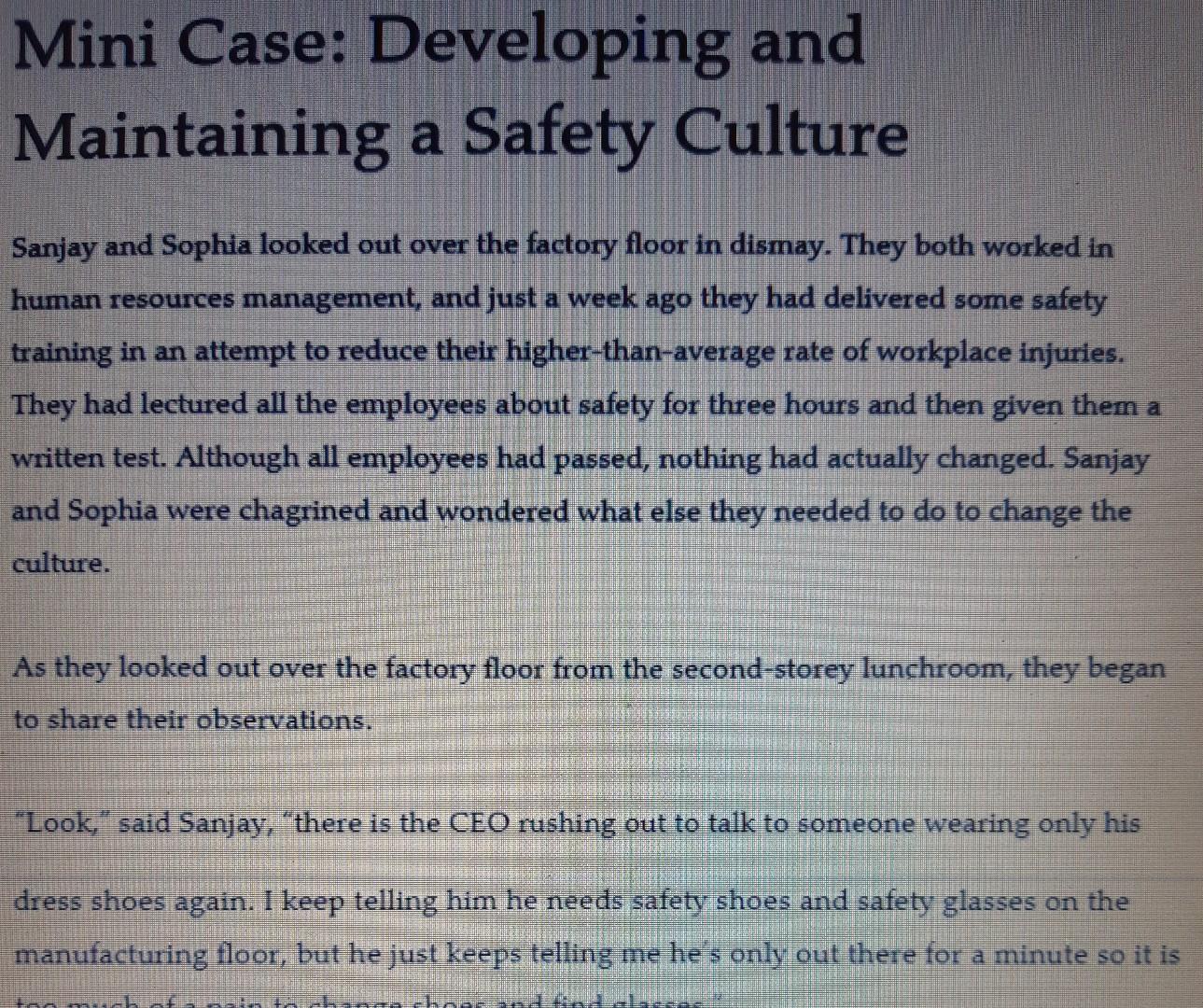
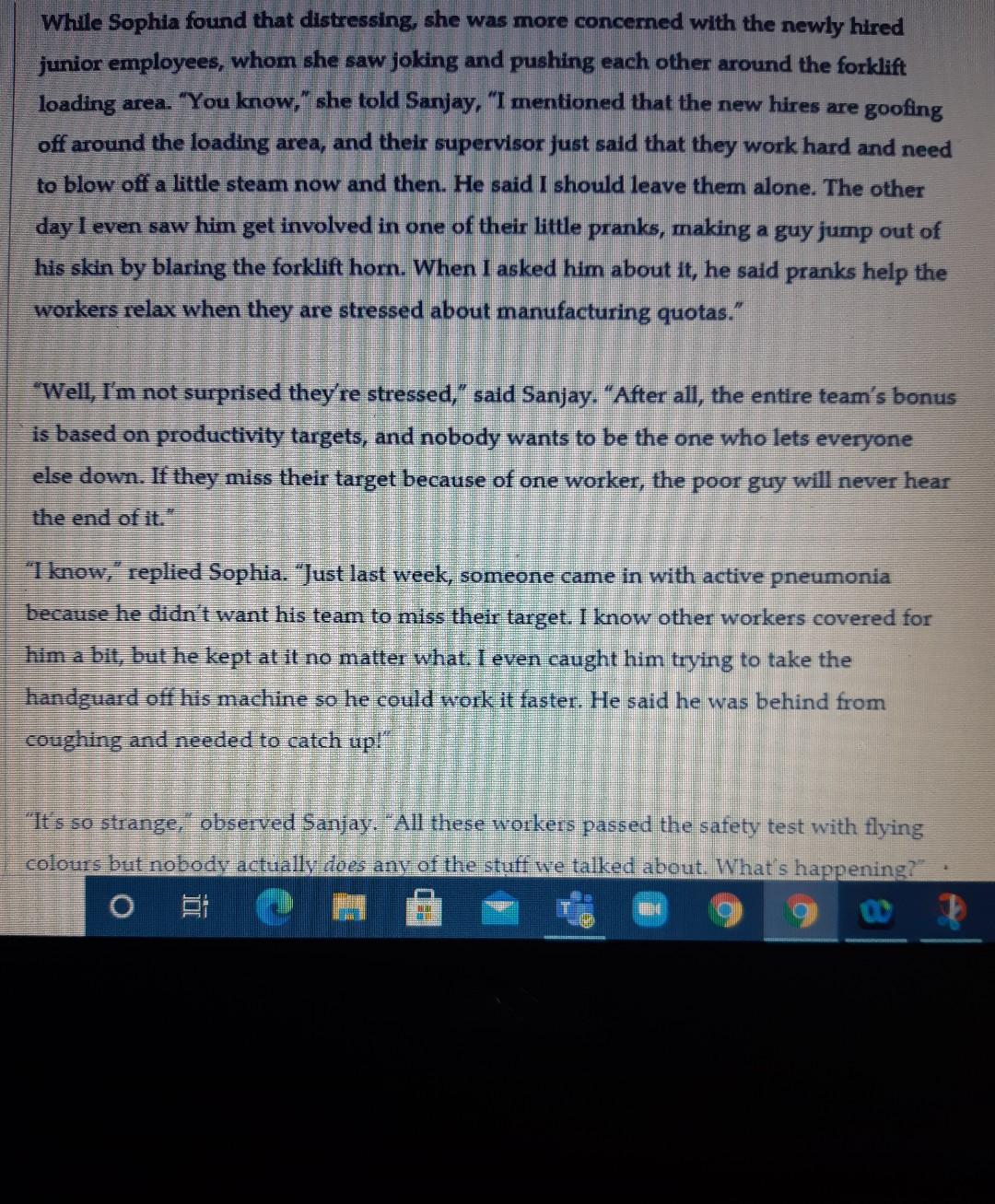
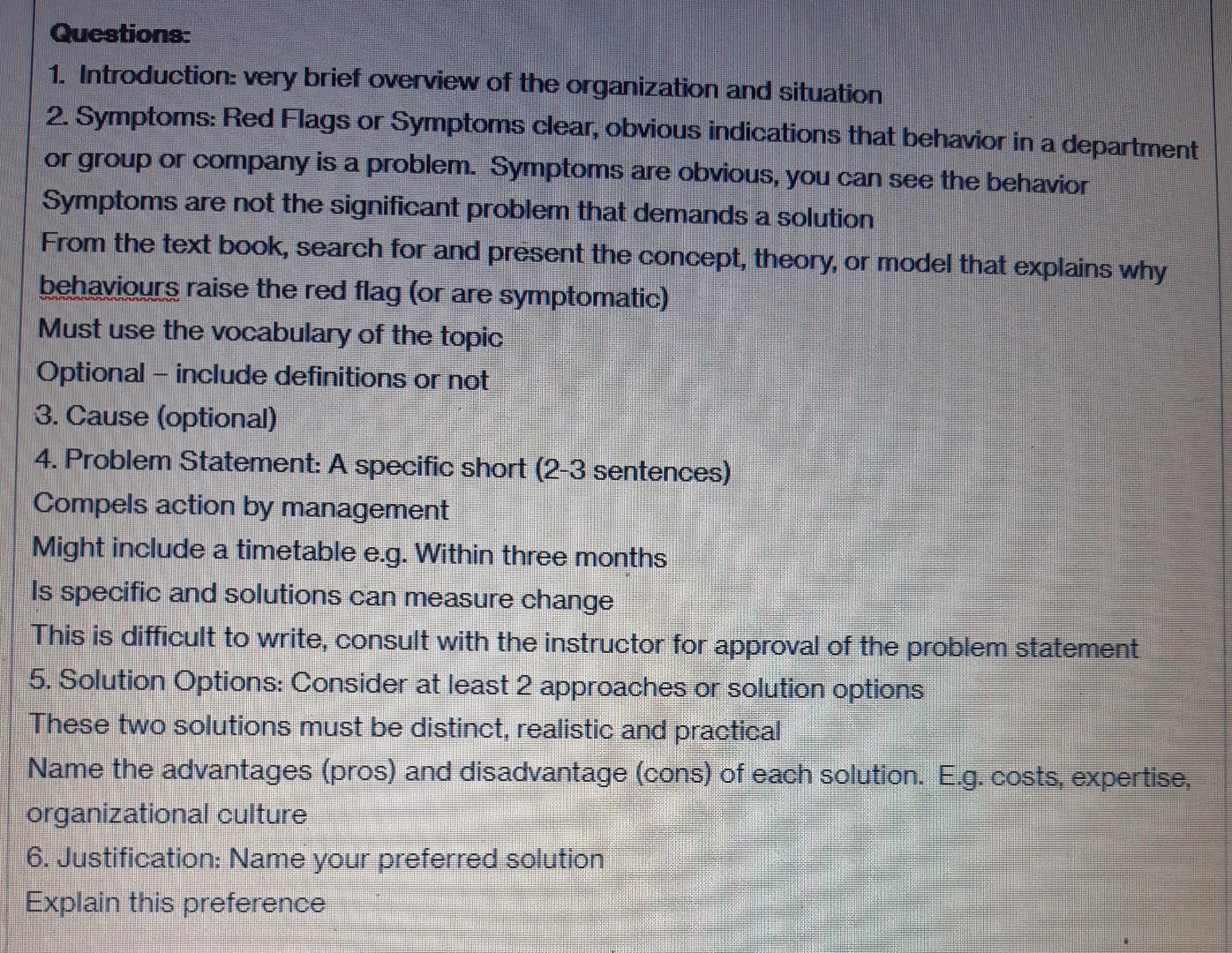
Mini Case: Developing and Maintaining a Safety Culture Sanjay and Sophia looked out over the factory floor in dismay. They both worked in human resources management, and just a week ago they had delivered some safety training in an attempt to reduce their higher-than-average rate of workplace injuries. They had lectured all the employees about safety for three hours and then given them a written test. Although all employees had passed, nothing had actually changed. Sanjay and Sophia were chagrined and wondered what else they needed to do to change the culture. As they looked out over the factory floor from the second-storey lunchroom, they began to share their observations. "Look, said Sanjay, there is the CEO rushing out to talk to someone wearing only his dress shoes again. I keep telling him he needs safety shoes and safety glasses on the manufacturing tloor, but he just keeps telling me he s only out there for a minute so it is While Sophia found that distressing, she was more concerned with the newly hired junior employees, whom she saw joking and pushing each other around the forklift loading area. "You know," she told Sanjay, "I mentioned that the new hires are goofing off around the loading area, and their supervisor just said that they work hard and need to blow off a little steam now and then. He said I should leave them alone. The other day I even saw him get involved in one of their little pranks, making a guy jump out of his skin by blaring the forklift hom. When I asked him about it, he said pranks help the workers relax when they are stressed about manufacturing quotas." "Well, I'm not surprised they're stressed," said Sanjay. After all, the entire team's bonus is based on productivity targets, and nobody wants to be the one who lets everyone else down. If they miss their target because of one worker, the poor guy will never hear the end of it. "I know," replied Sophia. "Just last week, someone came in with active pneumonia because he didn't want his team to miss their target. I know other workers covered for him a bit, but he kept at it no matter what. I even caught him trying to take the handguard off his machine so he could work it faster. He said he was behind from coughing and needed to catch up!" "It's so strange, observed Sanjay. "All these workers passed the safety test with flying colours but nobody actually does any of the stuff we talked about. What's happening?" 0 Questions: 1. Introduction: very brief overview of the organization and situation 2. Symptoms: Red Flags or Symptoms clear, obvious indications that behavior in a department or group or company is a problem. Symptoms are obvious, you can see the behavior Symptoms are not the significant problem that demands a solution From the text book, search for and present the concept, theory, or model that explains why behaviours raise the red flag (or are symptomatic) Must use the vocabulary of the topic Optional include definitions or not 3. Cause (optional) 4. Problem Statement: A specific short (2-3 sentences) Compels action by management Might include a timetable e.g. Within three months Is specific and solutions can measure change This is difficult to write, consult with the instructor for approval of the problem statement 5. Solution Options: Consider at least 2 approaches or solution options These two solutions must be distinct, realistic and practical Name the advantages (pros) and disadvantage (cons) of each solution. E.g. costs, expertise, organizational culture 6. Justification: Name your preferred solution Explain this preferenceStep by Step Solution
There are 3 Steps involved in it
1 Expert Approved Answer
Step: 1 Unlock

Question Has Been Solved by an Expert!
Get step-by-step solutions from verified subject matter experts
Step: 2 Unlock
Step: 3 Unlock
 Study Help