Question: PLEASE IM BEGGING YOU PROVIDE THE RIGHT ANSWER Question 1 (1 point) The CAN-SPAM Act provides which of the following mechanism of enforcement? (Select all

PLEASE IM BEGGING YOU PROVIDE THE RIGHT ANSWER
PLEASE IM BEGGING YOU PROVIDE THE RIGHT ANSWERPLEASE IM BEGGING YOU PROVIDE THE RIGHT ANSWERPLEASE IM BEGGING YOU PROVIDE THE RIGHT ANSWERPLEASE IM BEGGING YOU PROVIDE THE RIGHT ANSWERPLEASE IM BEGGING YOU PROVIDE THE RIGHT ANSWERPLEASE IM BEGGING YOU PROVIDE THE RIGHT ANSWERPLEASE IM BEGGING YOU PROVIDE THE RIGHT ANSWERPLEASE IM BEGGING YOU PROVIDE THE RIGHT ANSWERPLEASE IM BEGGING YOU PROVIDE THE RIGHT ANSWER
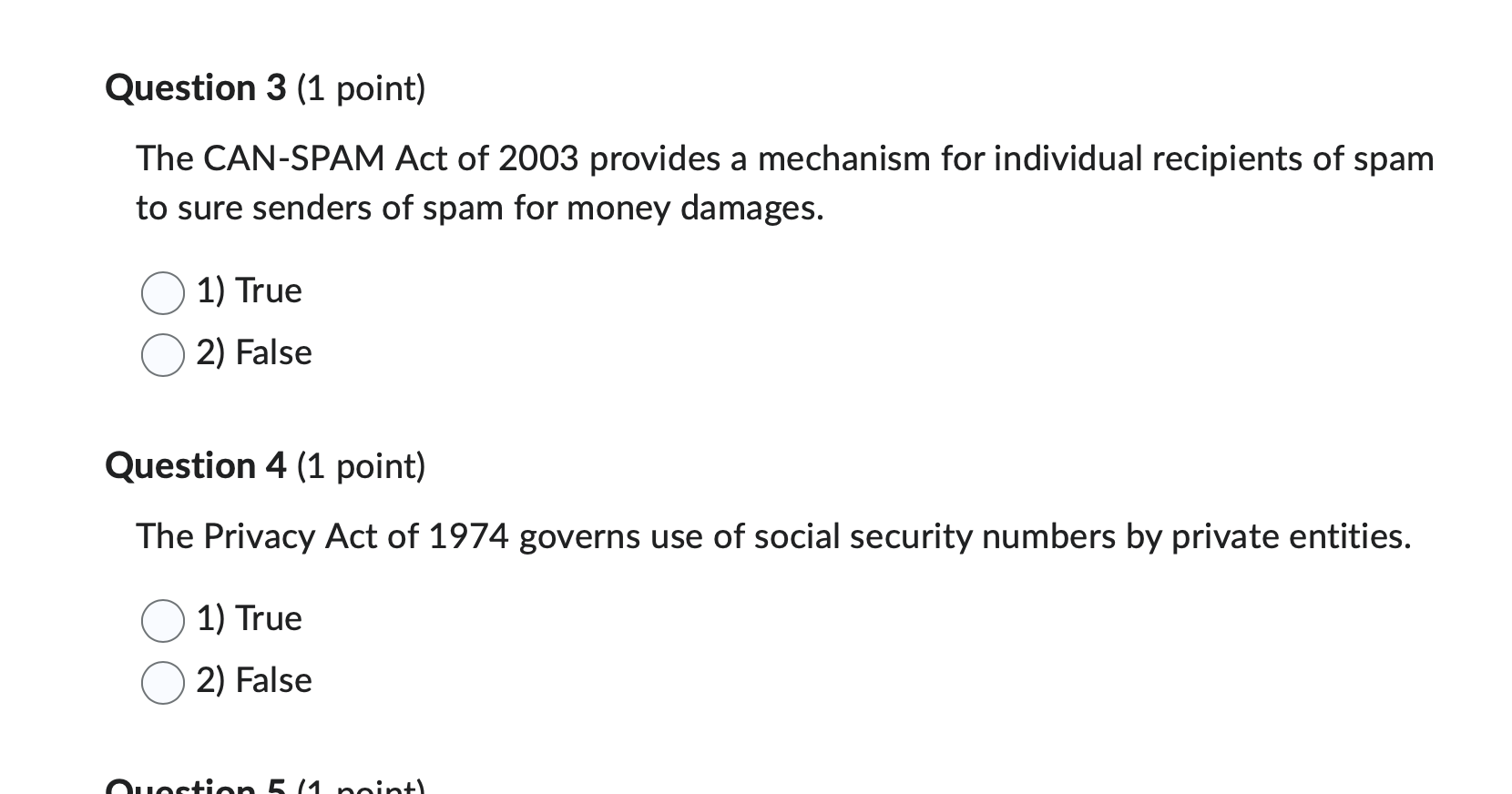
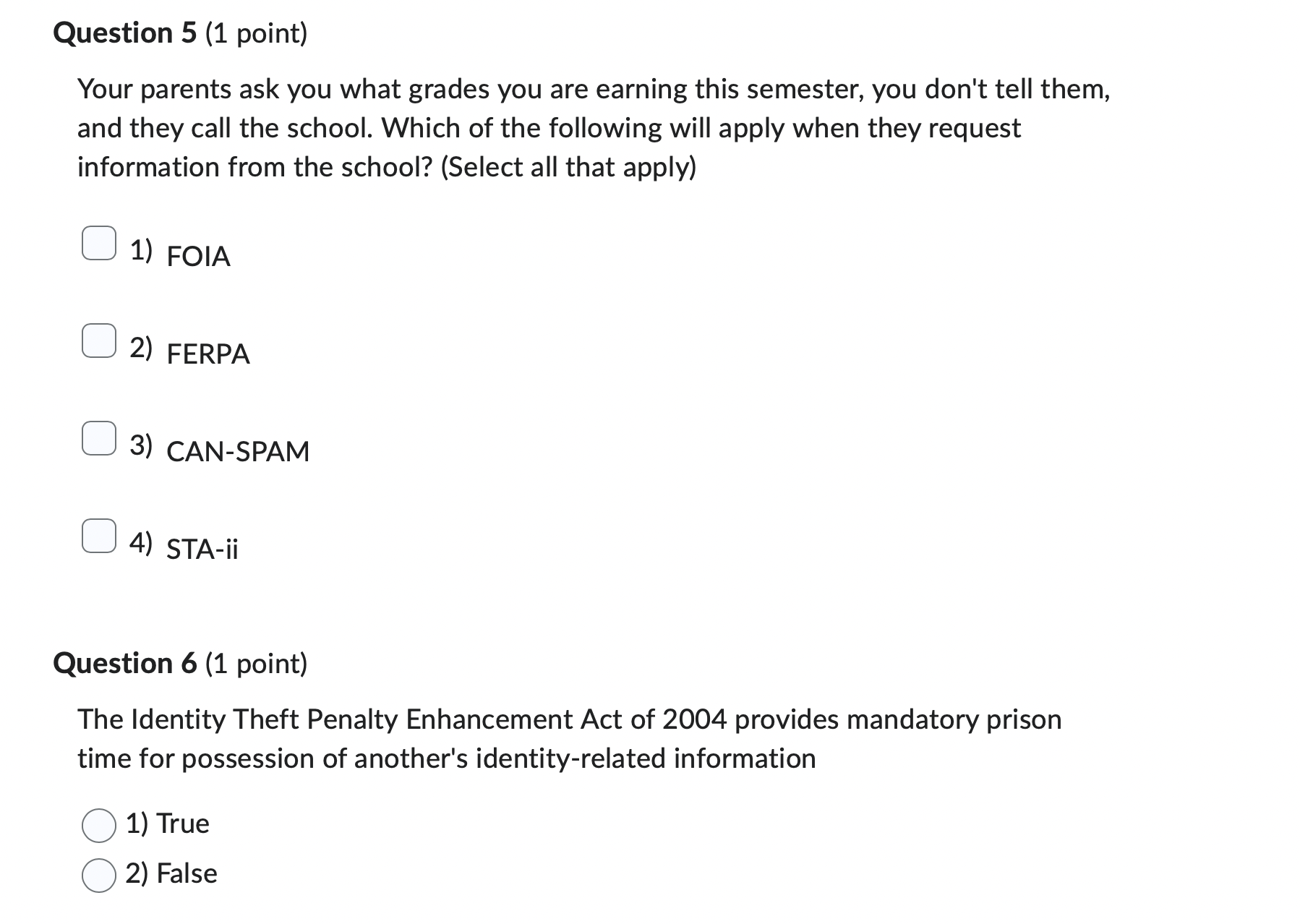
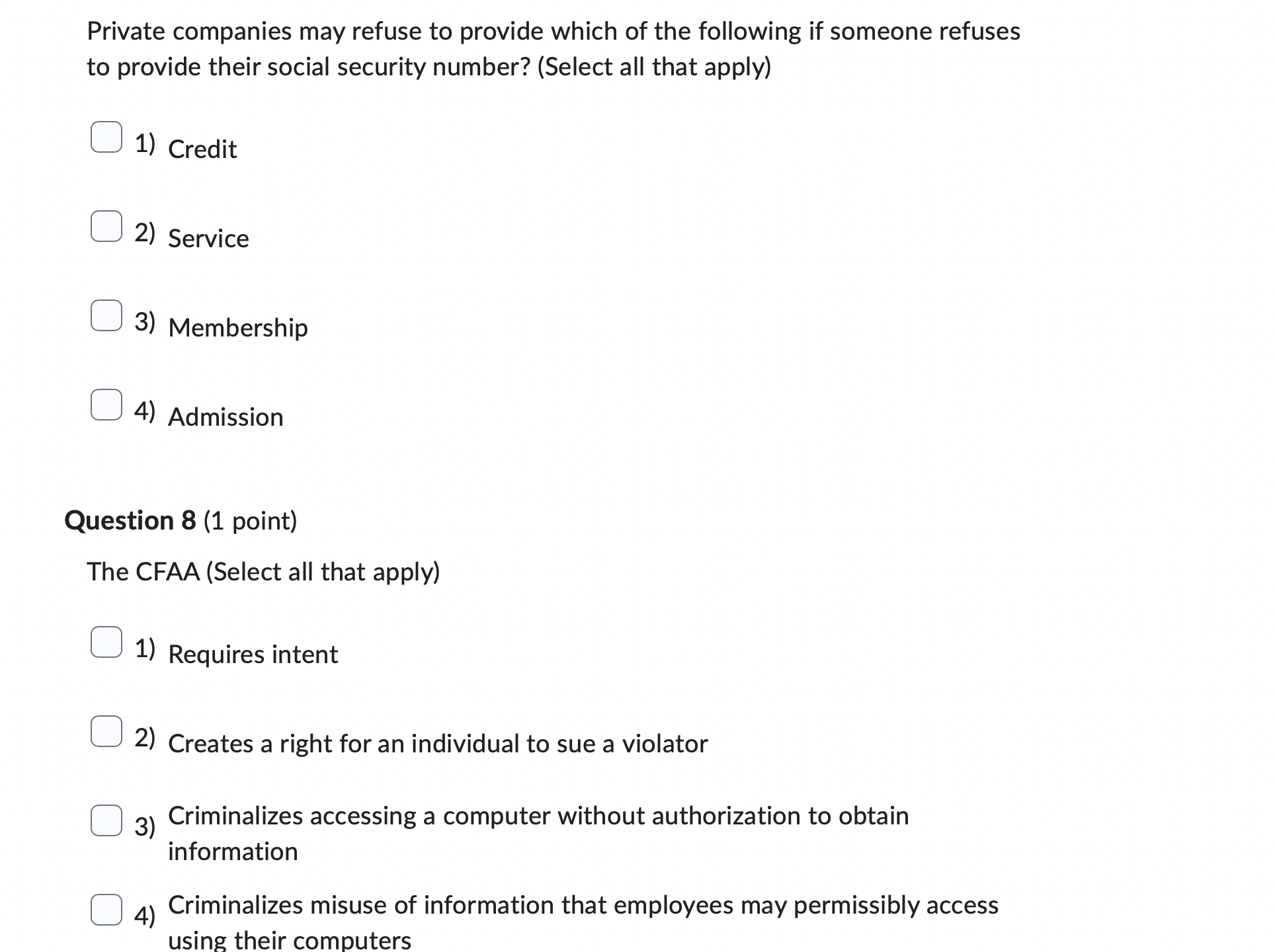
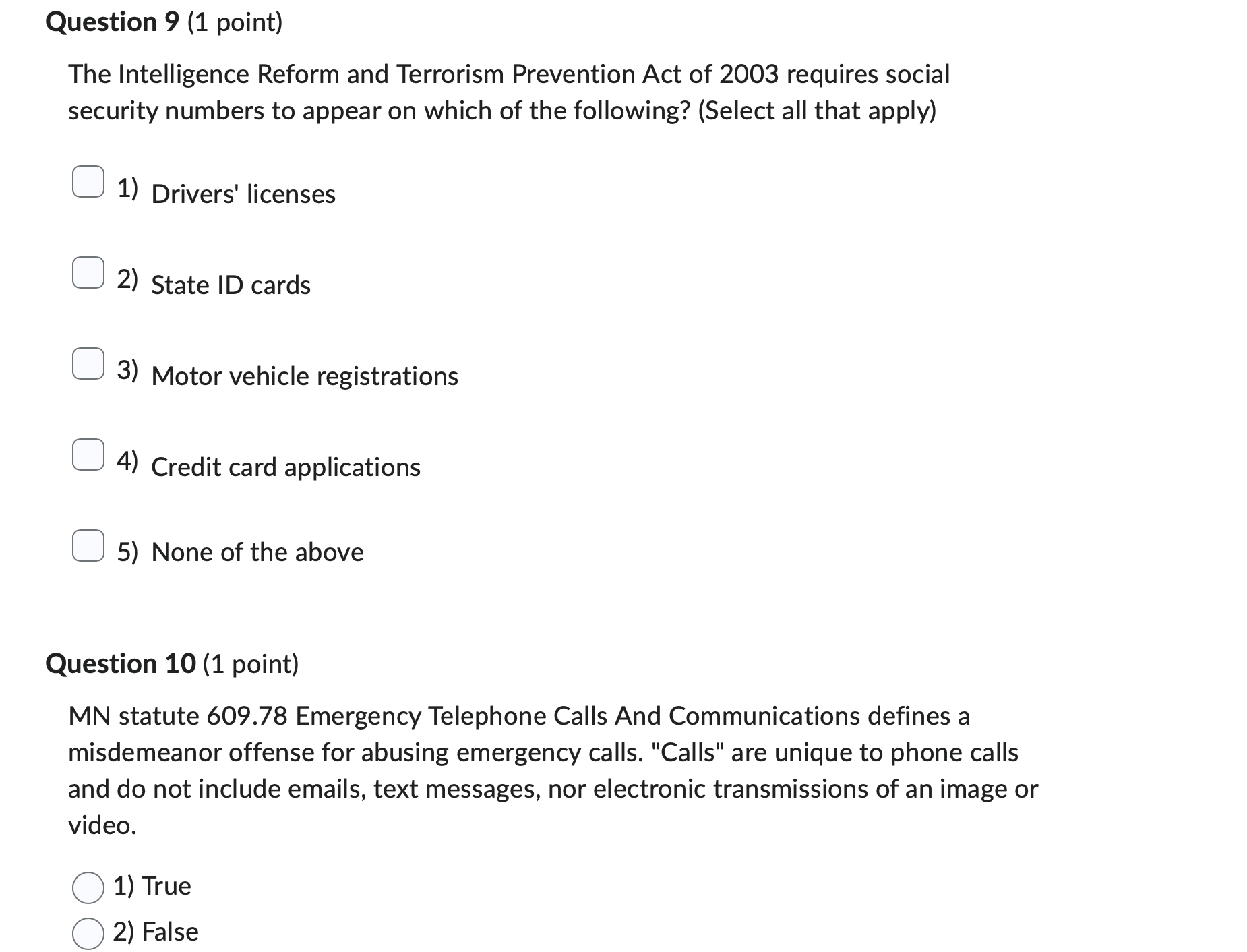
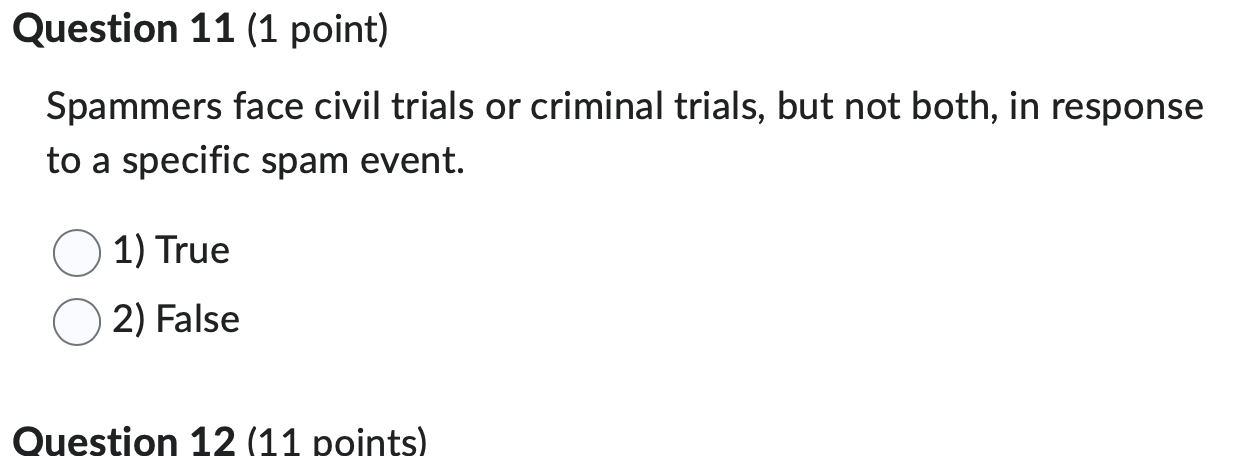
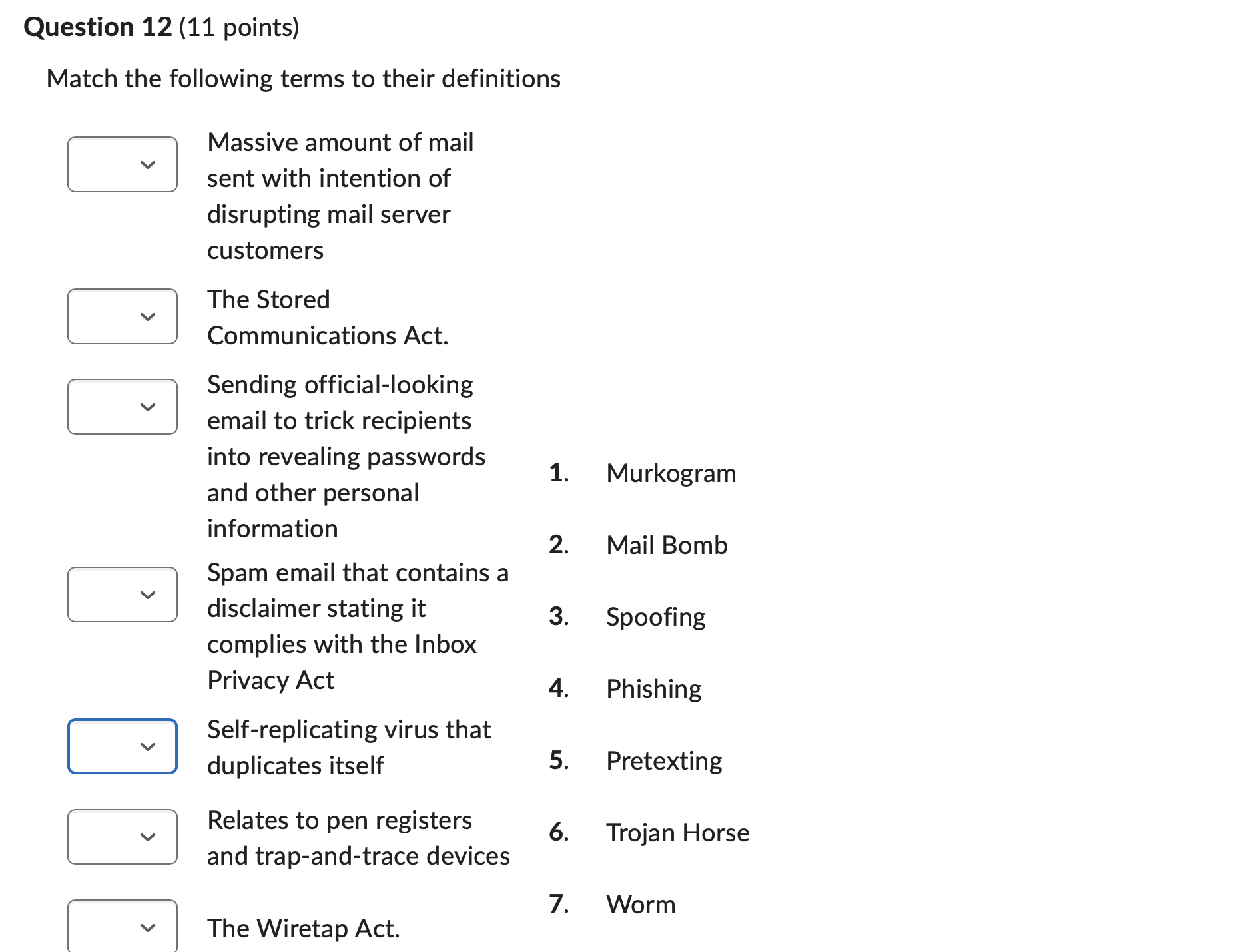
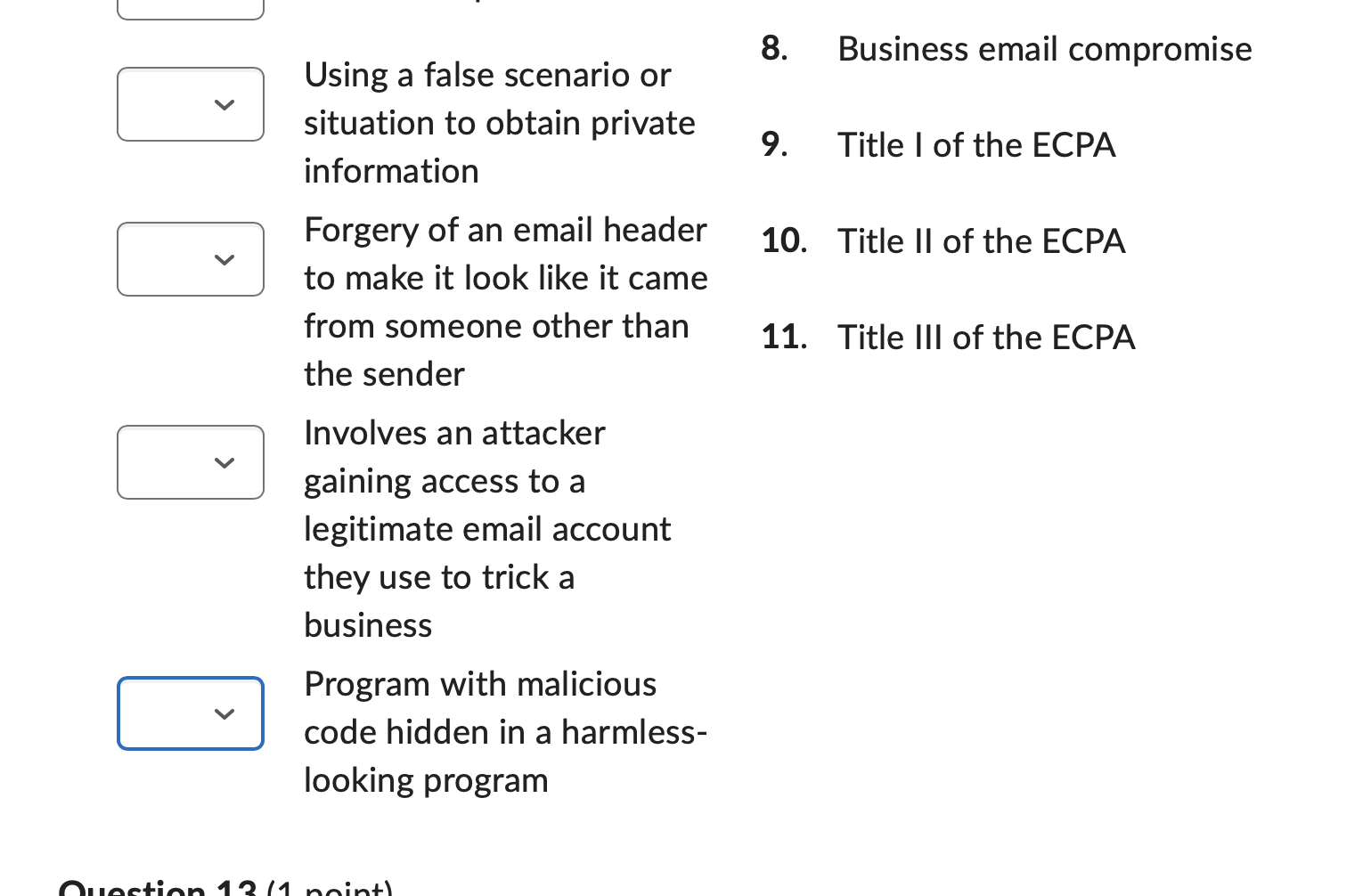
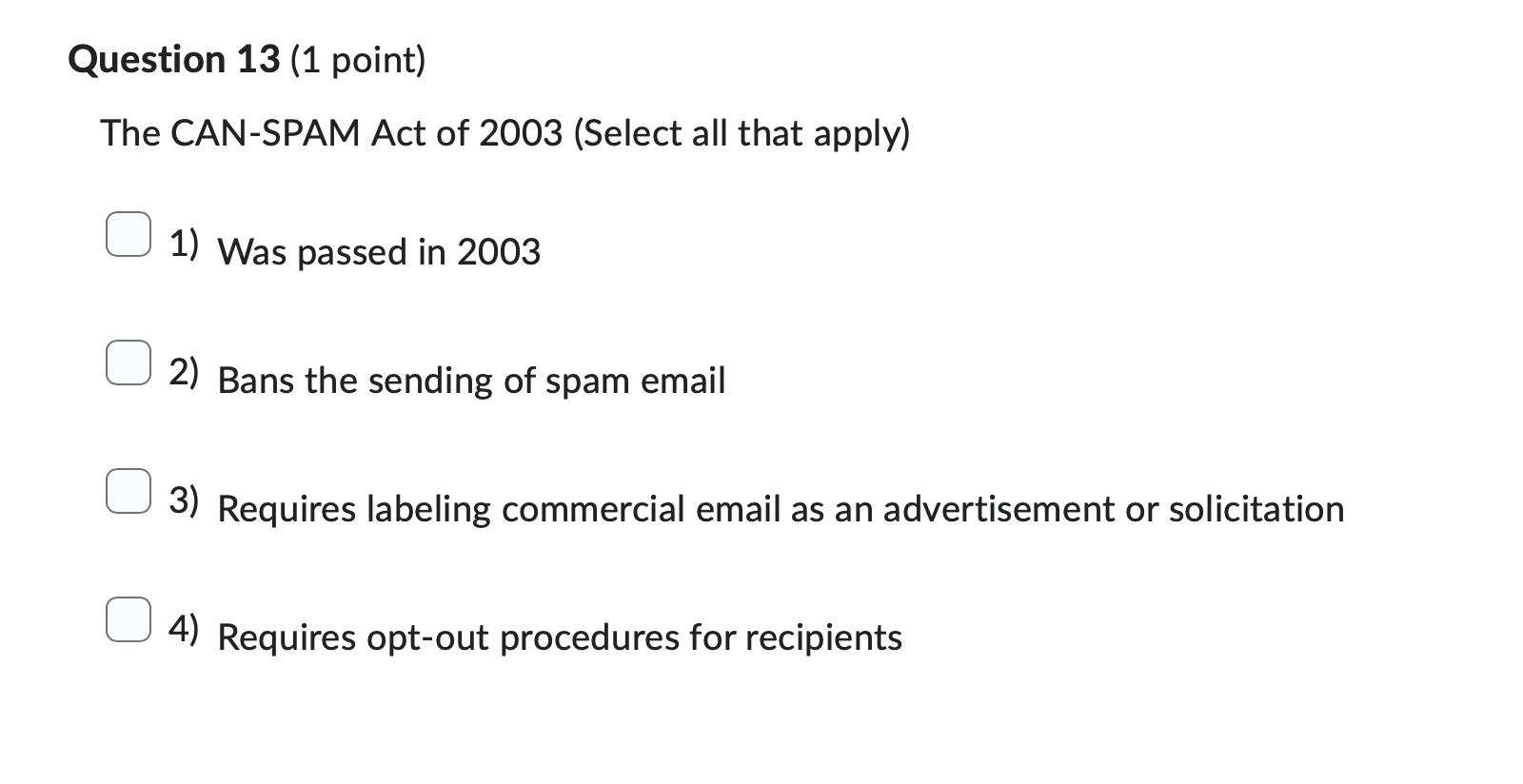
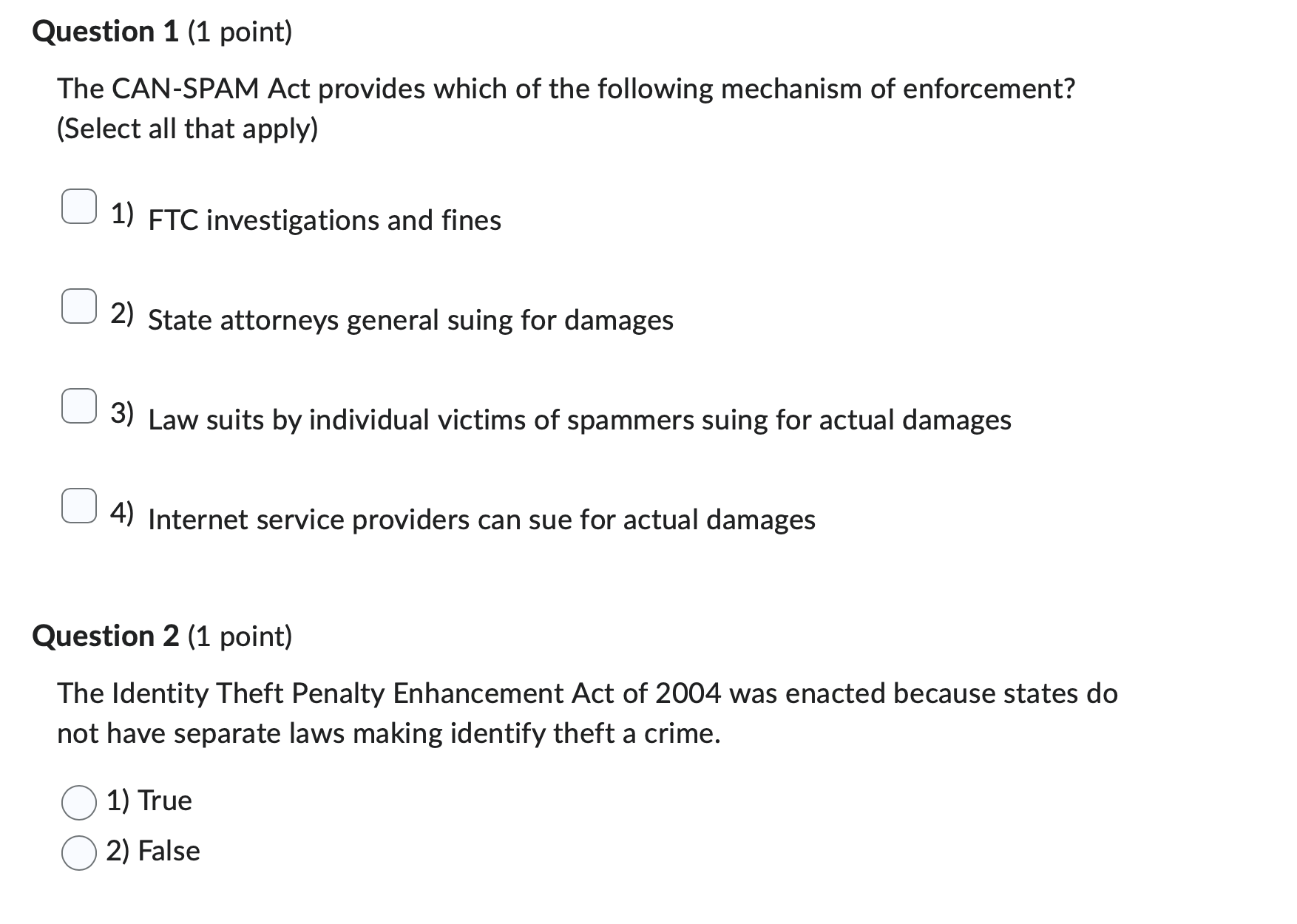
Question 1 (1 point) The CAN-SPAM Act provides which of the following mechanism of enforcement? (Select all that apply) 0 1) FTC investigations and fines C] 2) State attorneys general suing for damages 0 3) Law suits by individual victims of spammers suing for actual damages 0 4) Internet service providers can sue for actual damages Question 2 (1 point) The Identity Theft Penalty Enhancement Act of 2004 was enacted because states do not have separate laws making identify theft a crime. Question 3 (1 point) The CAN-SPAM Act of 2003 provides a mechanism for individual recipients of spam to sure senders of spam for money damages. 1) True ( 2) False Question 4 (1 point) The Privacy Act of 1974 governs use of social security numbers by private entities. ( 1) True ( 2) FalseQuestion 5 (1 point) Your parents ask you what grades you are earning this semester, you don't tell them, and they call the school. Which of the following will apply when they request information from the school? (Select all that apply) 0 1) FOIA D 2) FERPA D 3) CAN-SPAM D 4) STA-ii Question 6 (1 point) The Identity Theft Penalty Enhancement Act of 2004 provides mandatory prison time for possession of another's identity-related information Private companies may refuse to provide which of the following if someone refuses to provide their social security number? (Select all that apply) C 1) Credit 2) Service C C 3) Membership C 4) Admission Question 8 (1 point) The CFAA (Select all that apply) C 1) Requires intent 2) Creates a right for an individual to sue a violator information C 3) Criminalizes accessing a computer without authorization to obtain 4) Criminalizes misuse of information that employees may permissibly access using their computers Question 9 (1 point) The Intelligence Reform and Terrorism Prevention Act of 2003 requires social security numbers to appear on which of the following? (Select all that apply) 3 1) Drivers' licenses 3 2) State ID cards 3 3) Motor vehicle registrations 3 4) Credit card applications :J 5) None of the above Question 10 (1 point) MN statute 609.78 Emergency Telephone Calls And Communications defines a misdemeanor offense for abusing emergency calls. "Calls" are unique to phone calls and do not include emails, text messages, nor electronic transmissions of an image or video. 0 1) True 0 2) False Question 11 (1 point) Spammers face civil trials or criminal trials, but not both, in response to a specific spam event. 0 1) True 0 2) False Question 12 (11 points) Question 12 (11 points) Match the following terms to their definitions Massive amount of mail sent with intention of disrupting mail server customers The Stored Communications Act. Sending official-looking email to trick recipients into revealing passwords and other personal 1. Murkogram Information 2- Mail Bomb Spam email that contains a disclaimer stating it 3_ Spoofing complies with the Inbox Privacy Act 4. Phishing Self-replicating virus that duplicates itself 5- PFEtEthNE Relates to pen registers 6 Trojan Horse and trap-and-trace devices 7. Worm v The Wiretap Act. I Using a false scenario or situation to obtain private information Forgery of an email header to make it look like it came from someone other than the sender Involves an attacker gaining access to a legitimate email account they use to trick a business Program with malicious code hidden in a harmless- looking program n. I+:l\\l\\ 1 Q (4 nnin-I-\\ 8. 9. Business email compromise Title | of the ECPA 10. Title II of the ECPA 11. Title III of the ECPA Question 13 (1 point) The CANSPAM Act of 2003 (Select all that apply) 0 1) Was passed in 2003 O 2) Bans the sending of spam email 0 3) Requires labeling commercial email as an advertisement or solicitation O 4) Requires opt-out procedures for recipients

Step by Step Solution

There are 3 Steps involved in it

1 Expert Approved Answer
Step: 1 Unlock blur-text-image

Question Has Been Solved by an Expert!

Get step-by-step solutions from verified subject matter experts

Step: 2 Unlock
Step: 3 Unlock

Students Have Also Explored These Related Mathematics Questions!