







Question: please just do case study 1 a-e and thoroughly explain. CASE 1 Coverage (e) In addition to their life insurance planning, how The Johnsons Change
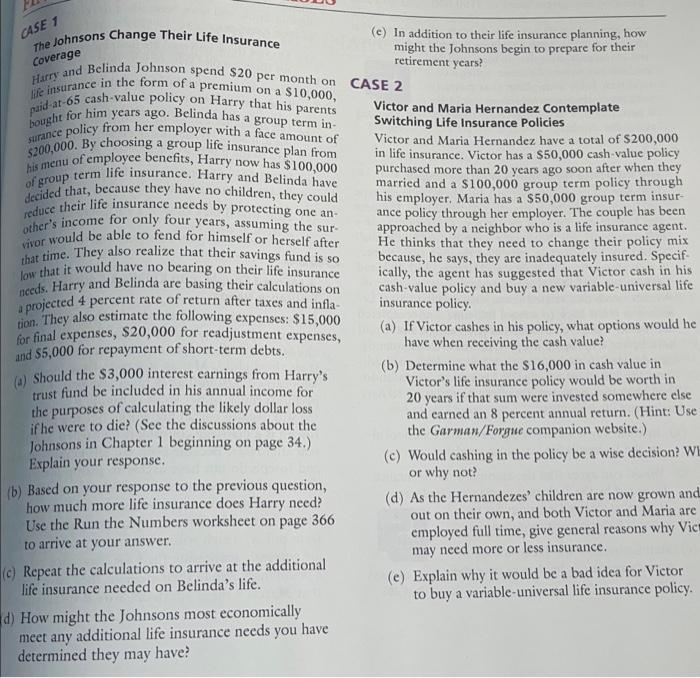
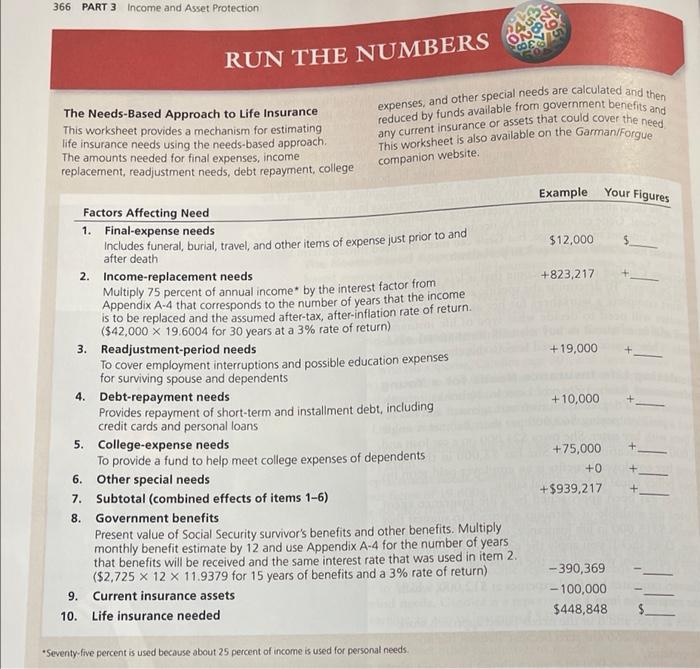
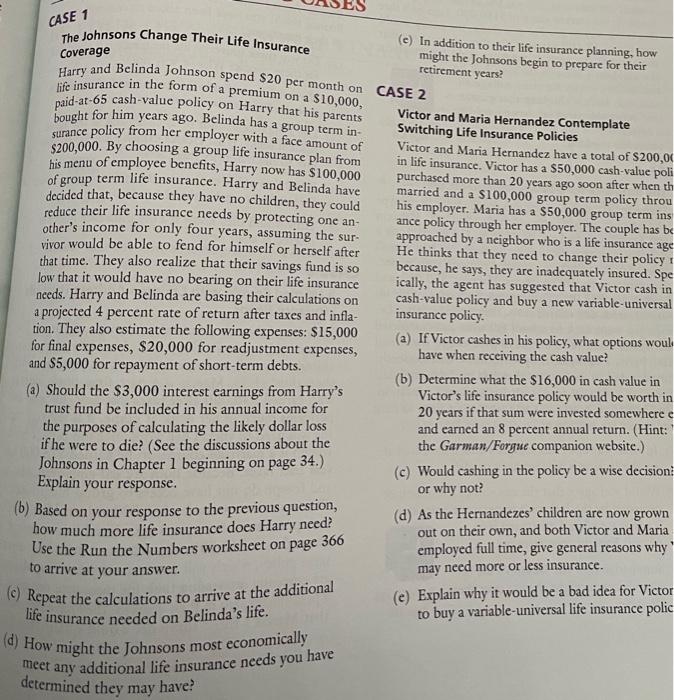
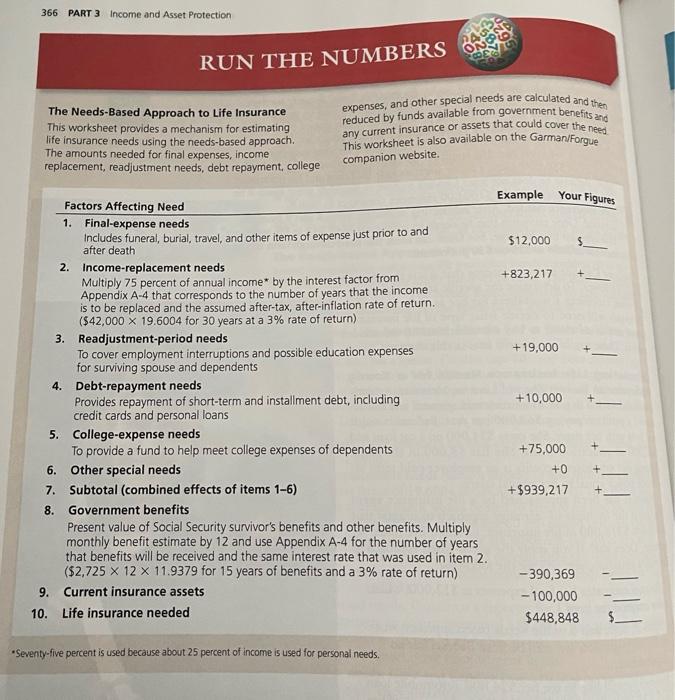
CASE 1 Coverage (e) In addition to their life insurance planning, how The Johnsons Change Their Life Insurance might the Johnsons begin to prepare for their retirement years? Harry and Belinda Johnson spend $20 per month on CASE 2 We insurance in the form of a premium on a $10,000, puid-ar-65 cash-value policy on Harry that his parents bought for him years ago. Belinda has a group term in Victor and Maria Hernandez Contemplate surance policy from her employer with a face amount of Switching Life Insurance Policies 5200,000. By choosing a group life insurance plan from Victor and Maria Hernandez have a total of $200,000 his menu of employee benefits, Harry now has $100,000 in life insurance. Victor has a $50,000 cash value policy of group term life insurance. Harry and Belinda have purchased more than 20 years ago soon after when they decided that, because they have no children, they could married and a $100,000 group term policy through reduce their life insurance needs by protecting one an- his employer. Maria has a $50,000 group term insur- other's income for only four years, assuming the sur ance policy through her employer. The couple has been approached by a neighbor who is a life insurance agent. a vivor would be able to fend for himself or herself after He thinks that they need to change their policy mix that time. They also realize that their savings fund is so because, he says, they are inadequately insured. Specif- ically, the agent has suggested that Victor cash in his needs. Harry and Belinda are basing their calculations on cash-value policy and buy a new variable-universal life a projected 4 percent rate of return after taxes and infla- insurance policy for final expenses, $20,000 for readjustment expenses, tion. They also estimate the following expenses: $15,000 (a) If Victor cashes in his policy, what options would he and $5,000 for repayment of short-term debts. have when receiving the cash value? (a) should the $3,000 interest earnings from Harry's (b) Determine what the $16,000 in cash value in trust fund be included in his annual income for Victor's life insurance policy would be worth in 20 years if that sum were invested somewhere else the purposes of calculating the likely dollar loss if he were to die? (See the discussions about the and earned an 8 percent annual return. (Hint: Use the Garman/Forgue companion website.) Johnsons in Chapter 1 beginning on page 34.) Explain your response. (c) Would cashing in the policy be a wise decision? WE or why not? (b) Based on your response to the previous question, how much more life insurance does Harry need? (d) As the Hernandezes' children are now grown and Use the Run the Numbers worksheet on page 366 out on their own, and both Victor and Maria are to arrive at your answer. employed full time, give general reasons why Vich may need more or less insurance, (c) Repeat the calculations to arrive at the additional life insurance needed on Belinda's life. (e) Explain why it would be a bad idea for Victor to buy a variable-universal life insurance policy. d) How might the Johnsons most economically meet any additional life insurance needs you have determined they may have? 366 PART 3 Income and Asset Protection RUN THE NUMBERS The Needs-Based Approach to Life Insurance This worksheet provides a mechanism for estimating life insurance needs using the needs-based approach The amounts needed for final expenses, income replacement, readjustment needs, debt repayment, college expenses, and other special needs are calculated and then reduced by funds available from government benefits and any current insurance or assets that could cover the need This worksheet is also available on the Garman/Forgue companion website Example Your Figures $12,000 after death +823,217 +19,000 +10,000 Factors Affecting Need 1. Final-expense needs Includes funeral , burial, travel, and other items of expense just prior to and 2. Income-replacement needs Multiply 75 percent of annual income by the interest factor from Appendix A-4 that corresponds to the number of years that the income is to be replaced and the assumed after-tax, after-inflation rate of return ($42,000 X 19.6004 for 30 years at a 3% rate of return) 3. Readjustment-period needs To cover employment interruptions and possible education expenses for surviving spouse and dependents 4. Debt-repayment needs Provides repayment of short-term and installment debt, including credit cards and personal loans 5. College-expense needs To provide a fund to help meet college expenses of dependents 6. Other special needs 7. Subtotal (combined effects of items 1-6) 8. Government benefits Present value of Social Security survivor's benefits and other benefits. Multiply monthly benefit estimate by 12 and use Appendix A-4 for the number of years that benefits will be received and the same interest rate that was used in item 2. ($2,725 X 12 X 11.9379 for 15 years of benefits and a 3% rate of return) 9. Current insurance assets 10. Life insurance needed +75,000 +0 +$939,217 -390,369 -100,000 $448,848 *Seventy-five percent is used because about 25 percent of income is used for personal needs CASE 1 Coverage The Johnsons Change Their Life Insurance (c) In addition to their life insurance planning, how might the Johnsons begin to prepare for their Harry and Belinda Johnson spend $20 per month on CASE 2 retirement years? life insurance in the form of a premium on a $10,000, paid-at-65 cash-value policy on Harry that his parents bought for him years ago. Belinda has a group term in- Victor and Maria Hernandez Contemplate surance policy from her employer with a face amount of Switching Life Insurance Policies $200,000. By choosing a group life insurance plan from Victor and Maria Hernandez have a total of $200,00 his menu of employee benefits, Harry now has $100,000 in life insurance. Victor has a $50,000 cash-value poli of group term life insurance. Harry and Belinda have purchased more than 20 years ago soon after when th decided that, because they have no children, they could married and a $100,000 group term policy throu his employer. Maria has a $50,000 group term ins reduce their life insurance needs by protecting one an- ance policy through her employer. The couple has be other's income for only four years, assuming the sur- approached by a neighbor who is a life insurance age vivor would be able to fend for himself or herself after He thinks that they need to change their policy that time. They also realize that their savings fund is so because, he says, they are inadequately insured. Spe low that it would have no bearing on their life insurance ically, the agent has suggested that Victor cash in needs. Harry and Belinda are basing their calculations on cash-value policy and buy a new variable-universal a projected 4 percent rate of return after taxes and infla- insurance policy tion. They also estimate the following expenses: $15,000 (a) If Victor cashes in his policy, what options woul for final expenses, $20,000 for readjustment expenses, have when receiving the cash value? and $5,000 for repayment of short-term debts. (b) Determine what the $16,000 in cash value in (a) Should the $3,000 interest earnings from Harry's Victor's life insurance policy would be worth in trust fund be included in his annual income for 20 years if that sum were invested somewhere e the purposes of calculating the likely dollar loss and earned an 8 percent annual return. (Hint: if he were to die? (See the discussions about the the Garman/Forgue companion website.) Johnsons in Chapter 1 beginning on page 34.) (c) Would cashing in the policy be a wise decision Explain your response. or why not? (b) Based on your response to the previous question, (d) As the Hernandezes' children are now grown out on their own, and both Victor and Maria Use the Run the Numbers worksheet on page 366 employed full time, give general reasons why to arrive at your answer. may need more or less insurance. (c) Repeat the calculations to arrive at the additional (e) Explain why it would be a bad idea for Victor to buy a variable-universal life insurance polic life insurance needed on Belinda's life. (d) How might the Johnsons most economically meet any additional life insurance needs you have determined they may have? how much more life insurance does Harry need? 366 PART 3 Income and Asset Protection RUN THE NUMBERS The Needs-Based Approach to Life Insurance This worksheet provides a mechanism for estimating life insurance needs using the needs-based approach. The amounts needed for final expenses, income replacement, readjustment needs, debt repayment, college expenses, and other special needs are calculated and then reduced by funds available from government benefits and any current insurance or assets that could cover the need This worksheet is also available on the Garman/Forgue companion website. Example Your Figures $12,000 +823,217 +19,000 +10,000 Factors Affecting Need 1. Final-expense needs Includes funeral, burial, travel, and other items of expense just prior to and after death 2. Income-replacement needs Multiply 75 percent of annual income* by the interest factor from Appendix A-4 that corresponds to the number of years that the income is to be replaced and the assumed after-tax, after-inflation rate of return. ($42,000 X 19.6004 for 30 years at a 3% rate of return) 3. Readjustment-period needs To cover employment interruptions and possible education expenses for surviving spouse and dependents 4. Debt-repayment needs Provides repayment of short-term and installment debt, including credit cards and personal loans 5. College-expense needs To provide a fund to help meet college expenses of dependents 6. Other special needs 7. Subtotal (combined effects of items 1-6) 8. Government benefits Present value of Social Security survivor's benefits and other benefits. Multiply monthly benefit estimate by 12 and use Appendix A-4 for the number of years that benefits will be received and the same interest rate that was used in item 2. ($2,725 X 12 X 11.9379 for 15 years of benefits and a 3% rate of return) 9 Current insurance assets 10. Life insurance needed +75,000 +0 +$939,217 9. -390,369 -100,000 $448,848 Seventy-five percent is used because about 25 percent of income is used for personal needs. CASE 1 Coverage (e) In addition to their life insurance planning, how The Johnsons Change Their Life Insurance might the Johnsons begin to prepare for their retirement years? Harry and Belinda Johnson spend $20 per month on CASE 2 We insurance in the form of a premium on a $10,000, puid-ar-65 cash-value policy on Harry that his parents bought for him years ago. Belinda has a group term in Victor and Maria Hernandez Contemplate surance policy from her employer with a face amount of Switching Life Insurance Policies 5200,000. By choosing a group life insurance plan from Victor and Maria Hernandez have a total of $200,000 his menu of employee benefits, Harry now has $100,000 in life insurance. Victor has a $50,000 cash value policy of group term life insurance. Harry and Belinda have purchased more than 20 years ago soon after when they decided that, because they have no children, they could married and a $100,000 group term policy through reduce their life insurance needs by protecting one an- his employer. Maria has a $50,000 group term insur- other's income for only four years, assuming the sur ance policy through her employer. The couple has been approached by a neighbor who is a life insurance agent. a vivor would be able to fend for himself or herself after He thinks that they need to change their policy mix that time. They also realize that their savings fund is so because, he says, they are inadequately insured. Specif- ically, the agent has suggested that Victor cash in his needs. Harry and Belinda are basing their calculations on cash-value policy and buy a new variable-universal life a projected 4 percent rate of return after taxes and infla- insurance policy for final expenses, $20,000 for readjustment expenses, tion. They also estimate the following expenses: $15,000 (a) If Victor cashes in his policy, what options would he and $5,000 for repayment of short-term debts. have when receiving the cash value? (a) should the $3,000 interest earnings from Harry's (b) Determine what the $16,000 in cash value in trust fund be included in his annual income for Victor's life insurance policy would be worth in 20 years if that sum were invested somewhere else the purposes of calculating the likely dollar loss if he were to die? (See the discussions about the and earned an 8 percent annual return. (Hint: Use the Garman/Forgue companion website.) Johnsons in Chapter 1 beginning on page 34.) Explain your response. (c) Would cashing in the policy be a wise decision? WE or why not? (b) Based on your response to the previous question, how much more life insurance does Harry need? (d) As the Hernandezes' children are now grown and Use the Run the Numbers worksheet on page 366 out on their own, and both Victor and Maria are to arrive at your answer. employed full time, give general reasons why Vich may need more or less insurance, (c) Repeat the calculations to arrive at the additional life insurance needed on Belinda's life. (e) Explain why it would be a bad idea for Victor to buy a variable-universal life insurance policy. d) How might the Johnsons most economically meet any additional life insurance needs you have determined they may have? 366 PART 3 Income and Asset Protection RUN THE NUMBERS The Needs-Based Approach to Life Insurance This worksheet provides a mechanism for estimating life insurance needs using the needs-based approach The amounts needed for final expenses, income replacement, readjustment needs, debt repayment, college expenses, and other special needs are calculated and then reduced by funds available from government benefits and any current insurance or assets that could cover the need This worksheet is also available on the Garman/Forgue companion website Example Your Figures $12,000 after death +823,217 +19,000 +10,000 Factors Affecting Need 1. Final-expense needs Includes funeral , burial, travel, and other items of expense just prior to and 2. Income-replacement needs Multiply 75 percent of annual income by the interest factor from Appendix A-4 that corresponds to the number of years that the income is to be replaced and the assumed after-tax, after-inflation rate of return ($42,000 X 19.6004 for 30 years at a 3% rate of return) 3. Readjustment-period needs To cover employment interruptions and possible education expenses for surviving spouse and dependents 4. Debt-repayment needs Provides repayment of short-term and installment debt, including credit cards and personal loans 5. College-expense needs To provide a fund to help meet college expenses of dependents 6. Other special needs 7. Subtotal (combined effects of items 1-6) 8. Government benefits Present value of Social Security survivor's benefits and other benefits. Multiply monthly benefit estimate by 12 and use Appendix A-4 for the number of years that benefits will be received and the same interest rate that was used in item 2. ($2,725 X 12 X 11.9379 for 15 years of benefits and a 3% rate of return) 9. Current insurance assets 10. Life insurance needed +75,000 +0 +$939,217 -390,369 -100,000 $448,848 *Seventy-five percent is used because about 25 percent of income is used for personal needs CASE 1 Coverage The Johnsons Change Their Life Insurance (c) In addition to their life insurance planning, how might the Johnsons begin to prepare for their Harry and Belinda Johnson spend $20 per month on CASE 2 retirement years? life insurance in the form of a premium on a $10,000, paid-at-65 cash-value policy on Harry that his parents bought for him years ago. Belinda has a group term in- Victor and Maria Hernandez Contemplate surance policy from her employer with a face amount of Switching Life Insurance Policies $200,000. By choosing a group life insurance plan from Victor and Maria Hernandez have a total of $200,00 his menu of employee benefits, Harry now has $100,000 in life insurance. Victor has a $50,000 cash-value poli of group term life insurance. Harry and Belinda have purchased more than 20 years ago soon after when th decided that, because they have no children, they could married and a $100,000 group term policy throu his employer. Maria has a $50,000 group term ins reduce their life insurance needs by protecting one an- ance policy through her employer. The couple has be other's income for only four years, assuming the sur- approached by a neighbor who is a life insurance age vivor would be able to fend for himself or herself after He thinks that they need to change their policy that time. They also realize that their savings fund is so because, he says, they are inadequately insured. Spe low that it would have no bearing on their life insurance ically, the agent has suggested that Victor cash in needs. Harry and Belinda are basing their calculations on cash-value policy and buy a new variable-universal a projected 4 percent rate of return after taxes and infla- insurance policy tion. They also estimate the following expenses: $15,000 (a) If Victor cashes in his policy, what options woul for final expenses, $20,000 for readjustment expenses, have when receiving the cash value? and $5,000 for repayment of short-term debts. (b) Determine what the $16,000 in cash value in (a) Should the $3,000 interest earnings from Harry's Victor's life insurance policy would be worth in trust fund be included in his annual income for 20 years if that sum were invested somewhere e the purposes of calculating the likely dollar loss and earned an 8 percent annual return. (Hint: if he were to die? (See the discussions about the the Garman/Forgue companion website.) Johnsons in Chapter 1 beginning on page 34.) (c) Would cashing in the policy be a wise decision Explain your response. or why not? (b) Based on your response to the previous question, (d) As the Hernandezes' children are now grown out on their own, and both Victor and Maria Use the Run the Numbers worksheet on page 366 employed full time, give general reasons why to arrive at your answer. may need more or less insurance. (c) Repeat the calculations to arrive at the additional (e) Explain why it would be a bad idea for Victor to buy a variable-universal life insurance polic life insurance needed on Belinda's life. (d) How might the Johnsons most economically meet any additional life insurance needs you have determined they may have? how much more life insurance does Harry need? 366 PART 3 Income and Asset Protection RUN THE NUMBERS The Needs-Based Approach to Life Insurance This worksheet provides a mechanism for estimating life insurance needs using the needs-based approach. The amounts needed for final expenses, income replacement, readjustment needs, debt repayment, college expenses, and other special needs are calculated and then reduced by funds available from government benefits and any current insurance or assets that could cover the need This worksheet is also available on the Garman/Forgue companion website. Example Your Figures $12,000 +823,217 +19,000 +10,000 Factors Affecting Need 1. Final-expense needs Includes funeral, burial, travel, and other items of expense just prior to and after death 2. Income-replacement needs Multiply 75 percent of annual income* by the interest factor from Appendix A-4 that corresponds to the number of years that the income is to be replaced and the assumed after-tax, after-inflation rate of return. ($42,000 X 19.6004 for 30 years at a 3% rate of return) 3. Readjustment-period needs To cover employment interruptions and possible education expenses for surviving spouse and dependents 4. Debt-repayment needs Provides repayment of short-term and installment debt, including credit cards and personal loans 5. College-expense needs To provide a fund to help meet college expenses of dependents 6. Other special needs 7. Subtotal (combined effects of items 1-6) 8. Government benefits Present value of Social Security survivor's benefits and other benefits. Multiply monthly benefit estimate by 12 and use Appendix A-4 for the number of years that benefits will be received and the same interest rate that was used in item 2. ($2,725 X 12 X 11.9379 for 15 years of benefits and a 3% rate of return) 9 Current insurance assets 10. Life insurance needed +75,000 +0 +$939,217 9. -390,369 -100,000 $448,848 Seventy-five percent is used because about 25 percent of income is used for personal needs
Step by Step Solution
There are 3 Steps involved in it

Get step-by-step solutions from verified subject matter experts
 Study Help