Question: please match the right and left side, no need for any explanation, only the right answer Bonpoc 4 6 (-) Match the terms with the
please match the right and left side, no need for any explanation, only the right answer 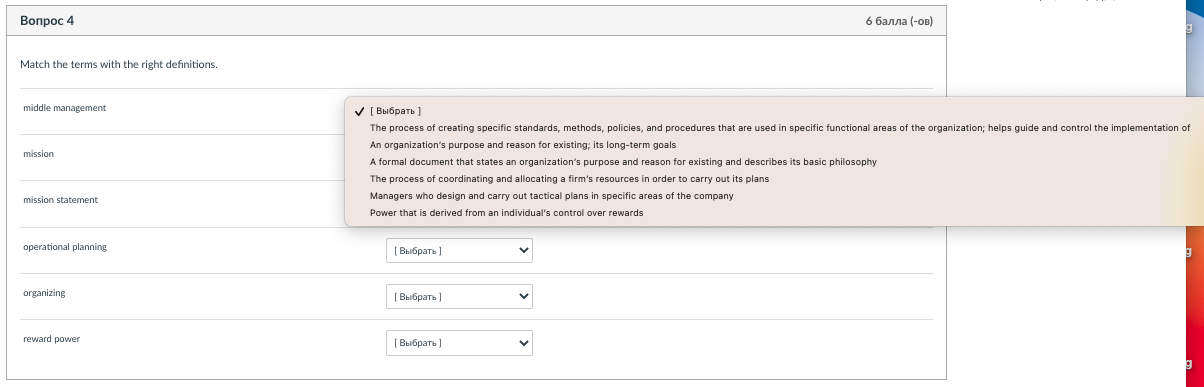
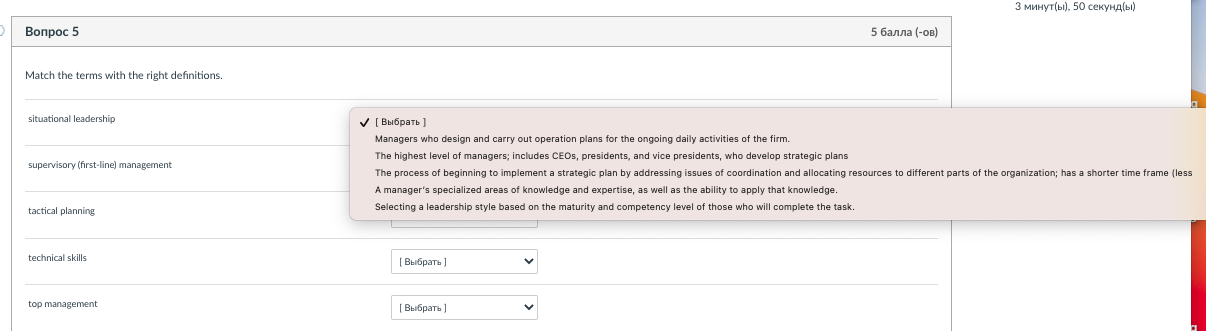
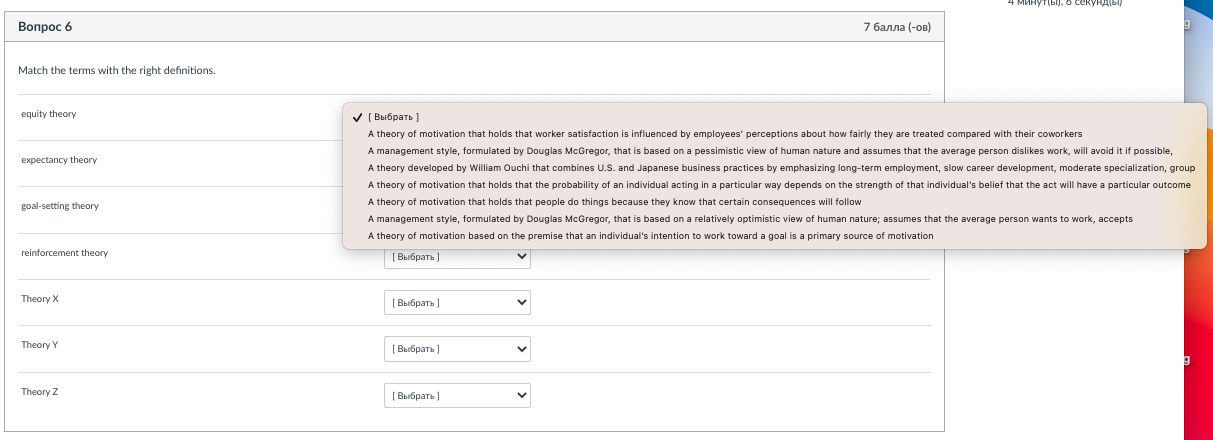
Bonpoc 4 6 (-) Match the terms with the right definitions. middle management mission [ ] The process of creating specific standards, methods, policies, and procedures that are used in specific functional areas of the organization; helps guide and control the implementation of An organization's purpose and reason for existing; its long-term goals A formal document that states an organization's purpose and reason for existing and describes its basic philosophy The process of coordinating and allocating a firm's resources order to carry out its plans Managers who design and carry out tactical plans in specific areas the company Power that is derived from an individual's control over rewards mission statement operational planning | ] organizing [ ] ] reward power | ] 3 (), 50 () 5 5 (-) Match the terms with the right definitions, situational leadership supervisory (first-line) management [ ] Managers who design and carry out operation plans for the ongoing daily activities of the firm. The highest level of managers; includes CEOs, presidents, and vice presidents, who develop strategic plans The process of beginning to implement a strategic plan by addressing issues of coordination and allocating resources to different parts of the organization; has a shorter time frame (less A manager's specialized areas of knowledge and expertise, as well as the ability to apply that knowledge. Selecting a leadership style based on the maturity and competency level those who will complete the task. tactical planning technical skills [ ) top management [ ] #), 6 7 (-) Match the terms with the right definitions, equity theory expectancy theory [ ] A theory of motivation that holds that worker satisfaction is influenced by employees' perceptions about how fairly they are treated compared with their coworkers A management style, formulated by Douglas McGregor, that is based on a pessimistic view of human nature and assumes that the average person dislikes work, will avoid it if possible, A theory developed by William Ouchi that combines U.S. and Japanese business practices by emphasizing long-term employment, slow career development, moderate specialization, group theory of motivation that holds that the probability of an individual acting in a particular way depends on the strength of that individual's belief that the act will have a particular outcome A theory of motivation that holds that people do things because they know that certain consequences will follow A management style, formulated by Douglas McGregor, that is based on a relatively optimistic view of human nature; assumes that the average person wants to work, accepts A theory of motivation based on the premise that an individual's intention to work toward a goal is a primary source of motivation [ ] goal-setting theory reinforcement theory Theory X [ ] Theory Y [ ] Theory Z | ] ]









 Study Help