







Question: Please need help understanding this for questions 1-3 with a MATLAB set up as well. The questions need to be based off of a THICK
Please need help understanding this for questions 1-3 with a MATLAB set up as well. The questions need to be based off of a THICK lens. The chart below is used for question 3. Ive also included some slides that I've been tryiing to use to understand how the phase are done.
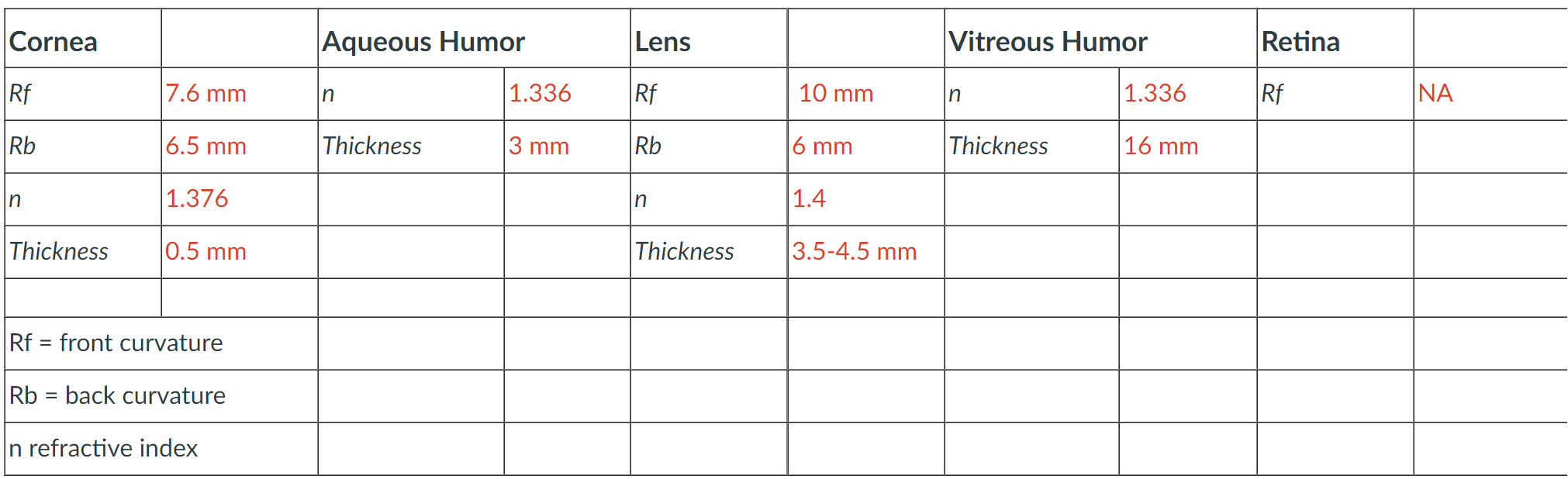
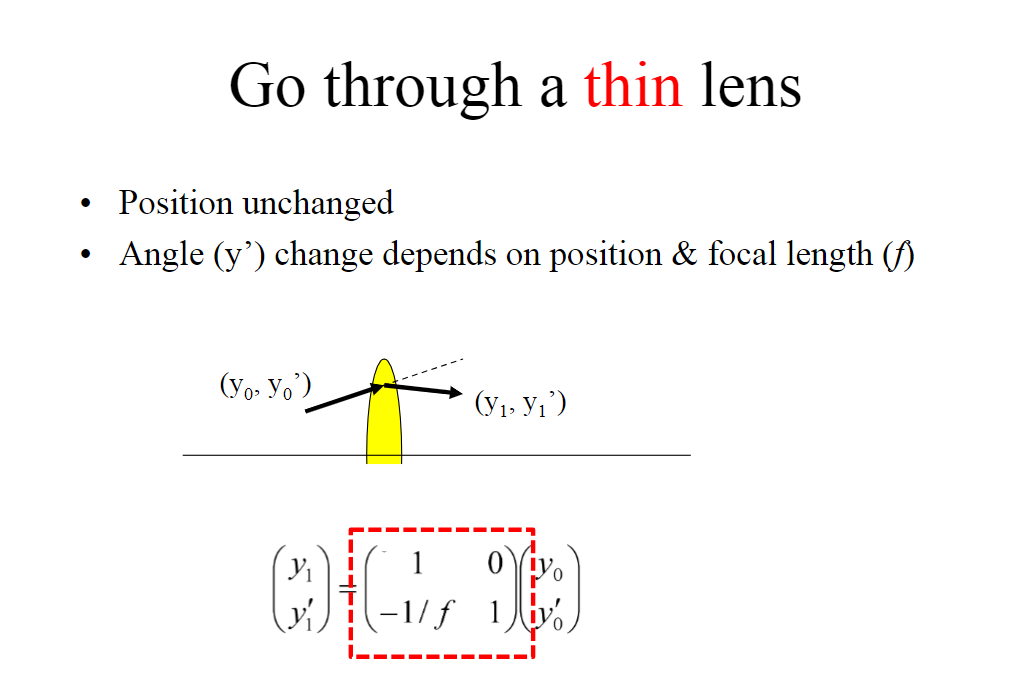
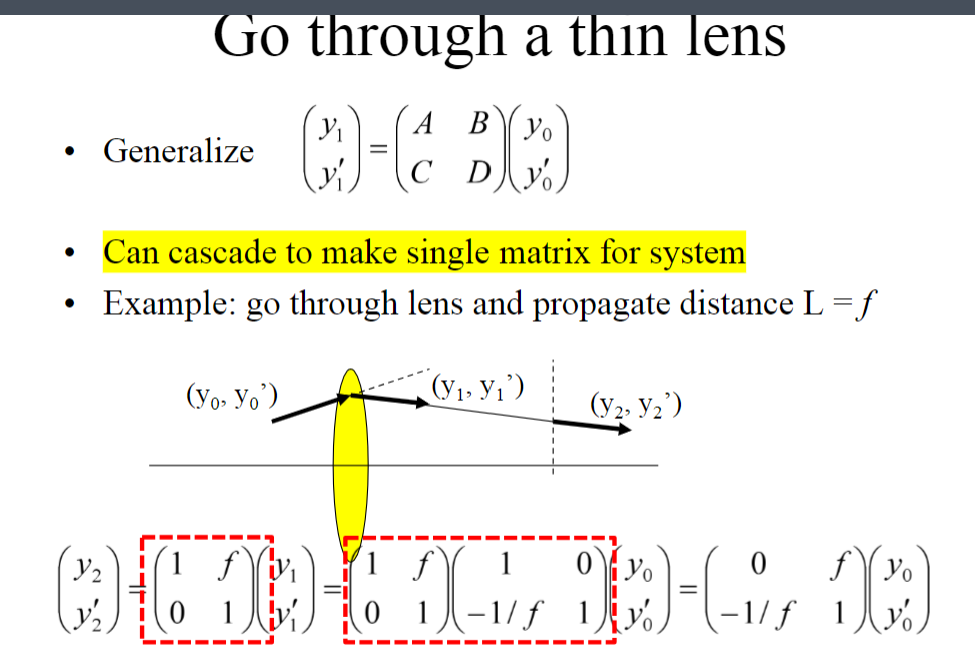
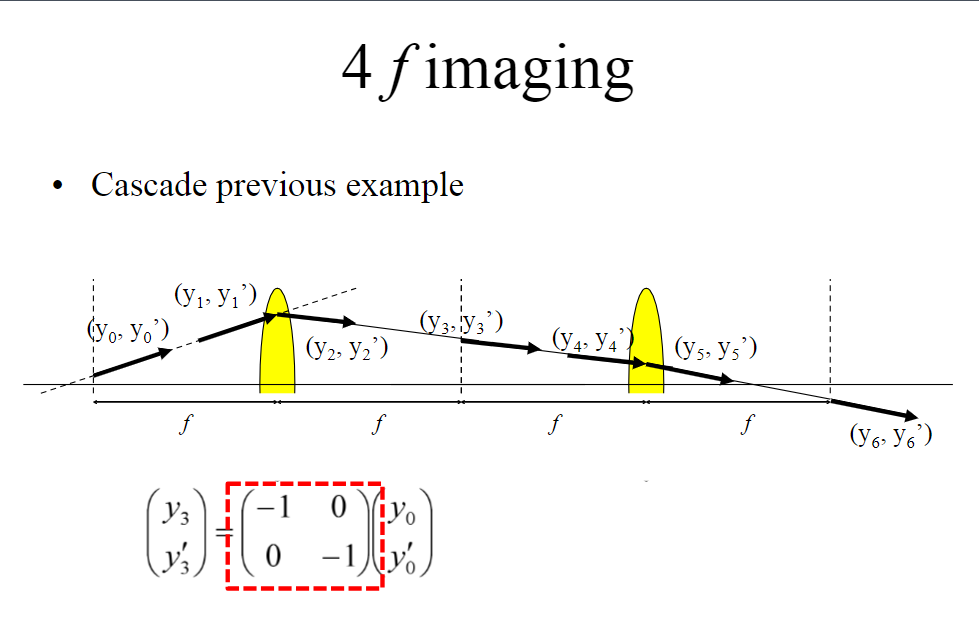
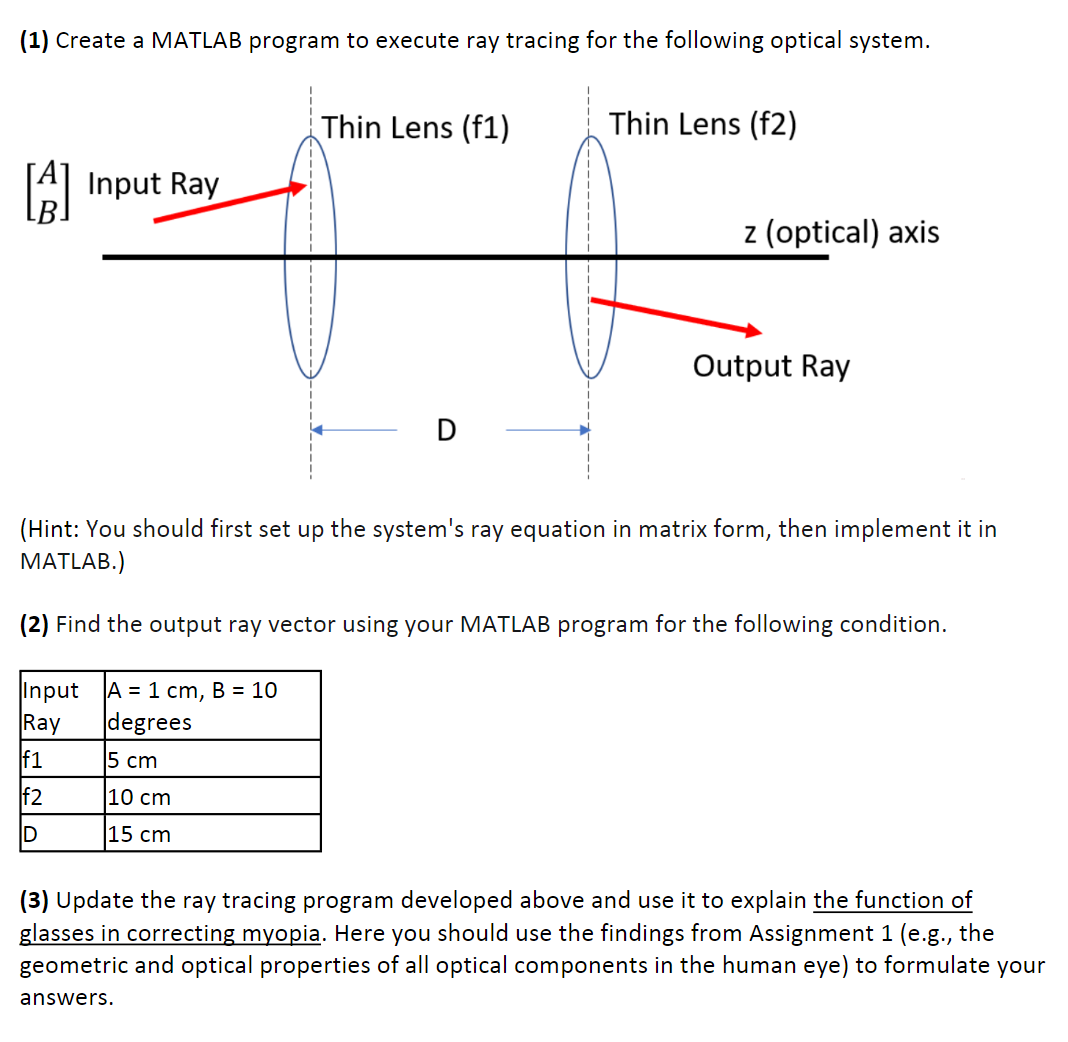
Cornea Aqueous Humor Lens Vitreous Humor Retina Rf 7.6 mm n 1.336 Rf 10 mm n 1.336 Rf NA Rb 6.5 mm Thickness 3 mm Rb 6 mm Thickness 16 mm n 1.376 n 1.4 Thickness 0.5 mm Thickness 3.5-4.5 mm Rf = front curvature Rb = back curvature n refractive indexGo through a thin lens 0 Position unchanged 0 Angle (y') change depends on position & focal length (1') . Go through a thin lens A B yo . Generalize Dy. . Can cascade to make single matrix for system . Example: go through lens and propagate distance L = f (yo, yo') ( y 1 , y1' ) (y 2, yz' ) yo 1 y\f(1) Create a MATLAB program to execute ray tracing for the following optical system. Thin Lens (f2) Thin Lens (f1) A In ut Ra [B] D V . . 2 (optical) aXIS . Output Ray D 4444414444 (Hint: You should first set up the system's ray equation in matrix form, then implement it in IVIATLAB.) (2) Find the output ray vector using your MATLAB program for the following condition. Input A: 1 cm, B = 10 Ray degrees _ (3) Update the ray tracing program developed above and use it to explain the function of glasses in correcting myopia. Here you should use the findings from Assignment 1 (e.g., the geometric and optical properties of all optical components in the human eye) to formulate your answers
Step by Step Solution
There are 3 Steps involved in it

Get step-by-step solutions from verified subject matter experts
 Study Help