







Question: PLEASE ONLY ANSWER THE L PROBLEM LISTED AND PLACE IT ON TO EXCEL SHEET LISTED BELOW.............. Find the NPV for the following residential real estate
PLEASE ONLY ANSWER THE L PROBLEM LISTED AND PLACE IT ON TO EXCEL SHEET LISTED BELOW.............. 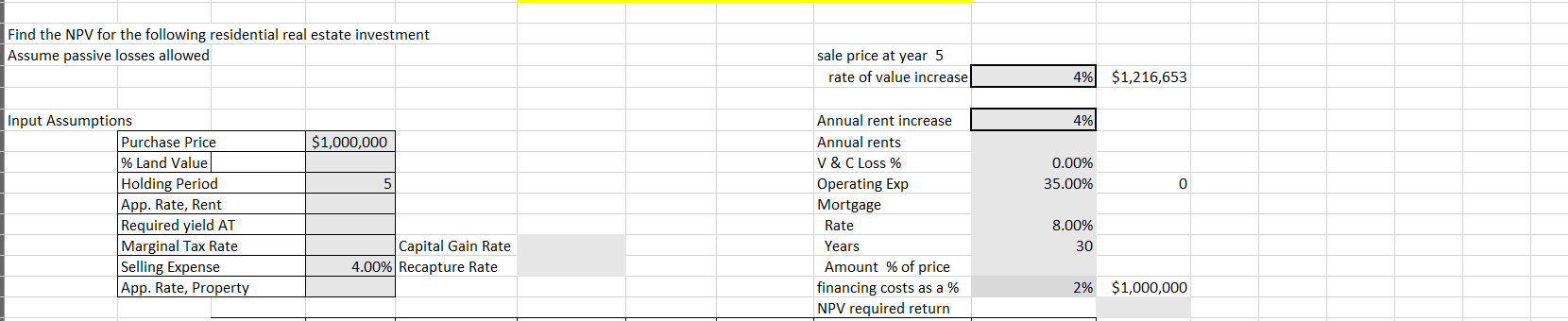
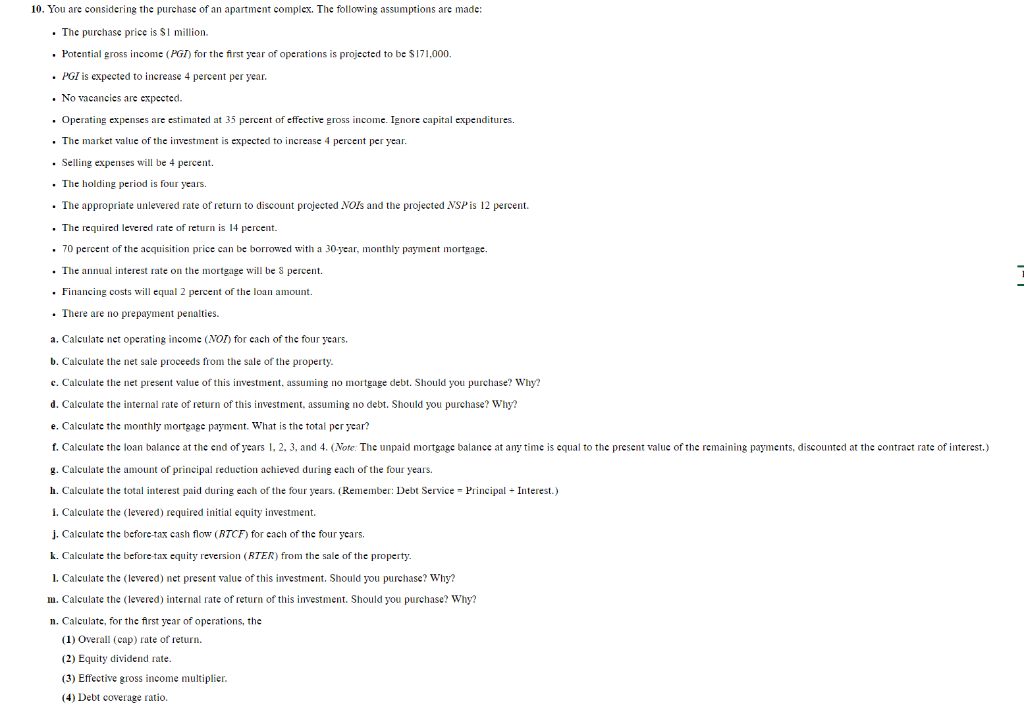
Find the NPV for the following residential real estate investment Assume passive losses allowed sale price at year 5 rate of value increase 4% $1,216,653 4% $1,000,000 0.00% 35.00% 5 0 Input Assumptions Purchase Price % Land Value Holding Period App. Rate, Rent Required yield AT Marginal Tax Rate Selling Expense App. Rate, Property Annual rent increase Annual rents V & C Loss % Operating Exp Mortgage Rate Years Amount % of price financing costs as a % NPV required return 8.00% 30 Capital Gain Rate 4.00% Recapture Rate 2% $1,000,000 10. You are considering the purchase of an apartment complex. The following assumptions are made: . The purchase price is $1 million. . Potential gross income (PGI) for the first year operations is projected to be $171.000 PGI is expected to increase 4 percent per year. . No vacancies are expected. . Operating expenses are estimated at 35 percent of effective gross income. Ignore capital expenditures. . The market value of the investment expected to increase 4 percent per year. . Selling expenses will be 4 percent. . The holding period is four years. . The appropriate unlevered rate of return to discount projected NOIs and the projected NSPis 12 percent. . The required levered rate of return is 14 percent. . 70 percent of the acquisition price can be borrowed with a 30 year, monthly payment mortgage. . The annual interest rate on the mortgage will be 8 percent. . Financing costs will equal 2 percent of the loan amount. There are no prepayment penalties. a. Calculate net operating income (NOT) for each of the four years. b. Calculate the net sale proceeds from the sale of the property. c. Calculate the net present value of this investment, assuming no mortgage debt. Should you purchase? Why? d. Calculate the internal rate of return of this investment, assuming no debt. Should you purchase? Why? e. Calculate the monthly mortgage payment. What is the total per year? f. Calculate the loan balance at the end of years 1, 2, 3, and 4. (Note: The unpaid mortgage balance at any time is equal to the present value of the remaining payments, discounted at the contract rate of interest.) g. Calculate the amount of principal reduction achieved during each of the four years. h. Calculate the total interest paid during each of the four years. (Remember: Debt Service - Principal - Interest.) 1. Calculate the (levered) required initial equity investment. j. Calculate the before-tax cash flow (RTCF) for each of the four years, k. Calculate the before tax equity reversion (RTER) from the sale of the property. - 1. Calculate the levered) net present value of this investment. Should you purchase? Why? m. Calculate the (levered) internal rate of return of this investment. Should you purchase? Why? n. Calculate for the first year of operations, the (1) Overall (cap) rate of return. (2) Equity dividend rate (3) Effective gross income multiplier. (4) Debt coverage ratio. Find the NPV for the following residential real estate investment Assume passive losses allowed sale price at year 5 rate of value increase 4% $1,216,653 4% $1,000,000 0.00% 35.00% 5 0 Input Assumptions Purchase Price % Land Value Holding Period App. Rate, Rent Required yield AT Marginal Tax Rate Selling Expense App. Rate, Property Annual rent increase Annual rents V & C Loss % Operating Exp Mortgage Rate Years Amount % of price financing costs as a % NPV required return 8.00% 30 Capital Gain Rate 4.00% Recapture Rate 2% $1,000,000 10. You are considering the purchase of an apartment complex. The following assumptions are made: . The purchase price is $1 million. . Potential gross income (PGI) for the first year operations is projected to be $171.000 PGI is expected to increase 4 percent per year. . No vacancies are expected. . Operating expenses are estimated at 35 percent of effective gross income. Ignore capital expenditures. . The market value of the investment expected to increase 4 percent per year. . Selling expenses will be 4 percent. . The holding period is four years. . The appropriate unlevered rate of return to discount projected NOIs and the projected NSPis 12 percent. . The required levered rate of return is 14 percent. . 70 percent of the acquisition price can be borrowed with a 30 year, monthly payment mortgage. . The annual interest rate on the mortgage will be 8 percent. . Financing costs will equal 2 percent of the loan amount. There are no prepayment penalties. a. Calculate net operating income (NOT) for each of the four years. b. Calculate the net sale proceeds from the sale of the property. c. Calculate the net present value of this investment, assuming no mortgage debt. Should you purchase? Why? d. Calculate the internal rate of return of this investment, assuming no debt. Should you purchase? Why? e. Calculate the monthly mortgage payment. What is the total per year? f. Calculate the loan balance at the end of years 1, 2, 3, and 4. (Note: The unpaid mortgage balance at any time is equal to the present value of the remaining payments, discounted at the contract rate of interest.) g. Calculate the amount of principal reduction achieved during each of the four years. h. Calculate the total interest paid during each of the four years. (Remember: Debt Service - Principal - Interest.) 1. Calculate the (levered) required initial equity investment. j. Calculate the before-tax cash flow (RTCF) for each of the four years, k. Calculate the before tax equity reversion (RTER) from the sale of the property. - 1. Calculate the levered) net present value of this investment. Should you purchase? Why? m. Calculate the (levered) internal rate of return of this investment. Should you purchase? Why? n. Calculate for the first year of operations, the (1) Overall (cap) rate of return. (2) Equity dividend rate (3) Effective gross income multiplier. (4) Debt coverage ratio
Step by Step Solution
There are 3 Steps involved in it

Get step-by-step solutions from verified subject matter experts
 Study Help