







Question: Please prepare a case brief that includes the following: (1) a summary of relevant facts, (2) a list of the key issues, (3) the courts
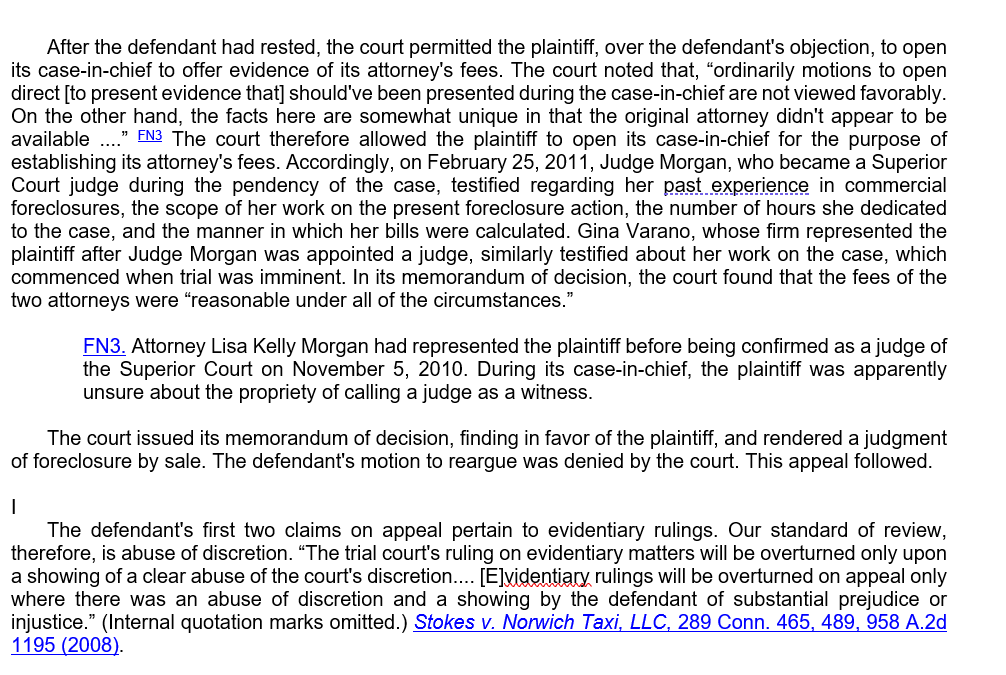
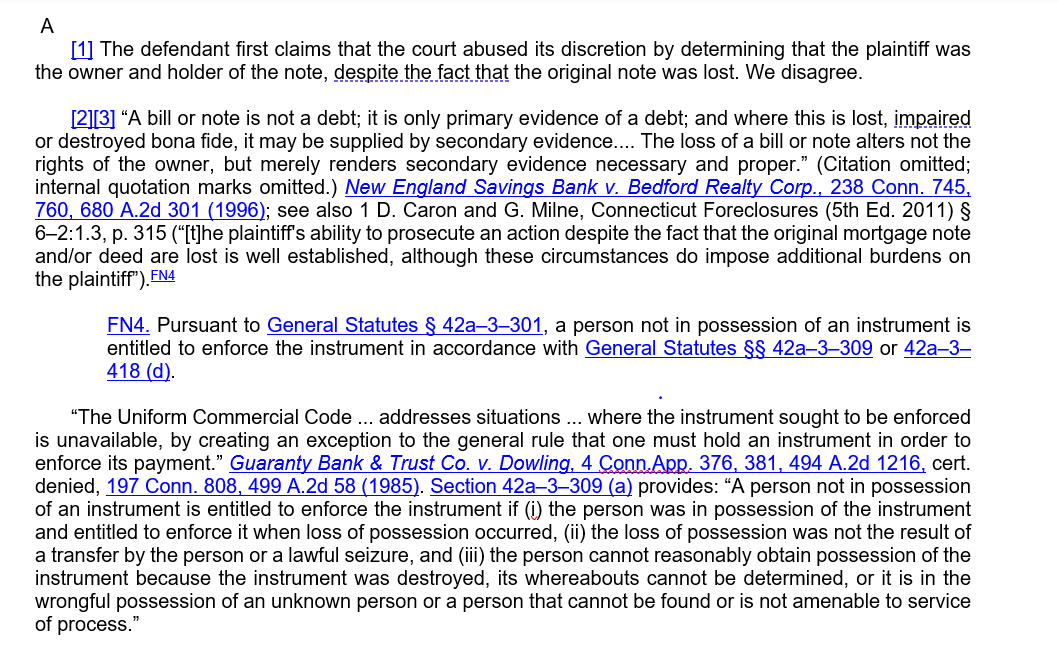
Please prepare a case brief that includes the following: (1) a summary of relevant facts, (2) a list of the key issues, (3) the courts holding on each issue, and (4) a brief summary of the courts reasoning on each issue. The student should submit a Word document not exceeding 4-5 pages in 12-point font, single-spaced within paragraphs, and double-spaced between paragraphs.
![instrument was lost. To the contrary, "[t]he special problems and burdens of](https://s3.amazonaws.com/si.experts.images/answers/2024/08/66b23b43d3605_61166b23b434b917.jpg)
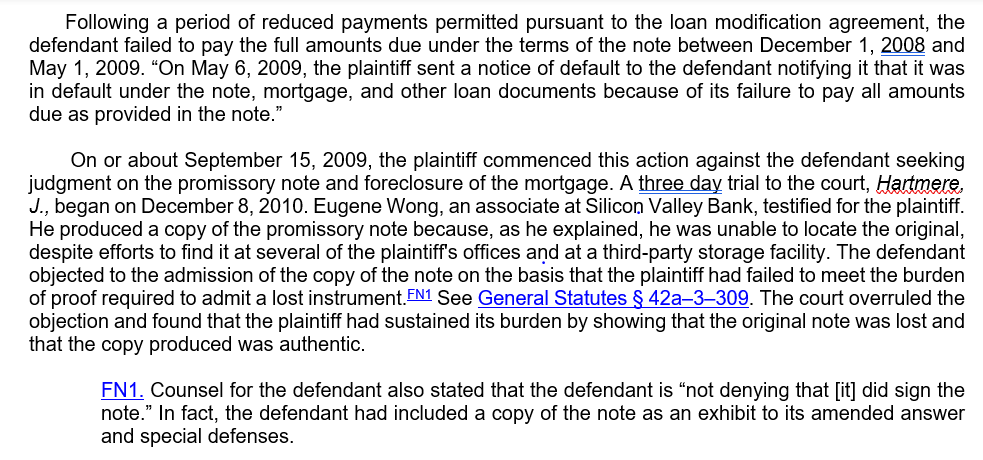
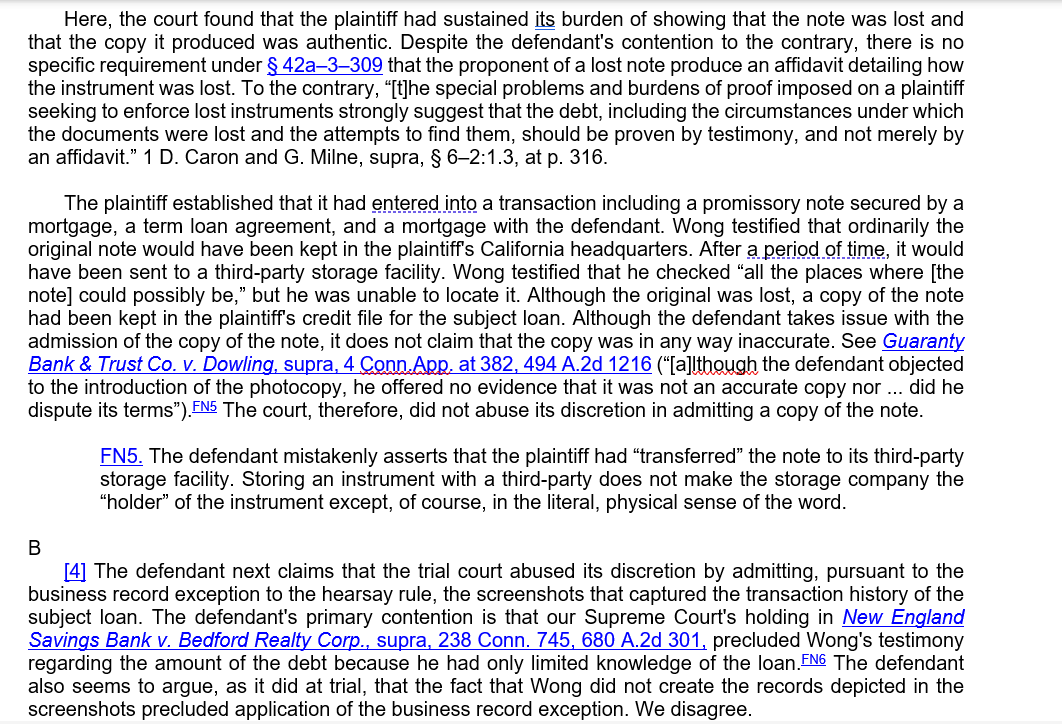
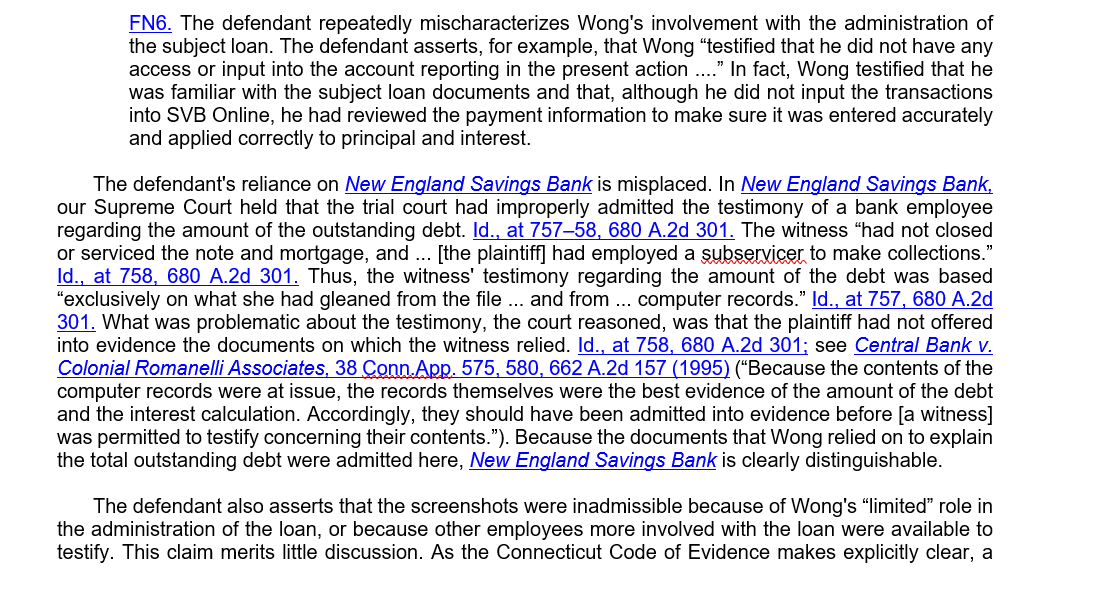
that the copy it produced was authentic. Despite the defendant's contention to the contrary, there is no specific requirement under 42a3309 that the proponent of a lost note produce an affidavit detailing how the instrument was lost. To the contrary, "[t]he special problems and burdens of proof imposed on a plaintiff seeking to enforce lost instruments strongly suggest that the debt, including the circumstances under which the documents were lost and the attempts to find them, should be proven by testimony, and not merely by an affidavit." 1 D. Caron and G. Milne, supra, 6-2:1.3, at p. 316. The plaintiff established that it had entered into a transaction including a promissory note secured by a mortgage, a term loan agreement, and a mortgage with the defendant. Wong testified that ordinarily the original note would have been kept in the plaintiff's California headquarters. After a period of time, it would have been sent to a third-party storage facility. Wong testified that he checked "all the places where [the note] could possibly be," but he was unable to locate it. Although the original was lost, a copy of the note had been kept in the plaintiff's credit file for the subject loan. Although the defendant takes issue with the admission of the copy of the note, it does not claim that the copy was in any way inaccurate. See Guaranty Bank \& Trust Co. v. Dowling, supra, 4 Conn.App, at 382, 494 A.2d 1216 ("[a]lthough the defendant objected to the introduction of the photocopy, he offered no evidence that it was not an accurate copy nor ... did he dispute its terms"). TFN5 The court, therefore, did not abuse its discretion in admitting a copy of the note. FN5. The defendant mistakenly asserts that the plaintiff had "transferred" the note to its third-party storage facility. Storing an instrument with a third-party does not make the storage company the "holder" of the instrument except, of course, in the literal, physical sense of the word. B [4] The defendant next claims that the trial court abused its discretion by admitting, pursuant to the business record exception to the hearsay rule, the screenshots that captured the transaction history of the subject loan. The defendant's primary contention is that our Supreme Court's holding in New England Savings Bank v. Bedford Realty Corp., supra, 238 Conn. 745, 680 A.2d 301, precluded Wong's testimony regarding the amount of the debt because he had only limited knowledge of the loan. TheFN6 The dendant also seems to argue, as it did at trial, that the fact that Wong did not create the records depicted in the screenshots precluded application of the business record exception. We disagree. that the copy it produced was authentic. Despite the defendant's contention to the contrary, there is no specific requirement under 42a3309 that the proponent of a lost note produce an affidavit detailing how the instrument was lost. To the contrary, "[t]he special problems and burdens of proof imposed on a plaintiff seeking to enforce lost instruments strongly suggest that the debt, including the circumstances under which the documents were lost and the attempts to find them, should be proven by testimony, and not merely by an affidavit." 1 D. Caron and G. Milne, supra, 6-2:1.3, at p. 316. The plaintiff established that it had entered into a transaction including a promissory note secured by a mortgage, a term loan agreement, and a mortgage with the defendant. Wong testified that ordinarily the original note would have been kept in the plaintiff's California headquarters. After a period of time, it would have been sent to a third-party storage facility. Wong testified that he checked "all the places where [the note] could possibly be," but he was unable to locate it. Although the original was lost, a copy of the note had been kept in the plaintiff's credit file for the subject loan. Although the defendant takes issue with the admission of the copy of the note, it does not claim that the copy was in any way inaccurate. See Guaranty Bank \& Trust Co. v. Dowling, supra, 4 Conn.App, at 382, 494 A.2d 1216 ("[a]lthough the defendant objected to the introduction of the photocopy, he offered no evidence that it was not an accurate copy nor ... did he dispute its terms"). TFN5 The court, therefore, did not abuse its discretion in admitting a copy of the note. FN5. The defendant mistakenly asserts that the plaintiff had "transferred" the note to its third-party storage facility. Storing an instrument with a third-party does not make the storage company the "holder" of the instrument except, of course, in the literal, physical sense of the word. B [4] The defendant next claims that the trial court abused its discretion by admitting, pursuant to the business record exception to the hearsay rule, the screenshots that captured the transaction history of the subject loan. The defendant's primary contention is that our Supreme Court's holding in New England Savings Bank v. Bedford Realty Corp., supra, 238 Conn. 745, 680 A.2d 301, precluded Wong's testimony regarding the amount of the debt because he had only limited knowledge of the loan. TheFN6 The dendant also seems to argue, as it did at trial, that the fact that Wong did not create the records depicted in the screenshots precluded application of the business record exception. We disagree
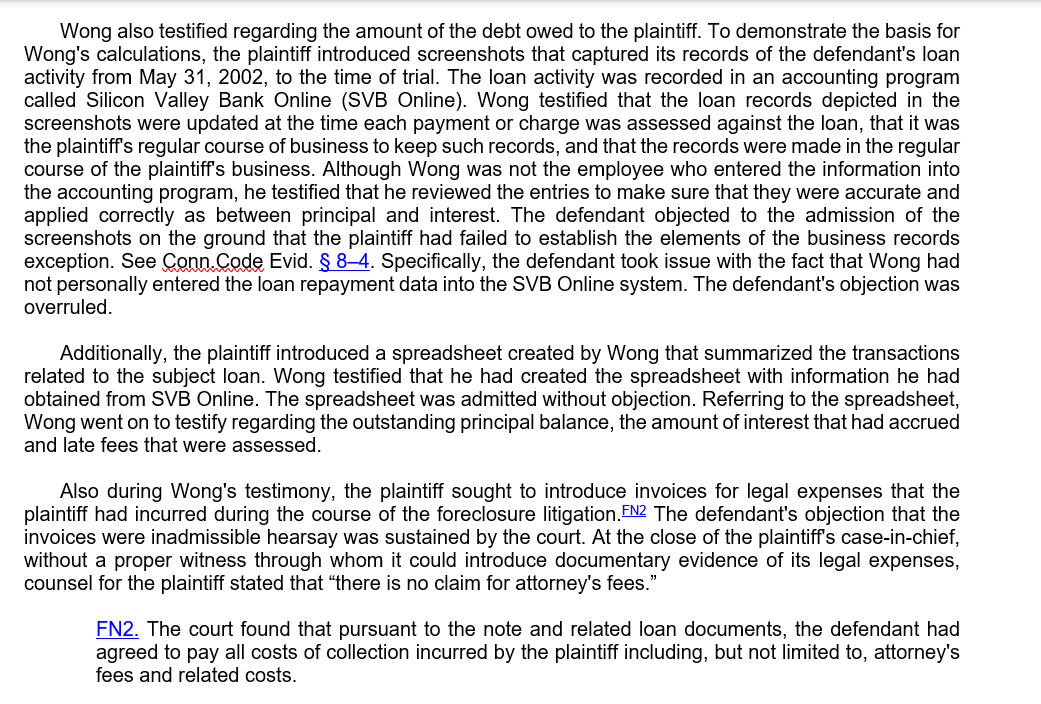
Step by Step Solution
There are 3 Steps involved in it

Get step-by-step solutions from verified subject matter experts
 Study Help