







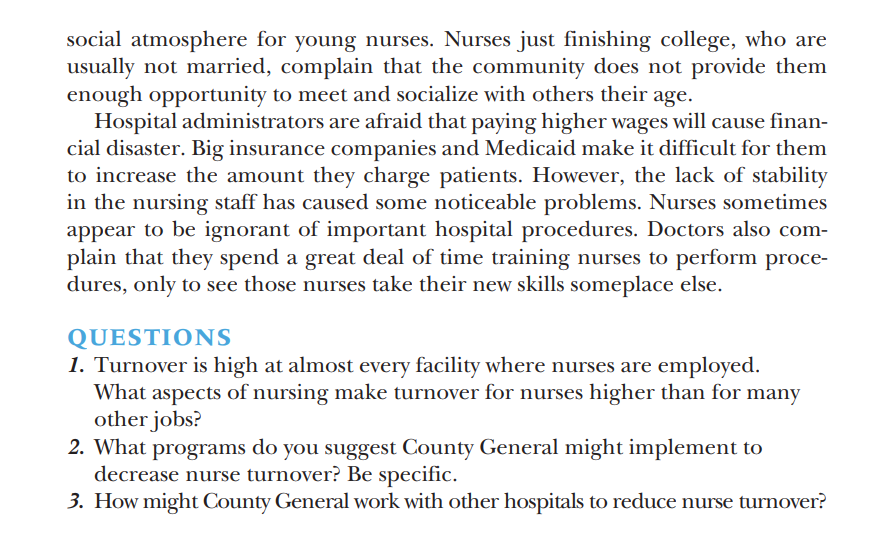
Question: Please read County General Hospital found under Appendix A; Cases for Hands-On Experiential Exercises in you book on page 538. A case analysis is designed
Please read County General Hospital found under Appendix A; Cases for Hands-On Experiential Exercises in you book on page 538. A case analysis is designed to sharpen your analytical skills. The strongest way to analyze a case is to apply a variation of the scientific method. This method of analysis is simply a logical approach that usually includes the seven steps outlined below. The content of the paper should be 6-8 pages in length and which includes a title page, abstract page, and reference page. Step 1: Problem Definition: A case seldom involves one clear-cut problem. Your task is to:
determine the symptoms, which require immediate attention; identify the fundamental issues and causal factors giving rise to these symptoms. It is important to separate the immediate problems from their more basic causes. For example, the immediate problem may be a high rate of absenteeism, while the more fundamental issue may be a poor motivational climate. How you define a problem determines how you go about solving it. A short-term solution for absenteeism is likely to be different from solutions that attempt to deal with motivational climate. Be sure to identify both the symptom and, more importantly, its underlying cause. Step 2: Justification for Problem Definition: In this step you need to review the information you have about the problem. You may need to make some inferences to fill in gaps. Clearly label what is inference and what is factual. Do not be afraid to assume, but clearly state the assumptions you are making. You should make assumptions on the basis of your knowledge of typical managerial practices, and they should be consistent with the facts about the case, even though your facts may be somewhat limited. Managerial decisions are often based on limited information. In fact, practicing managers find that many of their decisions have to be made quickly on the basis of limited information. Step 3: List Alternative Courses of Action: Be creative. Jot down ideas as they come to you. List as many ideas as you can without evaluating them or censoring anything. You can always cross them out later. The point is to let your imagination take over. Step 4: Evaluate Alternatives: Look critically at the alternatives you came up with in Step 3. List advantages and disadvantages of each alternative in terms of criteria that seem appropriate. Step 5: Review: Reread your notes and think. This may be a good time to let the case sit for a while. Get back to it later when you have a chance to digest all the data. Step 6: Draw Conclusions, Make Recommendations/Decisions: Select the alternative you would recommend and justify your choice. Include specifics about the implementation of your recommendation: who should do what, when, and how. Step 7: Follow Up and Evaluate: Given the limitations of a classroom setting, you cannot implement your recommendation and evaluate its actual impact. However, in this step you will describe how you would set up an evaluation procedure. Suggest a timetable and methods for the evaluation process. State who should do the evaluating.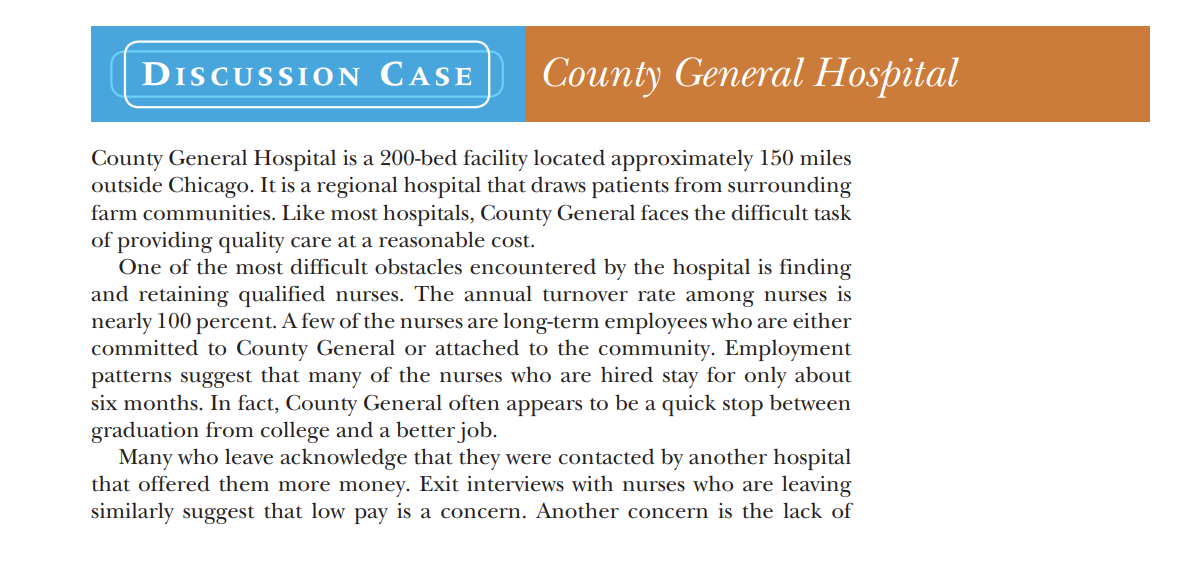
Step by Step Solution
There are 3 Steps involved in it

Get step-by-step solutions from verified subject matter experts
 Study Help