Question: Please read the article below about absolut vodka ,and make a 1-2 pages reflection on the case using the theme STP-marketing. Dont describe the case
Please read the article below about absolut vodka ,and make a 1-2 pages reflection on the case using the theme STP-marketing. Dont describe the case again Im just interested in your discussion.
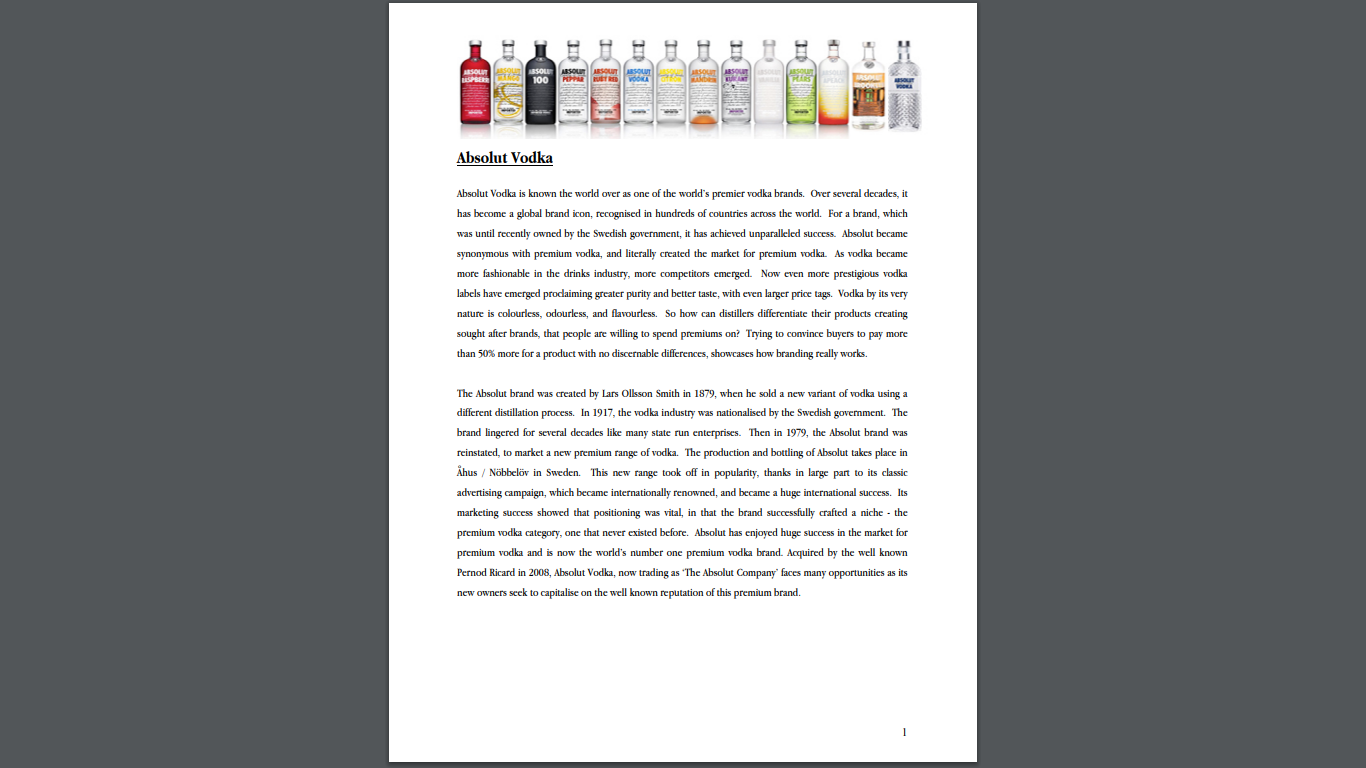
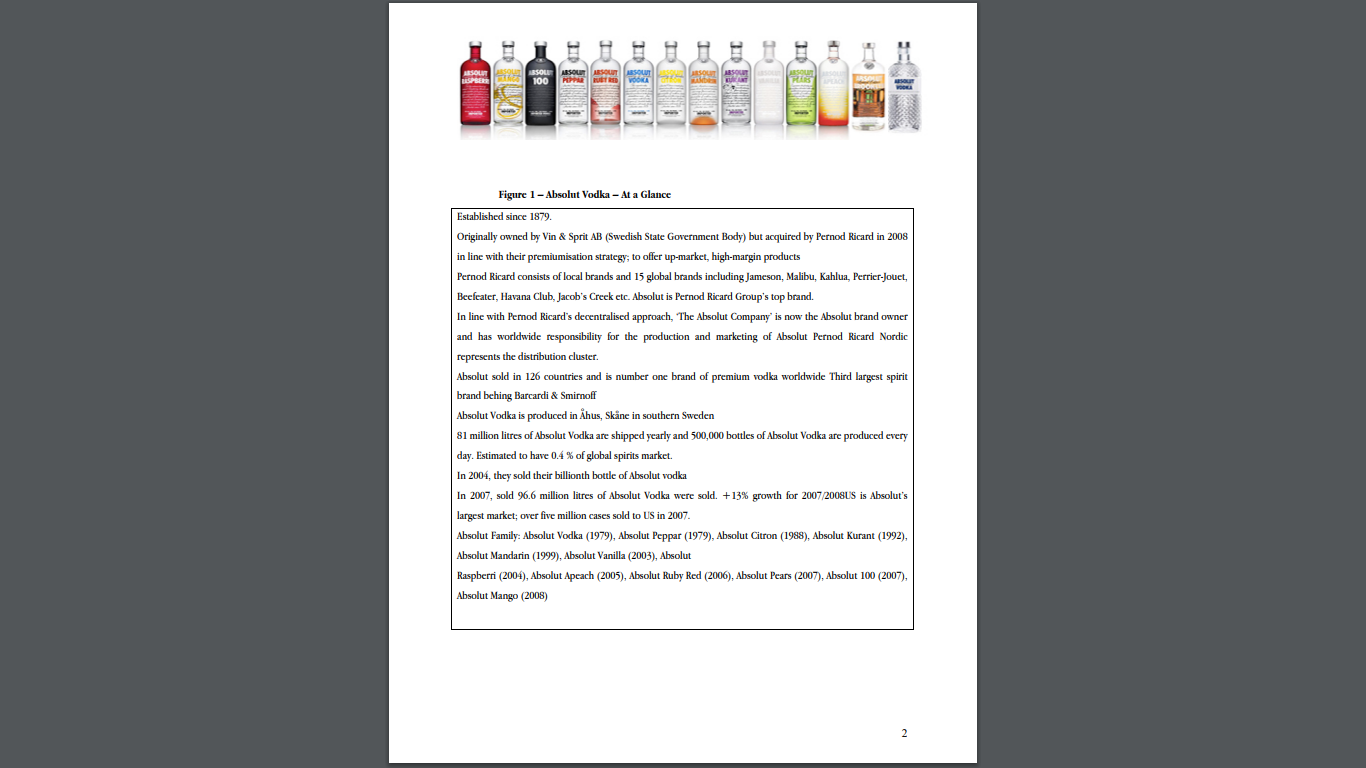
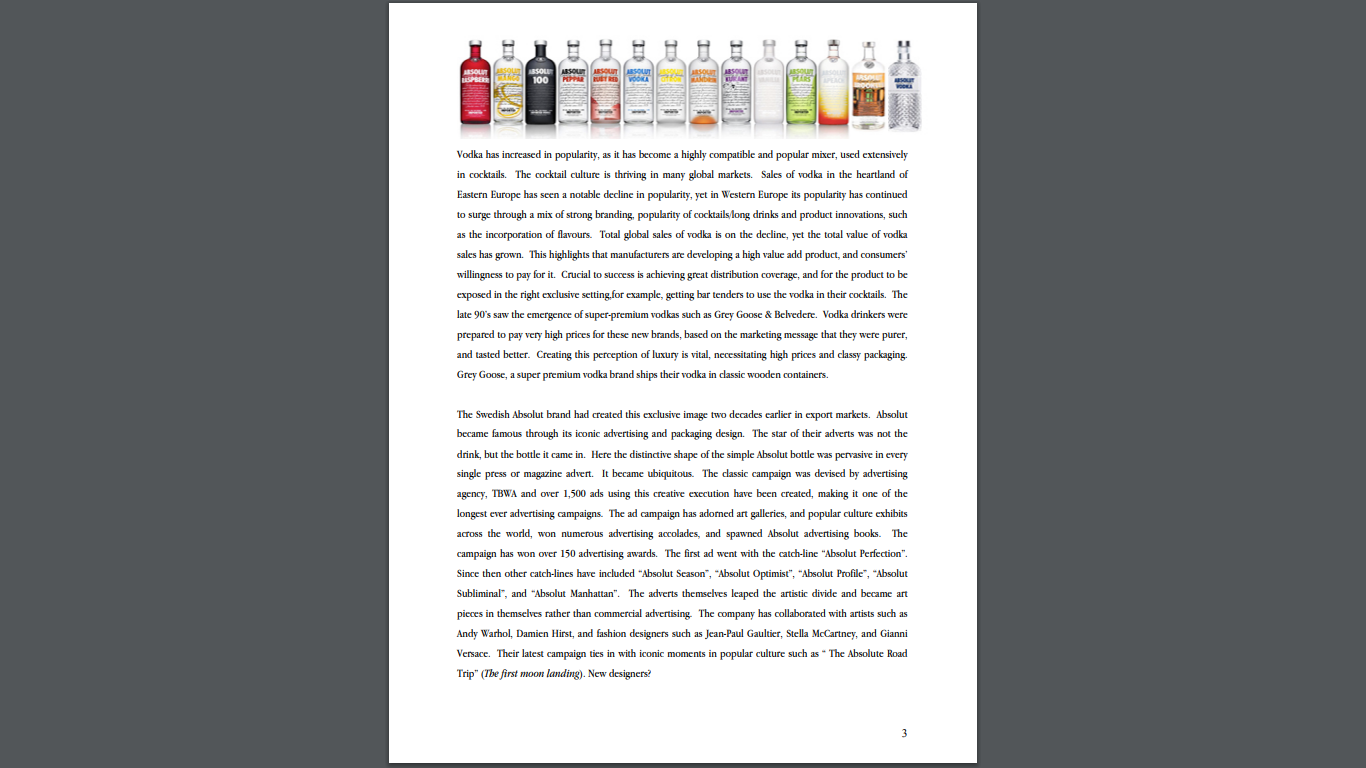
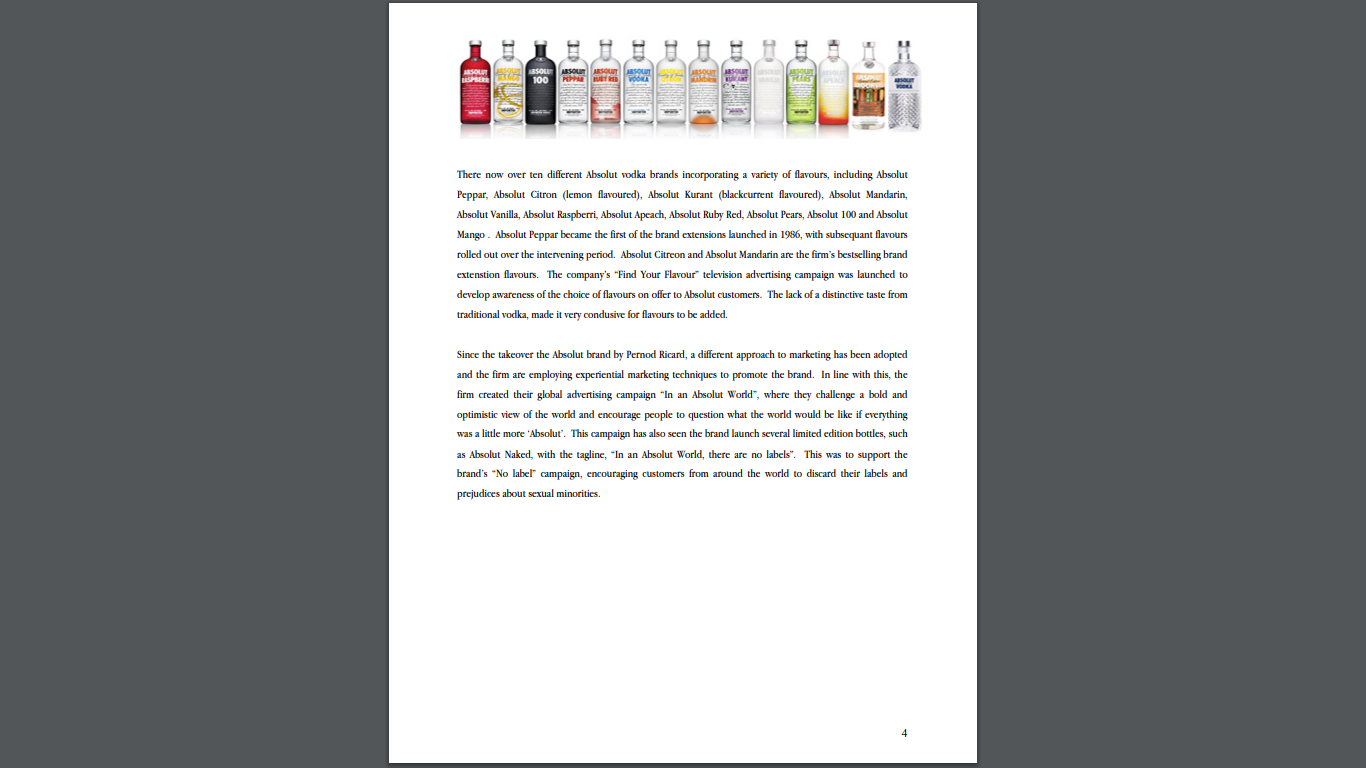
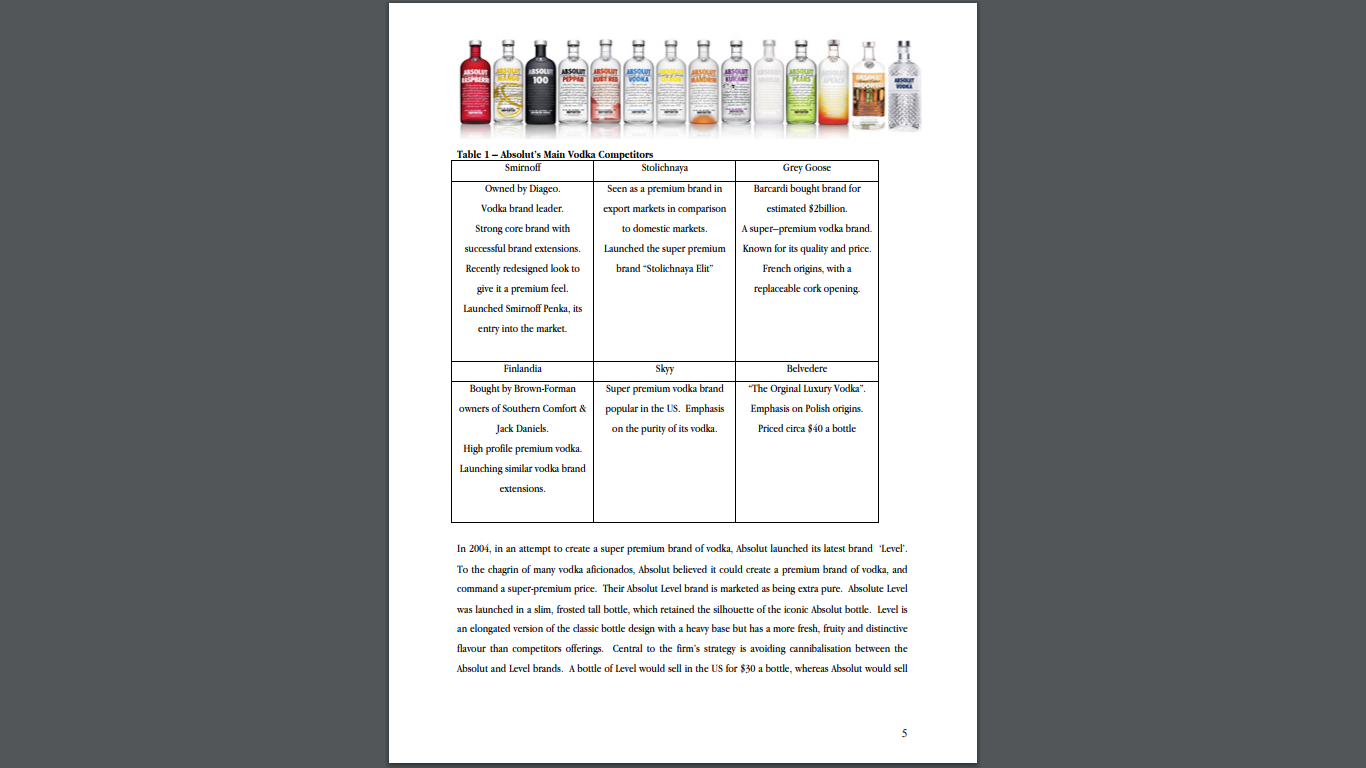
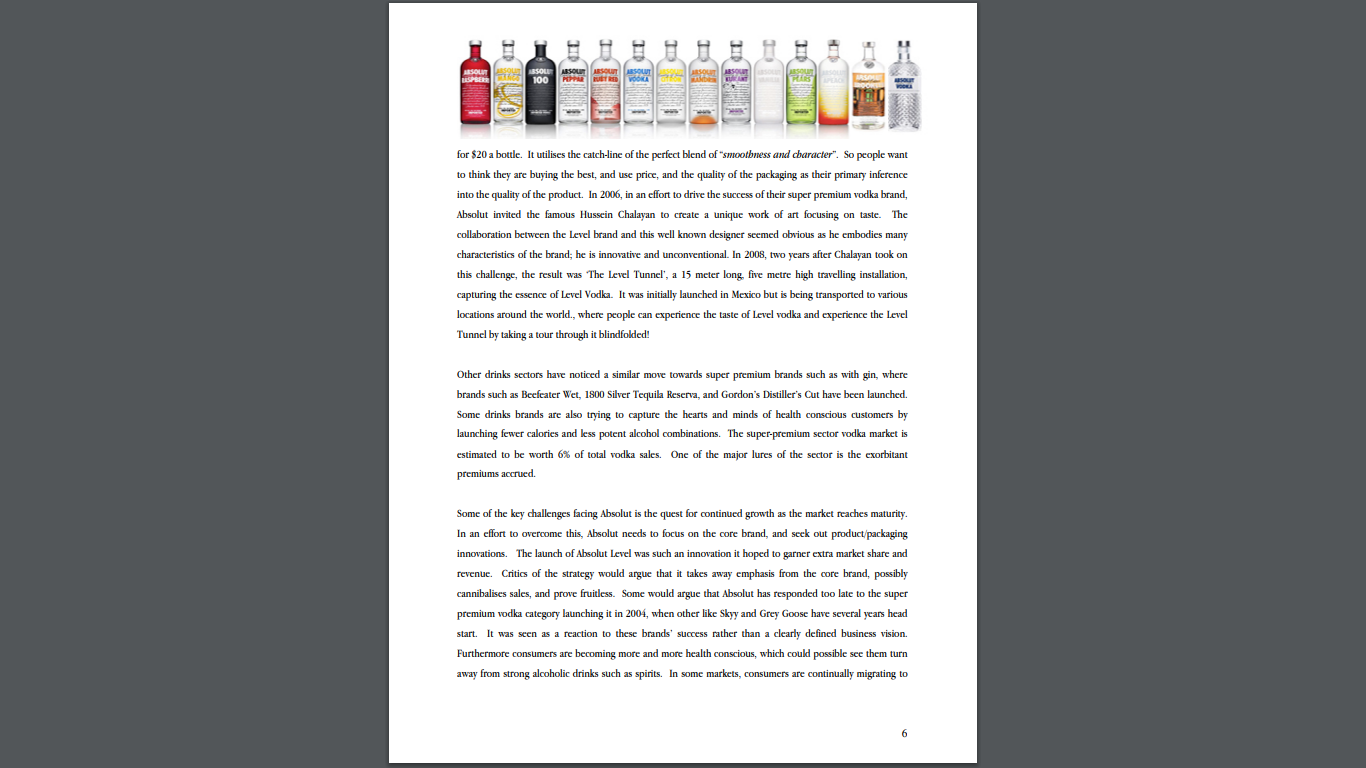
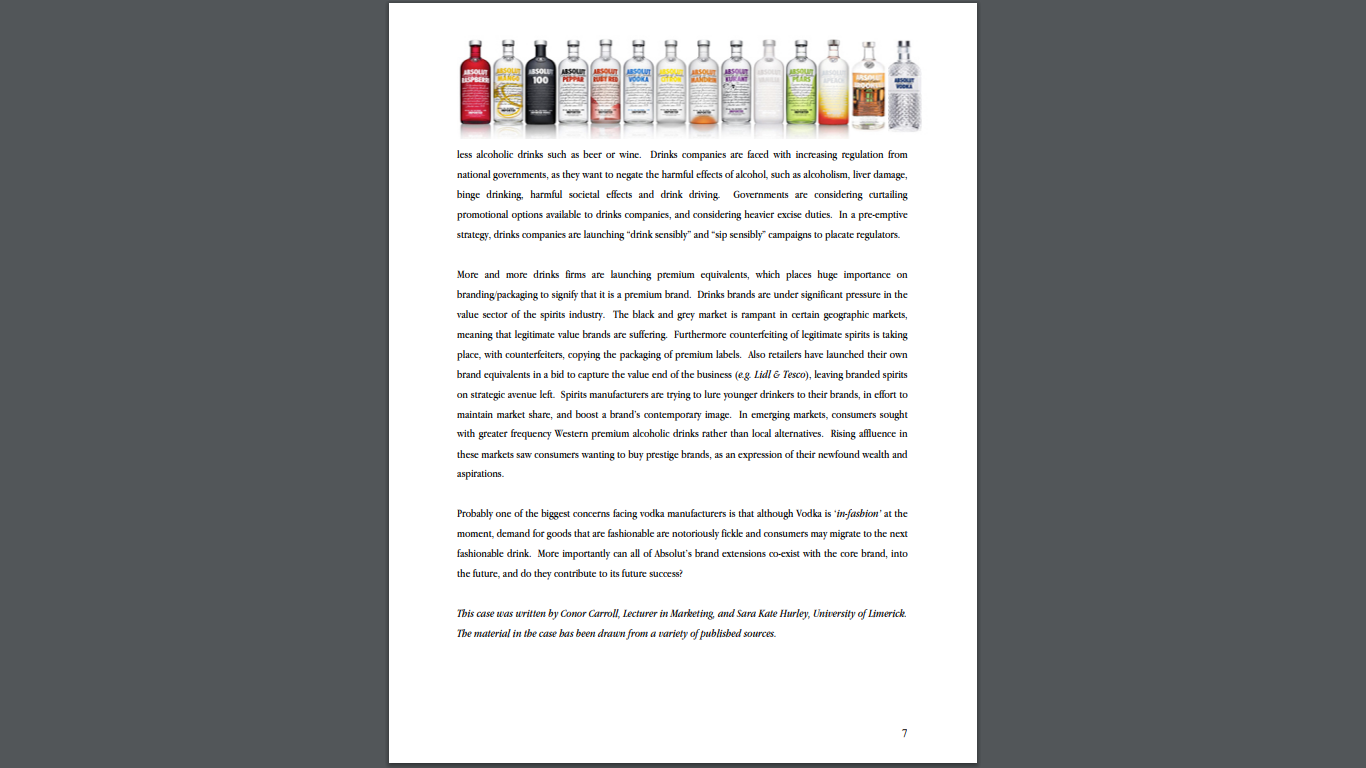
SOLARSOLAR LES PER 100 PE Absolut Vodka Absolut Vodka is known the world over as one of the world's premier vodka brands. Over several decades, it has become a global brand icon, recognised in hundreds of countries across the world. For a brand, which was until recently owned by the Swedish government, it has achieved unparalleled success. Absolut became synonymous with premium vodka, and literally created the market for premium vodka. As vodka became more fashionable in the drinks industry, more competitors emerged. Now even more prestigious vodka labels have emerged prodaiming greater purity and better taste, with even larger price tags. Vodka by its very nature is colourless, odourless, and flavourless. So how can distillers differentiate their products creating sought after brands, that people are willing to spend premiums on? Trying to convince buyers to pay more than 50% more for a product with no discernable differences, showcases how branding really works. The Absolut brand was created by Lars Olsson Smith in 1879, when he sold a new variant of vodka using a different distillation process. In 1917, the vodka industry was nationalised by the Swedish government. The brand lingered for several decades like many state run enterprises. Then in 1979, the Absolut brand was reinstated, to market a new premium range of vodka. The production and bottling of Absolut takes place in hus / Nbbelv in Sweden. This new range took off in popularity, thanks in large part to its classic advertising campaign, which became internationally renowned, and became a huge international success. Its marketing success showed that positioning was vital, in that the brand successfully crafted a niche - the premium vodka category, one that never existed before. Absolut has enjoyed huge success in the market for premium vodka and is now the world's number one premium vodka brand. Acquired by the well known Pernod Ricard in 2008, Absolut Vodka, now trading as 'The Absolut Company" faces many opportunities as its new owners seek to capitalise on the well known reputation of this premium brand. S 100 PORAS Figure 1 - Absolut Vodka - At a Glance Established since 1879. Originally owned by Vin & Sprit AB (Swedish State Government Body) but acquired by Pernod Ricard in 2008 in line with their premiumisation strategy; to offer up-market, high-margin products Pernod Ricard consists of local brands and 15 global brands including Jameson, Malibu, Kahlua, Perrier-Jouet, Beefeater, Havana Club, Jacob's Creek etc. Absolut is Pernod Ricard Group's top brand. In line with Pernod Ricard's decentralised approach, The Absolut Company is now the Absolut brand owner and has worldwide responsibility for the production and marketing of Absolut Pernod Ricard Nordic represents the distribution cluster. Absolut sold in 126 countries and is number one brand of premium vodka worldwide Third largest spirit brand behing Barcardi & Smirnoff Absolut Vodka is produced in hus, Skne in southern Sweden 81 million litres of Absolut Vodka are shipped yearly and 500,000 bottles of Absolut Vodka are produced every day. Estimated to have 0.4 % of global spirits market. In 2004, they sold their billionth bottle of Absolut vodka In 2007, sold 96.6 million litres of Absolut Vodka were sold. +13% growth for 2007/2008US is Absolut's largest market; over five million cases sold to US in 2007 Absolut Family: Absolut Vodka (1979), Absolut Peppar (1979), Absolut Citron (1988), Absolut Kurant (1992), Absolut Mandarin (1999). Absolut Vanilla (2003), Absolut Raspberri (2004), Absolut Apeach (2005), Absolut Ruby Red (2006), Absolut Pears (2007), Absolut 100 (2007), Absolut Mango (2008) ASSOL 100 Puis voor PE Vodka has increased in popularity, as it has become a highly compatible and popular mixer, used extensively in cocktails. The cocktail culture is thriving in many global markets. Sales of vodka in the heartland of Eastern Europe has seen a notable decline in popularity, yet in Western Europe its popularity has continued to surge through a mix of strong branding, popularity of cocktails long drinks and product innovations, such as the incorporation of flavours. Total global sales of vodka is on the decline, yet the total value of vodka sales has grown. This highlights that manufacturers are developing a high value add product, and consumers' willingness to pay for it. Crucial to success is achieving great distribution coverage, and for the product to be exposed in the right exclusive setting for example, getting bartenders to use the vodka in their cocktails. The late 90's saw the emergence of super-premium vodkas such as Grey Goose & Belvedere. Vodka drinkers were prepared to pay very high prices for these new brands, based on the marketing message that they were purer, and tasted better. Creating this perception luxury is vital, necessitating high prices and classy packaging. Grey Goose, a super premium vodka brand ships their vodka in classic wooden containers The Swedish Absolut brand had created this exclusive image two decades earlier in export markets. Absolut became famous through its iconic advertising and packaging design. The star of their adverts was not the drink, but the bottle it came in. Here the distinctive shape of the simple Absolut bottle was pervasive in every single press or magazine advert. It became ubiquitous. The classic campaign was devised by advertising agency, TBWA and over 1,500 ads using this creative execution have been created, making it one of the longest ever advertising campaigns. The ad campaign has adorned art galleries, and popular culture exhibits across the world, won numerous advertising accolades, and spawned Absolut advertising books. The campaign has won over 150 advertising awards. The first ad went with the catch-line "Absolut Perfection". Since then other catch-lines have included "Absolut Season", "Absolut Optimist", "Absolut Profile", "Absolut Subliminal", and "Absolut Manhattan". The adverts themselves leaped the artistic divide and became art picces in themselves rather than commercial advertising. The company has collaborated with artists such as Andy Warhol, Damien Hirst, and fashion designers such as Jean-Paul Gaultier, Stella McCartney, and Gianni Versace. Their latest campaign ties in with iconic moments in popular culture such as The Absolute Road Trip" (The first moon landing). New designers? SOL 100 PE VOS There now over ten different Absolut vodka brands incorporating a variety of flavours, including Absolut Peppar, Absolut Citron (lemon flavoured), Absolut Kurant (blackcurrent flavoured), Absolut Mandarin, Absolut Vanilla, Absolut Raspberri, Absolut Apeach, Absolut Ruby Red, Absolut Pears, Absolut 100 and Absolut Mango. Absolut Peppar became the first of the brand extensions launched in 1986, with subsequant flavours rolled out over the intervening period. Absolut Citreon and Absolut Mandarin are the firm's bestselling brand extenstion flavours. The company's "Find Your Flavour television advertising campaign was launched to develop awareness of the choice of flavours on offer to Absolut customers. The lack of a distinctive taste from traditional vodka, made it very condusive for flavours to be added. Since the takeover the Absolut brand by Pernod Ricard, a different approach to marketing has been adopted and the firm are employing experiential marketing techniques to promote the brand. In line with this, the firm created their global advertising campaign "In an Absolut World", where they challenge a bold and optimistic view of the world and encourage people to question what the world would be like if everything was a little more 'Absolut. This campaign has also seen the brand launch several limited edition bottles, such as Absolut Naked, with the tagline, "In an Absolut World, there are no labels". This was to support the brand's "No label campaign, encouraging customers from around the world to discard their labels and prejudices about sexual minorities. ASOL SOU ABSOLUT ASSOL ABSOLE ABSOLUT ABSOLUT RESOLUT 100 EUR WORA Puss SOU PE Table 1 - Absolut's Main Vodka Competitors Smirnoff Stolichnaya Grey Goose Owned by Diageo. Scen as a premium brand in Barcardi bought brand for Vodka brand leader export markets in comparison estimated $2 billion. Strong core brand with to domestic markets. A super-premium vodka brand, successful brand extensions. Launched the super premium Known for its quality and price. Recently redesigned look to brand "Stolichnaya Elit" French origins, with a give it a premium feel replaceable cork opening Launched Smirnoff Penka, its entry into the market. Finlandia Bought by Brown-Forman owners of Southern Comfort & Jack Daniels High profile premium vodka. Launching similar vodka brand Skyy Super premium vodka brand popular in the US. Emphasis on the purity of its vodka. Belvedere "The Orginal Luxury Vodka". Emphasis on Polish origins. Priced circa $10 a bottle extensions In 2004, in an attempt to create a super premium brand of vodka, Absolut launched its latest brand 'Level". To the chagrin of many vodka aficionados, Absolut believed it could create a premium brand of vodka, and command a super-premium price. Their Absolut Level brand is marketed as being extra pure. Absolute Level was launched in a slim, frosted tall bottle, which retained the silhouette of the iconic Absolut bottle. Level is n elongated version of the classic bottle design with a heavy base but has a more fresh, fruity and distinctive flavour than competitors offerings. Central to the firm's strategy is avoiding cannibalisation between the Absolut and Level brands. A bottle of Level would sell in the US for $30 a bottle, whereas Absolut would sell a 5 LES PER 100 POSTS for $20 a bottle. It utilises the catch-line of the perfect blend of "smoothness and character". So people want to think they are buying the best, and use price, and the quality of the packaging as their primary inference into the quality of the product. In 2006, in an effort to drive the success of their super premium vodka brand, Absolut invited the famous Hussein Chalayan to create a unique work of art focusing on taste. The collaboration between the level brand and this well known designer seemed obvious as he embodies many characteristics of the brand; he is innovative and unconventional. In 2008, two years after Chalayan took on this challenge, the result was The Level Tunnel', a 15 meter long, five metre high travelling installation, capturing the essence of Level Vodka. It was initially launched in Mexico but is being transported to various locations around the world., where people can experience the taste of Level vodka and experience the Level Tunnel by taking a tour through it blindfolded! Other drinks sectors have noticed a similar move towards super premium brands such as with gin, where brands such as Beefeater Wet, 1800 Silver Tequila Reserva, and Gordon's Distiller's Cut have been launched. Some drinks brands are also trying to capture the hearts and minds of health conscious customers by launching fewer calories and less potent alcohol combinations. The super-premium sector vodka market is estimated to be worth 6% of total vodka sales. One of the major lures of the sector is the exorbitant premiums accrued Some of the key challenges facing Absolut is the quest for continued growth as the market reaches maturity. In an effort to overcome this, Absolut needs to focus on the core brand, and seek out product packaging innovations. The launch of Absolut Level was such an innovation it hoped to garner extra market share and revenue. Critics of the strategy would argue that it takes away emphasis from the core brand, possibly cannibalises sales, and prove fruitless. Some would argue that Absolut has responded too late to the super premium vodka category launching it in 2004, when other like Skyy and Grey Goose have several years head start. It was seen as a reaction to these brands' success rather than a clearly defined business vision Furthermore consumers are becoming more and more health conscious, which could possible see them turn away from strong alcoholic drinks such as spirits. In some markets, consumers are continually migrating to ASSOL 100 Pris - PE less alcoholic drinks such as beer or wine. Drinks companies are faced with increasing regulation from national governments, as they want to negate the harmful effects of alcohol, such as alcoholism, liver damage, binge drinking, harmful societal effects and drink driving Governments are considering curtailing promotional options available to drinks companies, and considering heavier excise duties. In a pre-emptive strategy, drinks companies are launching "drink sensibly" and "sip sensibly campaigns to placate regulators More and more drinks firms are launching premium equivalents, which places huge importance on branding packaging to signify that it is a premium brand. Drinks brands are under significant pressure in the value sector of the spirits industry. The black and grey market is rampant in certain geographic markets, meaning that legitimate value brands are suffering. Furthermore counterfeiting of legitimate spirits is taking place, with counterfeiters, copying the packaging of premium labels. Also retailers have launched their own brand equivalents in a bid to capture the value end of the business (eg. Lidl & Tesco), leaving branded spirits strategic avenue left. Spirits manufacturers are trying to lure younger drinkers to their brands, in effort to maintain market share, and boost a brand's contemporary image. In emerging markets, consumers sought with greater frequency Western premium alcoholic drinks rather than local alternatives. Rising affluence in these markets saw consumers wanting to buy prestige brands, as an expression of their newfound wealth and aspirations. Probably one of the biggest concerns facing vodka manufacturers is that although Vodka is 'in-fasbion' at the moment, demand for goods that are fashionable are notoriously fickle and consumers may migrate to the next fashionable drink. More importantly can all of Absolut's brand extensions co-exist with the core brand, into the future, and do they contribute to its future success? This case was written by Conor Carroll, Lecturer in Marketing and Sara Kate Hurley, University of Limerick. The material in the case has been drawn from a variety of published sources









 Study Help