Question: Please read the Management In Action Case on p. 413 and answer the following questions: 1. Which of the 5 Steps in the Human Resource
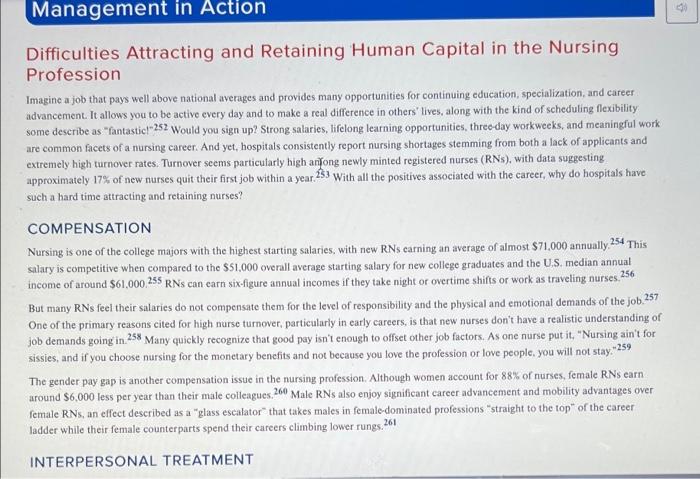
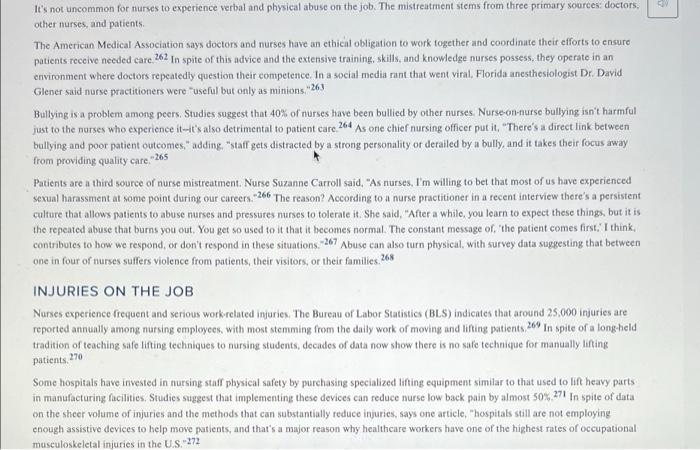
Please read the Management In Action Case on p. 413 and answer the following questions: 1. Which of the 5 Steps in the Human Resource Process should management address first? Support your response. 2. What could hiring managers do to create a realistic job preview during the interview process? Describe how you think it will help with retention 3. How could training be used to help reduce turnover of nurses? Explain. 4. How could hospitals work to reduce work related injuries among nurses? Explain. Management in Action Difficulties Attracting and Retaining Human Capital in the Nursing Profession Imagine a job that pays well above national averages and provides many opportunities for continuing education, specialization, and career advancement. It allows you to be active every day and to make a real difference in others' lives, along with the kind of scheduling flexibility some describe as "fantastic-252 Would you sign up? Strong salaries, lifelong learning opportunities, three-day workweeks, and meaningful work are common facets of a nursing career. And yet, hospitals consistently report nursing shortages stemming from both a lack of applicants and extremely high turnover rates. Turnover seems particularly high anfong newly minted registered nurses (RNs), with data suggesting approximately 17% of new nurses quit their first job within a year.25) With all the positives associated with the career, why do hospitals have such a hard time attracting and retaining nurses? This COMPENSATION Nursing is one of the college majors with the highest starting salaries with new RNs earning an average of almost $71.000 annually. 254 salary is competitive when compared to the $51,000 overall average starting salary for new college graduates and the U.S. median annual income of around $61,000 255 RNs can earn six-figure annual incomes if they take night or overtime shifts or work as traveling nurses. 256 But many RNs feel their salaries do not compensate them for the level of responsibility and the physical and emotional demands of the job.257 One of the primary reasons cited for high nurse turnover, particularly in early carcers, is that new nurses don't have a realistic understanding of job demands going in 258 Many quickly recognize that good pay isn't enough to offset other job factors. As one nurse put it, "Nursing ain't for sissies, and if you choose nursing for the monetary benefits and not because you love the profession or love people, you will not stay. 259 The gender pay gap is another compensation issue in the nursing profession. Although women account for 88% of nurses, female RNs earn around $6,000 less per year than their male colleagues.260 Male RNs also enjoy significant career advancement and mobility advantages over female RNs an effect described as a "glass escalator" that takes males in female dominated professions "straight to the top of the career ladder while their female counterparts spend their careers climbing lower rungs, 261 INTERPERSONAL TREATMENT A It's not uncommon for nurses to experience verbal and physical abuse on the job. The mistreatment stems from three primary sources doctors, other nurses, and patients The American Medical Association says doctors and nurses have an ethical obligation to work together and coordinate their efforts to ensure patients receive needed care 262 In spite of this advice and the extensive training, skills, and knowledge nurses possess, they operate in an environment where doctors repeatedly question their competence. In a social media rant that went viral, Florida anesthesiologist Dr. David Glener said nurse practitioners were useful but only as minions 263 Bullying is a problem among peers. Studies suggest that 40% of nurses have been bullied by other nurses. Nurseon-nurse bullying isn't harmful just to the nurses who experience it's also detrimental to patient care 264 As one chief nursing officer put it, "There's a direct link between bullying and poor patient outcomes, "adding "staff gets distracted by a strong personality or derailed by a bully, and it takes their focus away from providing quality care."265 Patients are a third source or nurse mistreatment. Nurse Suzanne Carroll said, "As nurses, I'm willing to be that most of us have experienced sexual harassment at some point during our careers. 266 The reason? According to a nurse practitioner in a recent interview there's a persistent culture that allows patients to abuse nurses and pressures nurses to tolerate it. She said, "After a while, you learn to expect these things, but it is the repeated abuse that burns you out. You get so used to it that it becomes normal. The constant message of the patient comes first. I think contributes to how we respond, or don't respond in these situations. 267 Abuse can also turn physical, with survey data suggesting that between one in four of nurses suffers violence from patients, their visitors, or their families. 268 INJURIES ON THE JOB Nurses experience frequent and serious work related injuries. The Bureau of Labor Statistics (BLS) indicates that around 25.000 injuries are reported annually among nursing employees, with most stemming from the daily work of moving and lifting patients.269 In spite of a long held tradition of teaching safe lifting techniques to nursing students, decades of data now show there is no safe technique for manually lifting a patients 250 Some hospitals have invested in nursing staff physical safety by purchasing specialized lifting equipment similar to that used to lift heavy purts. in manufacturing facilities, Studies suggest that implementing these devices can reduce nurse low back pain by almost 50%,271 In spite of data on the sheer volume of injuries and the methods that can substantially reduce injuries, says one article, "hospitals still are not employing enough assistive devices to help move patients, and that's a major reason why healthcare workers have one of the highest rates of occupational musculoskeletal injuries in the U.S. 272










 Study Help