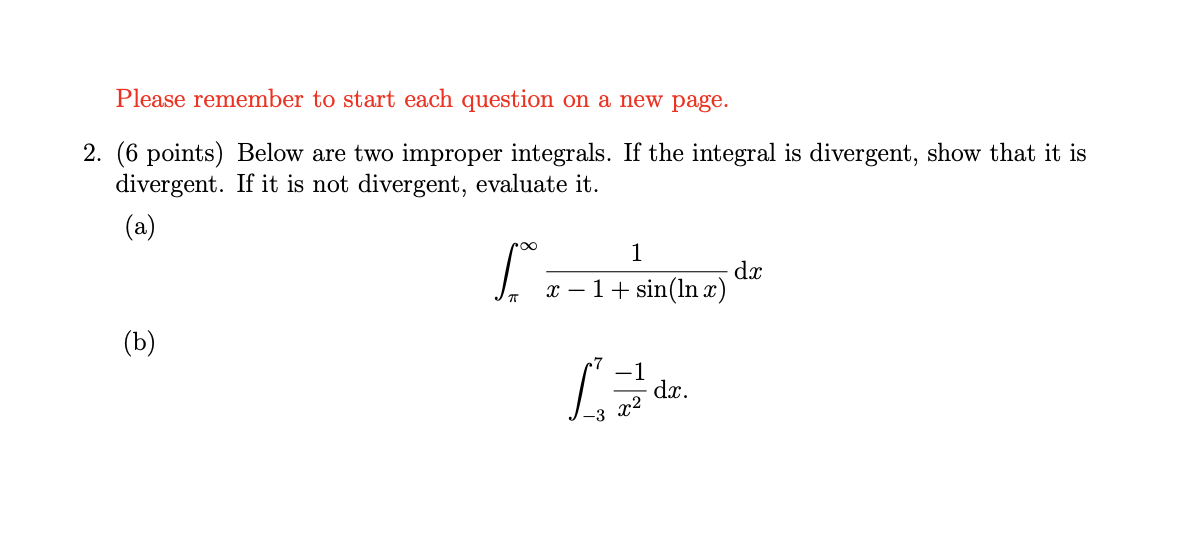
Question: Please remember to start each question on a new page. 2. (6 points) Below are two improper integrals. If the integral is divergent, Show that
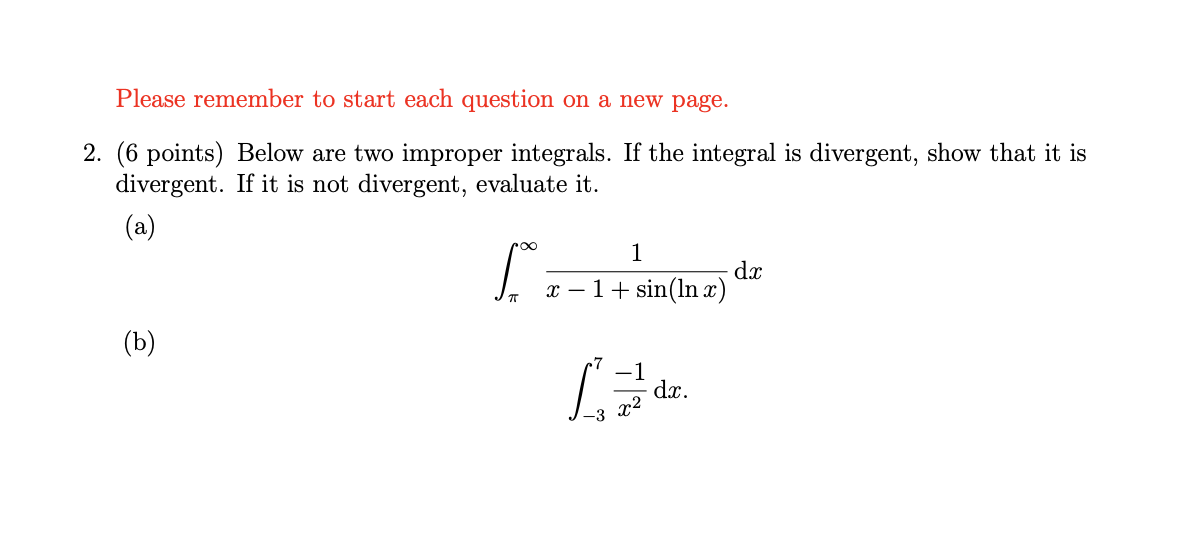
 Please remember to start each question on a new page. 2.(6 points) Below are two improper integrals. If the integral is divergent,Show that it is divergent. If it is not divergent, evaluate it.

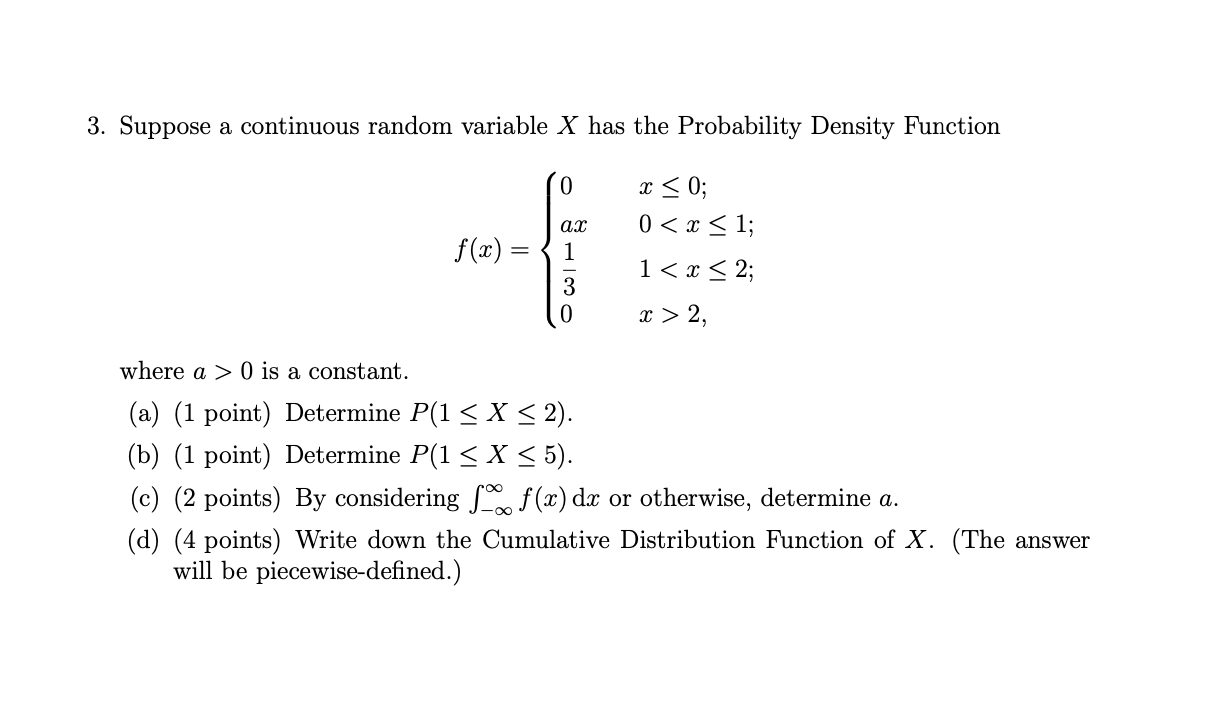
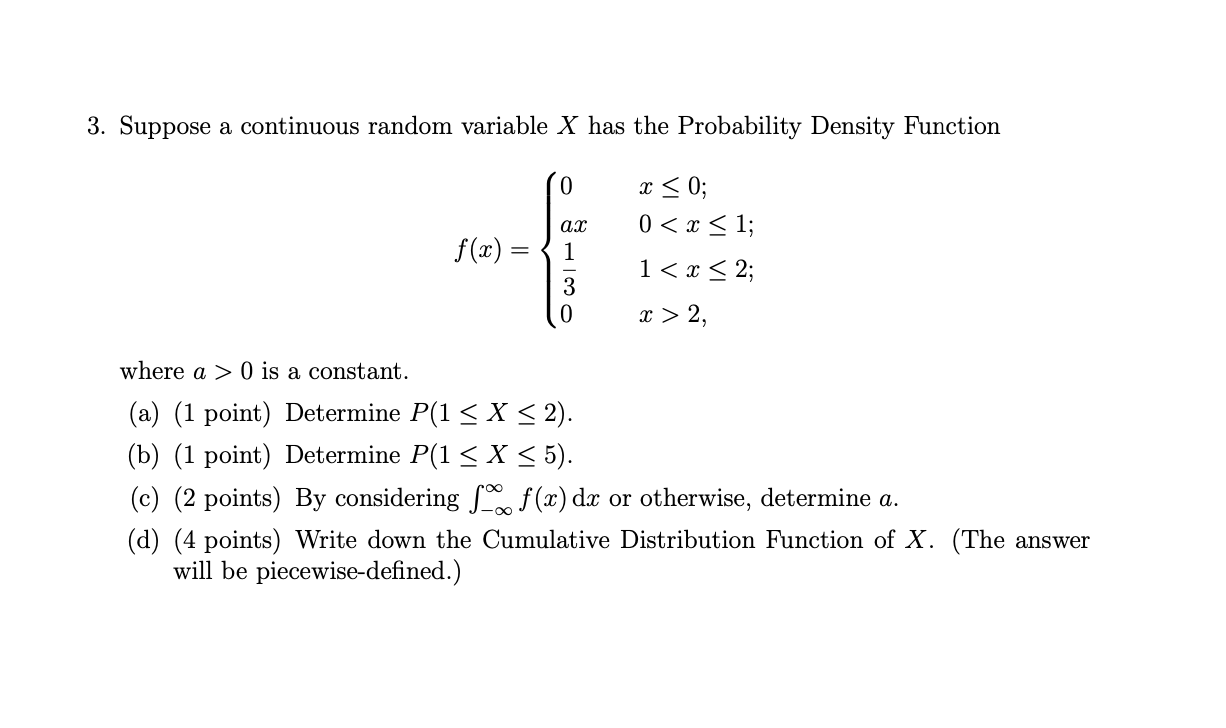
(a) m 1 [r x 1 + sin(lnx) d3: ('0) 3. Supposea continuous random variable X has the Probability Density Function 0 $330;as: 02, where a > 0 is a constant. (a) (1 point)

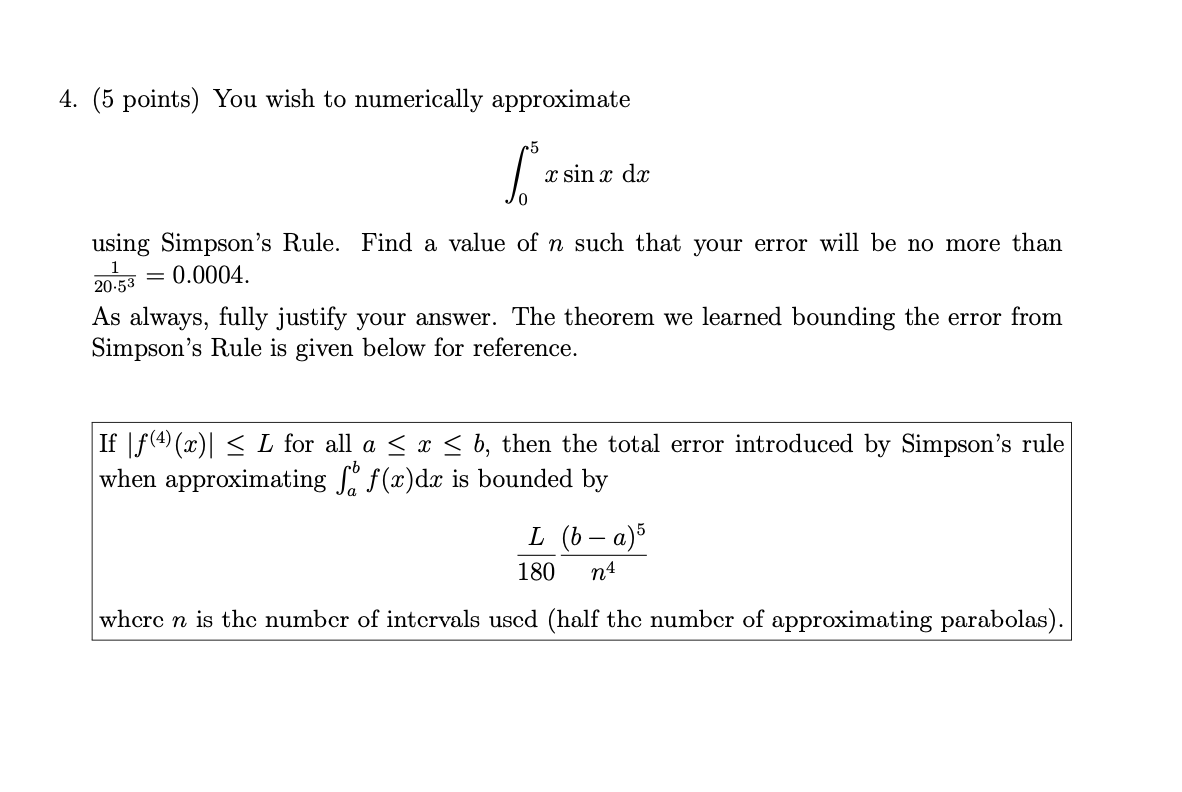
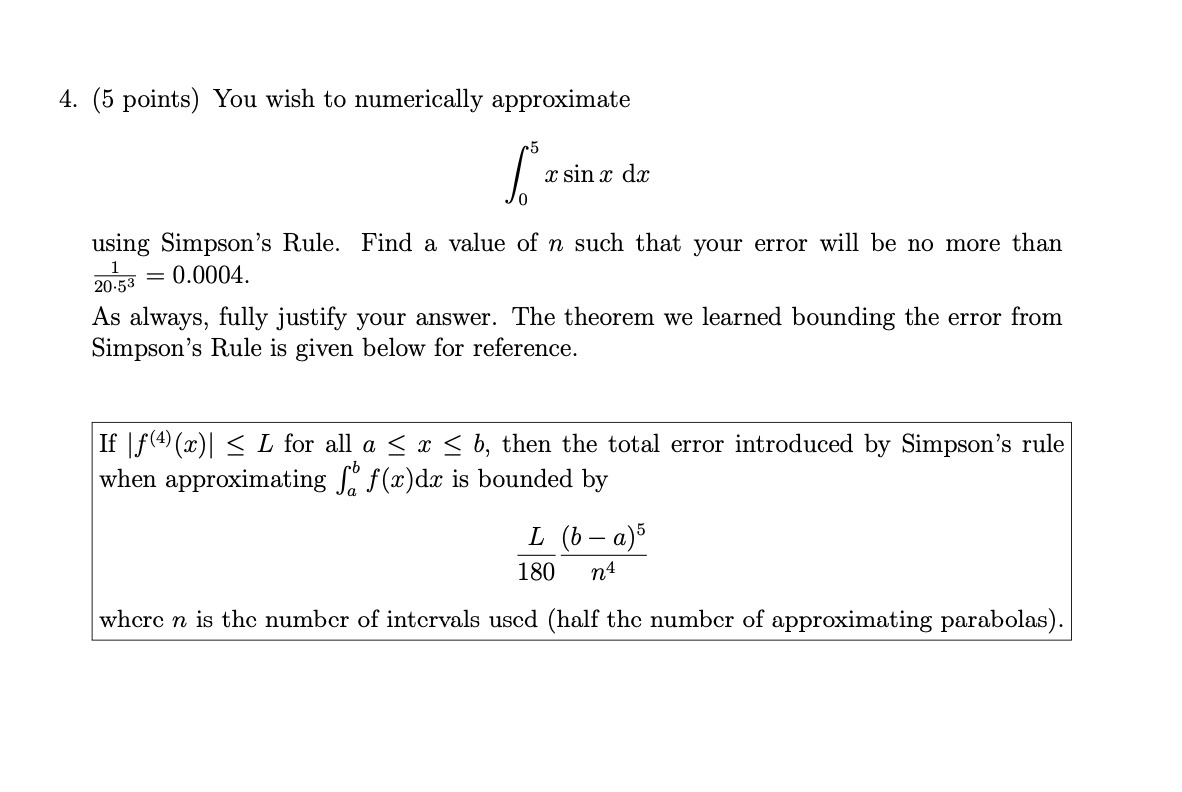
Please remember to start each question on a new page. 2. (6 points) Below are two improper integrals. If the integral is divergent, Show that it is divergent. If it is not divergent, evaluate it. (a) m 1 [r x 1 + sin(lnx) d3: ('0) 3. Suppose a continuous random variable X has the Probability Density Function 0 $330; as: 02, where a > 0 is a constant. (a) (1 point) Determine P(1 g X 5 2). (b) (1 point) Determine P(1 S X 5 5). (c) (2 points) By considering If; f (:12) d3: or otherwise, determine a. ) (d (4 points) Write down the Cumulative Distribution Function of X. (The answer will be piecewise-dened.) 4. (5 points) You wish to numerically approm'mate 5 :rsinzr: do: 0 using Simpson's Rule. Find a value of n such that your error will be no more than = 00004. As always, fully justify your answer. The theorem we learned bounding the error from Simpson's Rule is given below for reference. [f |f(4)($)| S L for all a S a: s b, then the total error introduced by Simpson's rule when approximating I: f (:r)d:c is bounded by a (b at 180 n4 where n is the number of intervals used (half the number of approximating parabolas)
Step by Step Solution

There are 3 Steps involved in it

1 Expert Approved Answer
Step: 1 Unlock blur-text-image
Question Has Been Solved by an Expert!

Get step-by-step solutions from verified subject matter experts

Step: 2 Unlock
Step: 3 Unlock

Students Have Also Explored These Related Mathematics Questions!