







Question: please solve it in 10 mins I need all answer I will thumb you up Question 12 When indifference curves are bowed in toward the
please solve it in 10 mins I need all answer I will thumb you up
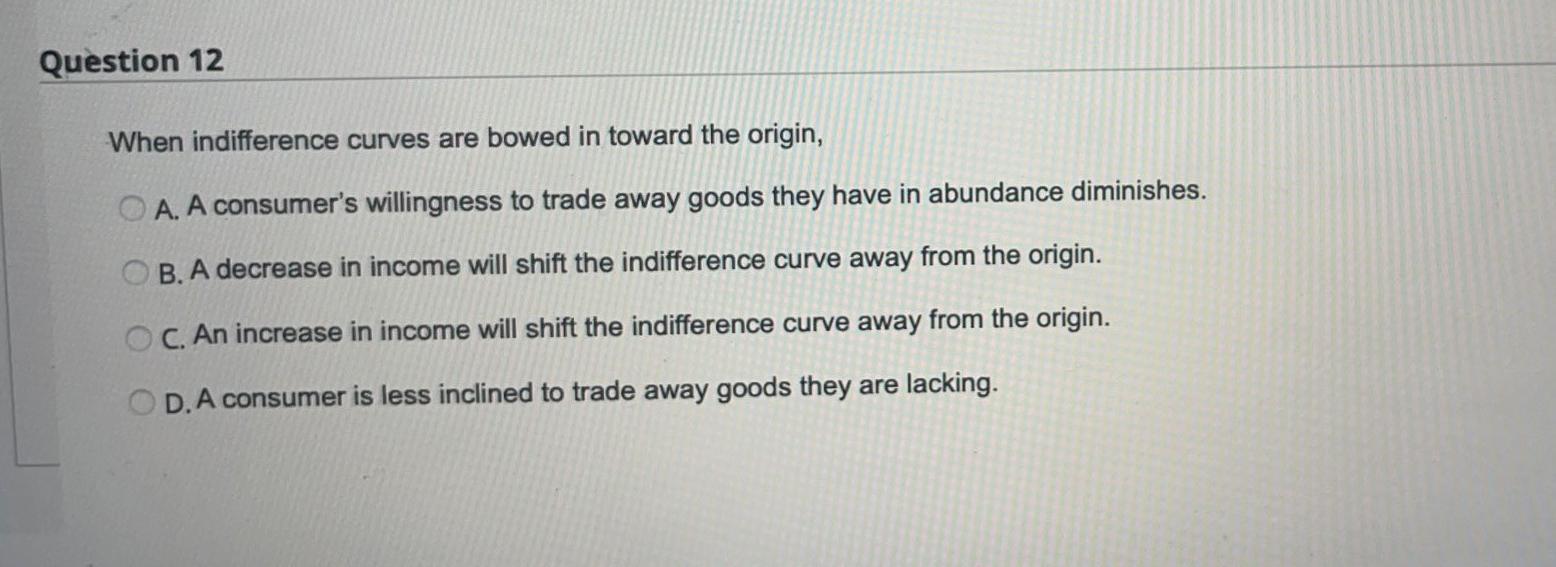
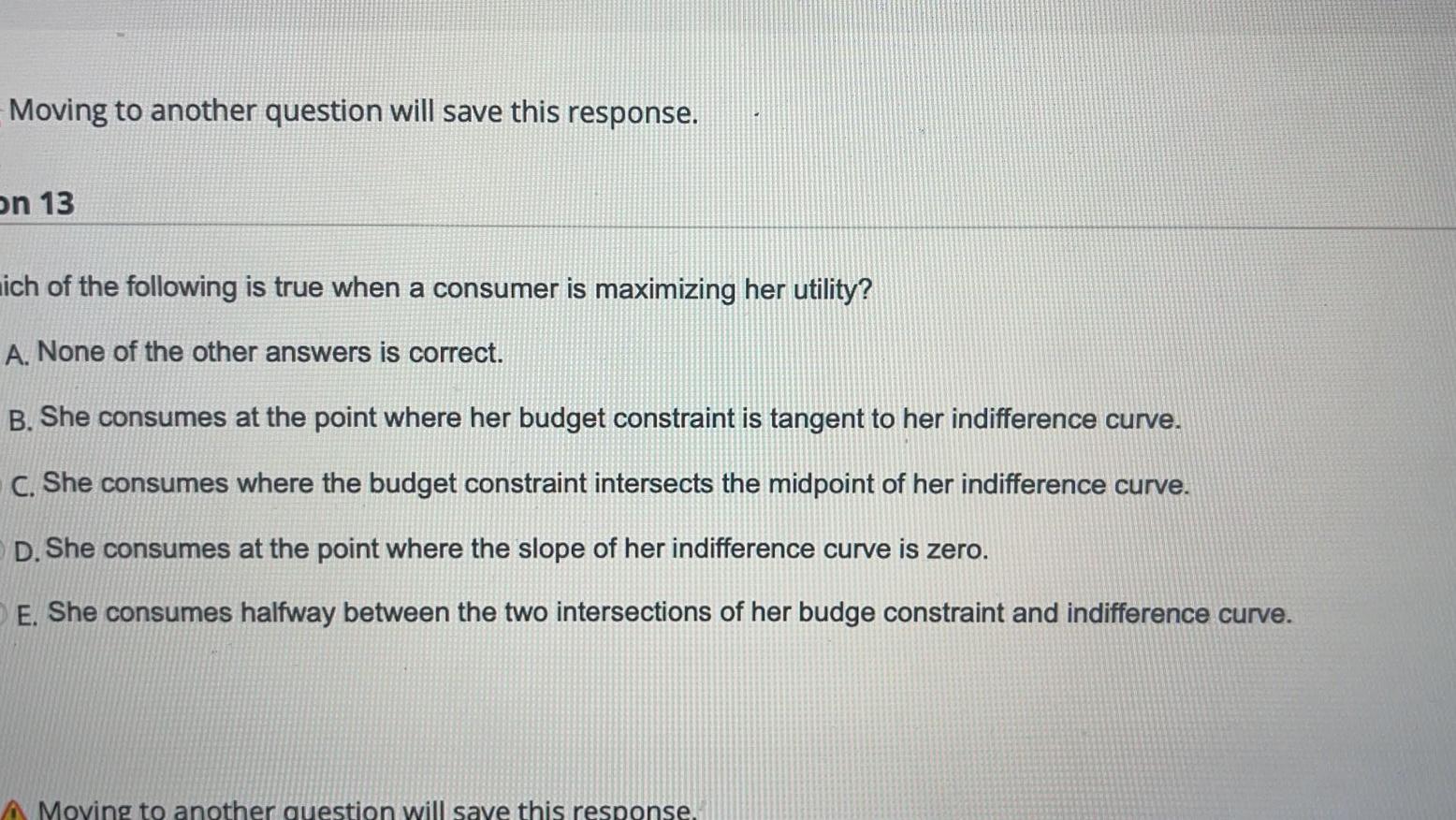
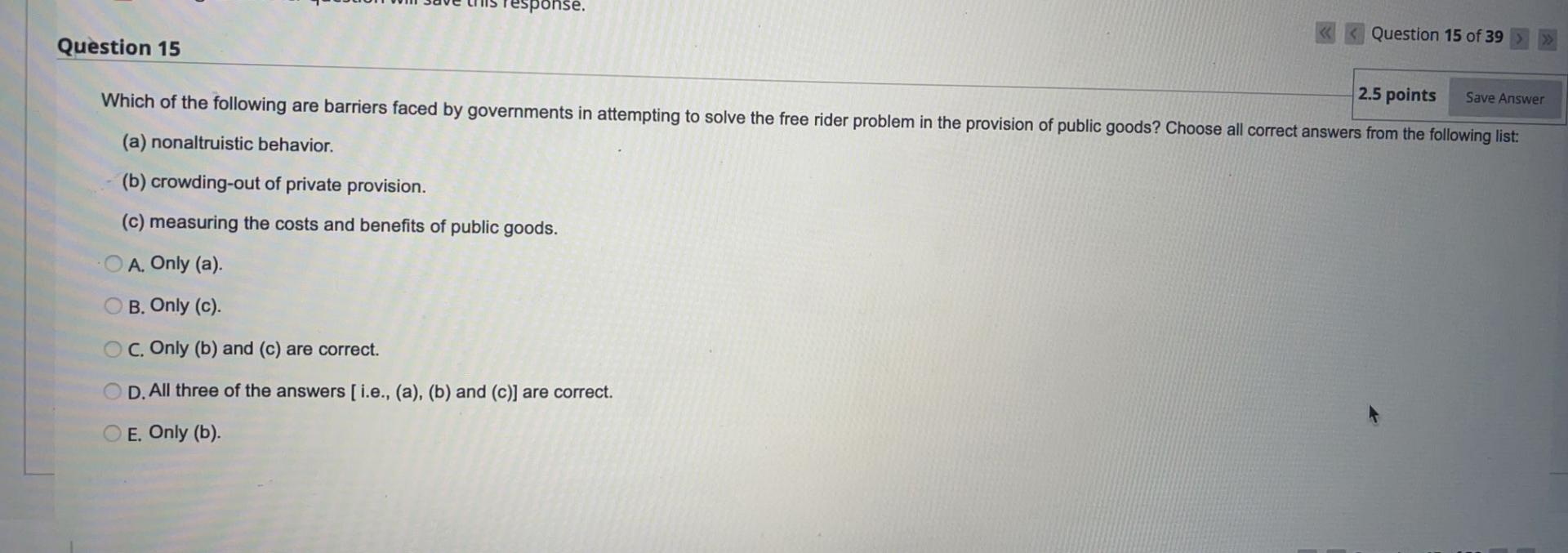
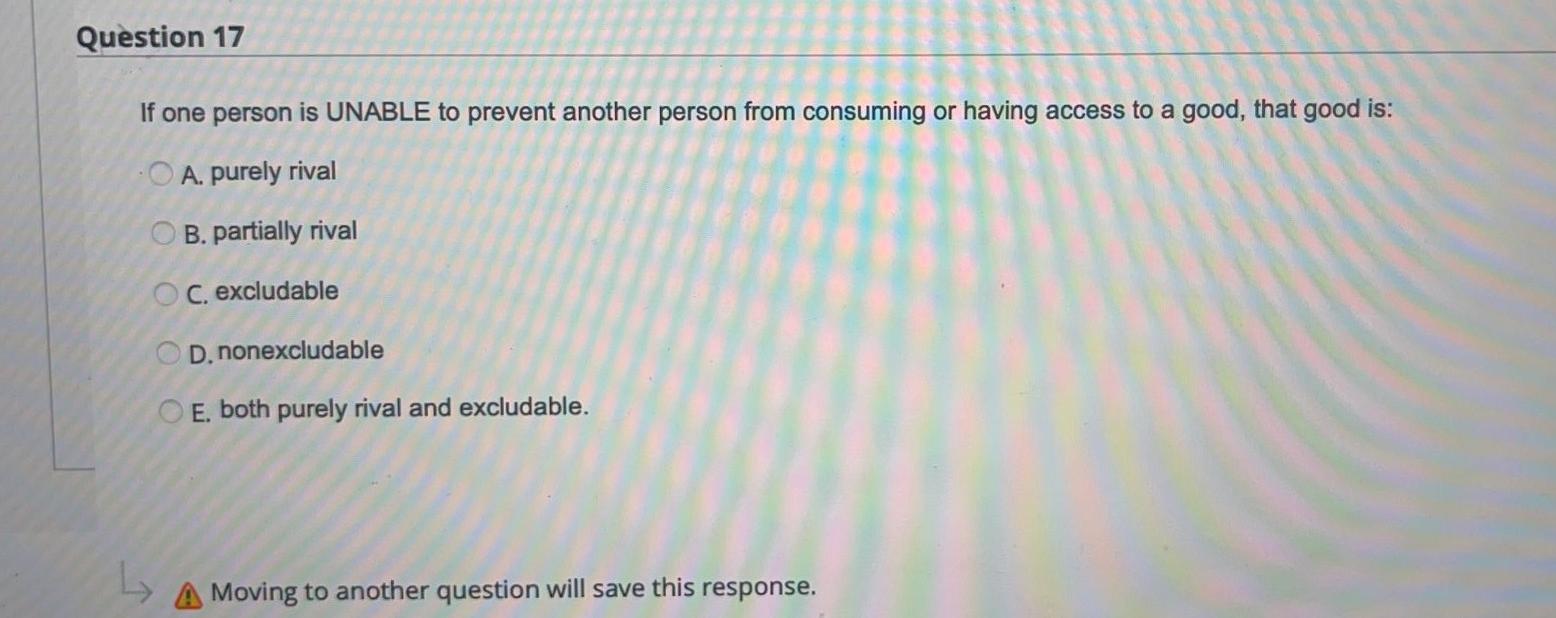
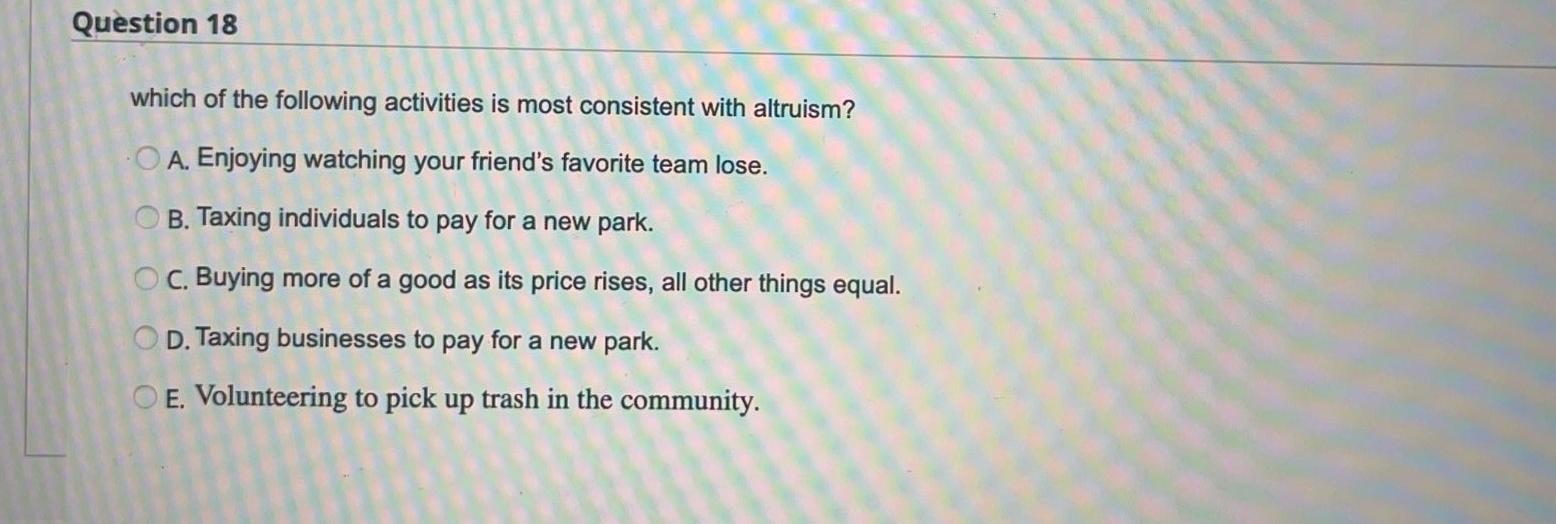
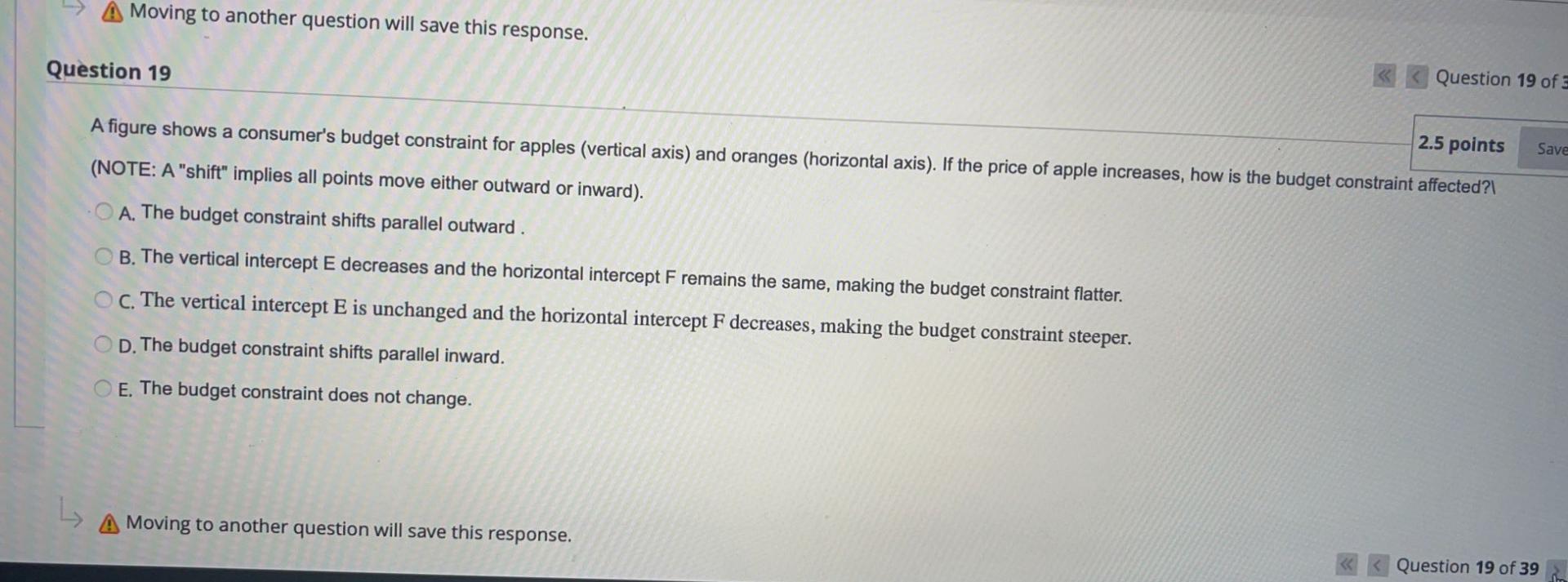
Question 12 When indifference curves are bowed in toward the origin, A. A consumer's willingness to trade away goods they have in abundance diminishes. O B. A decrease in income will shift the indifference curve away from the origin. C. An increase in income will shift the indifference curve away from the origin. D. A consumer is less inclined to trade away goods they are lacking. Moving to another question will save this response. on 13 ich of the following is true when a consumer is maximizing her utility? A. None of the other answers is correct. B. She consumes at the point where her budget constraint is tangent to her indifference curve. C. She consumes where the budget constraint intersects the midpoint of her indifference curve. D. She consumes at the point where the slope of her indifference curve is zero. E. She consumes halfway between the two intersections of her budge constraint and indifference curve. A Moying to another question will save this response. esponse, Question 15 of 39 Question 15 Which of the following are barriers faced by governments in attempting to solve the free rider problem in the provision of public goods? Choose all correct answers from the following list: 2.5 points Save Answer (a) nonaltruistic behavior. (b) crowding-out of private provision. (c) measuring the costs and benefits of public goods. A. Only (a) B. Only (c). OC. Only (b) and (c) are correct. D. All three of the answers [i.e., (a), (b) and (c)] are correct. E. Only (b). Question 17 If one person is UNABLE to prevent another person from consuming or having access to a good, that good is: . A. purely rival B. partially rival C. excludable D. nonexcludable E. both purely rival and excludable. A Moving to another question will save this response. Question 18 which of the following activities is most consistent with altruism? - A. Enjoying watching your friend's favorite team lose. OB. Taxing individuals to pay for a new park. OC. Buying more of a good as its price rises, all other things equal. O D. Taxing businesses to pay for a new park. O E. Volunteering to pick up trash in the community. Moving to another question will save this response. Question 19 Question 19 of 3 A figure shows a consumer's budget constraint for apples (vertical axis) and oranges (horizontal axis). If the price of apple increases, how is the budget constraint affected? (NOTE: A "shift" implies all points move either outward or inward). 2.5 points Save A. The budget constraint shifts parallel outward. B. The vertical intercept E decreases and the horizontal intercept F remains the same, making the budget constraint flatter. C. The vertical intercept E is unchanged and the horizontal intercept F decreases, making the budget constraint steeper. D. The budget constraint shifts parallel inward. E. The budget constraint does not change. A Moving to another question will save this response. Question 19 of 39
Step by Step Solution
There are 3 Steps involved in it

Get step-by-step solutions from verified subject matter experts
 Study Help