







Question: please this is a case study with follow up questions . Please read the case below carefully and answer the questions that follow (30 marks).
please this is a case study with follow up questions
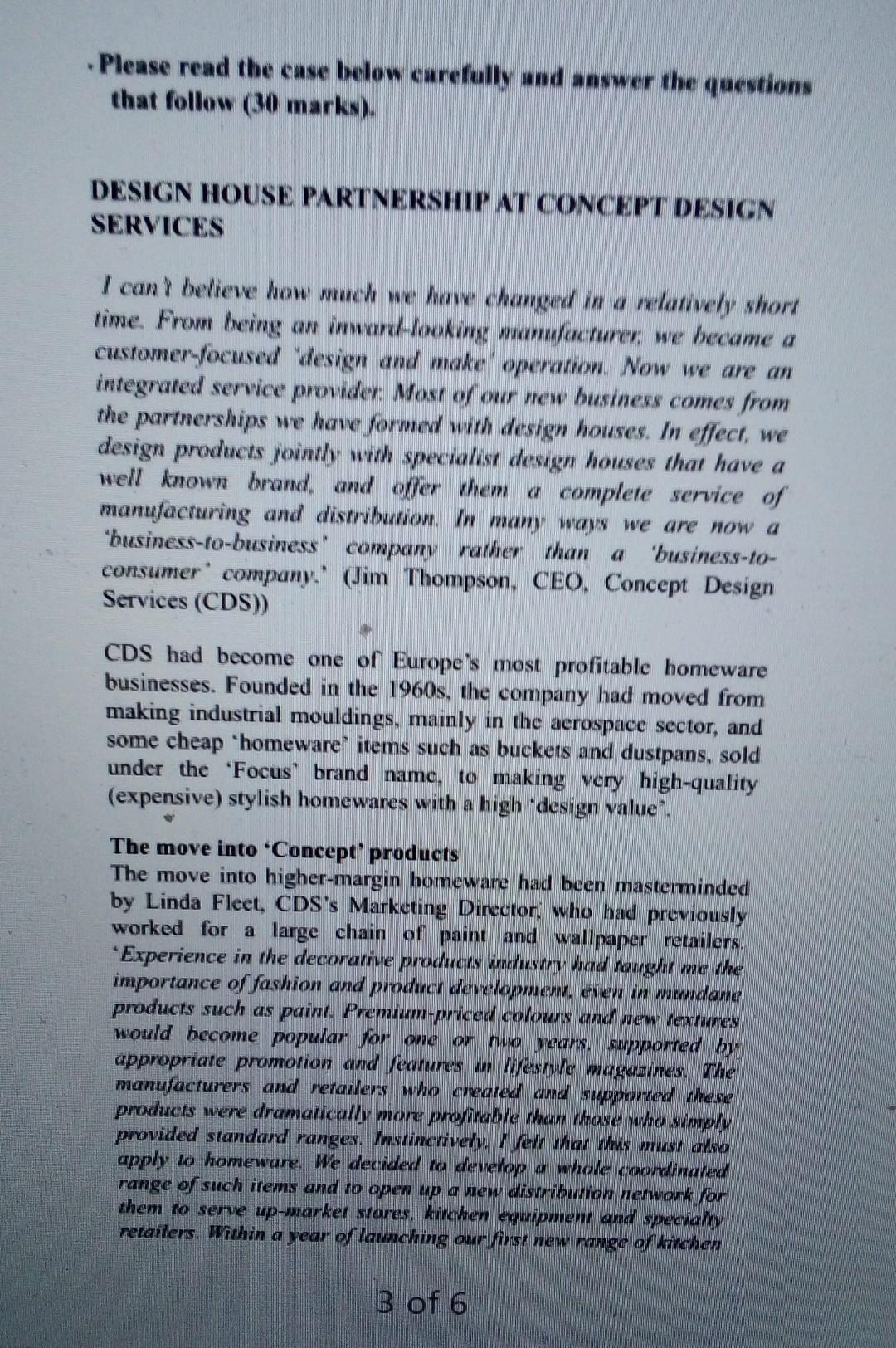
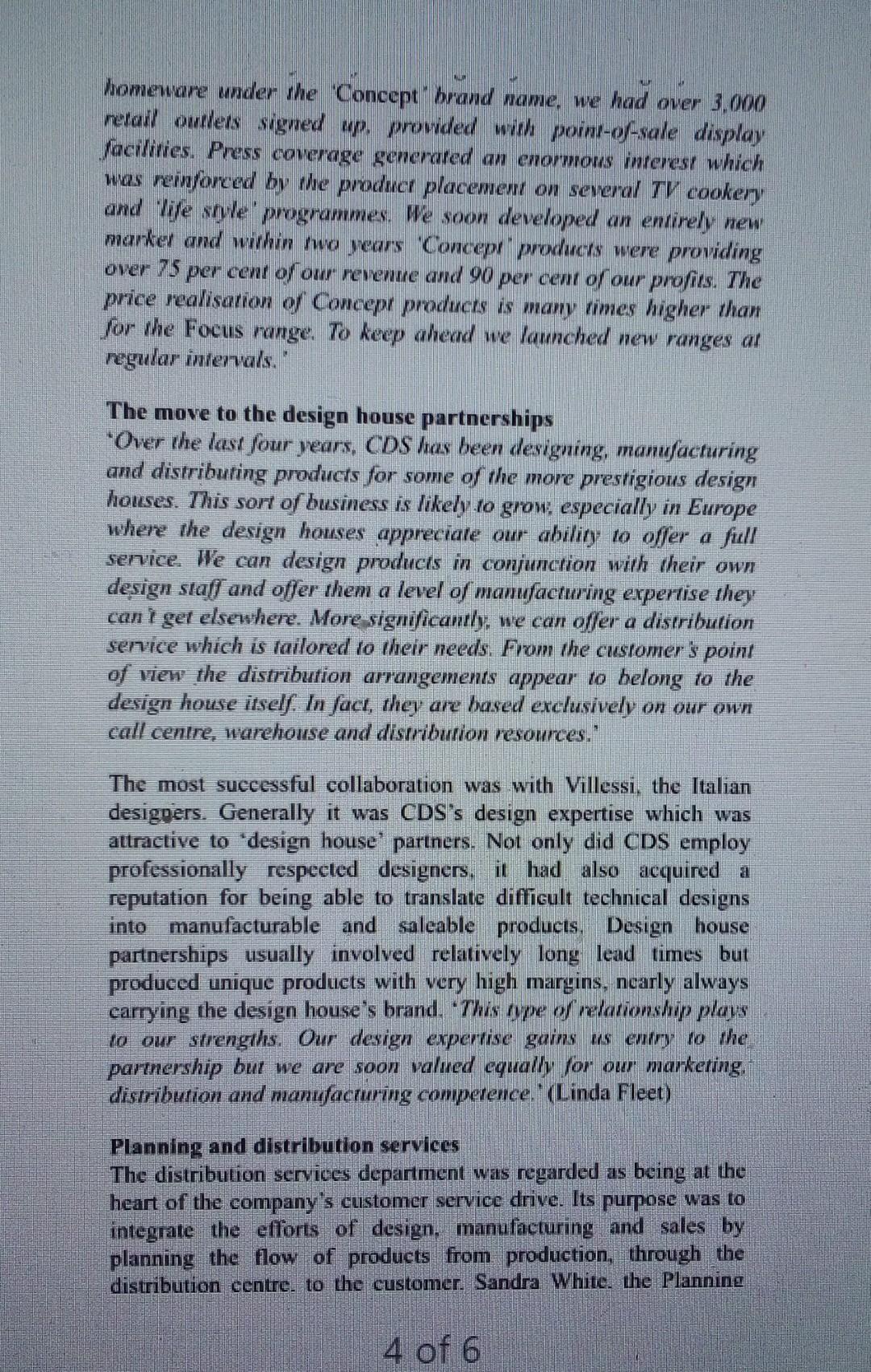
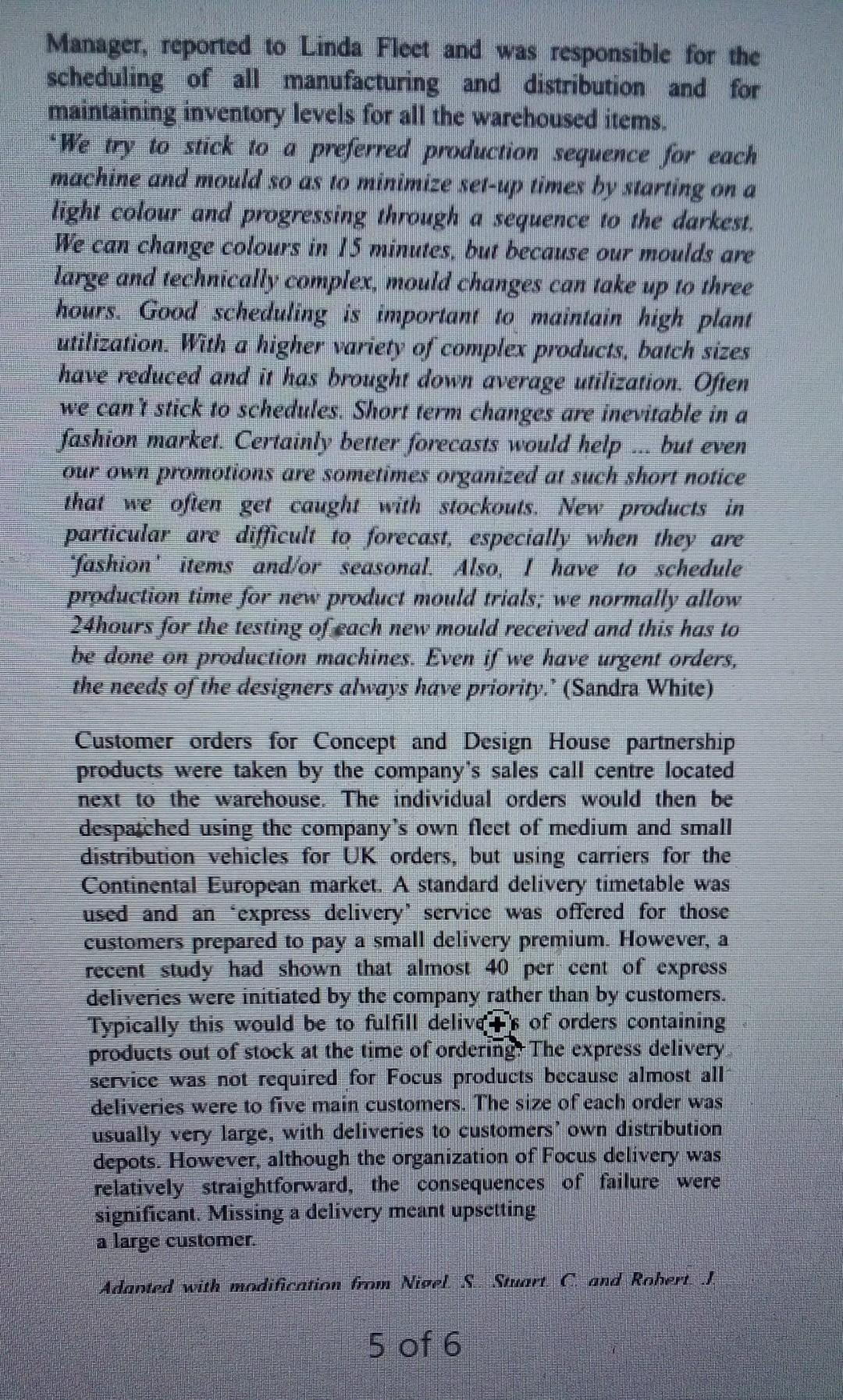
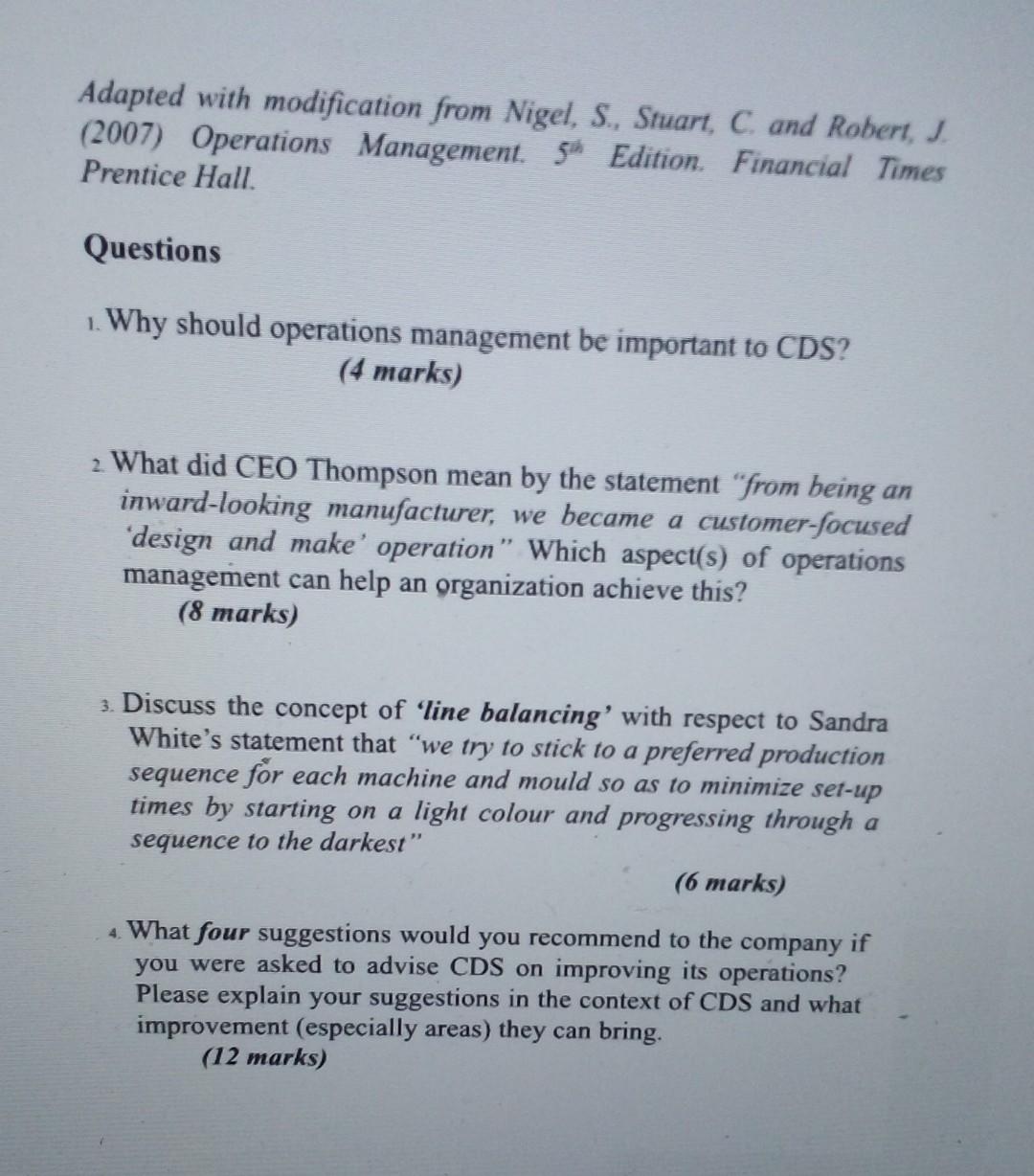
. Please read the case below carefully and answer the questions that follow (30 marks). DESIGN HOUSE PARTNERSHIP AT CONCEPT DESIGN SERVICES I can I believe how much we how changed in a relatively short time. From being an inwind-looking manufacturer: we became a customer focused design and make' operation. Now we are an integrated service provider. Most of our new business comes from the partnerships we have formed with design houses. In effect, we design products jointly with specialist design houses that have a well known brand, and offer them a complete service of manufacturing and distribution. In many ways we are now a business-to-business" company rather than a 'business-to- consumer' company." (Jim Thompson, CEO. Concept Design Services (CDS)) CDS had become one of Europe's most profitable homeware businesses. Founded in the 1960s, the company had moved from making industrial mouldings, mainly in the aerospace sector, and some cheap 'homeware items such as buckets and dustpans, sold under the "Focus" brand name, to making very high-quality (expensive) stylish homewares with a high 'design value'. The move into Concept products The move into higher-margin homeware had been masterminded by Linda Fleet, CDS's Marketing Director, who had previously worked for a large chain of paint and wallpaper retailers. 'Experience in the decorative products industry had roughi me the importance of fashion and product development, even in mundane products such as paint. Premium-priced colours and new rextures would become popular for one or nuo pears, supported by appropriate promotion and rearures in lifestwe magazines. The manufacturers and retailers who created and supported these products were dramatically more profitable than those who simply provided standard ranges. Instinctively / fel rhan Wris wrust also apply to homeware. We decided to develop a whole coordinarend range of such items and to open up a new distribution network for them to serve up-marker stores, kitchen equipment and specialn retailers. Within a year of launching our first new range of nirchen 3 of 6 Manager, reported to Linda Fleet and was responsible for the scheduling of all manufacturing and distribution and for maintaining inventory levels for all the warehoused items. *We try to stick to a preferred production sequence for each machine and mould so as to minimize ser-up times by starting on a light colour and progressing through a sequence to the darkest. We can change colours in 15 minutes, but because our moulds are large and rechnically complex, mould changes can take up to three hours. Good scheduling is important to maintain high plant utilization. With a higher variety of complex products, batch sizes have reduced and it has brought down average utilization. Often we can stick to schedules. Short term changes are inevitable in a fashion market. Certainly better forecasts would help but even our own promotions are sometimes organized at such short notice that we ofien get caught with stockouts. New products in particular are difficult to forecast, especially when they are fashion' items and/or seasonal. Also, I have to schedule production time for new product mould trials; we normally allow 24hours for the testing of each new mould received and this has to be done on production machines. Even if we have urgent orders, the needs of the designers always have priority.' (Sandra White) Customer orders for Concept and Design House partnership products were taken by the company's sales call centre located next to the warehouse. The individual orders would then be despatched using the company's own fleet of medium and small distribution vehicles for UK orders, but using carriers for the Continental European market. A standard delivery timetable was used and an express delivery service was offered for those customers prepared to pay a small delivery premium. However, a recent study had shown that almost 40 per cent of express deliveries were initiated by the company rather than by customers. Typically this would be to fulfill delive+s of orders containing products out of stock at the time of ordering. The express delivery service was not required for Focus products because almost all deliveries were to five main customers. The size of each order was usually very large, with deliveries to customers' own distribution depots. However, although the organization of Focus delivery was relatively straightforward, the consequences of failure were significant. Missing a delivery meant upsetting a large customer. Adapted with modification for Nice S. Stuart C and Robert 5 of 6 Adapted with modification from Nigel, S., Stuart, C. and Robert, J. (2007) Operations Management. 5h Edition. Financial Times Prentice Hall. Questions 1. Why should operations management be important to CDS? (4 marks) 2. What did CEO Thompson mean by the statement "from being an inward-looking manufacturer, we became a customer-focused 'design and make' operation Which aspect(s) of operations management can help an organization achieve this? (8 marks) 3. Discuss the concept of 'line balancing' with respect to Sandra White's statement that "we try to stick to a preferred production sequence for each machine and mould so as to minimize set-up times by starting on a light colour and progressing through a sequence to the darkest" (6 marks) 4. What four suggestions would you recommend to the company if you were asked to advise CDS on improving its operations? Please explain your suggestions in the context of CDS and what improvement (especially areas) they can bring. (12 marks)Step by Step Solution
There are 3 Steps involved in it
1 Expert Approved Answer
Step: 1 Unlock

Question Has Been Solved by an Expert!
Get step-by-step solutions from verified subject matter experts
Step: 2 Unlock
Step: 3 Unlock
 Study Help