







Question: Plese explain the output ( attached ) why using SWITCH _ ON _ IO and IO _ RUN _ LATER will have this result in
Plese explain the output attachedwhy using SWITCHONIO and IORUNLATER will have this result in deatil as i am so confuse of what the command do Also, please answer the question below. Thankyou!
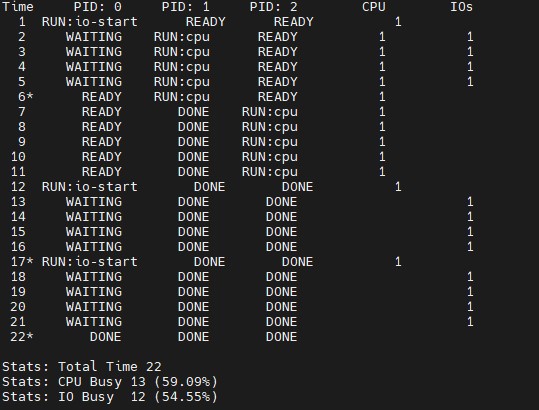
Output:Time PID: PID: PID: CPU IOs
RUN:iostart READY READY
WAITING RUN:cpu READY
WAITING RUN:cpu READY
WAITING RUN:cpu READY
WAITING RUN:cpu READY
READY RUN:cpu READY
READY DONE RUN:cpu
READY DONE RUN:cpu
READY DONE RUN:cpu
READY DONE RUN:cpu
READY DONE RUN:cpu
RUN:iostart DONE DONE
WAITING DONE DONE
WAITING DONE DONE
WAITING DONE DONE
WAITING DONE DONE
RUN:iostart DONE DONE
WAITING DONE DONE
WAITING DONE DONE
WAITING DONE DONE
WAITING DONE DONE
DONE DONE DONE
Stats: Total Time
Stats: CPU Busy
Stats: IO Busy
Question:Run processrun.py with flags in tutorial One important
behavior is what to do when an IO completes. With I IORUNLATER, when an
IO completes, the process that issued it is not necessarily run right away; rather,
whatever was running at the time keeps running. What happens when you run this
combination of processes? l ::::S SWITCHONIO
I IORUNLATER c p Are system resources being effectively utilized?
Step by Step Solution
There are 3 Steps involved in it
1 Expert Approved Answer
Step: 1 Unlock

Question Has Been Solved by an Expert!
Get step-by-step solutions from verified subject matter experts
Step: 2 Unlock
Step: 3 Unlock
 Study Help