







Question: Population parameter, hypothesis test, sample statistic, randomized experiment, random, normal, quantitative, confidence interval, central limit theorem, statistical inference, standard error, statistical, biased, categorical variable versus
Population parameter, hypothesis test, sample statistic, randomized experiment, random, normal, quantitative, confidence interval, central limit theorem, statistical inference, standard error, statistical, biased, categorical variable versus a categorical, P value, large, representative, quantitative variable versus a quantitative, categorical, categorical variable versus a quantitative variable
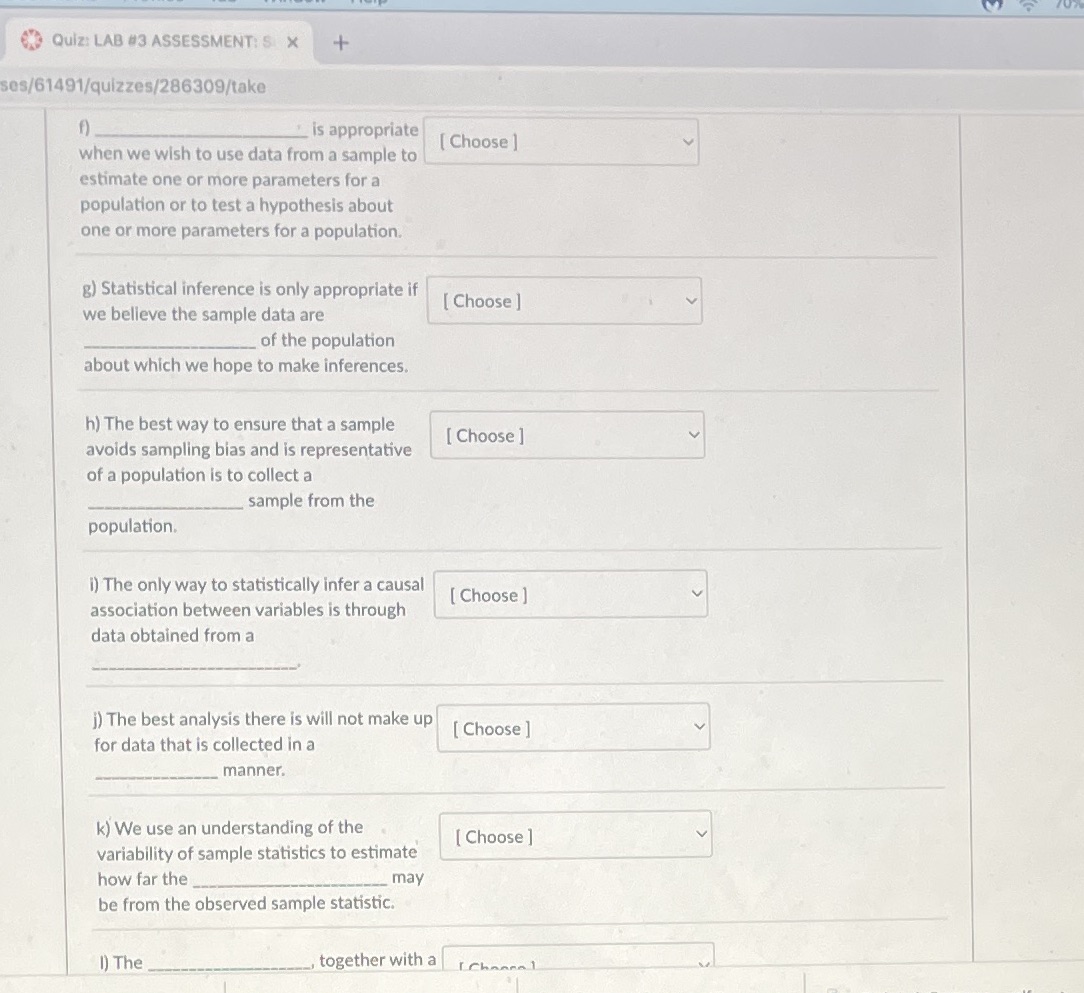
Quiz: LAB #3 ASSESSMENT: S. X + ses/61491/quizzes/286309/take is appropriate when we wish to use data from a sample to [ Choose ] estimate one or more parameters for a population or to test a hypothesis about one or more parameters for a population. g) Statistical inference is only appropriate if we believe the sample data are [ Choose ] of the population about which we hope to make inferences. h) The best way to ensure that a sample avoids sampling bias and is representative [ Choose ] of a population is to collect a sample from the population. i) The only way to statistically infer a causal association between variables is through [ Choose ] data obtained from a j) The best analysis there is will not make up [ Choose ] for data that is collected in a _manner. k) We use an understanding of the [ Choose ] variability of sample statistics to estimate how far the may be from the observed sample statistic. I) The together with a
Step by Step Solution
There are 3 Steps involved in it

Get step-by-step solutions from verified subject matter experts
 Study Help