Question: Prepare your answer to the questions in your word processing program. Number each question the same as the questions below. Restate the question. Give complete
Prepare your answer to the questions in your word processing program.
Number each question the same as the questions below.
Restate the question.
Give complete answers (minimum 250 words).
Use examples.
Cite the source of your answer.
Submit the file as a word or pdf format only.
all other formats will receive 0 points for the assignment.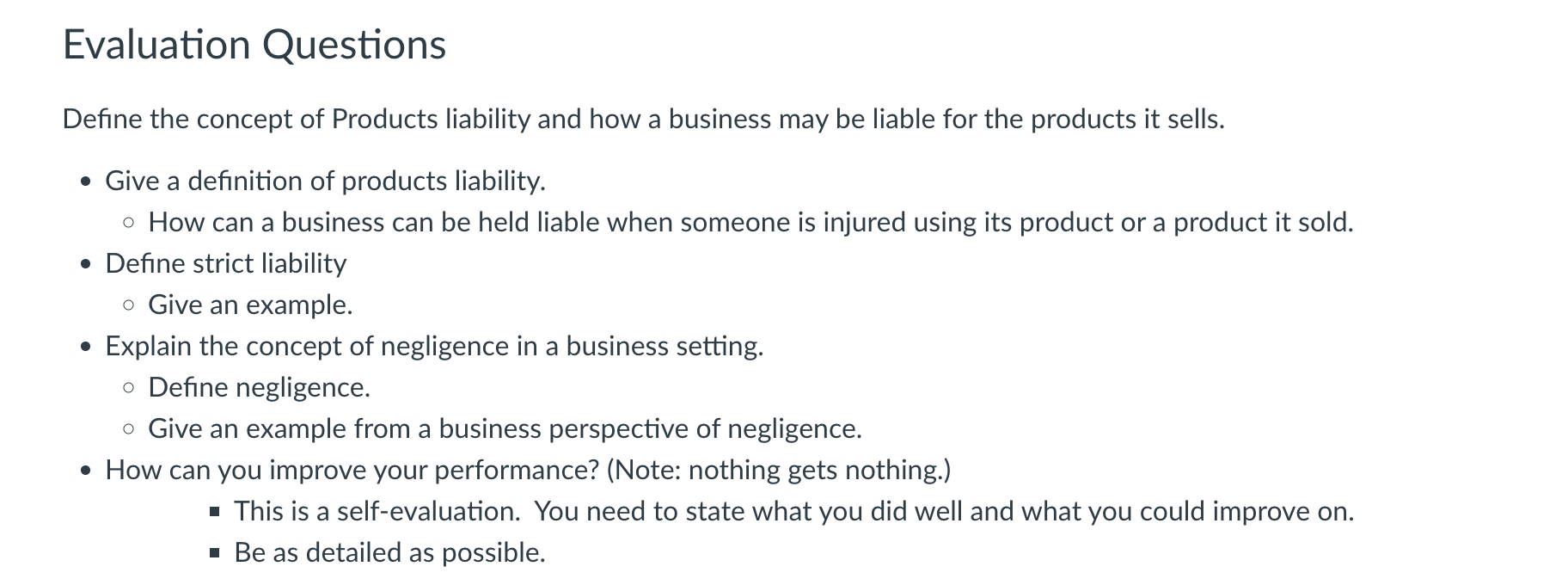
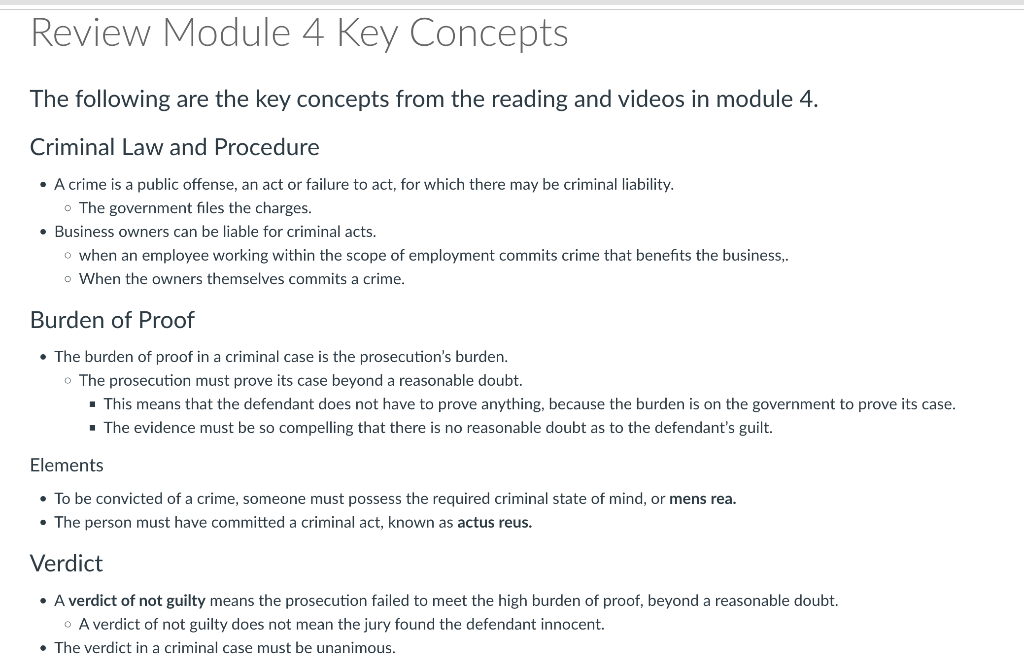
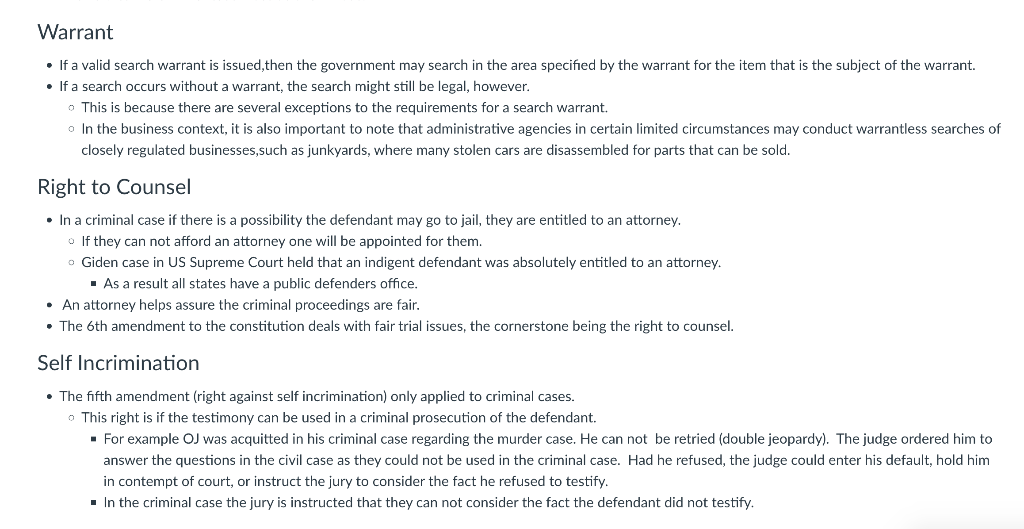
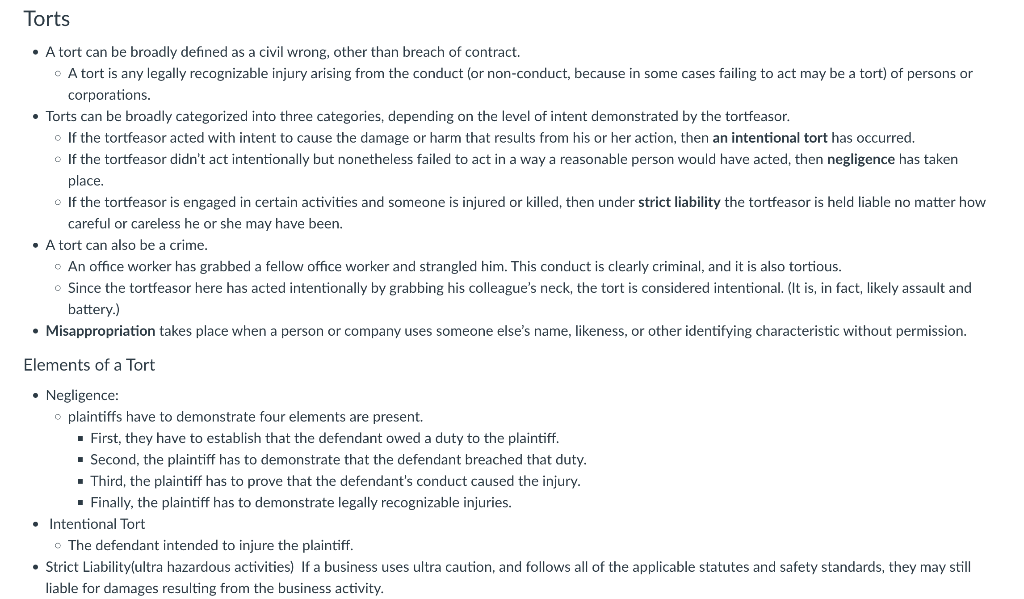
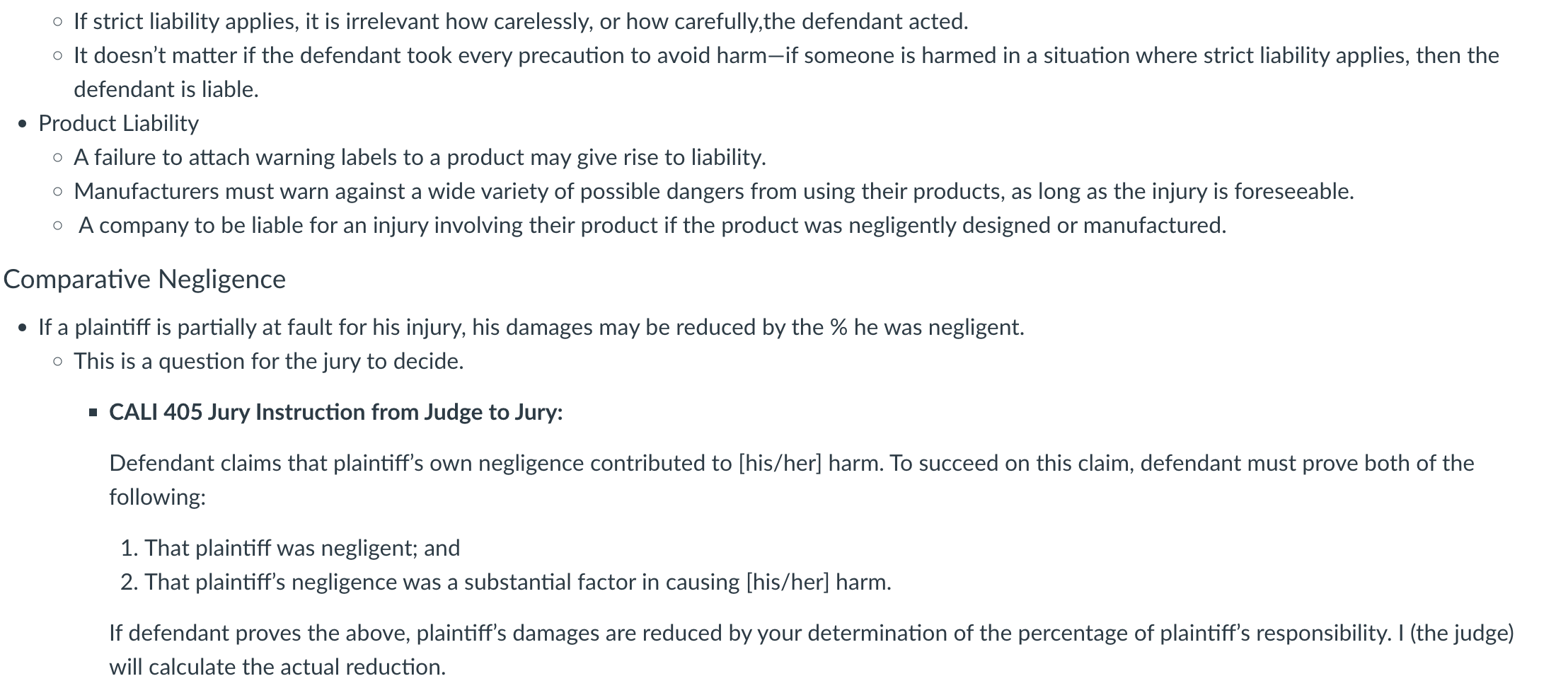
Evaluation Questions Define the concept of Products liability and how a business may be liable for the products it sells. - Give a definition of products liability. - How can a business can be held liable when someone is injured using its product or a product it sold. - Define strict liability - Give an example. - Explain the concept of negligence in a business setting. - Define negligence. - Give an example from a business perspective of negligence. - How can you improve your performance? (Note: nothing gets nothing.) - This is a self-evaluation. You need to state what you did well and what you could improve on. - Be as detailed as possible. Criminal Law and Procedure - A crime is a public offense, an act or failure to act, for which there may be criminal liability. - The government files the charges. - Business owners can be liable for criminal acts. - when an employee working within the scope of employment commits crime that benefits the business,. - When the owners themselves commits a crime. Burden of Proof - The burden of proof in a criminal case is the prosecution's burden. - The prosecution must prove its case beyond a reasonable doubt. - This means that the defendant does not have to prove anything, because the burden is on the government to prove its case. - The evidence must be so compelling that there is no reasonable doubt as to the defendant's guilt. Elements - To be convicted of a crime, someone must possess the required criminal state of mind, or mens rea. - The person must have committed a criminal act, known as actus reus. Verdict - A verdict of not guilty means the prosecution failed to meet the high burden of proof, beyond a reasonable doubt. A verdict of not guilty does not mean the jury found the defendant innocent. - The verdict in a criminal case must be unanimous. Warrant - If a valid search warrant is issued,then the government may search in the area specified by the warrant for the item that is the subject of the warrant. - If a search occurs without a warrant, the search might still be legal, however. o This is because there are several exceptions to the requirements for a search warrant. In the business context, it is also important to note that administrative agencies in certain limited circumstances may conduct warrantless searches of closely regulated businesses,such as junkyards, where many stolen cars are disassembled for parts that can be sold. Right to Counsel - In a criminal case if there is a possibility the defendant may go to jail, they are entitled to an attorney. If they can not afford an attorney one will be appointed for them. Giden case in US Supreme Court held that an indigent defendant was absolutely entitled to an attorney. - As a result all states have a public defenders office. - An attorney helps assure the criminal proceedings are fair. - The 6th amendment to the constitution deals with fair trial issues, the cornerstone being the right to counsel. Self Incrimination - The fifth amendment (right against self incrimination) only applied to criminal cases. - This right is if the testimony can be used in a criminal prosecution of the defendant. - For example OJ was acquitted in his criminal case regarding the murder case. He can not be retried (double jeopardy). The judge ordered him to answer the questions in the civil case as they could not be used in the criminal case. Had he refused, the judge could enter his default, hold him in contempt of court, or instruct the jury to consider the fact he refused to testify. - In the criminal case the jury is instructed that they can not consider the fact the defendant did not testify. - A tort can be broadly defined as a civil wrong, other than breach of contract. A tort is any legally recognizable injury arising from the conduct (or non-conduct, because in some cases failing to act may be a tort) of persons or corporations. - Torts can be broadly categorized into three categories, depending on the level of intent demonstrated by the tortfeasor. If the tortfeasor acted with intent to cause the damage or harm that results from his or her action, then an intentional thered If the tortfeasor didn't act intentionally but nonetheless failed to act in a way a reasonable person would have acted, then negligence has taken place. If the tortfeasor is engaged in certain activities and someone is injured or killed, then under strict liability the tortfeasor is held liable no matter how careful or careless he or she may have been. - A tort can also be a crime. An office worker has grabbed a fellow office worker and strangled him. This conduct is clearly criminal, and it is also tortious. Since the tortfeasor here has acted intentionally by grabbing his colleague's neck, the tort is considered intentional. (It is, in fact, likely assault and battery.) - Misappropriation takes place when a person or company uses someone else's name, likeness, or other identifying characteristic without permission. Elements of a Tort - Negligence: - plaintiffs have to demonstrate four elements are present. - First, they have to establish that the defendant owed a duty to the plaintiff. - Second, the plaintiff has to demonstrate that the defendant breached that duty. - Third, the plaintiff has to prove that the defendant's conduct caused the injury. - Finally, the plaintiff has to demonstrate legally recognizable injuries. - Intentional Tort The defendant intended to injure the plaintiff. - Strict Liability(ultra hazardous activities) If a business uses ultra caution, and follows all of the applicable statutes and safety standards, they may still liable for damages resulting from the business activity. If strict liability applies, it is irrelevant how carelessly, or how carefully,the defendant acted. - It doesn't matter if the defendant took every precaution to avoid harm-if someone is harmed in a situation where strict liability applies, then the defendant is liable. - Product Liability A failure to attach warning labels to a product may give rise to liability. - Manufacturers must warn against a wide variety of possible dangers from using their products, as long as the injury is foreseeable. - A company to be liable for an injury involving their product if the product was negligently designed or manufactured. omparative Negligence - If a plaintiff is partially at fault for his injury, his damages may be reduced by the % he was negligent. - This is a question for the jury to decide. - CALI 405 Jury Instruction from Judge to Jury: Defendant claims that plaintiff's own negligence contributed to [his/her] harm. To succeed on this claim, defendant must prove both of the following: 1. That plaintiff was negligent; and 2. That plaintiff's negligence was a substantial factor in causing [his/her] harm. If defendant proves the above, plaintiff's damages are reduced by your determination of the percentage of plaintiff's responsibility. I (the judge) will calculate the actual reduction









 Study Help