



Question: Previous question below Following directly from the previous question, you know the next step in limit pricing is to take the correct Q that you
Previous question below
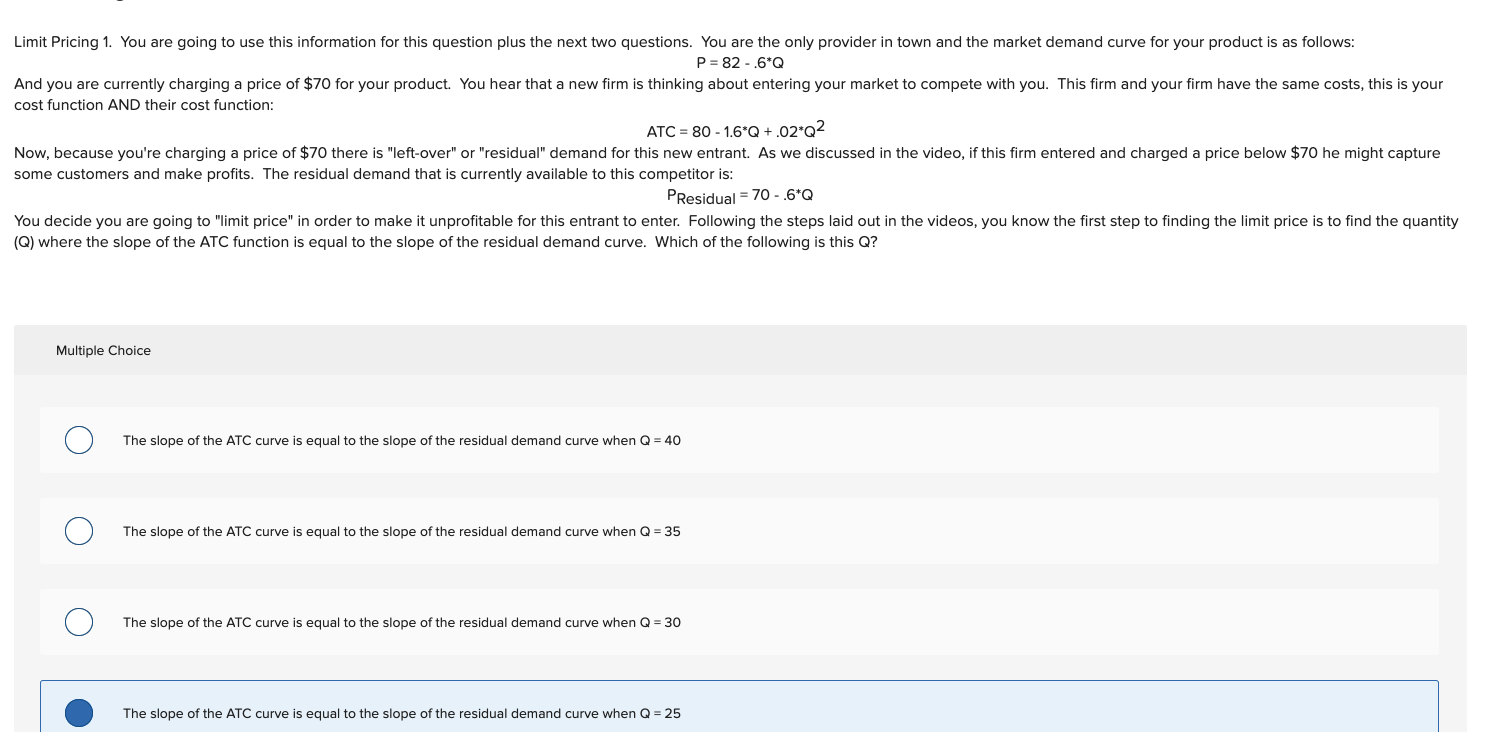
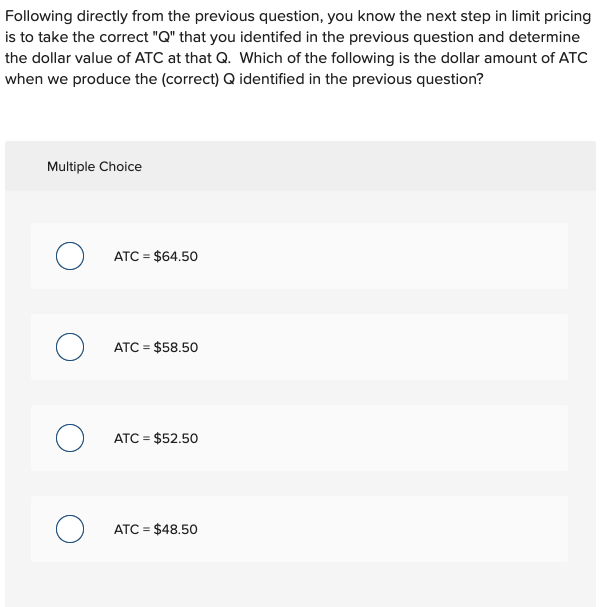
Following directly from the previous question, you know the next step in limit pricing is to take the correct "Q" that you identifed in the previous question and determine the dollar value of ATC at that Q. Which of the following is the dollar amount of ATC when we produce the correct) Q identified in the previous question? Multiple Choice ATC = $64.50 ATC = $58.50 ATC = $52.50 ATC = $48.50 Limit Pricing 1. You are going to use this information for this question plus the next two questions. You are the only provider in town and the market demand curve for your product is as follows: P = 82 - 6'Q And you are currently charging a price of $70 for your product. You hear that a new firm is thinking about entering your market to compete with you. This firm and your firm have the same costs, this is your cost function AND their cost function: ATC = 80 - 1.6*Q +.02*Q2 Now, because you're charging a price of $70 there is "left-over" or "residual" demand for this new entrant. As we discussed in the video, if this firm entered and charged a price below $70 he might capture some customers and make profits. The residual demand that is currently available to this competitor is: PResidual = 70 - .6*Q You decide you are going to "limit price" in order to make it unprofitable for this entrant to enter. Following the steps laid out in the videos, you know the first step to finding the limit price is to find the quantity (Q) where the slope of the ATC function is equal to the slope of the residual demand curve. Which of the following is this Q? Multiple Choice The slope of the ATC curve is equal to the slope of the residual demand curve when Q = 40 The slope of the ATC curve is equal to the slope of the residual demand curve when Q = 35 The slope of the ATC curve is equal to the slope of the residual demand curve when Q = 30 The slope of the ATC curve is equal to the slope of the residual demand curve when Q = 25
Step by Step Solution
There are 3 Steps involved in it

Get step-by-step solutions from verified subject matter experts