



Question: Problem 1 Consider an economy where there are three types of agents. Each type wishes to borrow $500,000 for their small business from your bank.
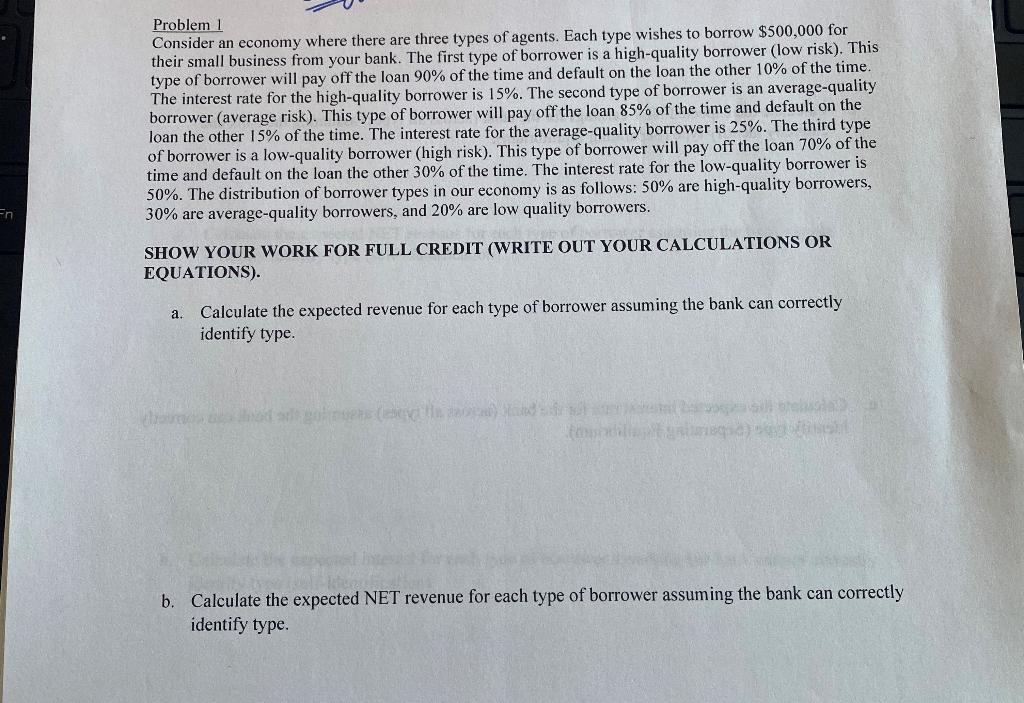
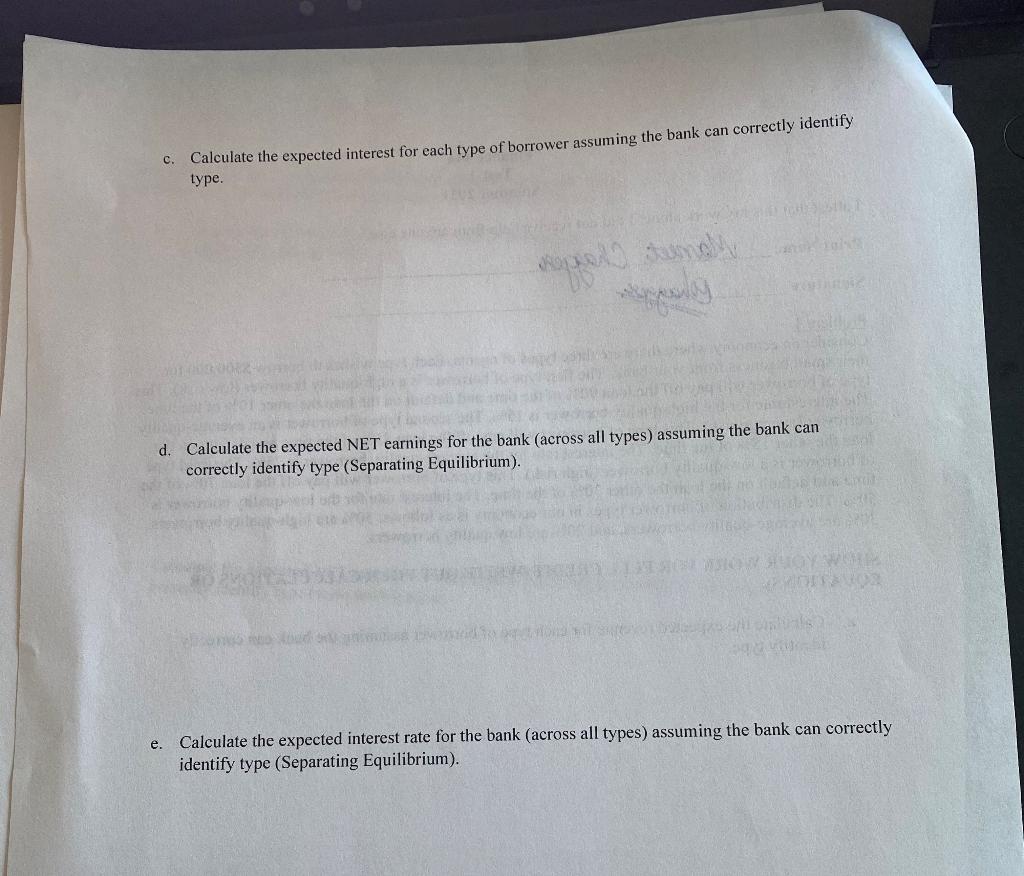
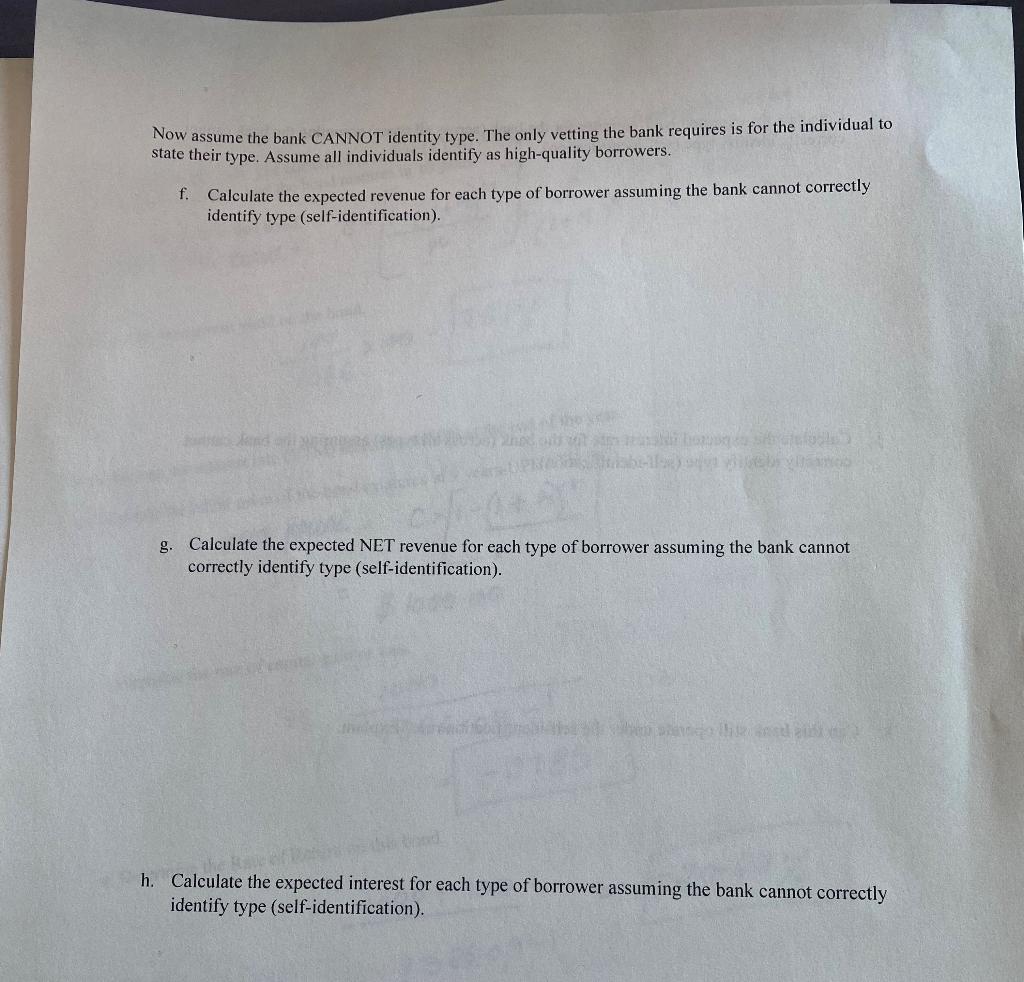
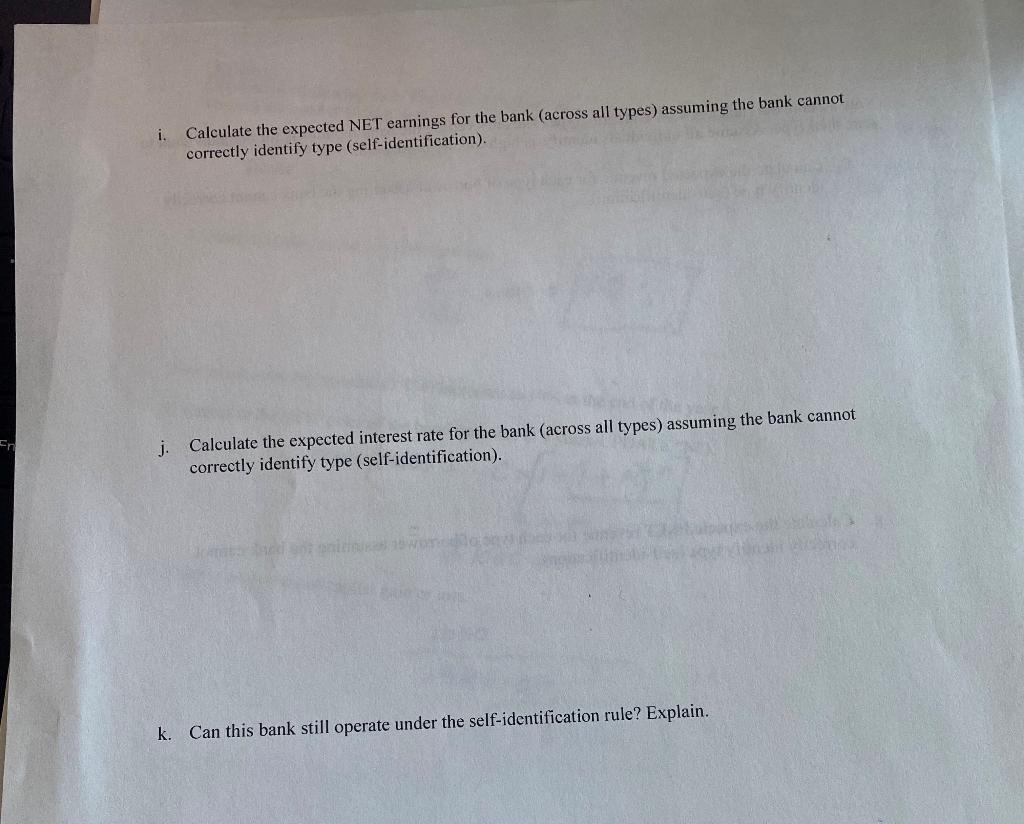
Problem 1 Consider an economy where there are three types of agents. Each type wishes to borrow $500,000 for their small business from your bank. The first type of borrower is a high-quality borrower (low risk). This type of borrower will pay off the loan 90% of the time and default on the loan the other 10% of the time. The interest rate for the high-quality borrower is 15%. The second type of borrower is an average-quality borrower (average risk). This type of borrower will pay off the loan 85% of the time and default on the loan the other 15% of the time. The interest rate for the average-quality borrower is 25%. The third type of borrower is a low-quality borrower (high risk). This type of borrower will pay off the loan 70% of the time and default on the loan the other 30% of the time. The interest rate for the low-quality borrower is 50%. The distribution of borrower types in our economy is as follows: 50% are high-quality borrowers, 30% are average-quality borrowers, and 20% are low quality borrowers. SHOW YOUR WORK FOR FULL CREDIT (WRITE OUT YOUR CALCULATIONS OR EQUATIONS). a. Calculate the expected revenue for each type of borrower assuming the bank can correctly identify type. bre b. Calculate the expected NET revenue for each type of borrower assuming the bank can correctly identify type. c. Calculate the expected interest for each type of borrower assuming the bank can correctly identify type. pe un wasily d. Calculate the expected NET earnings for the bank (across all types) assuming the bank can correctly identify type (Separating Equilibrium). SOW ons e. Calculate the expected interest rate for the bank (across all types) assuming the bank can correctly identify type (Separating Equilibrium). Now assume the bank CANNOT identity type. The only vetting the bank requires is for the individual to state their type. Assume all individuals identify as high-quality borrowers. f. Calculate the expected revenue for each type of borrower assuming the bank cannot correctly identify type (self-identification). g. Calculate the expected NET revenue for each type of borrower assuming the bank cannot correctly identify type (self-identification). h. Calculate the expected interest for each type of borrower assuming the bank cannot correctly identify type (self-identification). i. Calculate the expected NET earnings for the bank (across all types) assuming the bank cannot correctly identify type (self-identification). j. Calculate the expected interest rate for the bank (across all types) assuming the bank cannot correctly identify type (self-identification). lowon k. Can this bank still operate under the self-identification rule? Explain. Problem 1 Consider an economy where there are three types of agents. Each type wishes to borrow $500,000 for their small business from your bank. The first type of borrower is a high-quality borrower (low risk). This type of borrower will pay off the loan 90% of the time and default on the loan the other 10% of the time. The interest rate for the high-quality borrower is 15%. The second type of borrower is an average-quality borrower (average risk). This type of borrower will pay off the loan 85% of the time and default on the loan the other 15% of the time. The interest rate for the average-quality borrower is 25%. The third type of borrower is a low-quality borrower (high risk). This type of borrower will pay off the loan 70% of the time and default on the loan the other 30% of the time. The interest rate for the low-quality borrower is 50%. The distribution of borrower types in our economy is as follows: 50% are high-quality borrowers, 30% are average-quality borrowers, and 20% are low quality borrowers. SHOW YOUR WORK FOR FULL CREDIT (WRITE OUT YOUR CALCULATIONS OR EQUATIONS). a. Calculate the expected revenue for each type of borrower assuming the bank can correctly identify type. bre b. Calculate the expected NET revenue for each type of borrower assuming the bank can correctly identify type. c. Calculate the expected interest for each type of borrower assuming the bank can correctly identify type. pe un wasily d. Calculate the expected NET earnings for the bank (across all types) assuming the bank can correctly identify type (Separating Equilibrium). SOW ons e. Calculate the expected interest rate for the bank (across all types) assuming the bank can correctly identify type (Separating Equilibrium). Now assume the bank CANNOT identity type. The only vetting the bank requires is for the individual to state their type. Assume all individuals identify as high-quality borrowers. f. Calculate the expected revenue for each type of borrower assuming the bank cannot correctly identify type (self-identification). g. Calculate the expected NET revenue for each type of borrower assuming the bank cannot correctly identify type (self-identification). h. Calculate the expected interest for each type of borrower assuming the bank cannot correctly identify type (self-identification). i. Calculate the expected NET earnings for the bank (across all types) assuming the bank cannot correctly identify type (self-identification). j. Calculate the expected interest rate for the bank (across all types) assuming the bank cannot correctly identify type (self-identification). lowon k. Can this bank still operate under the self-identification rule? Explain
Step by Step Solution
There are 3 Steps involved in it

Get step-by-step solutions from verified subject matter experts