



Question: Problem 14-3 (Algo) Straight-line and effective interest compared [LO14-2] On January 1, 2024, Reyes Recreational Products issued $125,000,10%, four-year bonds. Interest is paid semiannually on
![Problem 14-3 (Algo) Straight-line and effective interest compared [LO14-2] On January](https://s3.amazonaws.com/si.experts.images/answers/2024/07/66a08d88013ea_02366a08d878384a.jpg)
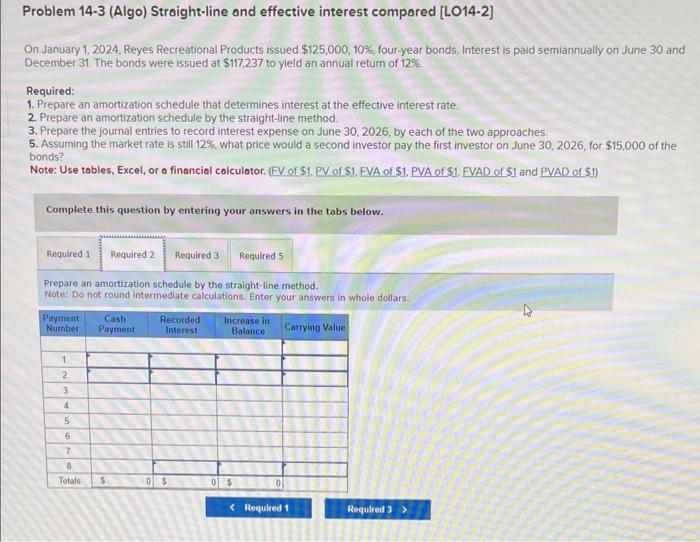
Problem 14-3 (Algo) Straight-line and effective interest compared [LO14-2] On January 1, 2024, Reyes Recreational Products issued $125,000,10%, four-year bonds. Interest is paid semiannually on June 30 and December 31 . The bonds were issued at $117,237 to yield an annual return of 12%. Required: 1. Prepare an amortization schedule that determines interest at the effective interest rate: 2. Prepare an amortization schedule by the straight-line method. 3. Prepare the journal entries to record interest expense on June 30,2026 , by each of the two approaches. 5. Assuming the market rate is still 12%, what price would a second investor pay the first investor on June 30,2026 , for $15,000 of the bonds? Note: Use tables, Excel, or a financial calculator. (FV of \$1, PV of S1, FVA of S1. PVA of S1, FVAD of \$1 and PVAD of S1) Complete this question by entering your answers in the tabs below. Prepare an amortization schedule that determines interest at the effective interest rate. Note: Enter your answers in whole dollars. Problem 14-3 (Algo) Straight-line and effective interest compored [LO14-2] On January 1, 2024, Reyes Recreational Products issued $125,000,10%, four-year bonds. Interest is paid semiannually on June 30 and December 31 . The bonds were issued at $117,237 to yield an annual return of 12% Required: 1. Prepare an amortization schedule that determines interest at the effective interest rate 2. Prepare an amortization schedule by the straight-line method. 3. Prepare the journal entries to record interest expense on June 30,2026 , by each of the two approaches. 5. Assuming the market rate is still 12%, what price would a second investor pay the first investor on June 30,2026, for $15,000 of the bonds? Note: Use tables, Excel, or a finencial calculator. (FV of S1, PV of S1. FVA of S1. PVA of S1. FVAD of S1 and PVAD of \$1) Complete this question by entering your answers in the tabs below. Prepare an amortization schedule by the straight-line method. Note: Do not round intermedlate calculations. Enter your answers in whole dollars
Step by Step Solution
There are 3 Steps involved in it

Get step-by-step solutions from verified subject matter experts