







Question: Problem 2 (15 points). If you have two surface reactions: 1. AB 2. AC where reaction 1 is first order, and reaction 2 is second
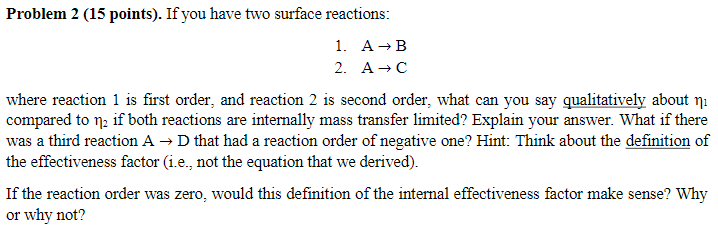
Problem 2 (15 points). If you have two surface reactions: 1. AB 2. AC where reaction 1 is first order, and reaction 2 is second order, what can you say qualitatively about 1 compared to 2 if both reactions are internally mass transfer limited? Explain your answer. What if there was a third reaction AD that had a reaction order of negative one? Hint: Think about the definition of the effectiveness factor (i.e., not the equation that we derived). If the reaction order was zero, would this definition of the internal effectiveness factor make sense? Why or why not
Step by Step Solution
There are 3 Steps involved in it
1 Expert Approved Answer
Step: 1 Unlock

Question Has Been Solved by an Expert!
Get step-by-step solutions from verified subject matter experts
Step: 2 Unlock
Step: 3 Unlock
 Study Help