







Question: Problem 2 Consider again the basic RBC model, but now allow for government spending shocks as a source of fluctuations. The representative household maximizes: s=1
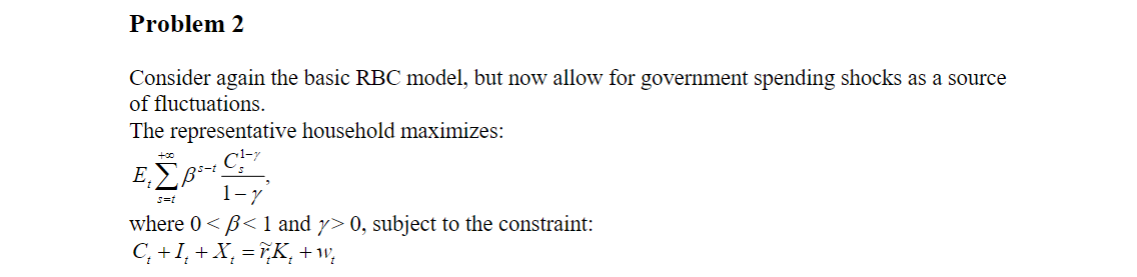
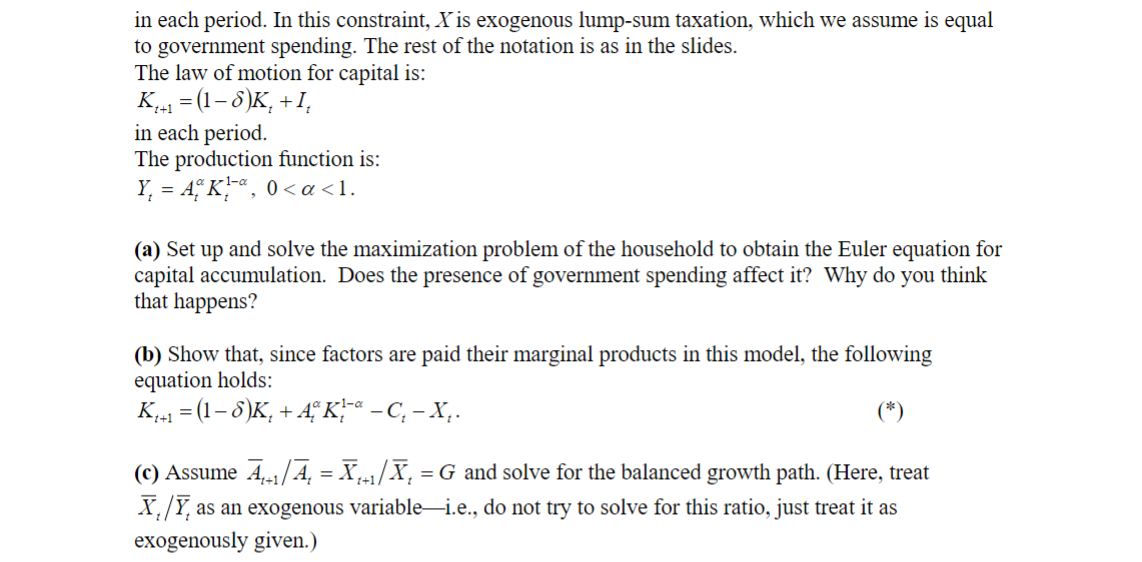
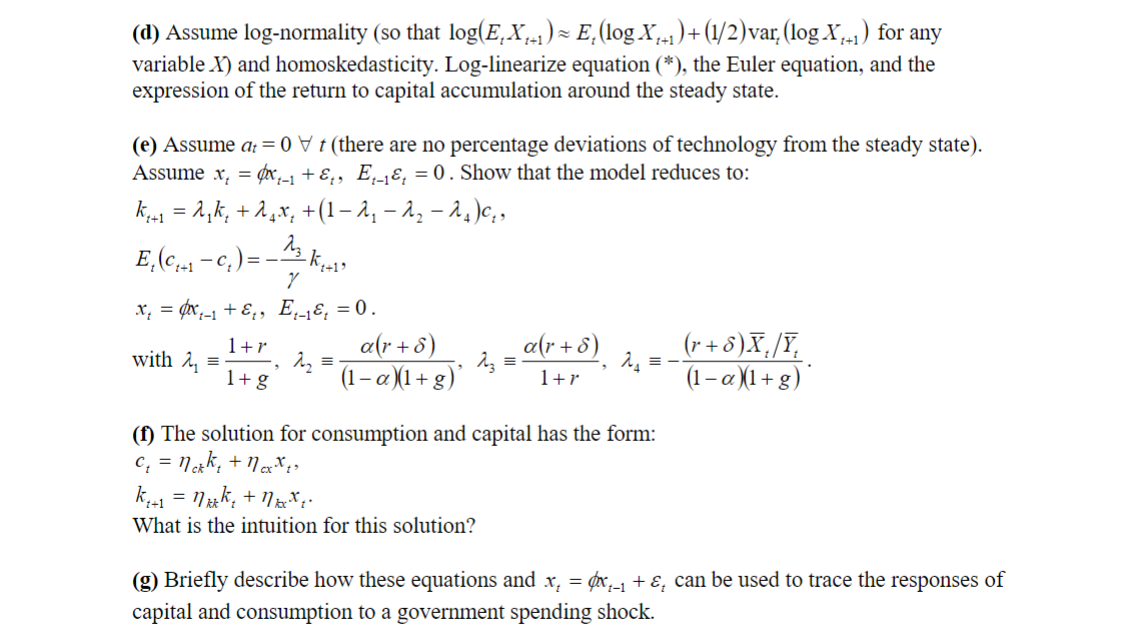

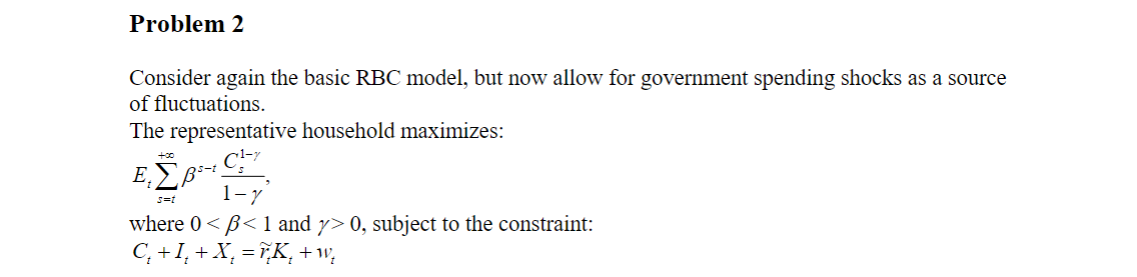
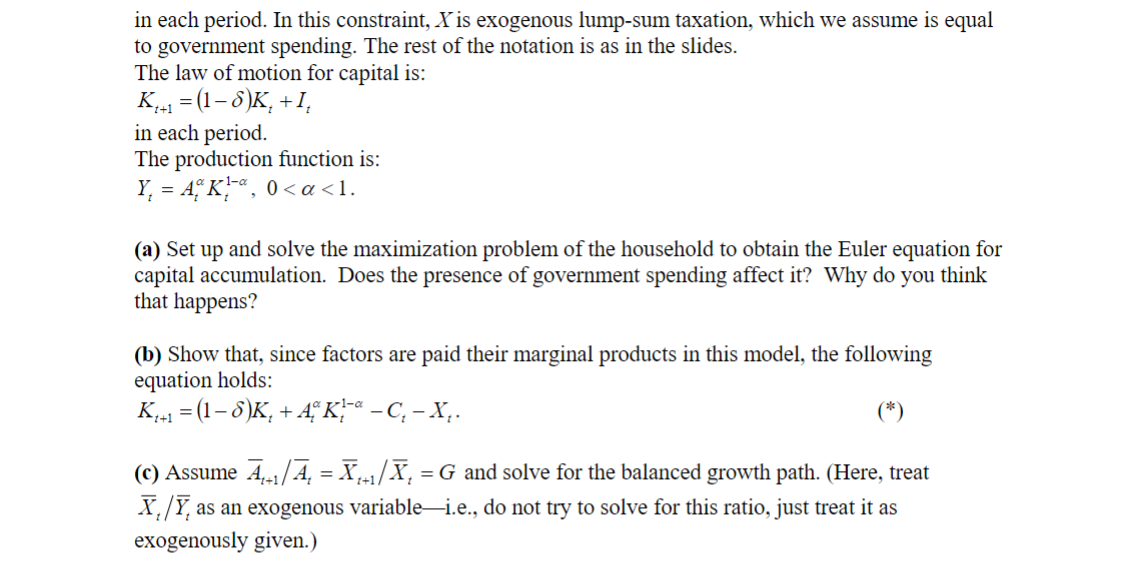

Problem 2 Consider again the basic RBC model, but now allow for government spending shocks as a source of fluctuations. The representative household maximizes: s=1 1-1 where 0 0, subject to the constraint: C, +1, +X=FK,+ W.in each period. In this constraint. X is exogenous lump-sum taxation. which we assume is equal to government spending. The rest of the notation is as in the slides. The law of motion for capital is: K1+1 ={l )KI +1} in each period. The production function is: r AfKQ'\". 0
Step by Step Solution
There are 3 Steps involved in it
1 Expert Approved Answer
Step: 1 Unlock

Question Has Been Solved by an Expert!
Get step-by-step solutions from verified subject matter experts
Step: 2 Unlock
Step: 3 Unlock
 Study Help