Question: Problem 3 (20 points) You own a bar that has not been able to open in the last year due to the health contingency. Without
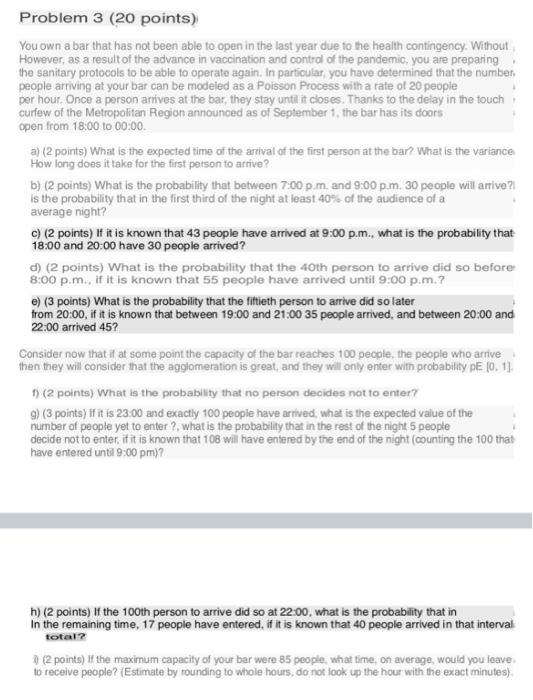
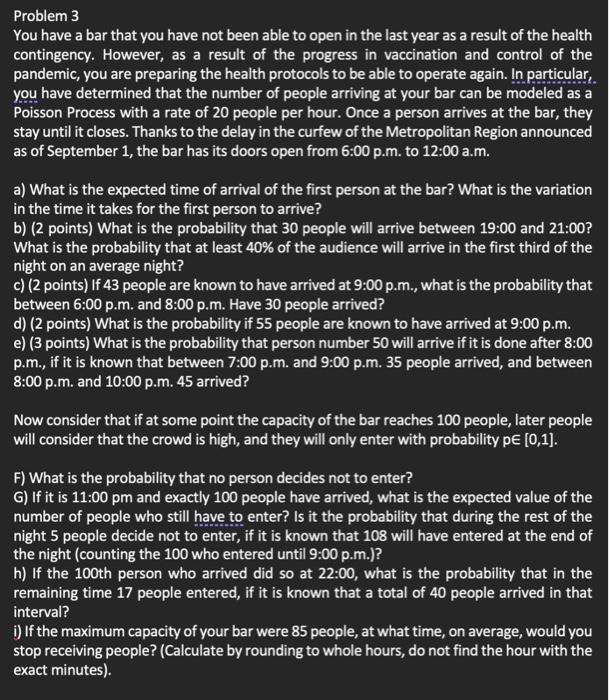
Problem 3 (20 points) You own a bar that has not been able to open in the last year due to the health contingency. Without However, as a result of the advance in vaccination and control of the pandemic, you are preparing the sanitary protocols to be able to operate again. In particular, you have determined that the number people arriving at your bar can be modeled as a Poisson Process with a rate of 20 people per hour. Once a person arrives at the bar, they stay until it closes. Thanks to the delay in the touch curfew of the Metropolitan Region announced as of September 1, the bar has its doors open from 18:00 to 00.00. a) (2 points) What is the expected time of the arrival of the first person at the bar? What is the variance How long does it take for the first person to arrive? b) (2 points) What is the probability that between 7:00p.m. and 9:00p.m. 30 people will arrive? is the probability that in the first third of the night at least 40% of the audience of a average night? C) (2 points) It it is known that 43 people have arrived at 9:00 p.m., what is the probability that 18:00 and 20:00 have 30 people arrived? d) (2 points) What is the probability that the 40th person to arrive did so before 8:00 p.m., if it is known that 55 people have arrived until 9:00 p.m.? e) (3 points) What is the probability that the fiftieth person to arrive did so later from 20:00, if it is known that between 19:00 and 21:00 35 people arrived, and between 20:00 and 22:00 arrived 45? Consider now that it at some point the capacity of the bar teaches 100 people, the people who arrive then they will consider that the agglomeration is great, and they will only enter with probability PE 10.11 1) (2 points) What is the probability that no person decides not to enter? 9) (3 points) if it is 23.00 and exactly 100 people have arrived. What is the expected value of the number of people yet to enter ?, what is the probability that in the rest of the night 5 people decide not to enter. it it is known that 108 wil have entered by the end of the night (counting the 100 that have entered until 9:00 pm)? h) (2 points) If the 100th person to arrive did so at 22:00, what is the probability that in In the remaining time, 17 people have entered, if it is known that 40 people arrived in that interval total? (2 points) If the maximum capacity of your bar were 85 people, what time, on average, would you leave to receive people? (Estimate by rounding to whole hours, do not fook up the hour with the exact minutes) Problem 3 You have a bar that you have not been able to open in the last year as a result of the health contingency. However, as a result of the progress in vaccination and control of the pandemic, you are preparing the health protocols to be able to operate again. In particular, you have determined that the number of people arriving at your bar can be modeled as a Poisson Process with a rate of 20 people per hour. Once a person arrives at the bar, they stay until it closes. Thanks to the delay in the curfew of the Metropolitan Region announced as of September 1, the bar has its doors open from 6:00 p.m. to 12:00 a.m. a) What is the expected time of arrival of the first person at the bar? What is the variation in the time it takes for the first person to arrive? b) (2 points) What is the probability that 30 people will arrive between 19:00 and 21:00? What is the probability that at least 40% of the audience will arrive in the first third of the night on an average night? c) (2 points) If 43 people are known to have arrived at 9:00 p.m., what is the probability that between 6:00 p.m. and 8:00p.m. Have 30 people arrived? d) (2 points) What is the probability if 55 people are known to have arrived at 9:00 p.m. e) (3 points) What is the probability that person number 50 will arrive if it is done after 8:00 p.m., if it is known that between 7:00 p.m. and 9:00 p.m. 35 people arrived, and between 8:00 p.m. and 10:00 p.m. 45 arrived? Now consider that if at some point the capacity of the bar reaches 100 people, later people will consider that the crowd is high, and they will only enter with probability PE (0,1). F) What is the probability that no person decides not to enter? G) If it is 11:00 pm and exactly 100 people have arrived, what is the expected value of the number of people who still have to enter? Is it the probability that during the rest of the night 5 people decide not to enter, if it is known that 108 will have entered at the end of the night (counting the 100 who entered until 9:00 p.m.)? h) If the 100th person who arrived did so at 22:00, what is the probability that in the remaining time 17 people entered, if it is known that a total of 40 people arrived in that interval? i) If the maximum capacity of your bar were 85 people, at what time, on average, would you stop receiving people? (Calculate by rounding to whole hours, do not find the hour with the exact minutes) Problem 3 (20 points) You own a bar that has not been able to open in the last year due to the health contingency. Without However, as a result of the advance in vaccination and control of the pandemic, you are preparing the sanitary protocols to be able to operate again. In particular, you have determined that the number people arriving at your bar can be modeled as a Poisson Process with a rate of 20 people per hour. Once a person arrives at the bar, they stay until it closes. Thanks to the delay in the touch curfew of the Metropolitan Region announced as of September 1, the bar has its doors open from 18:00 to 00.00. a) (2 points) What is the expected time of the arrival of the first person at the bar? What is the variance How long does it take for the first person to arrive? b) (2 points) What is the probability that between 7:00p.m. and 9:00p.m. 30 people will arrive? is the probability that in the first third of the night at least 40% of the audience of a average night? C) (2 points) It it is known that 43 people have arrived at 9:00 p.m., what is the probability that 18:00 and 20:00 have 30 people arrived? d) (2 points) What is the probability that the 40th person to arrive did so before 8:00 p.m., if it is known that 55 people have arrived until 9:00 p.m.? e) (3 points) What is the probability that the fiftieth person to arrive did so later from 20:00, if it is known that between 19:00 and 21:00 35 people arrived, and between 20:00 and 22:00 arrived 45? Consider now that it at some point the capacity of the bar teaches 100 people, the people who arrive then they will consider that the agglomeration is great, and they will only enter with probability PE 10.11 1) (2 points) What is the probability that no person decides not to enter? 9) (3 points) if it is 23.00 and exactly 100 people have arrived. What is the expected value of the number of people yet to enter ?, what is the probability that in the rest of the night 5 people decide not to enter. it it is known that 108 wil have entered by the end of the night (counting the 100 that have entered until 9:00 pm)? h) (2 points) If the 100th person to arrive did so at 22:00, what is the probability that in In the remaining time, 17 people have entered, if it is known that 40 people arrived in that interval total? (2 points) If the maximum capacity of your bar were 85 people, what time, on average, would you leave to receive people? (Estimate by rounding to whole hours, do not fook up the hour with the exact minutes) Problem 3 You have a bar that you have not been able to open in the last year as a result of the health contingency. However, as a result of the progress in vaccination and control of the pandemic, you are preparing the health protocols to be able to operate again. In particular, you have determined that the number of people arriving at your bar can be modeled as a Poisson Process with a rate of 20 people per hour. Once a person arrives at the bar, they stay until it closes. Thanks to the delay in the curfew of the Metropolitan Region announced as of September 1, the bar has its doors open from 6:00 p.m. to 12:00 a.m. a) What is the expected time of arrival of the first person at the bar? What is the variation in the time it takes for the first person to arrive? b) (2 points) What is the probability that 30 people will arrive between 19:00 and 21:00? What is the probability that at least 40% of the audience will arrive in the first third of the night on an average night? c) (2 points) If 43 people are known to have arrived at 9:00 p.m., what is the probability that between 6:00 p.m. and 8:00p.m. Have 30 people arrived? d) (2 points) What is the probability if 55 people are known to have arrived at 9:00 p.m. e) (3 points) What is the probability that person number 50 will arrive if it is done after 8:00 p.m., if it is known that between 7:00 p.m. and 9:00 p.m. 35 people arrived, and between 8:00 p.m. and 10:00 p.m. 45 arrived? Now consider that if at some point the capacity of the bar reaches 100 people, later people will consider that the crowd is high, and they will only enter with probability PE (0,1). F) What is the probability that no person decides not to enter? G) If it is 11:00 pm and exactly 100 people have arrived, what is the expected value of the number of people who still have to enter? Is it the probability that during the rest of the night 5 people decide not to enter, if it is known that 108 will have entered at the end of the night (counting the 100 who entered until 9:00 p.m.)? h) If the 100th person who arrived did so at 22:00, what is the probability that in the remaining time 17 people entered, if it is known that a total of 40 people arrived in that interval? i) If the maximum capacity of your bar were 85 people, at what time, on average, would you stop receiving people? (Calculate by rounding to whole hours, do not find the hour with the exact minutes)









 Study Help