







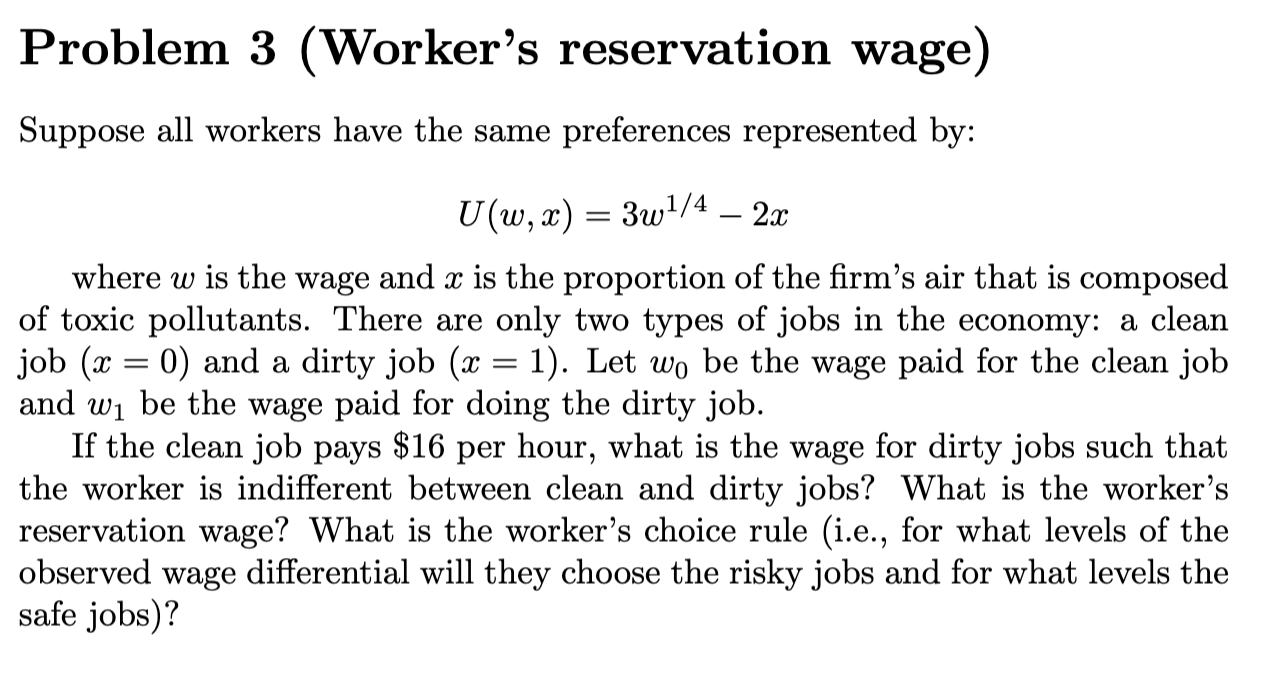
Question: Problem 3 ( Worker ' s reservation wage ) Suppose all workers have the same preferences represented by: [ U ( w , x
Problem Workers reservation wage
Suppose all workers have the same preferences represented by:
Uw x w x
where w is the wage and x is the proportion of the firm's air that is composed of toxic pollutants. There are only two types of jobs in the economy: a clean job x and a dirty job x Let w be the wage paid for the clean job and w be the wage paid for doing the dirty job.
If the clean job pays $ per hour, what is the wage for dirty jobs such that the worker is indifferent between clean and dirty jobs? What is the worker's reservation wage? What is the worker's choice rule ie for what levels of the observed wage differential will they choose the risky jobs and for what levels the safe jobs
Step by Step Solution
There are 3 Steps involved in it
1 Expert Approved Answer
Step: 1 Unlock

Question Has Been Solved by an Expert!
Get step-by-step solutions from verified subject matter experts
Step: 2 Unlock
Step: 3 Unlock
 Study Help