







Question: Problem 3-01 (Algorithmic) Consider the following linear program: Max 3A + 2B s.t. 1A + 1B 14 3A + 1B 26 1A + 2B 16
Problem 3-01 (Algorithmic)
Consider the following linear program:
| Max | 3A + 2B |
| s.t. | |
| 1A + 1B 14 | |
| 3A + 1B 26 | |
| 1A + 2B 16 | |
| A, B 0 |
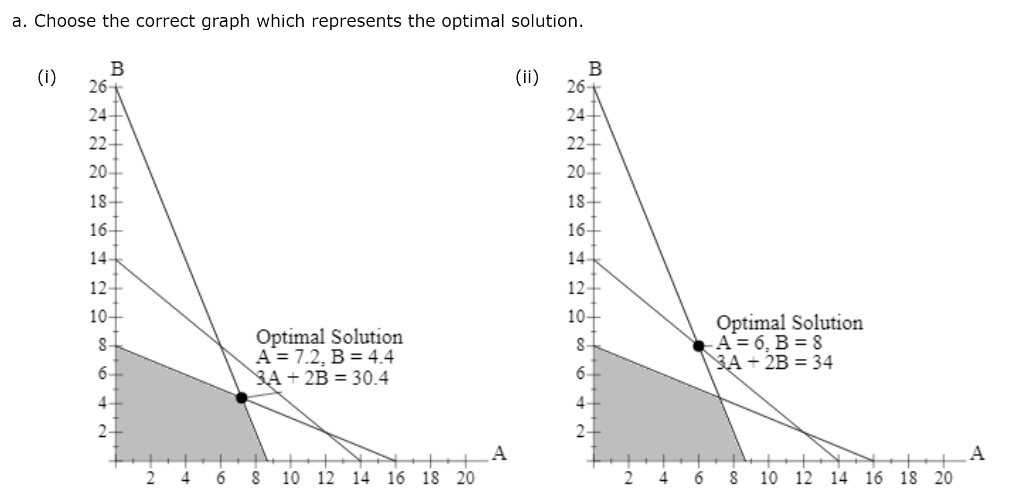
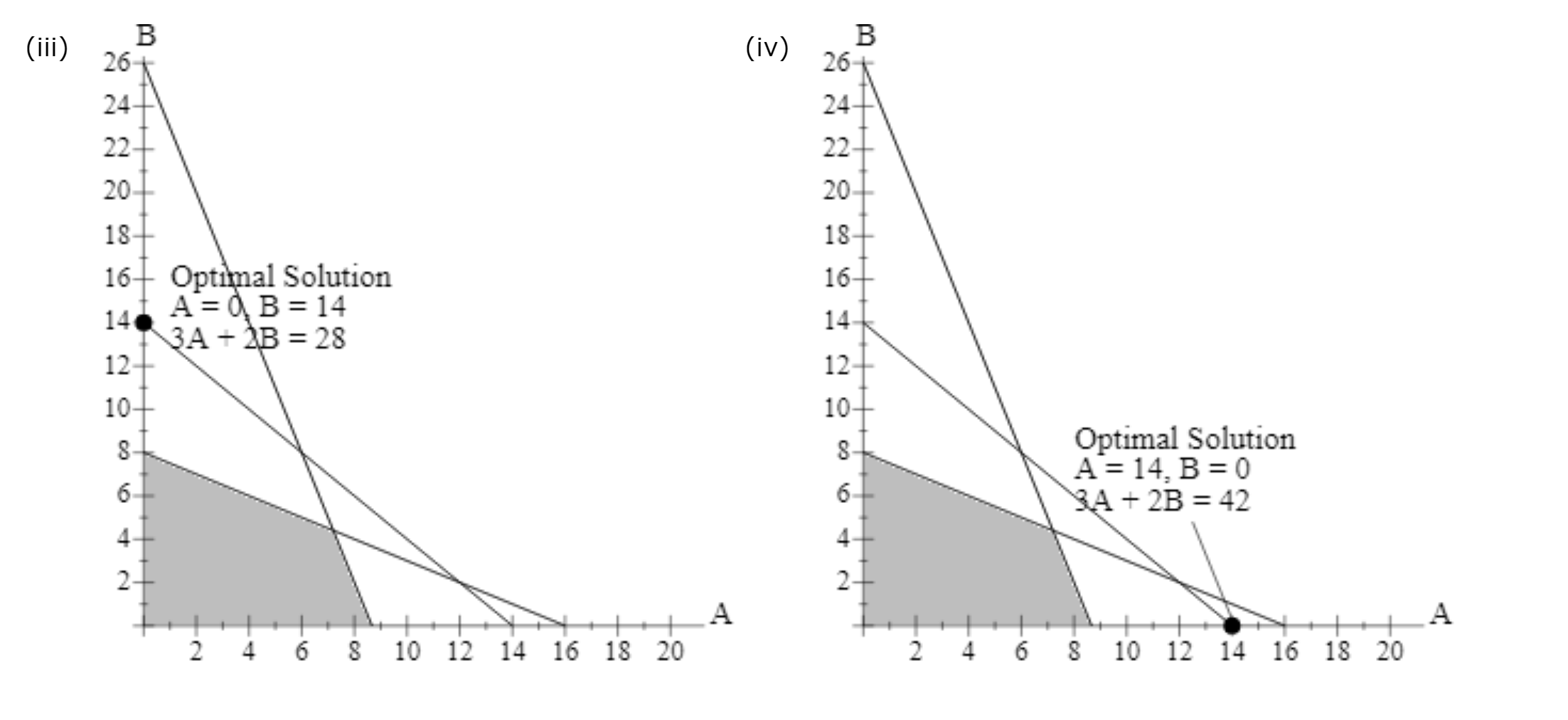
B. Assume that the objective function coefficient for A changes from 3 to 4. Does the optimal solution change? Use the graphical solution procedure to find the new optimal solution
_____________ (The same extreme point remains optimal or a new extreme point becomes optimal)
If required, round your answers to one decimal place.
| A | |
| B | |
| Optimal solution |
|
C. Assume that the objective function coefficient for A remains 3, but the objective function coefficient for B changes from 2 to 7. Does the optimal solution change? Use the graphical solution procedure to find the new optimal solution.
_________________(Same options as step B)
If required, round your answers to one decimal place.
| A | |
| B | |
| Optimal solution |
D. The sensitivity report for the linear program in part (a) provides the following objective coefficient range information:
| Variable | Objective Coefficient | Allowable Increase | Allowable Decrease | ||||||
| A | 3.00000 | 3.00000 | 2.00000 | ||||||
| B | 2.00000 | 4.00000 | 1.00000 |
Use this objective coefficient range information to answer parts (b) and (c). The objective coefficient range for A is from __________ to _________ so the optimal solution ______ change in part (b) because the new objective coefficient is ________ this range. The objective coefficient range for B is from ________ to fill ___________ so the optimal solution _______ change in part (c) because the new objective coefficient is _____this range.
a. Choose the correct graph which represents the optimal solution. B (i) (ii) 26 B 26 24 22 20 24 22 20 18 18 16 16- 14 14 12 10- 8 Optimal Solution A = 7.2, B = 4.4 SA + 2B = 30.4 12 10- 8 6 Optimal Solution A= 6. B=8 3.A + 2B = 34 6 4 4 2 2 A 6 8 10 12 14 16 18 20 4 6 8 10 12 14 16 18 20 (iii) B 26 (iv) B 26 24 24 2 22 22 20 20 18 18 16+ Optimal Solution 14 A=0, B = 14 3A - B = 28 12 10 16- 14 12 1 10+ 8 8 Optimal Solution A = 14, B = 0 SA + 2B = 42 6 6 4 2- 2 A A 2 4 6 8 10 12 14 16 18 20 2 4 6 8 10 12 14 16 18 20Step by Step Solution
There are 3 Steps involved in it

Get step-by-step solutions from verified subject matter experts
 Study Help