



Question: Problem 6-09A Shamrock, Inc. began operations on July 1. It uses a perpetual inventory system. During July, the company had the following purchases and sales.
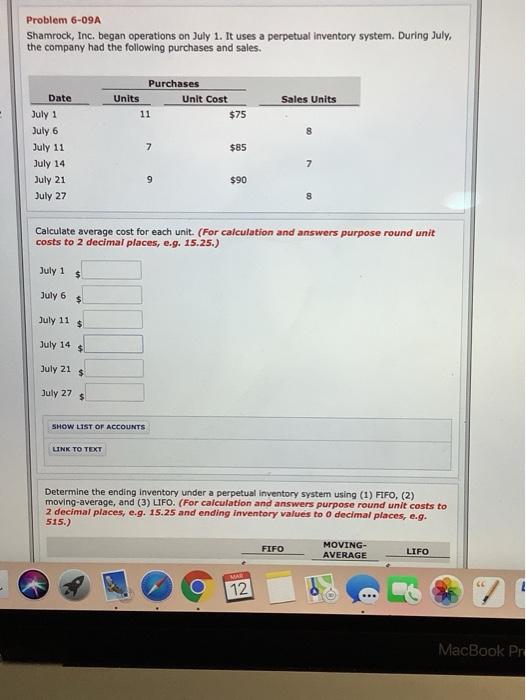
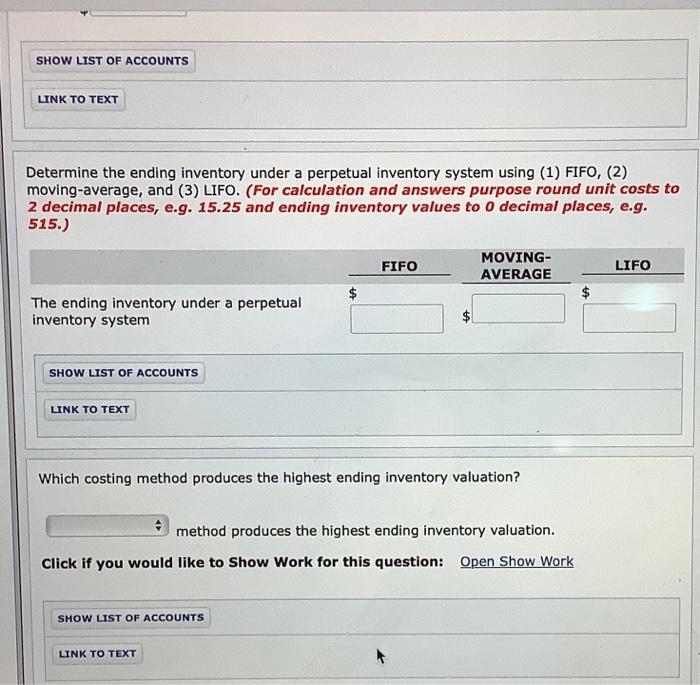
Problem 6-09A Shamrock, Inc. began operations on July 1. It uses a perpetual inventory system. During July, the company had the following purchases and sales. Date Purchases Units Unit Cost 11 $75 Sales Units 7 $85 July 1 July 6 July 11 July 14 July 21 July 27 7 9 $90 Calcula average cost for each unit. (For calculation and answers purpose round unit costs to 2 decimal places, e.g. 15.25.) July 1 $ July 6 $ July 11 $ July 14 $ July 21 $ July 27 $ SHOW LIST OF ACCOUNTS LINK TO TEXT Determine the ending inventory under a perpetual Inventory system using (1) FIFO, (2) moving average, and (3) LIFO. (For calculation and answers purpose round unit costs to 2 decimal places, e.g. 19.25 and ending Inventory values to o decimal places, e.g. 515.) MOVING- FIFO LIFO AVERAGE C 12 MacBook Pri SHOW LIST OF ACCOUNTS LINK TO TEXT Determine the ending inventory under a perpetual inventory system using (1) FIFO, (2) moving-average, and (3) LIFO. (For calculation and answers purpose round unit costs to 2 decimal places, e.g. 15.25 and ending inventory values to o decimal places, e.g. 515.) FIFO MOVING- AVERAGE LIFO $ The ending inventory under a perpetual inventory system SHOW LIST OF ACCOUNTS LINK TO TEXT Which costing method produces the highest ending inventory valuation? method produces the highest ending inventory valuation. Click if you would like to Show Work for this question: Open Show Work SHOW LIST OF ACCOUNTS LINK TO TEXT
Step by Step Solution
There are 3 Steps involved in it

Get step-by-step solutions from verified subject matter experts