







Question: Problem is solvable. Please show all work. Solve for all except mol fraction CO in purge, that is correct. All other answers are wrong. Methanol
Problem is solvable. Please show all work. Solve for all except mol fraction CO in purge, that is correct. All other answers are wrong.
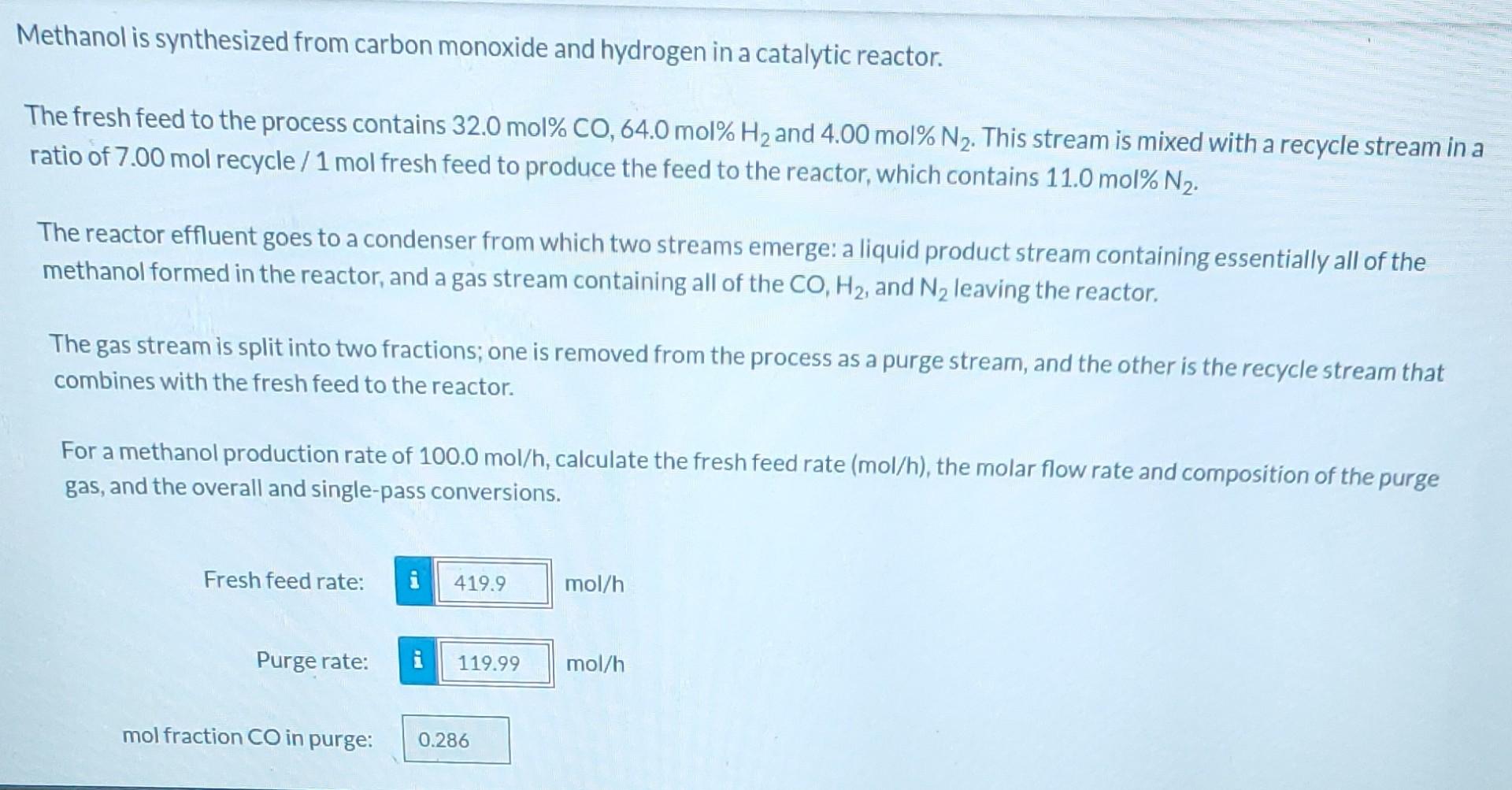
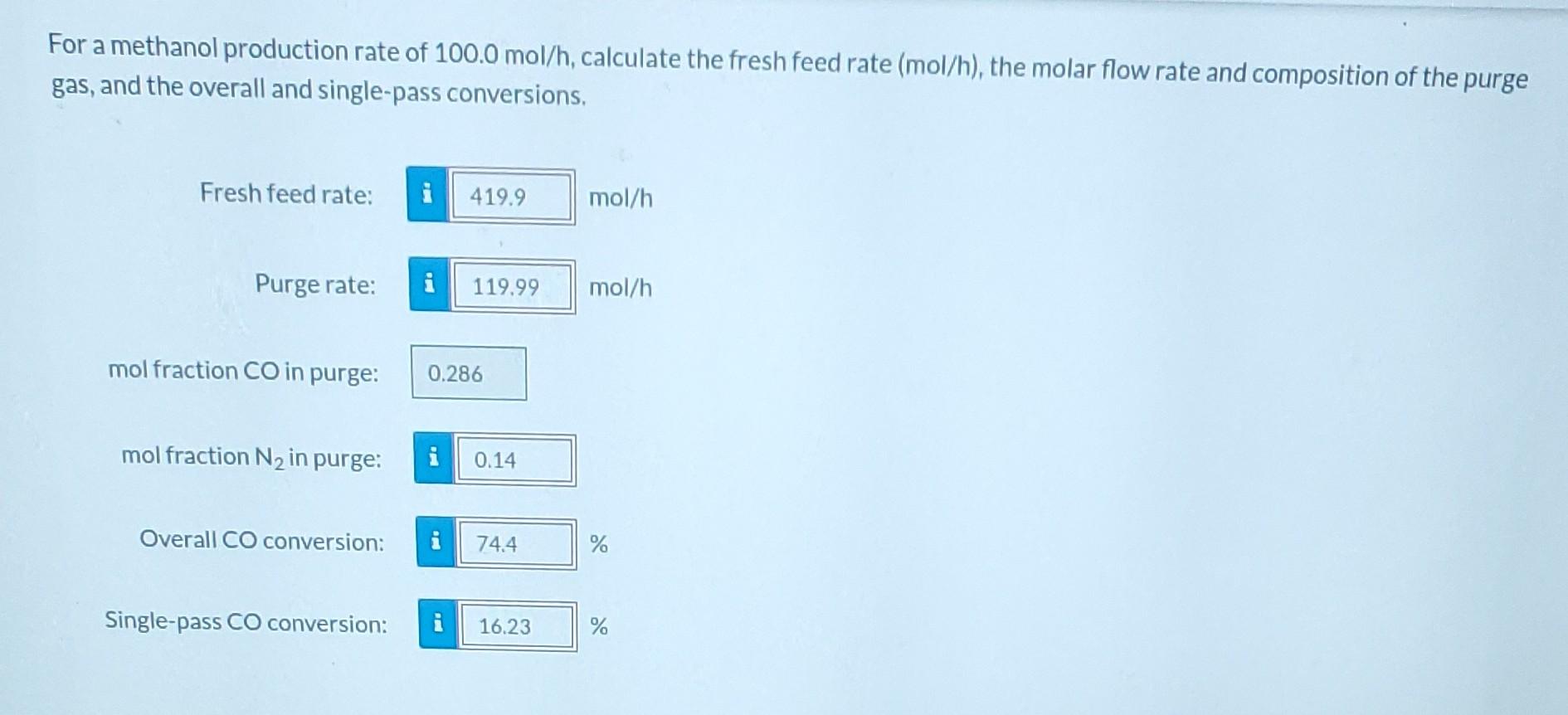
Methanol is synthesized from carbon monoxide and hydrogen in a catalytic reactor. The fresh feed to the process contains 32.0 mol% CO, 64.0 mol % H and 4.00 mol% N. This stream is mixed with a recycle stream in a ratio of 7.00 mol recycle / 1 mol fresh feed to produce the feed to the reactor, which contains 11.0 mol % N. The reactor effluent goes to a condenser from which two streams emerge: a liquid product stream containing essentially all of the methanol formed in the reactor, and a gas stream containing all of the CO, H2, and N leaving the reactor. The gas stream is split into two fractions; one is removed from the process as a purge stream, and the other is the recycle stream that combines with the fresh feed to the reactor. For a methanol production rate of 100.0 mol/h, calculate the fresh feed rate (mol/h), the molar flow rate and composition of the purge gas, and the overall and single-pass conversions. Fresh feed rate: 419.9 mol/h Purge rate: 119.99 mol/h mol fraction CO in purge: 0.286 For a methanol production rate of 100.0 mol/h, calculate the fresh feed rate (mol/h), the molar flow rate and composition of the purge gas, and the overall and single-pass conversions. Fresh feed rate: 419.9 mol/h Purge rate: i 119.99 mol/h mol fraction CO in purge: 0.286 mol fraction N in purge: i 0.14 Overall CO conversion: 74.4 Single-pass CO conversion: 16.23 % %
Step by Step Solution
There are 3 Steps involved in it

Get step-by-step solutions from verified subject matter experts
 Study Help