Question: Project 1 - REA Database - 80 pts Points Allocation . Relationship 10pt . Tables 20pt . 10 Queries 50pt Grand Total 80pt **Completion of
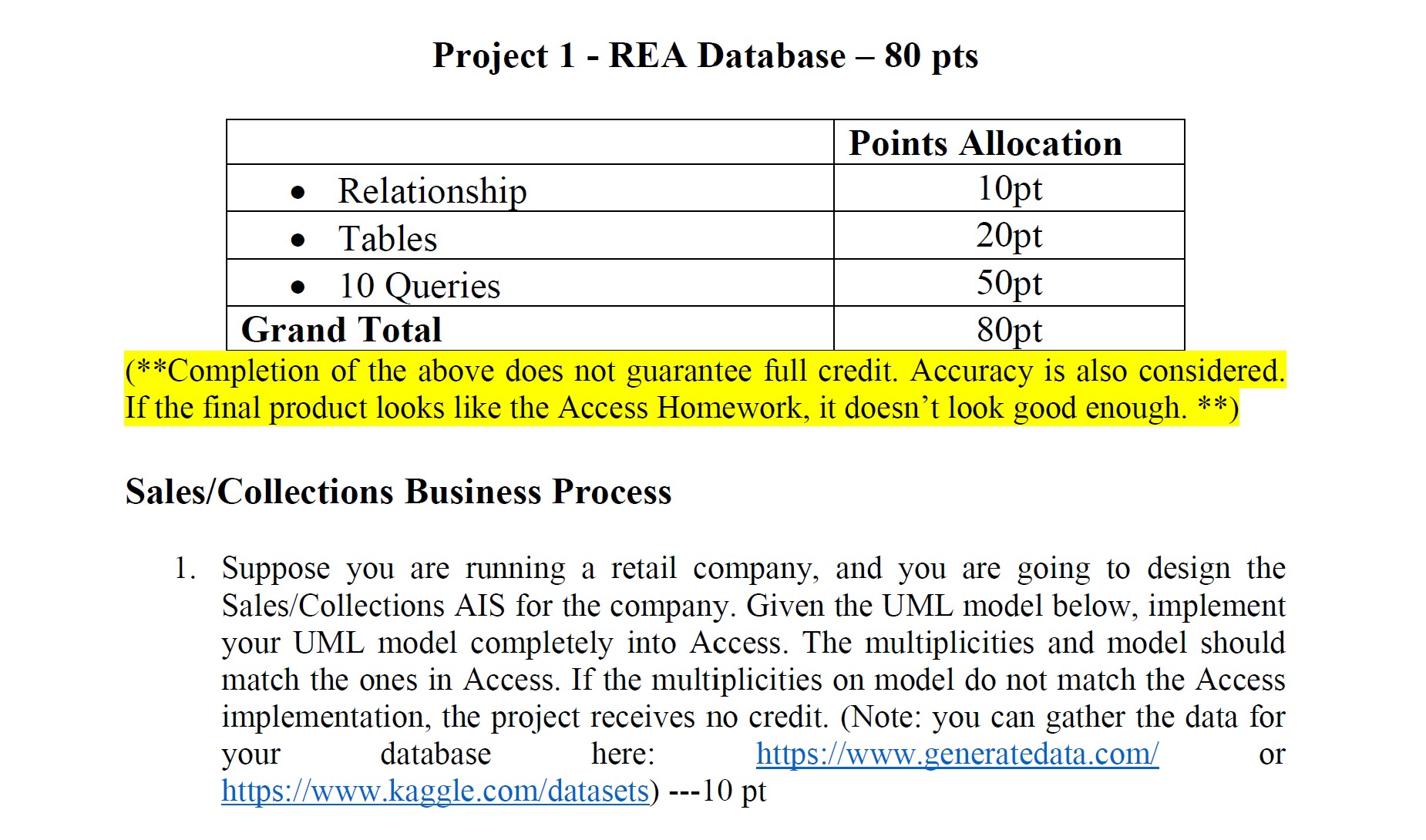
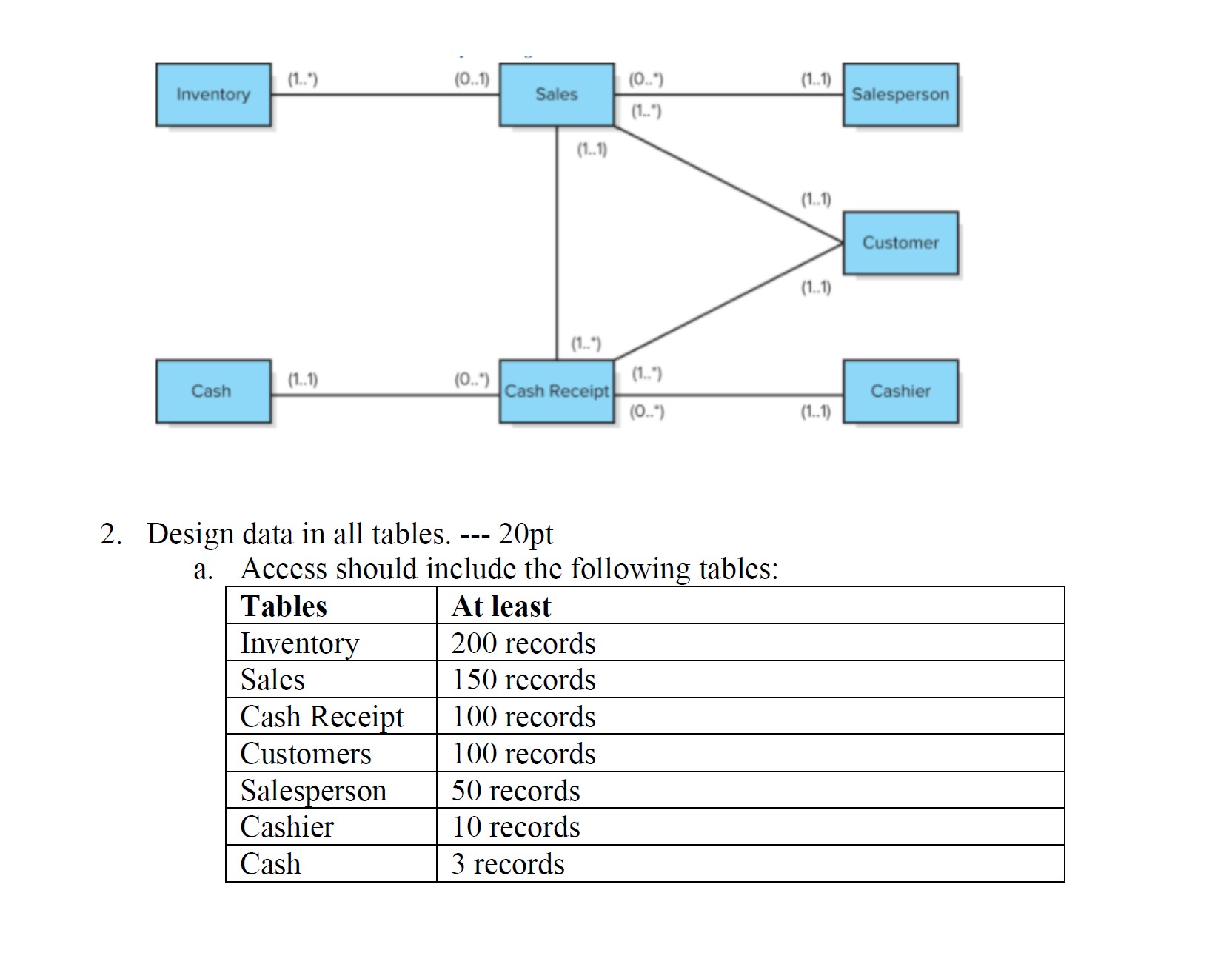
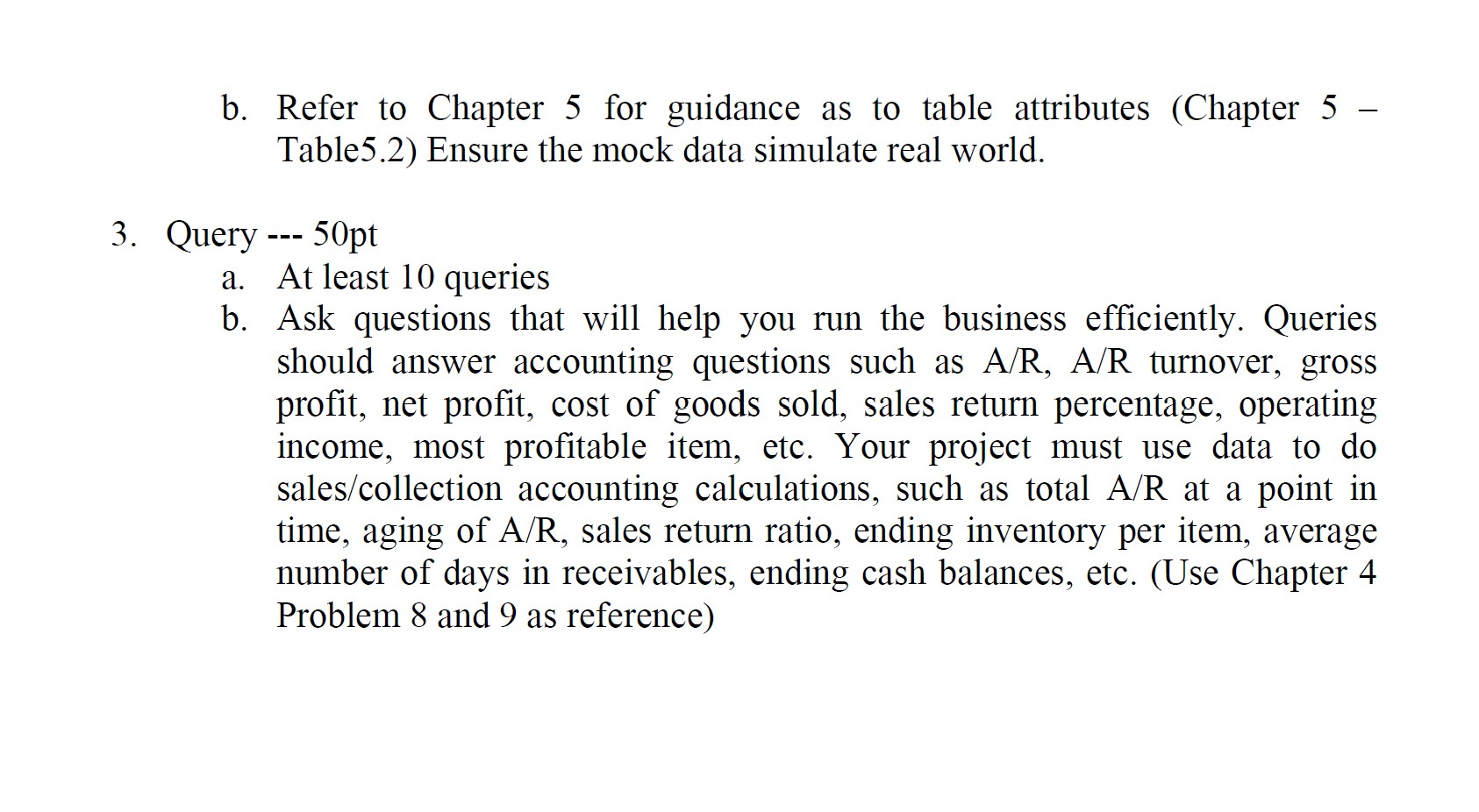
Project 1 - REA Database - 80 pts Points Allocation . Relationship 10pt . Tables 20pt . 10 Queries 50pt Grand Total 80pt **Completion of the above does not guarantee full credit. Accuracy is also considered. If the final product looks like the Access Homework, it doesn't look good enough. * *) Sales/Collections Business Process 1. Suppose you are running a retail company, and you are going to design the Sales/Collections AIS for the company. Given the UML model below, implement your UML model completely into Access. The multiplicities and model should match the ones in Access. If the multiplicities on model do not match the Access implementation, the project receives no credit. (Note: you can gather the data for your database here: https://www.generatedata.com/ or https://www.kaggle.com/datasets) ---10 pt(1..") (0..1) (0..") (1..1 Inventory Sales Salesperson (1..") (1..1) (1..1) Customer (1..1) (1..") (1..1) (0..") (1..") Cash Cash Receipt Cashier (0..") (1..1) 2. Design data in all tables. --- 20pt a. Access should include the following tables: Tables At least Inventory 200 records Sales 150 records Cash Receipt 100 records Customers 100 records Salesperson 50 records Cashier 10 records Cash 3 recordsb. Refer to Chapter 5 for guidance as to table attributes (Chapter 5 Table5.2) Ensure the mock data simulate real world. 3. Query --- 50pt a. At least 10 queries b. Ask questions that will help you run the business efciently. Queries should answer accounting questions such as A/R, A/R turnover, gross prot, net prot, cost of goods sold, sales return percentage, operating income, most protable item, etc. Your project must use data to do sales/collection accounting calculations, such as total A/R at a point in time, aging of A/R, sales return ratio, ending inventory per item, average number of days in receivables, ending cash balances, etc. (Use Chapter 4 Problem 8 and 9 as reference)
Step by Step Solution
There are 3 Steps involved in it
1 Expert Approved Answer
Step: 1 Unlock
Question Has Been Solved by an Expert!
Get step-by-step solutions from verified subject matter experts
Step: 2 Unlock
Step: 3 Unlock
Students Have Also Explored These Related Accounting Questions!









 Study Help