







Question: Projectile (Compound) Motion lagot 15 Inhal Values Angle: 0' Apand: 5 mb Mass 17.60 kg 10 m 0.15 m 9.81 m's A Resistance Drag Coefficient:
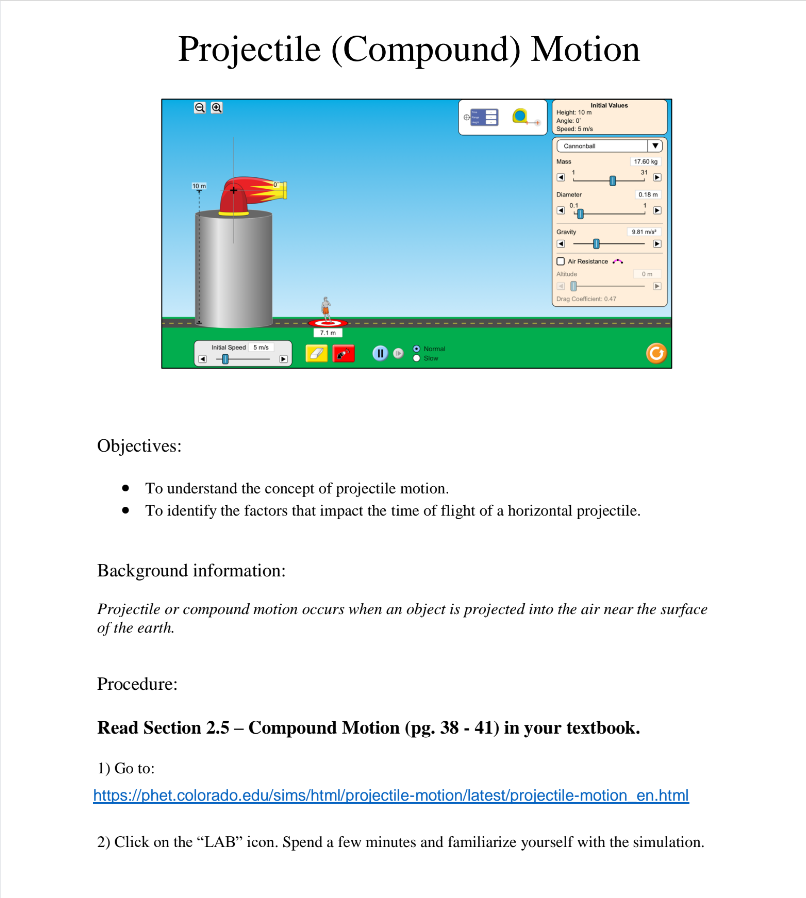
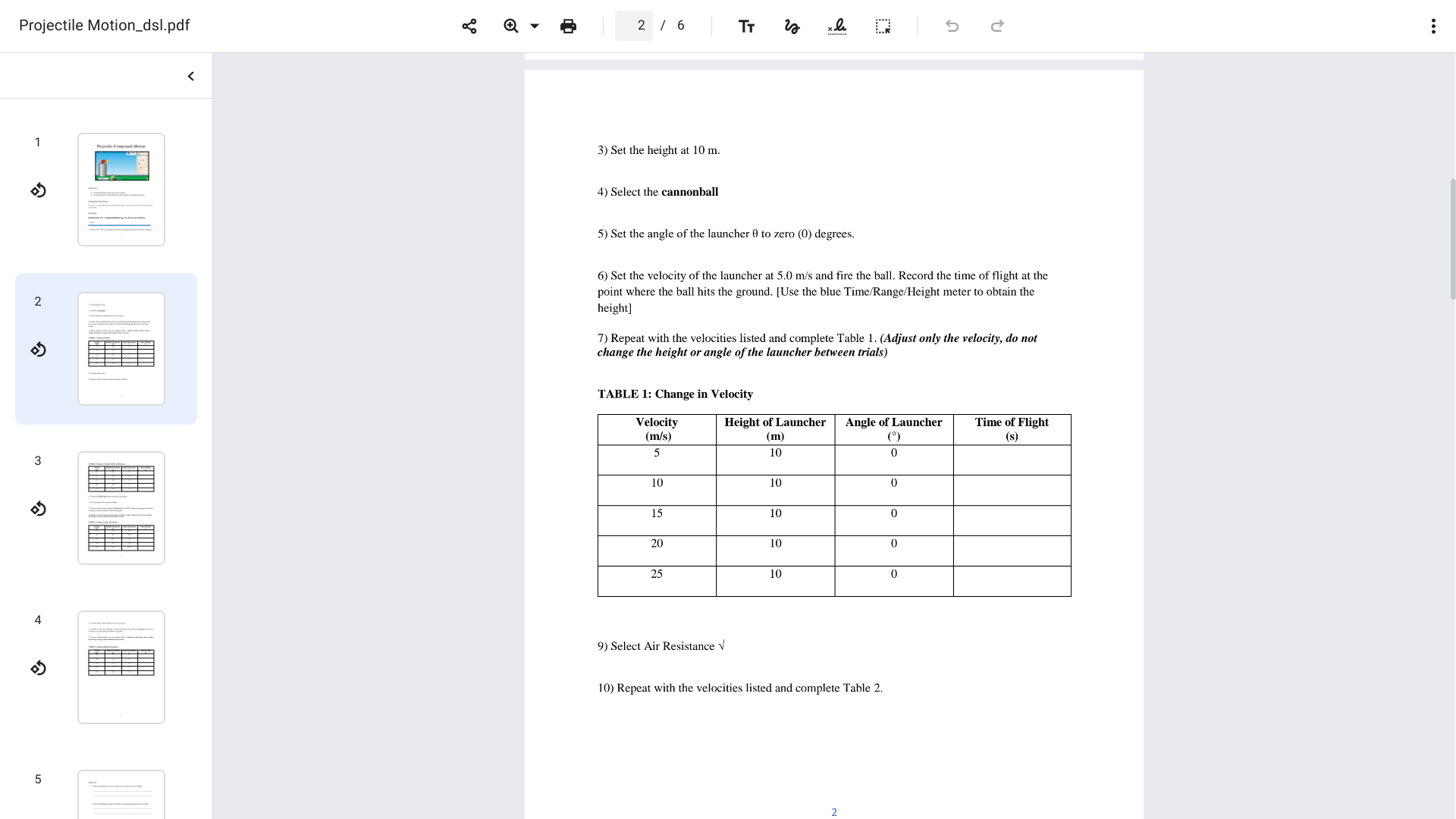
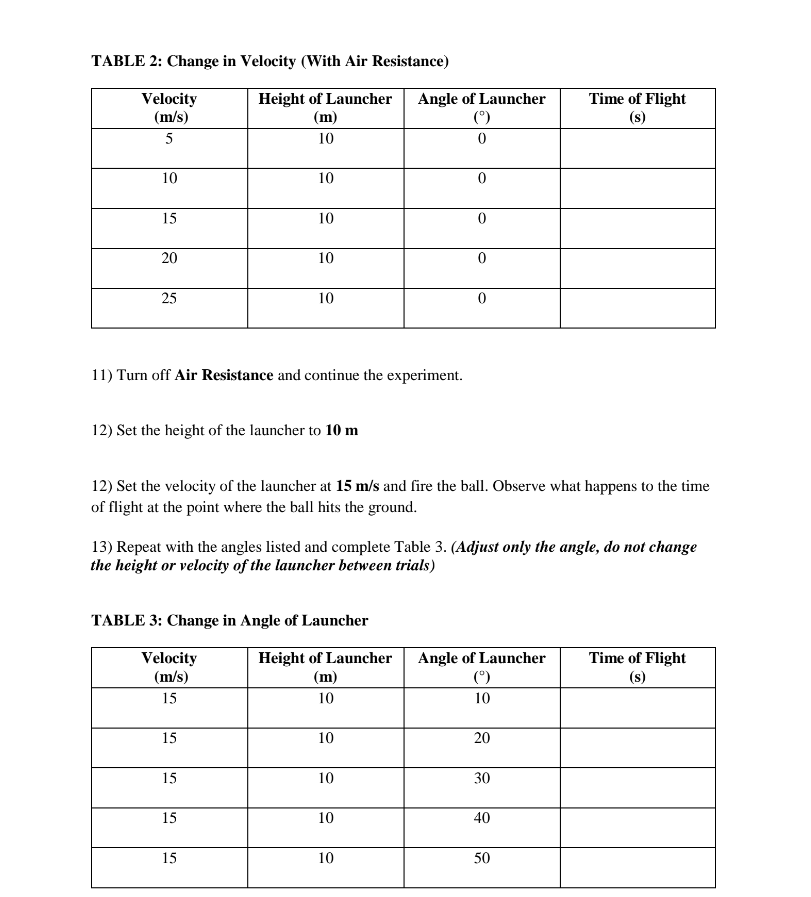
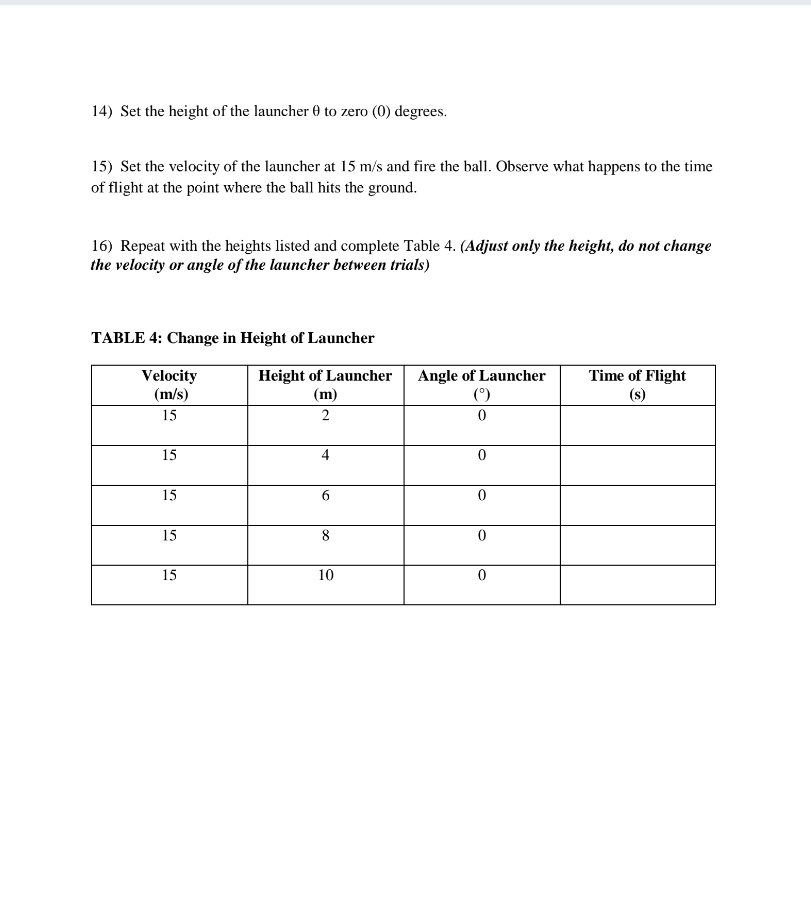
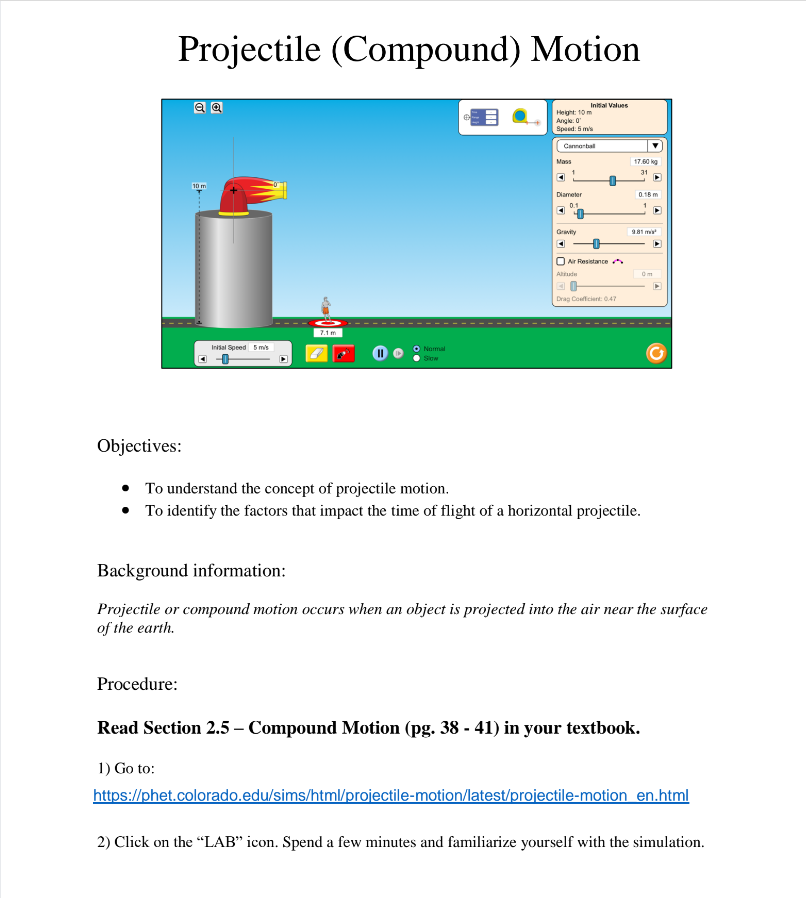
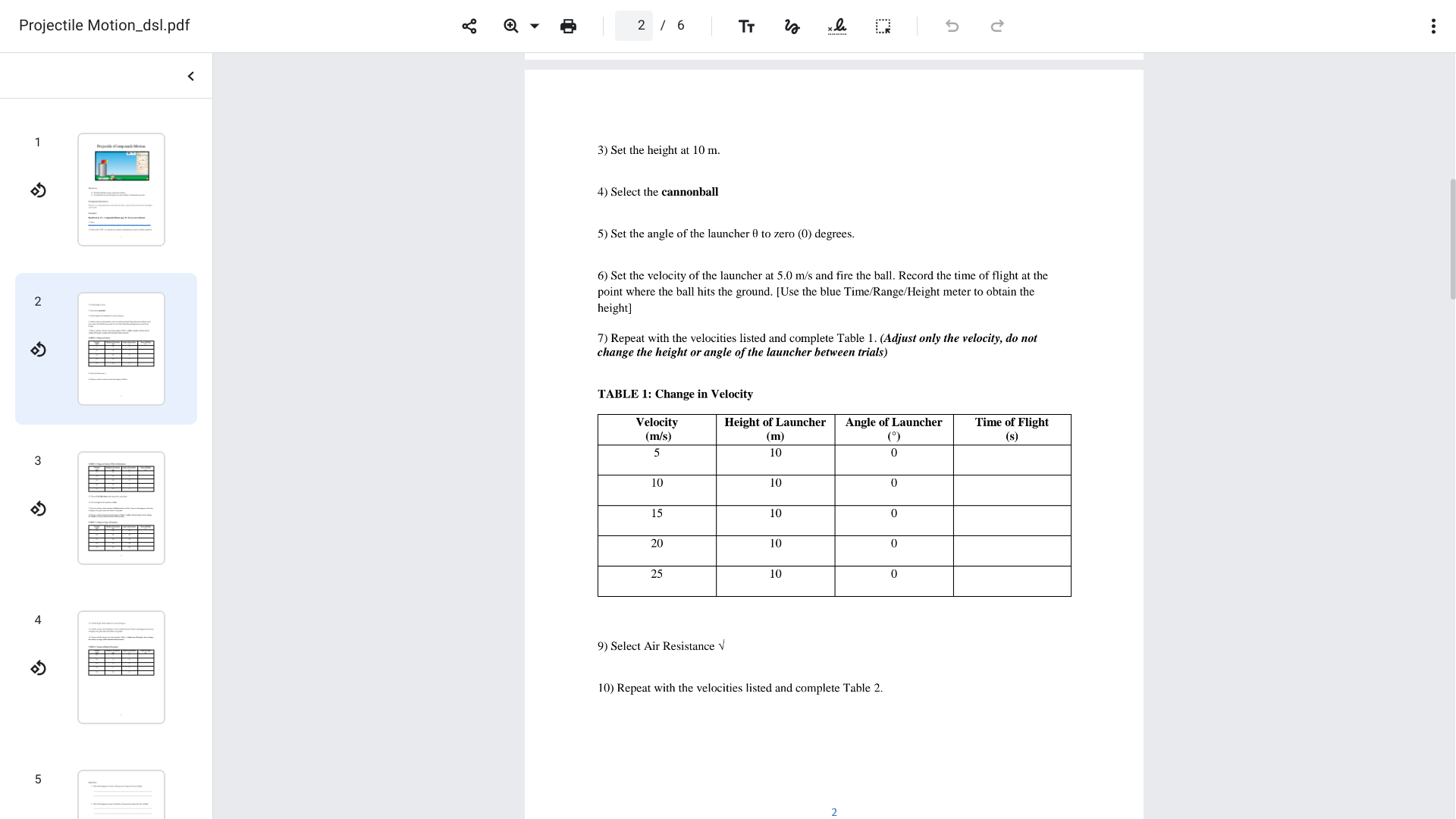
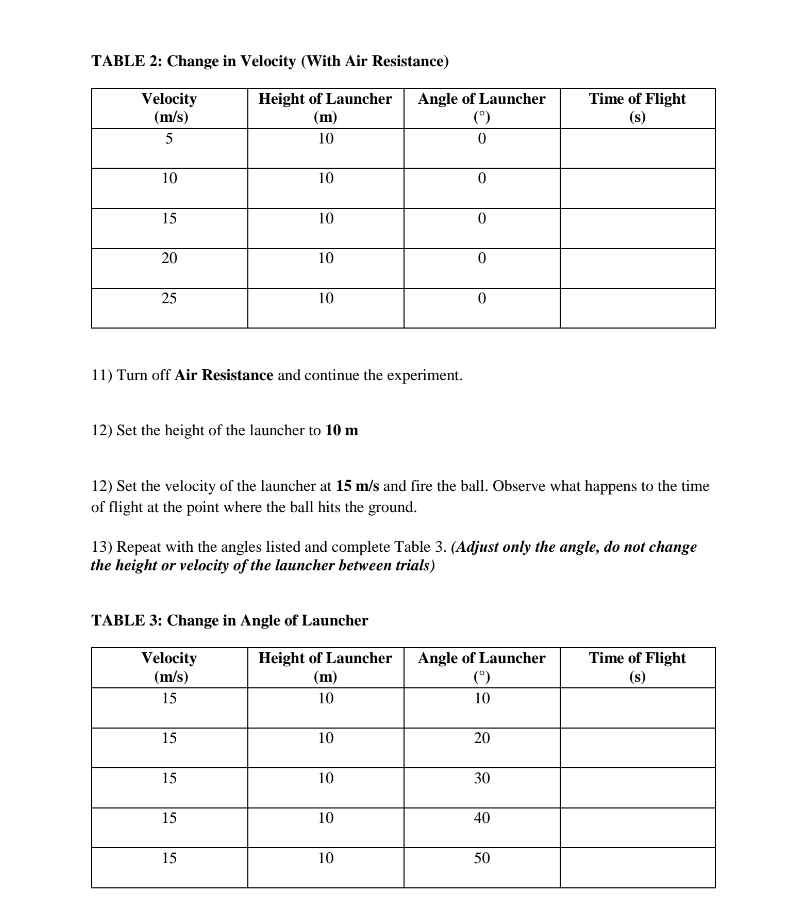
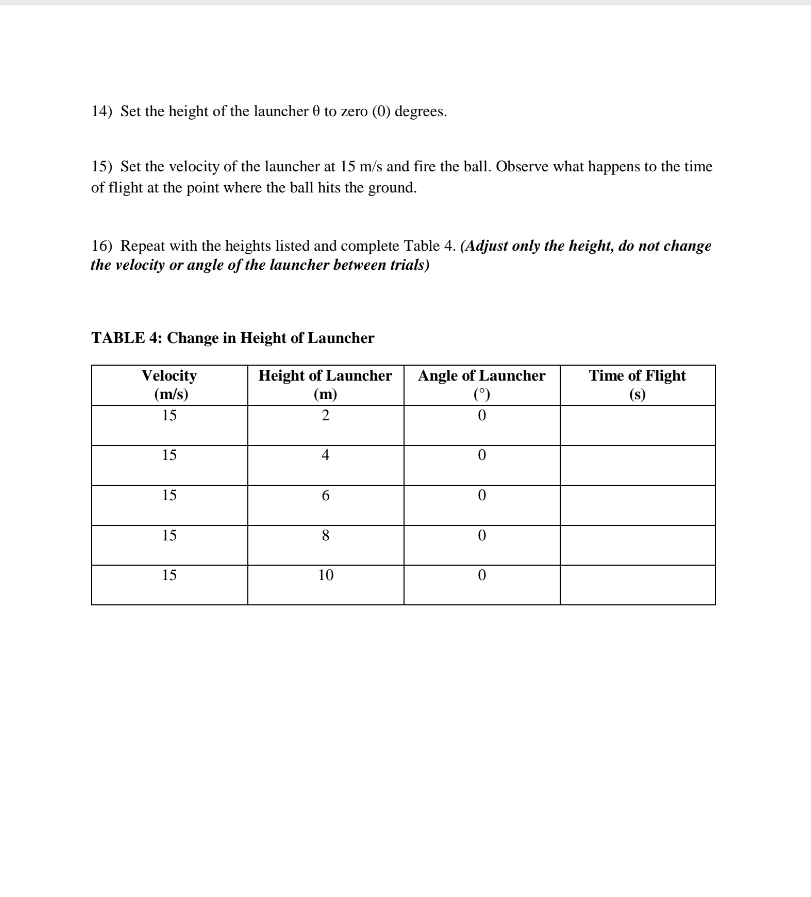
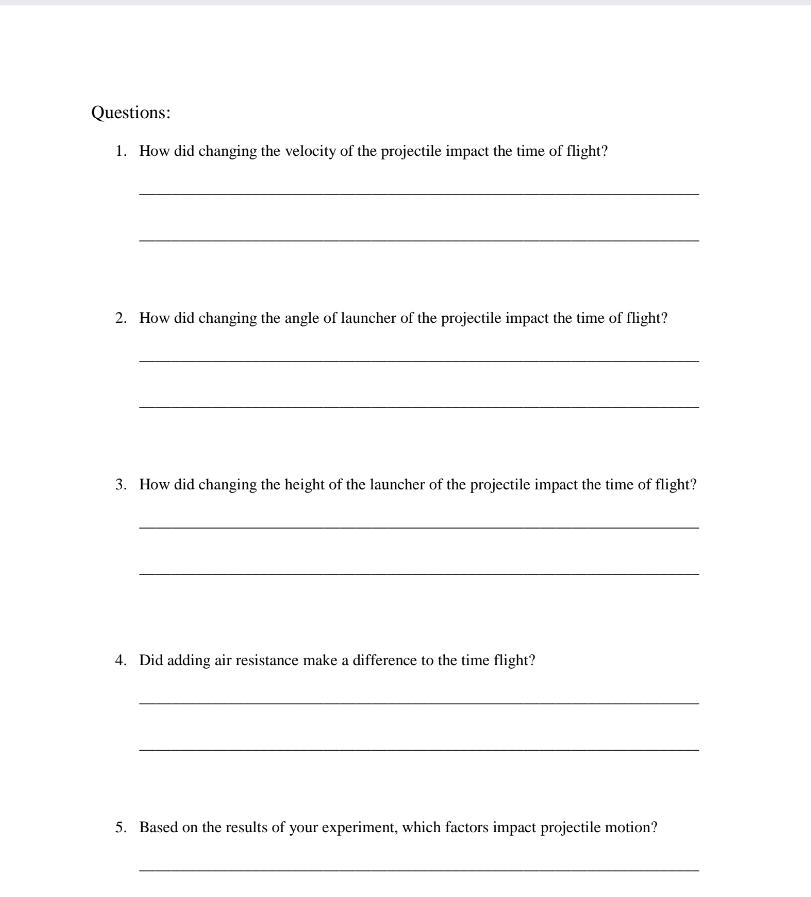
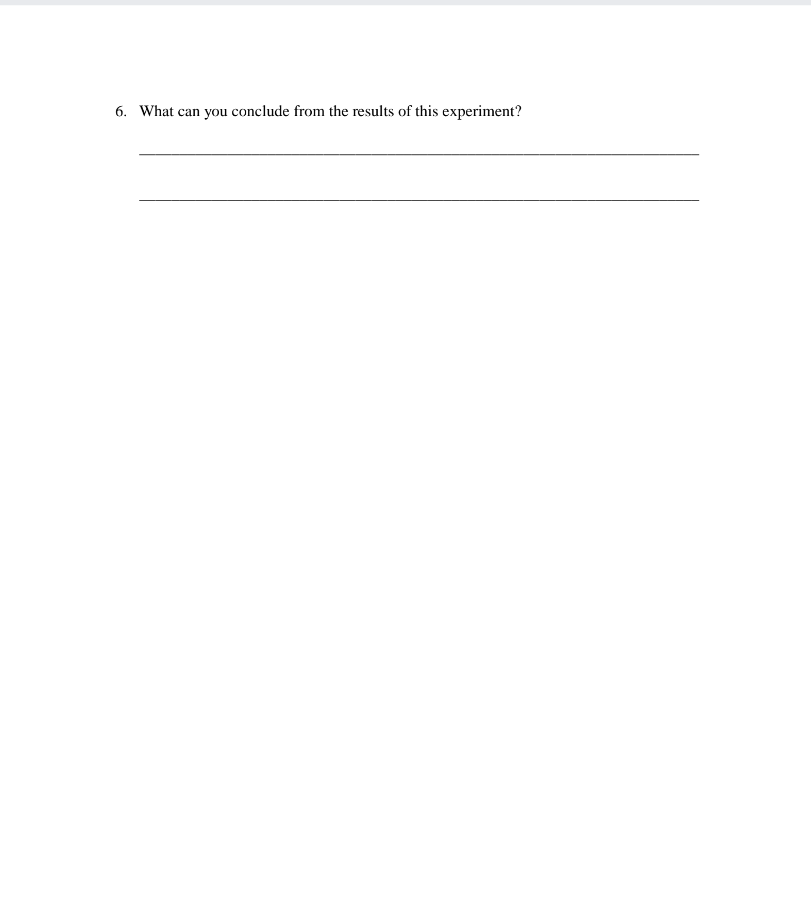
Projectile (Compound) Motion lagot 15 Inhal Values Angle: 0' Apand: 5 mb Mass 17.60 kg 10 m 0.15 m 9.81 m's" A Resistance Drag Coefficient: 0.47 7.1 m Intial Speed 5 m's C Objectives: To understand the concept of projectile motion. . To identify the factors that impact the time of flight of a horizontal projectile. Background information: Projectile or compound motion occurs when an object is projected into the air near the surface of the earth. Procedure: Read Section 2.5 - Compound Motion (pg. 38 - 41) in your textbook. 1) Go to: https://phet.colorado.edu/sims/html/projectile-motion/latest/projectile-motion_en.html 2) Click on the "LAB" icon. Spend a few minutes and familiarize yourself with the simulation.Projectile Motion_dsl.pdf 2 / 6 TT ... 3) Set the height at 10 m. 4) Select the cannonball 5) Set the angle of the launcher 0 to zero (0) degrees. 2 6) Set the velocity of the launcher at 5.0 m/s and fire the ball. Record the time of flight at the height ] point where the ball hits the ground. [Use the blue Time/Range/Height meter to obtain the 7) Repeat with the velocities listed and complete Table 1. (Adjust only the velocity, do not change the height or angle of the launcher between trials) TABLE 1: Change in Velocity Velocity Height of Launcher (m/s) Angle of Launcher (m Time of Flight (9) 10 (s) 0 10 10 0 15 10 0 20 10 0 25 10 0 4 9) Select Air Resistance V 10) Repeat with the velocities listed and complete Table 2. 5TABLE 2: Change in Velocity (With Air Resistance) Velocity Height of Launcher "m/s) Angle of Launcher (m) Time of Flight 5 S 10 0 10 10 0 15 10 0 20 10 0 25 10 0 1 1) Turn off Air Resistance and continue the experiment. 12) Set the height of the launcher to 10 m 12) Set the velocity of the launcher at 15 m/s and fire the ball. Observe what happens to the time of flight at the point where the ball hits the ground. 13) Repeat with the angles listed and complete Table 3. (Adjust only the angle, do not change the height or velocity of the launcher between trials) TABLE 3: Change in Angle of Launcher Velocity Height of Launcher (m/s) Angle of Launcher Time of Flight (m) (") 15 (S 10 10 15 10 20 15 10 30 15 10 40 15 10 5014) Set the height of the launcher 0 to zero (0) degrees. 15) Set the velocity of the launcher at 15 m/s and fire the ball. Observe what happens to the time of flight at the point where the ball hits the ground. 16) Repeat with the heights listed and complete Table 4. (Adjust only the height, do not change the velocity or angle of the launcher between trials) TABLE 4: Change in Height of Launcher Velocity Height of Launcher Angle of Launcher Time of Flight (m/s) (m) (S) 15 2 0 15 4 0 15 6 0 15 8 0 15 10 0Questions: 1. How did changing the velocity of the projectile impact the time of flight? 2. How did changing the angle of launcher of the projectile impact the time of flight? 3. How did changing the height of the launcher of the projectile impact the time of flight? 4. Did adding air resistance make a difference to the time flight? 5. Based on the results of your experiment, which factors impact projectile motion?
Step by Step Solution
There are 3 Steps involved in it

Get step-by-step solutions from verified subject matter experts
 Study Help