







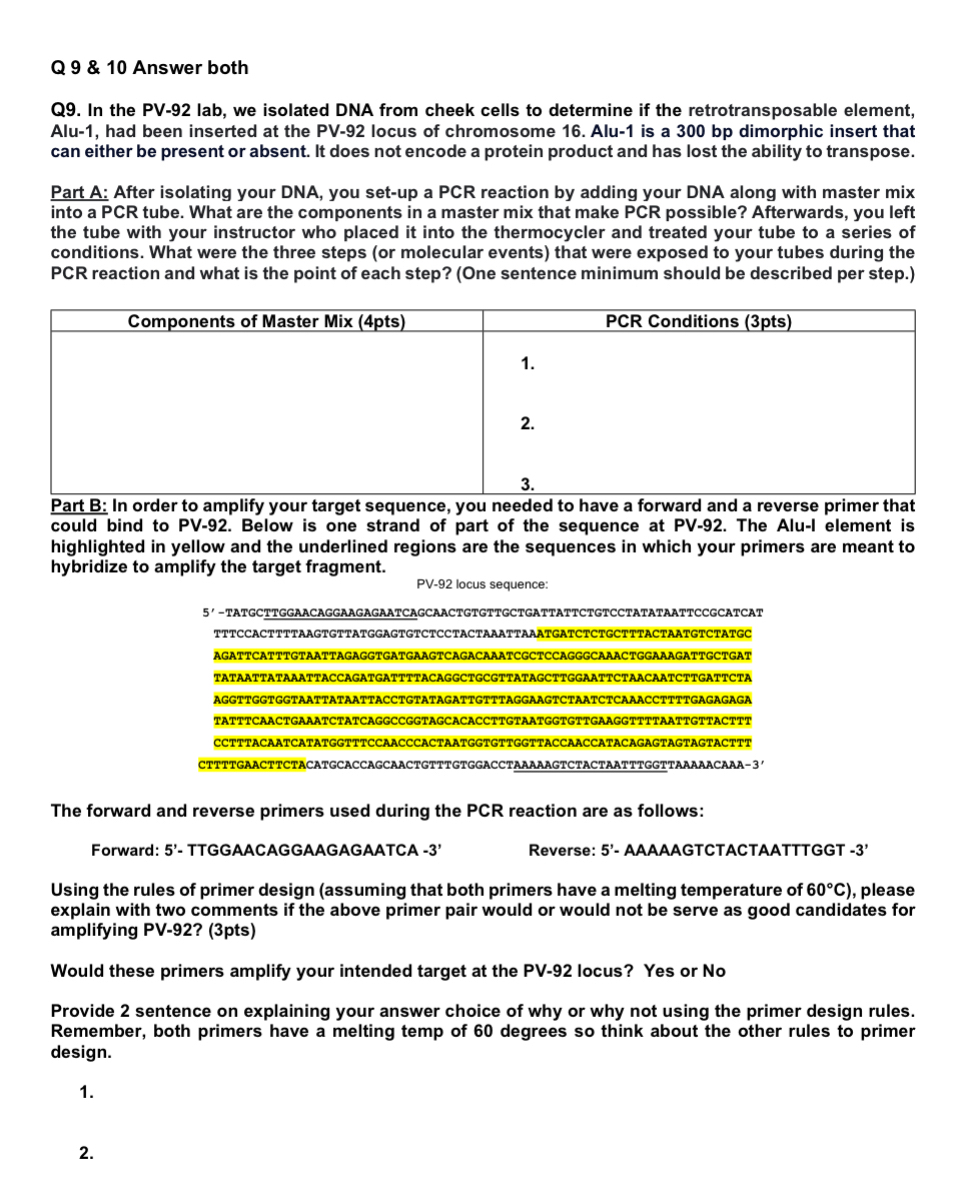
Question: Q 9 & 1 0 Answer both Q 9 . In the PV - 9 2 lab, we isolated DNA from cheek cells to determine
Q & Answer both
Q In the PV lab, we isolated DNA from cheek cells to determine if the retrotransposable element, Alu had been inserted at the PV locus of chromosome Alu is a bp dimorphic insert that can either be present or absent It does not encode a protein product and has lost the ability to transpose.
Part A: After isolating your DNA, you setup a PCR reaction by adding your DNA along with master mix into a PCR tube. What are the components in a master mix that make PCR possible? Afterwards, you left the tube with your instructor who placed it into the thermocycler and treated your tube to a series of conditions. What were the three steps or molecular events that were exposed to your tubes during the PCR reaction and what is the point of each step? One sentence minimum should be described per step.
tableComponents of Master Mix ptsPCR Conditions pts
Part B: In order to amplify your target sequence, you needed to have a forward and a reverse primer that could bind to PV Below is one strand of part of the sequence at PV The AluI element is highlighted in yellow and the underlined regions are the sequences in which your primers are meant to hybridize to amplify the target fragment.
PV locus sequence:
TATGCTTGGAACAGGAAGAGAATCAGCAACTGTGTTGCTGATTATTCTGTCCTATATAATTCCGCATCAT
TTTCCACTTTTAAGTGTTATGGAGTGTCTCCTACTAAATTAAATGATCTCTGCTTTACTAATGTCTATGC
AGATTCATTTGTAATTAGAGGTGATGAAGTCAGACAAATCGCTCCAGGGCAAACTGGAAAGATTGCTGAT
TATAATTATAAATTACCAGATGATTTTACAGGCTGCGTTATAGCTTGGAATTCTAACAATCTTGATTCTA
AGGTTGGTGGTAATTATAATTACCTGTATAGATTGTTTAGGAAGTCTAATCTCAAACCTTTTGAGAGAGA
TATTTCAACTGAAATCTATCAGGCCGGTAGCACACCTTGTAATGGTGTTGAAGGTTTTAATTGTTACTTT
CCTTTACAATCATATGGTTTCCAACCCACTAATGGTGTTGGTTACCAACCATACAGAGTAGTAGTACTTT
CTTTTGAACTTCTACATGCACCAGCAACTGTTTGTGGACCTAAAAAGTCTACTAATTTGGTTAAAACAAA
The forward and reverse primers used during the PCR reaction are as follows:
Forward: TTGGAACAGGAAGAGAATCA
Reverse: AAAAAGTCTACTAATTTGGT
Using the rules of primer design assuming that both primers have a melting temperature of please explain with two comments if the above primer pair would or would not be serve as good candidates for amplifying PVpts
Would these primers amplify your intended target at the PV locus? Yes or No
Provide sentence on explaining your answer choice of why or why not using the primer design rules. Remember, both primers have a melting temp of degrees so think about the other rules to primer design.
Step by Step Solution
There are 3 Steps involved in it
1 Expert Approved Answer
Step: 1 Unlock

Question Has Been Solved by an Expert!
Get step-by-step solutions from verified subject matter experts
Step: 2 Unlock
Step: 3 Unlock
 Study Help