







Question: Review Questions 1. Explain how a polymer and its monomers are similar 7. Your friend is going to try to follow a no-fat diet. to
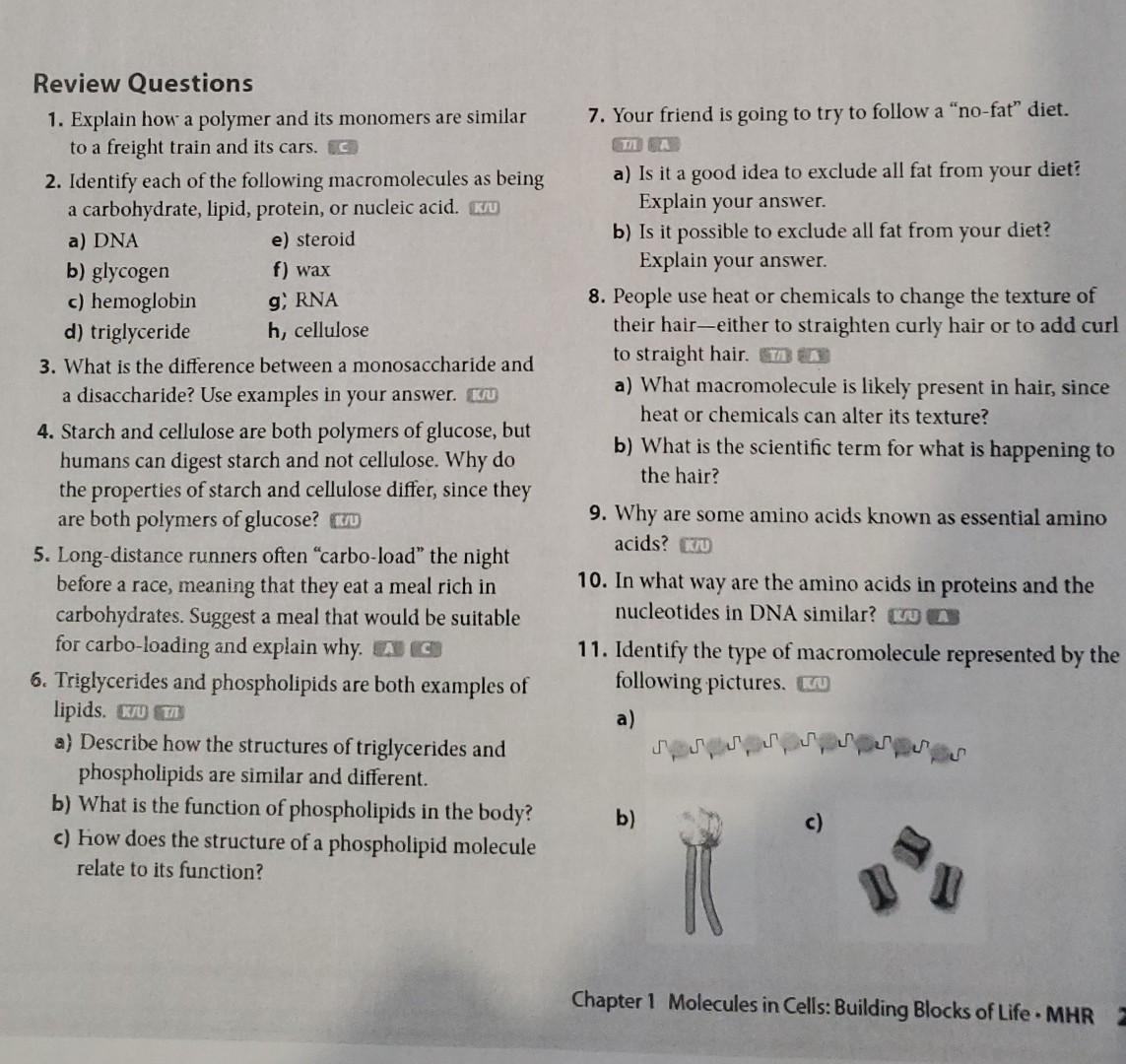
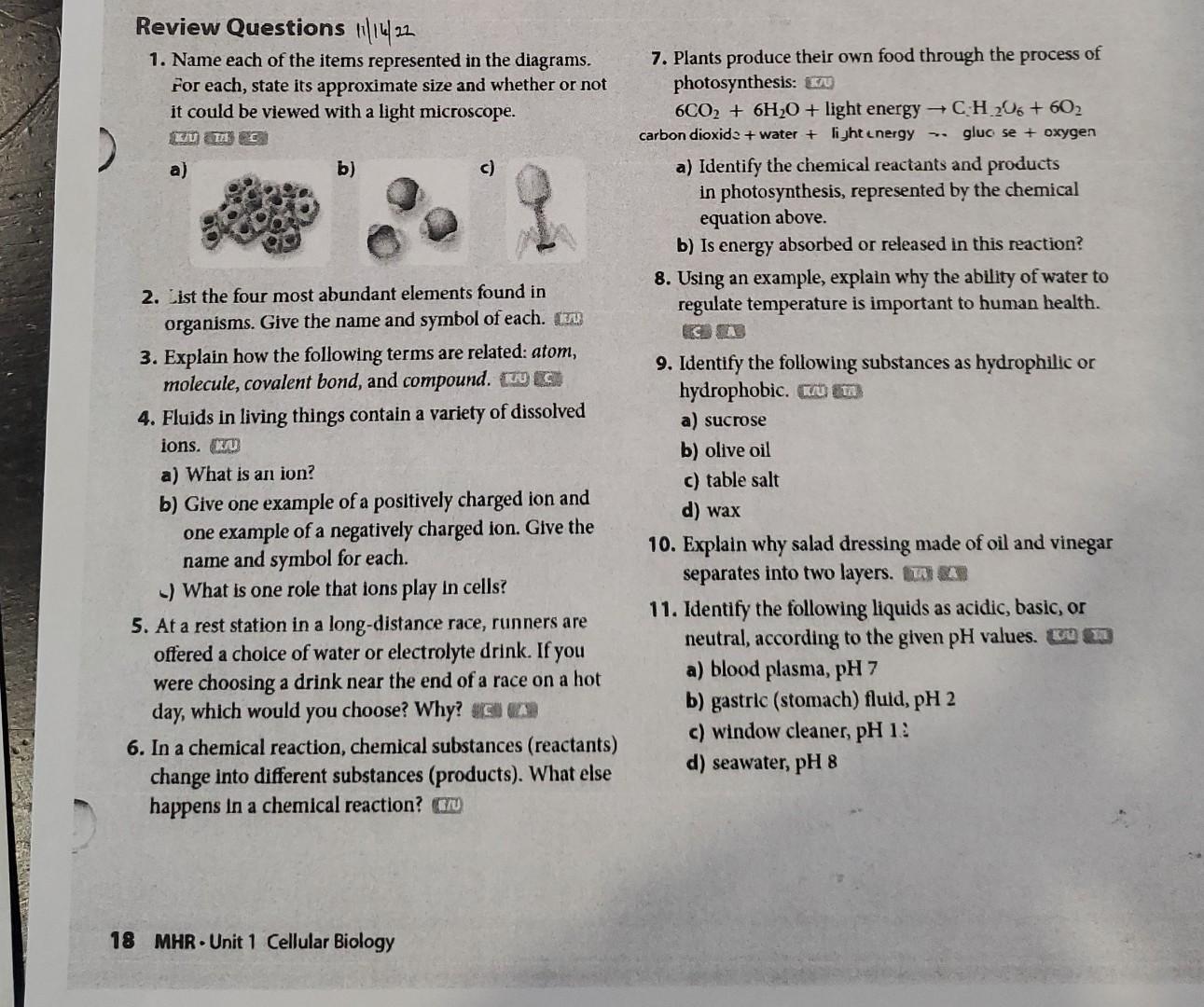
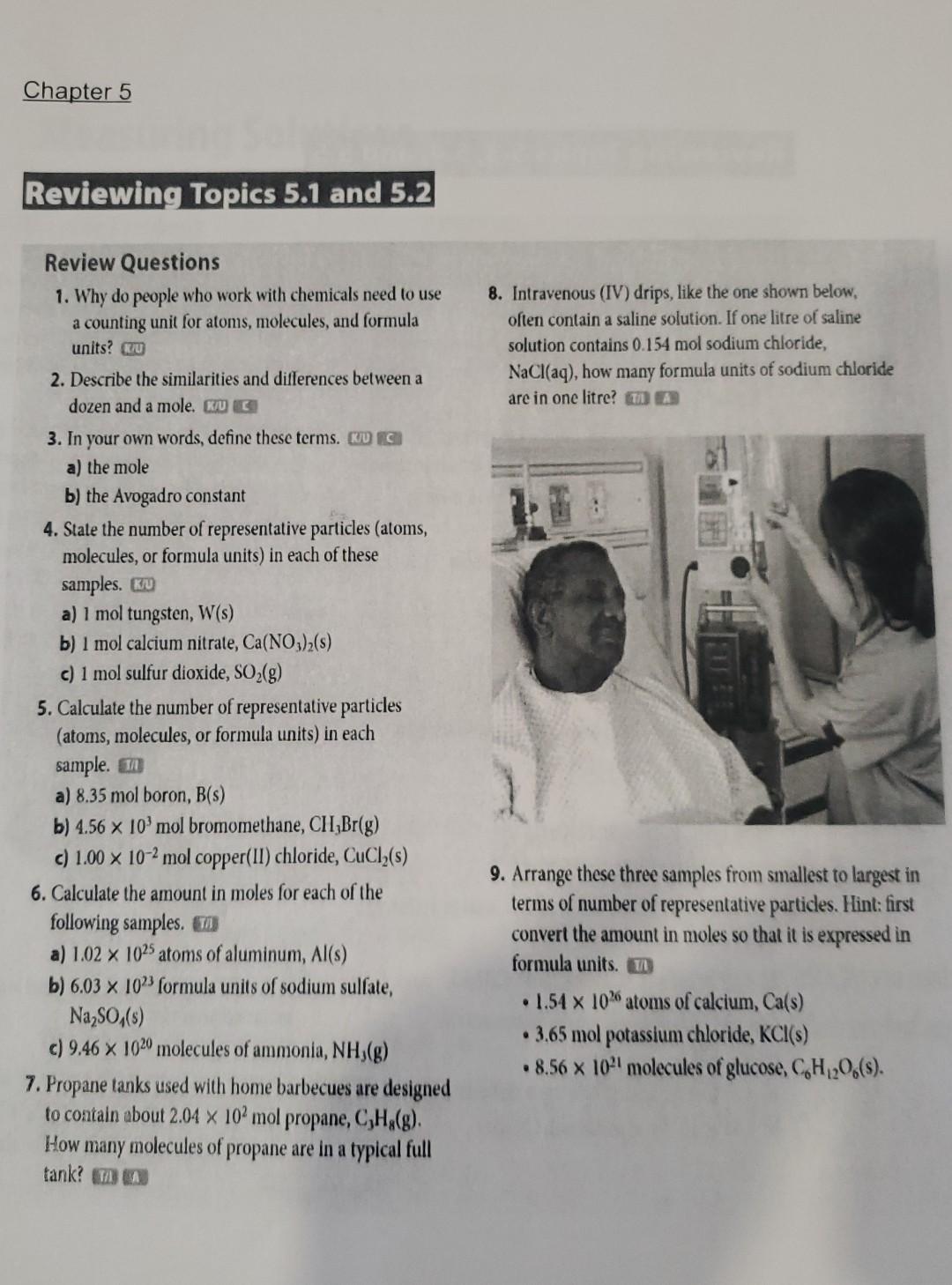
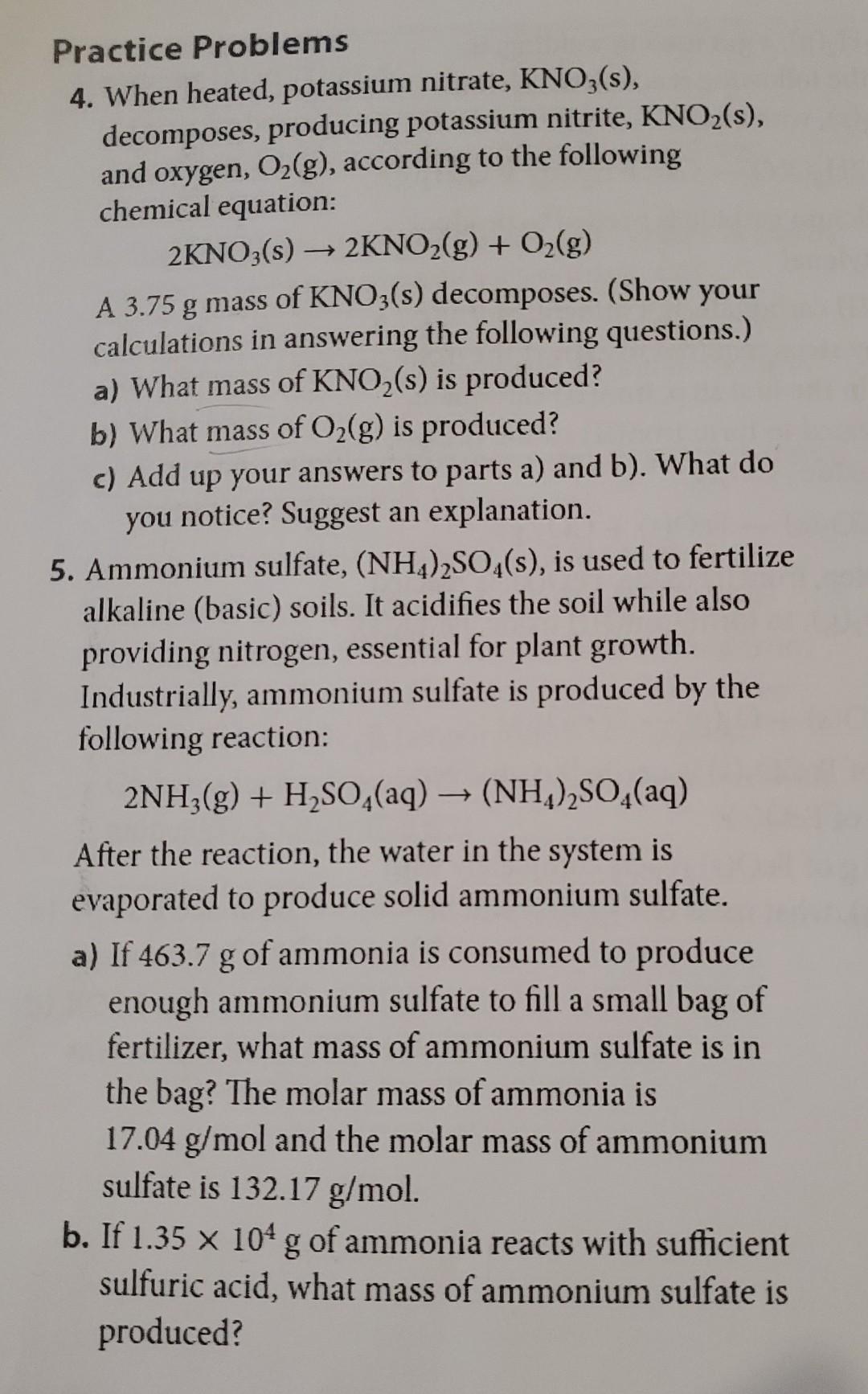
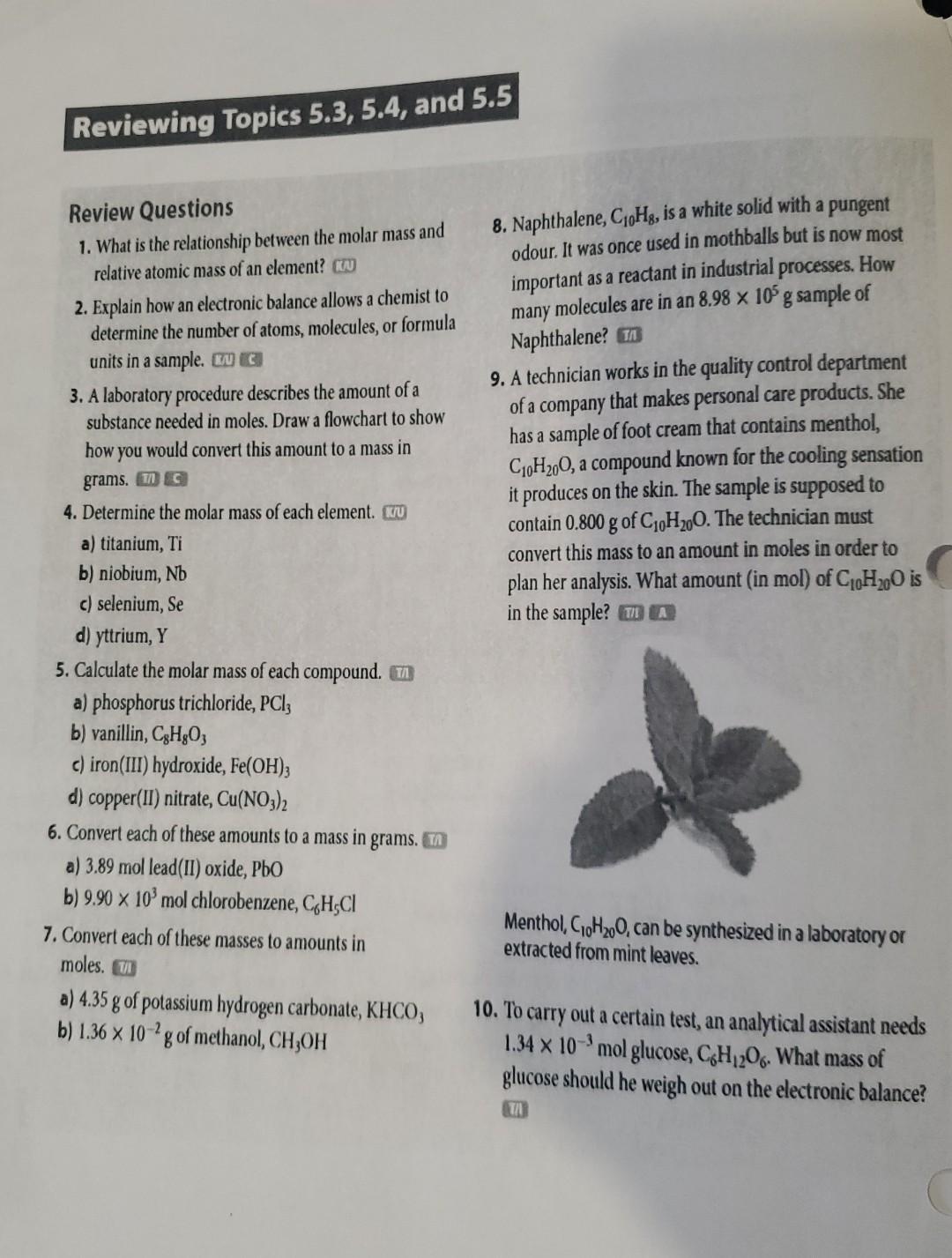
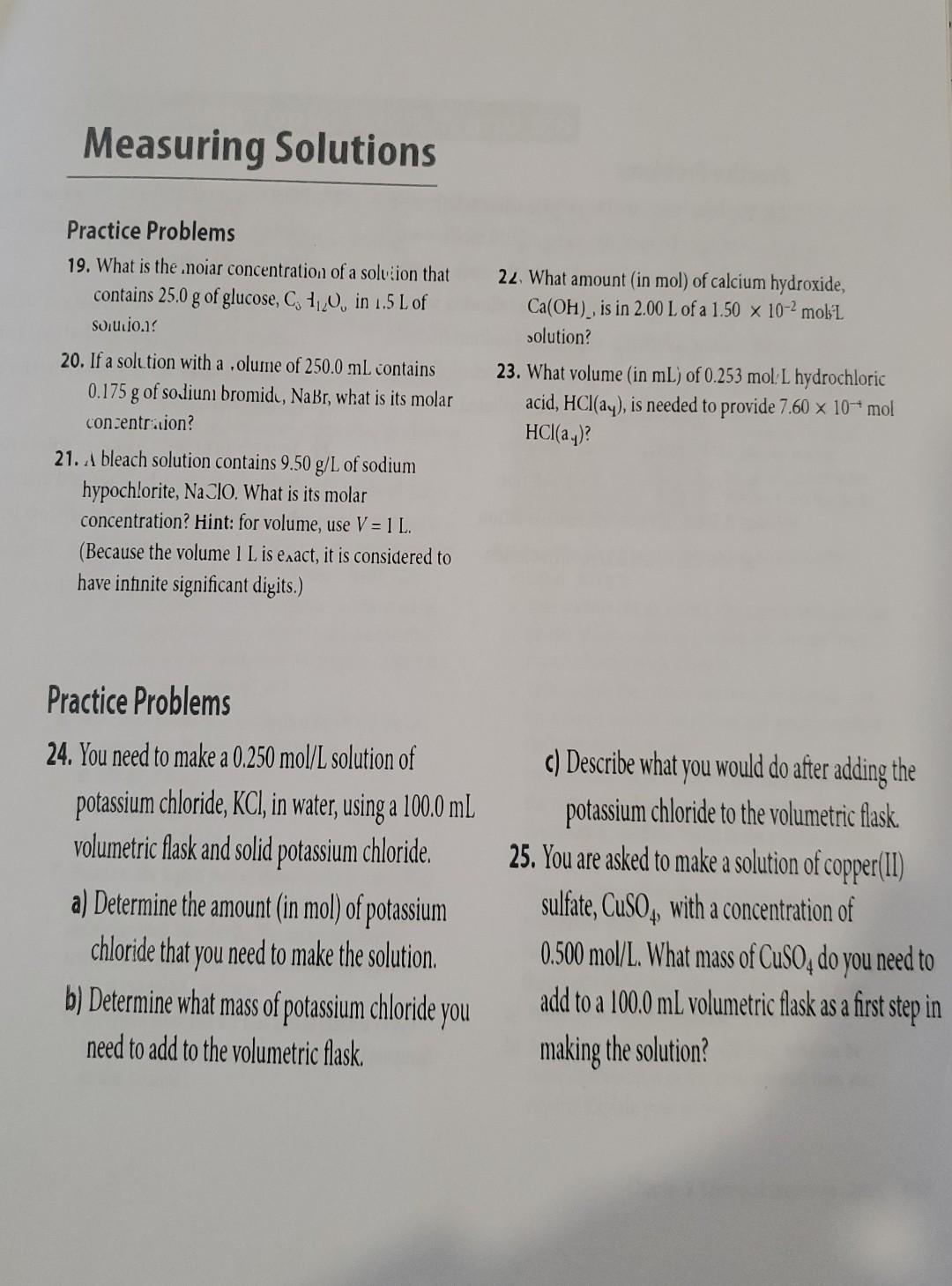
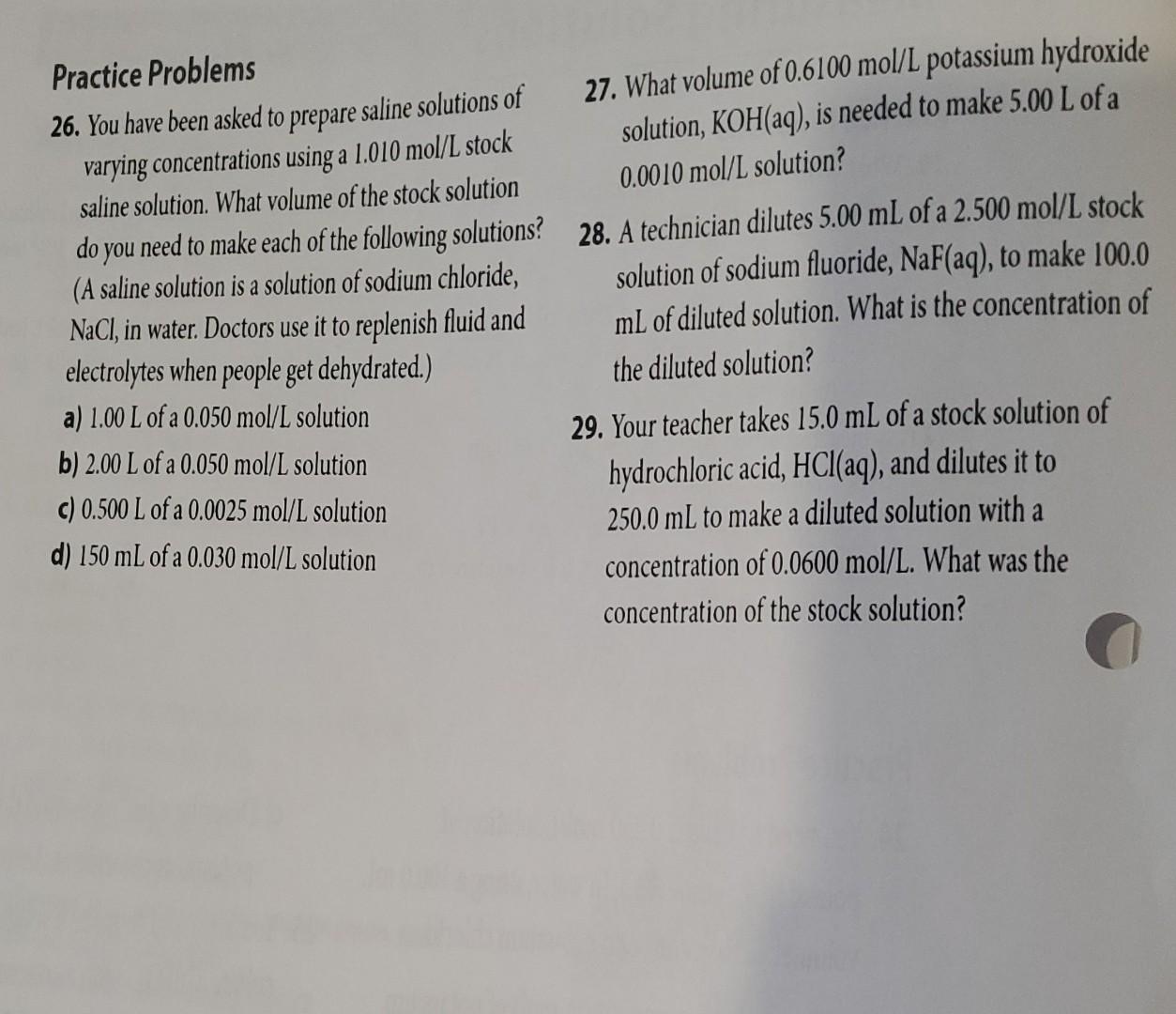
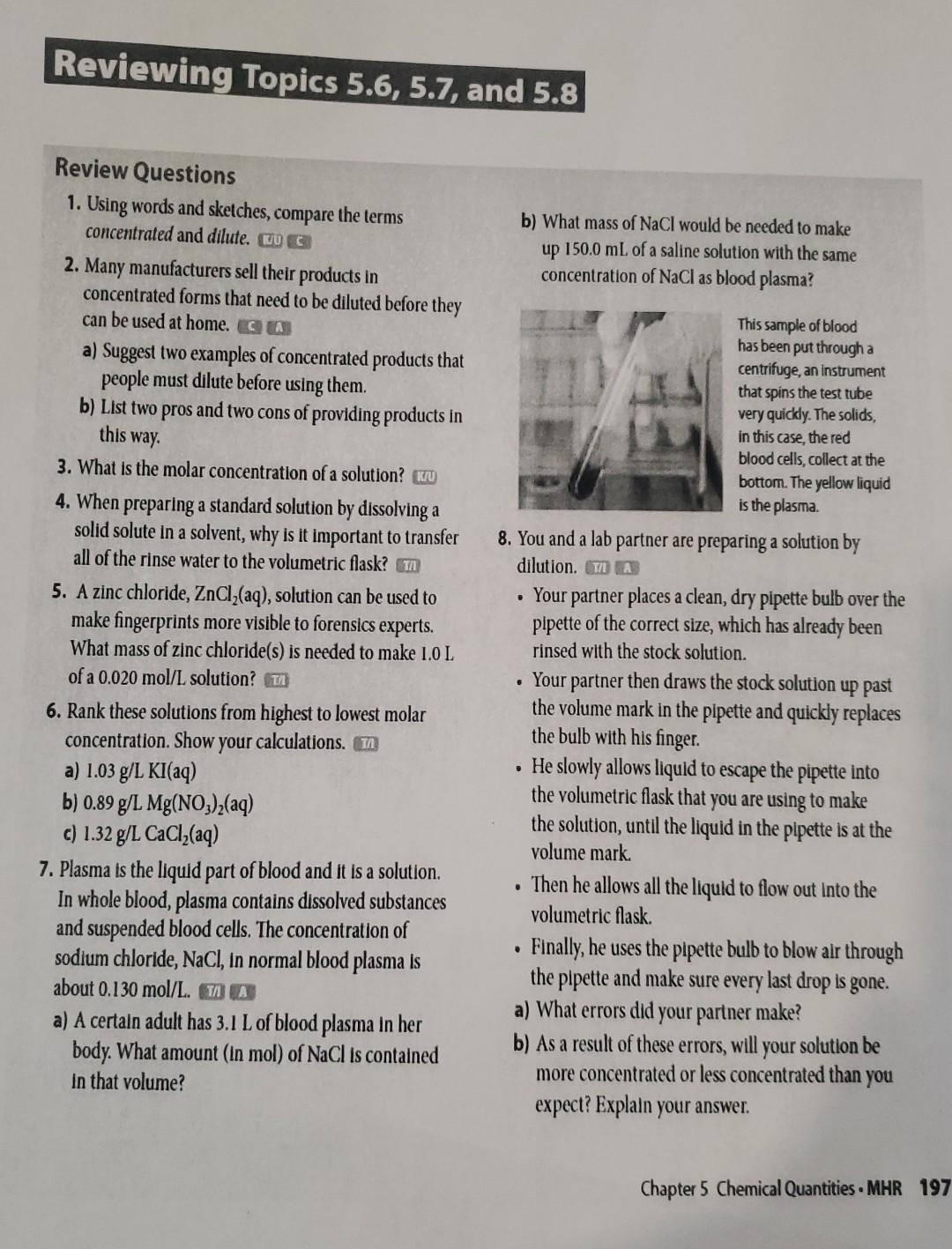
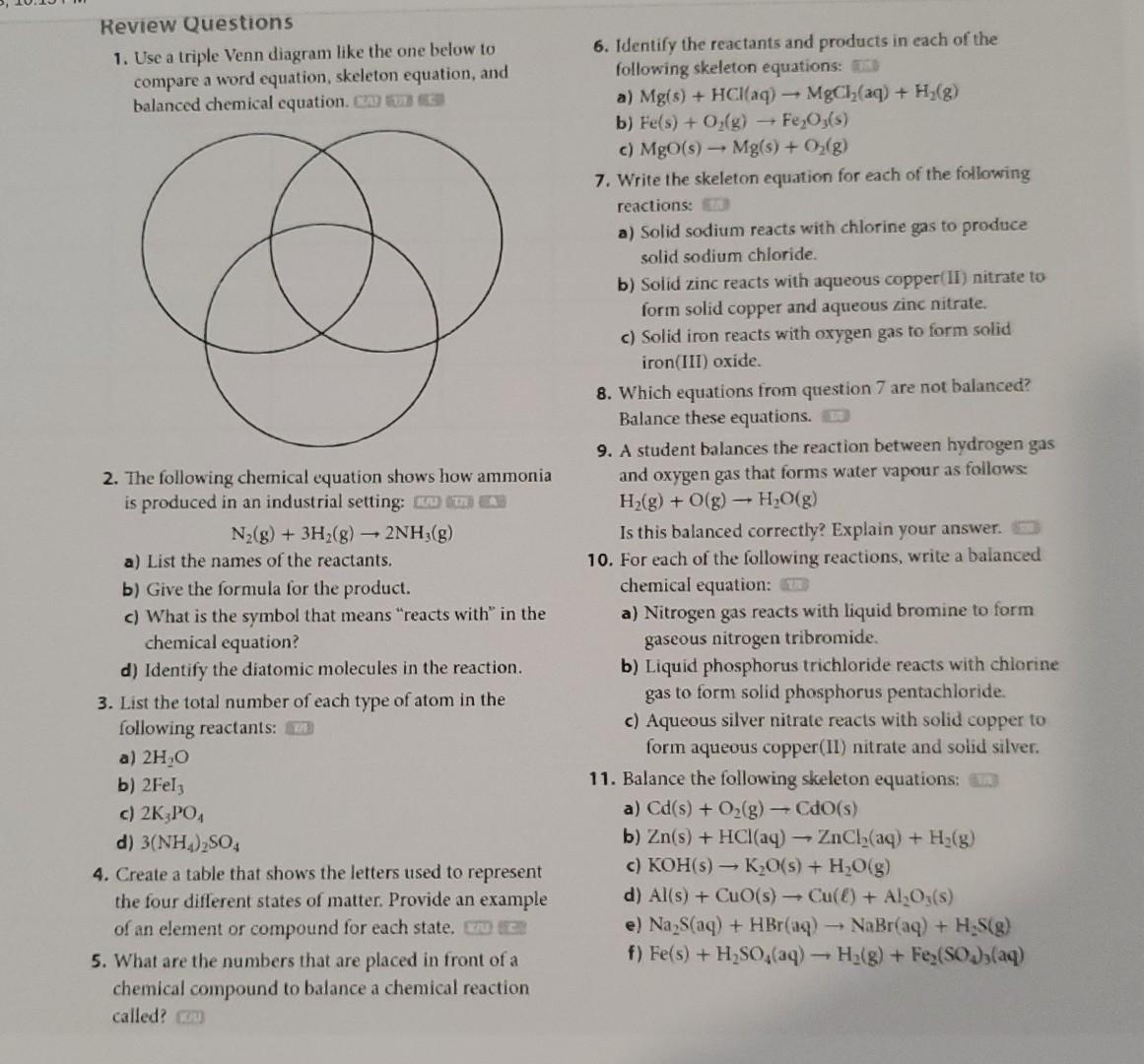
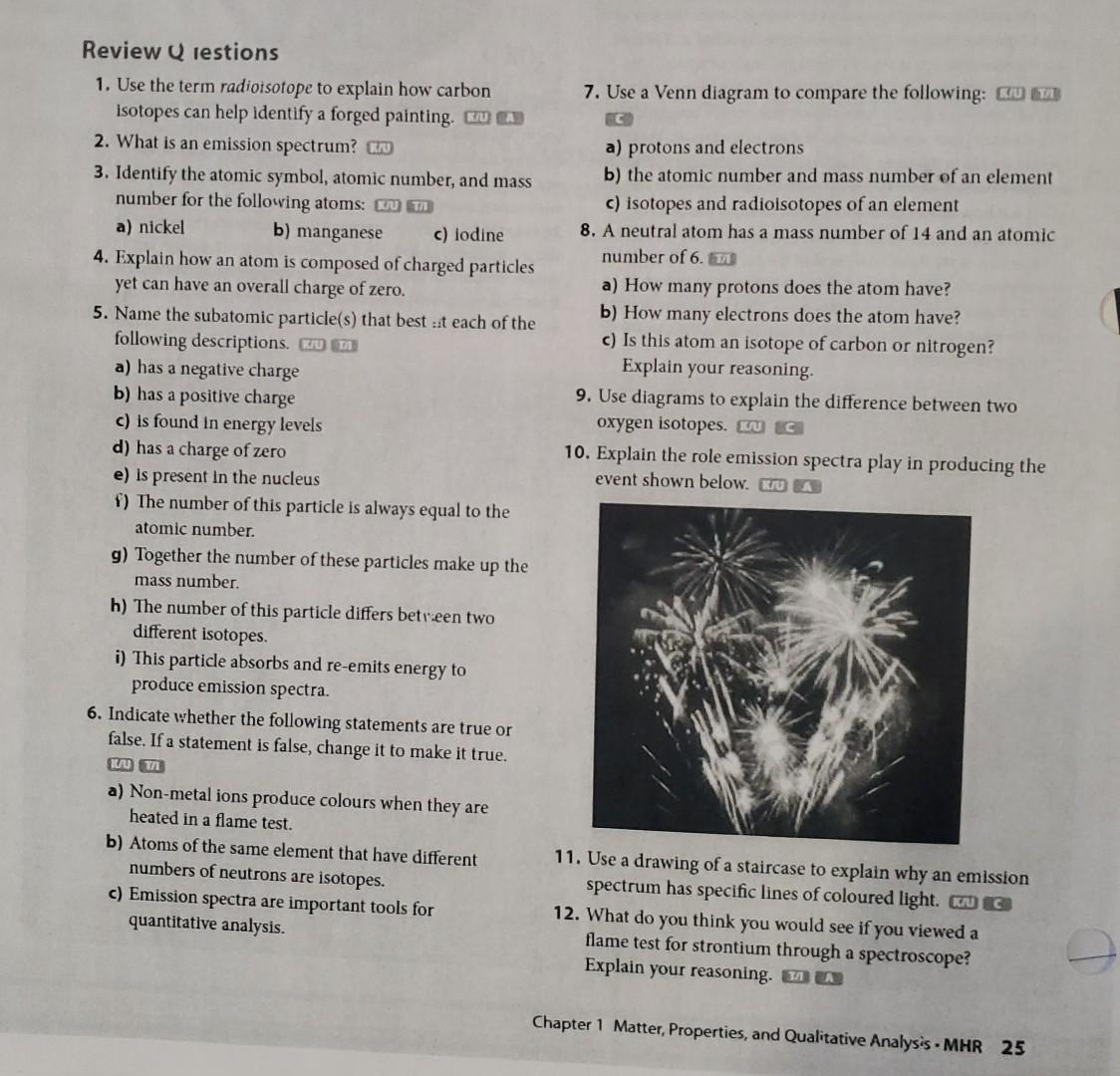
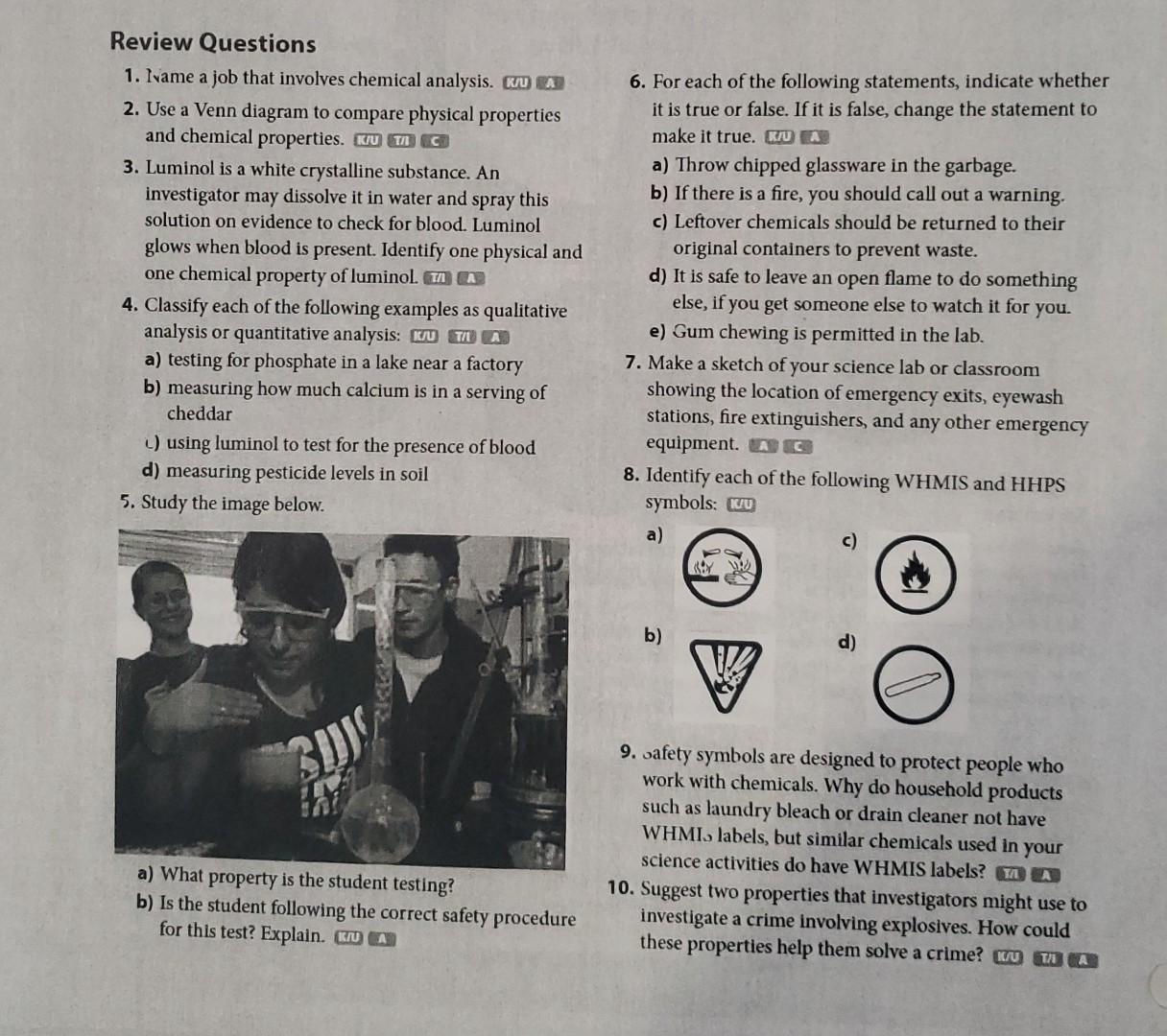
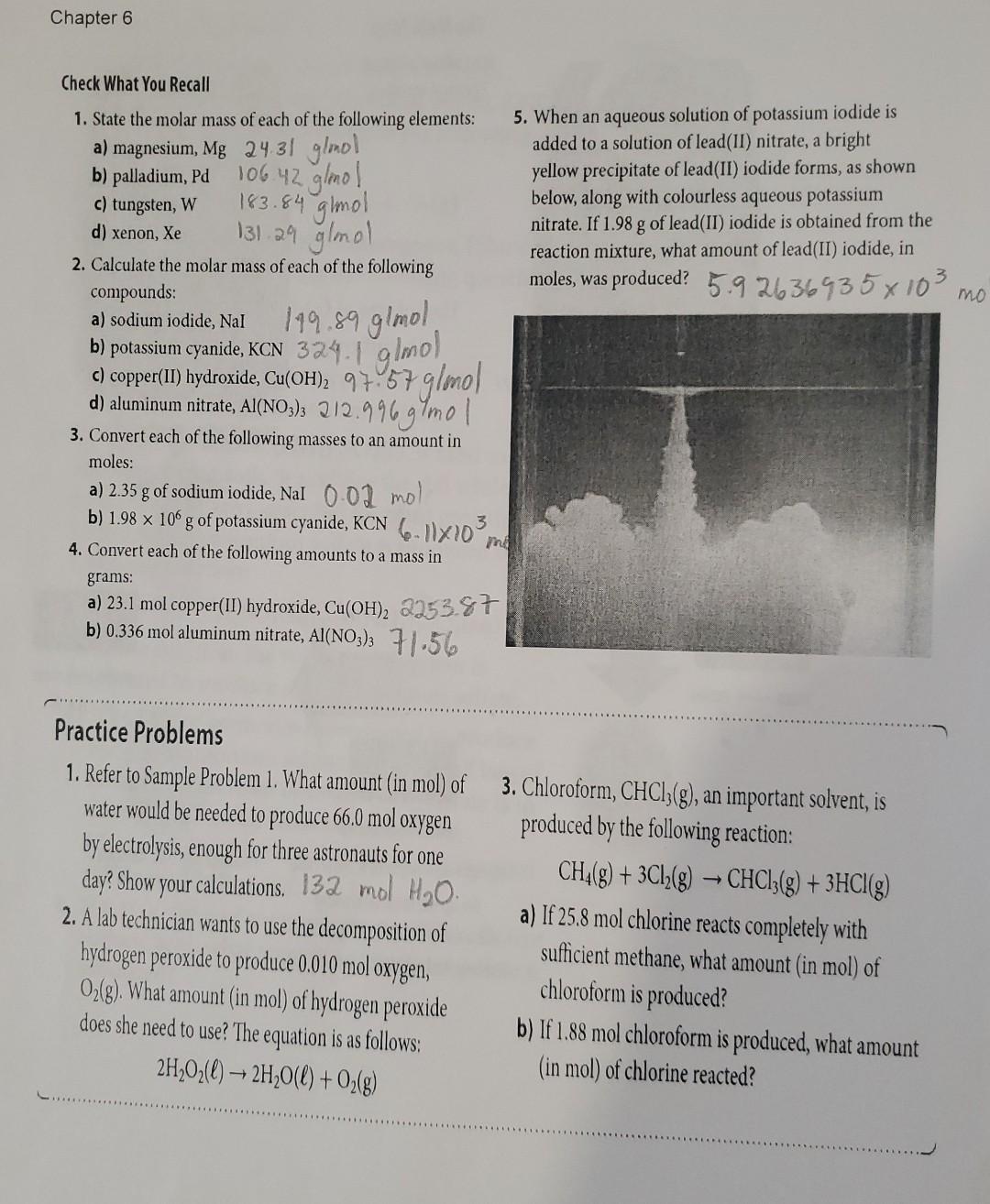
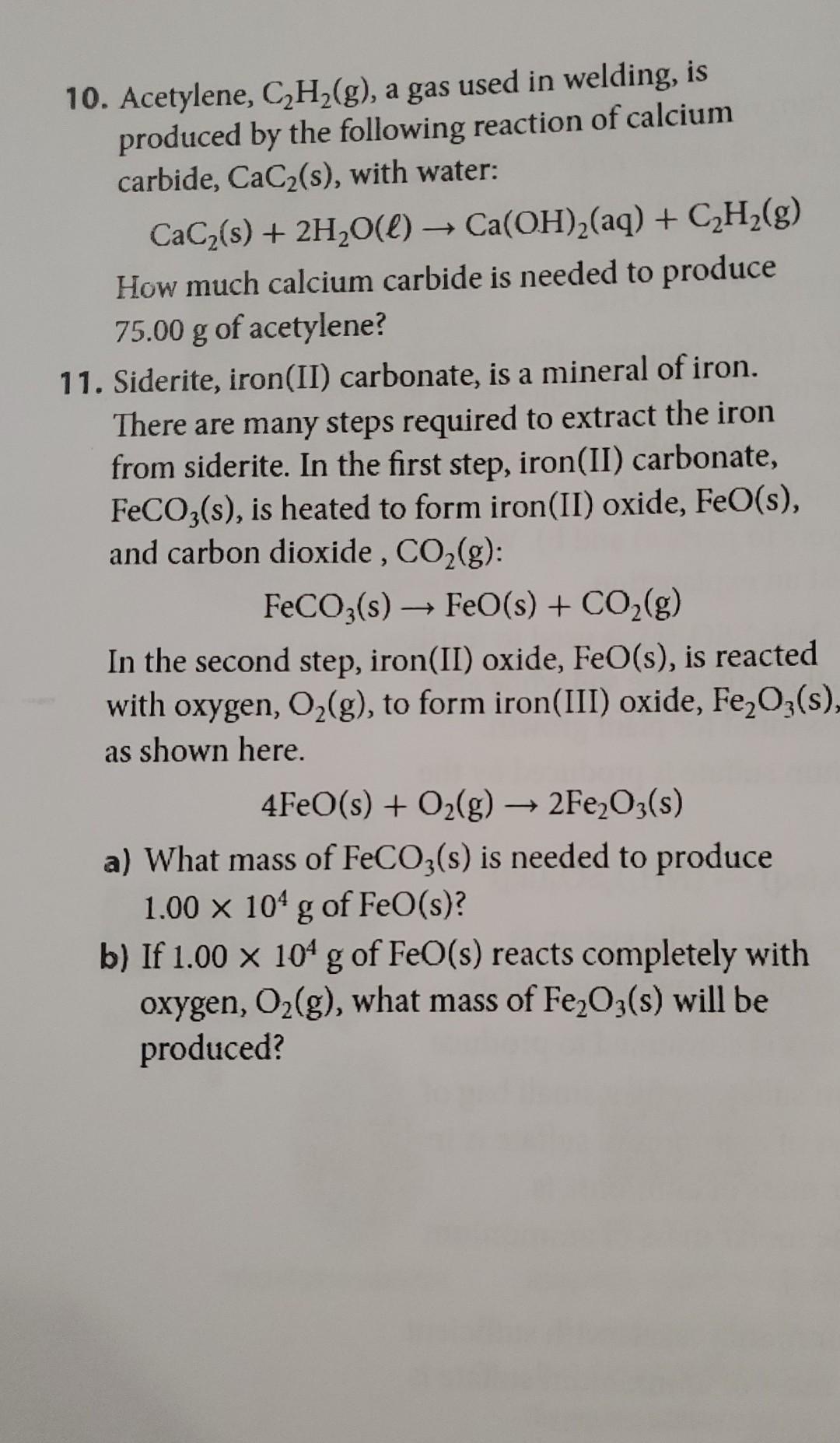
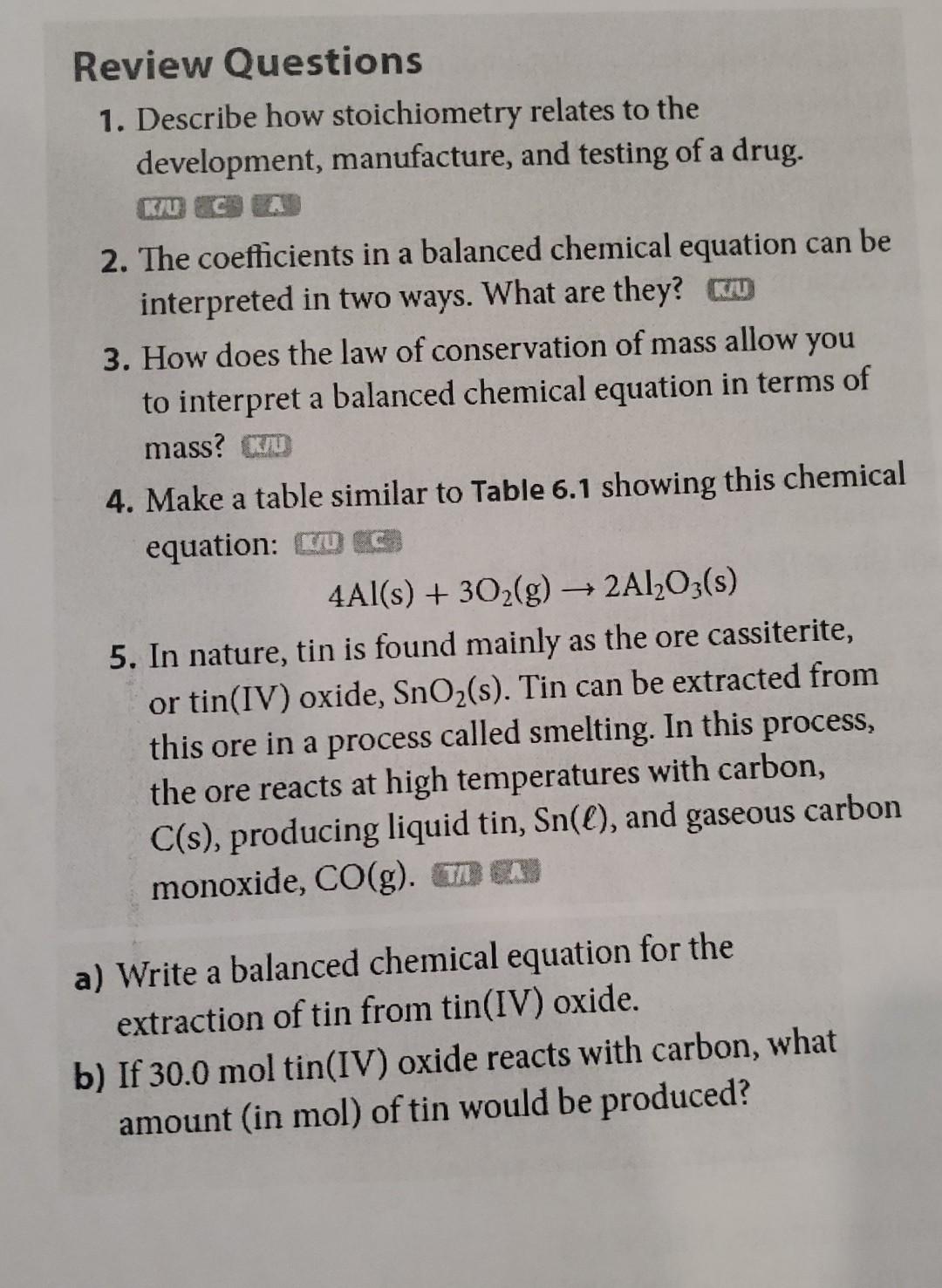
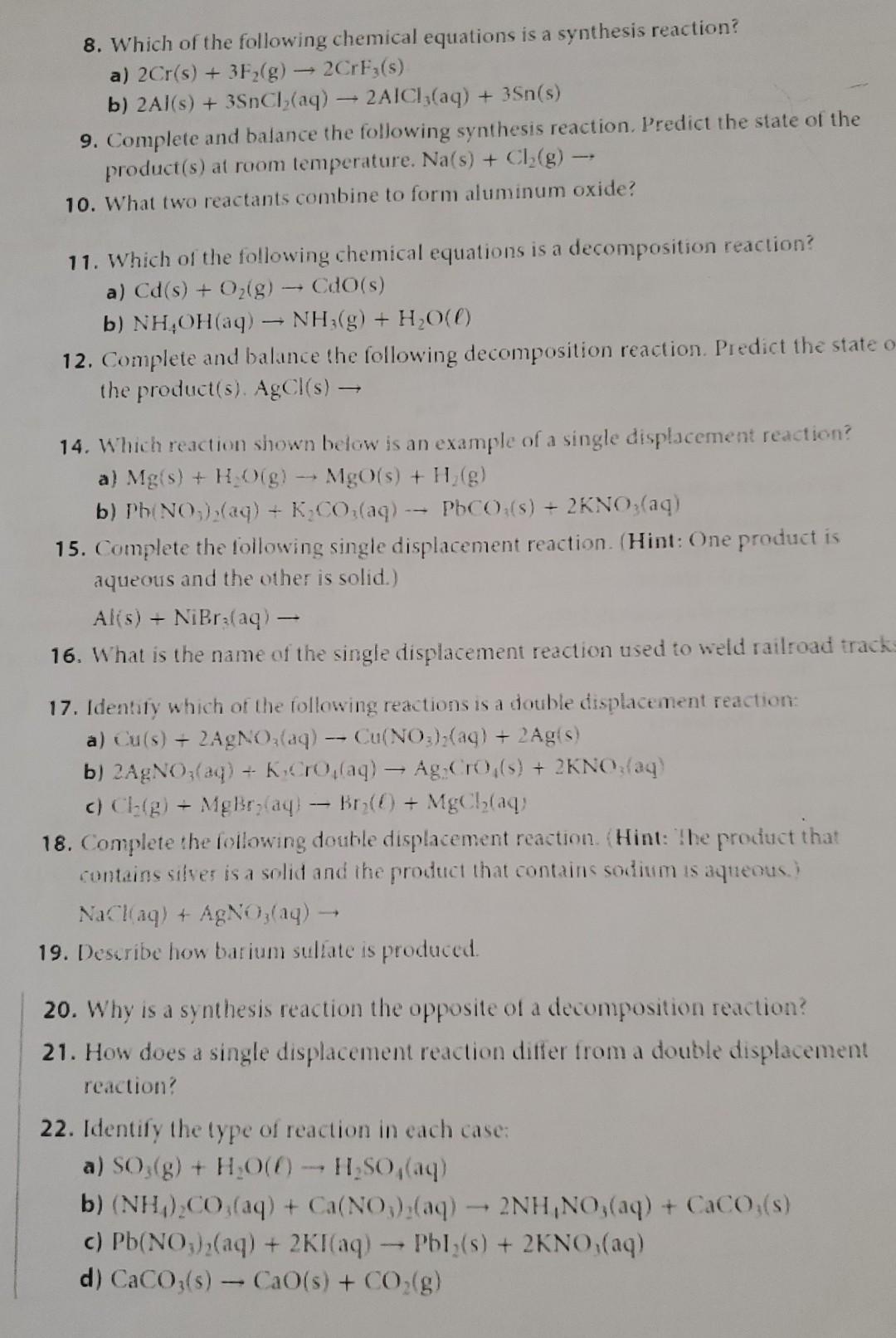
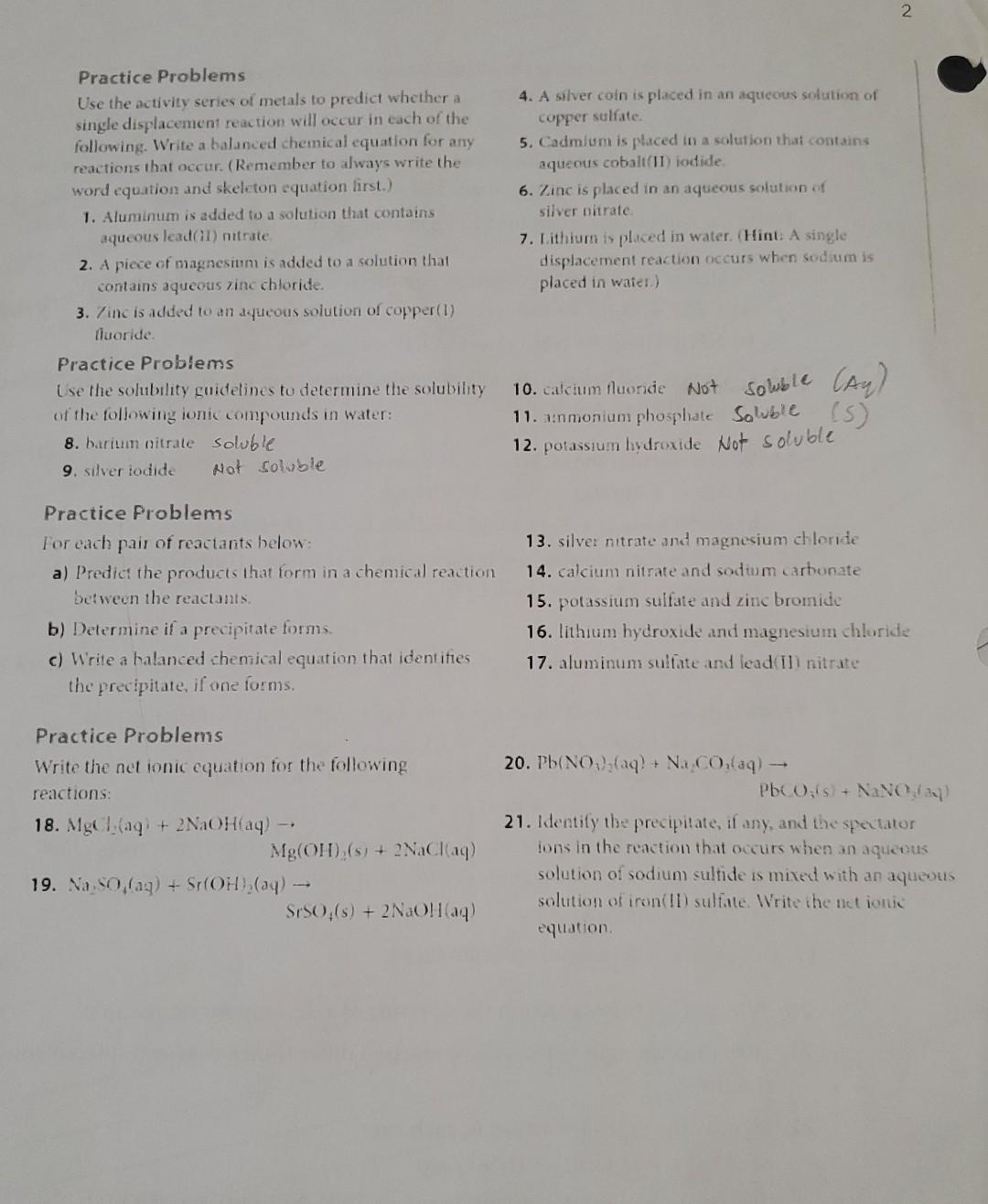
Review Questions 1. Explain how a polymer and its monomers are similar 7. Your friend is going to try to follow a "no-fat" diet. to a freight train and its cars. 2. Identify each of the following macromolecules as being a) Is it a good idea to exclude all fat from your diet? a carbohydrate, lipid, protein, or nucleic acid. WTo Explain your answer. a) DNA e) steroid b) Is it possible to exclude all fat from your diet? b) glycogen f) wax Explain your answer. c) hemoglobin gi, RNA 8. People use heat or chemicals to change the texture of d) triglyceride h, cellulose their hair-either to straighten curly hair or to add curl 3. What is the difference between a monosaccharide and to straight hair. a disaccharide? Use examples in your answer. 0. a) What macromolecule is likely present in hair, since 4. Starch and cellulose are both polymers of glucose, but heat or chemicals can alter its texture? humans can digest starch and not cellulose. Why do b) What is the scientific term for what is happening to the properties of starch and cellulose differ, since they the hair? are both polymers of glucose? 9. Why are some amino acids known as essential amino 5. Long-distance runners often "carbo-load" the night acids? [D] before a race, meaning that they eat a meal rich in 10. In what way are the amino acids in proteins and the carbohydrates. Suggest a meal that would be suitable nucleotides in DNA similar? for carbo-loading and explain why. 11. Identify the type of macromolecule represented by the 6. Triglycerides and phospholipids are both examples of following pictures. lipids. E a) a) Describe how the structures of triglycerides and phospholipids are similar and different. b) What is the function of phospholipids in the body? b) c) c) How does the structure of a phospholipid molecule relate to its function? Chapter 1 Molecules in Cells: Building Blocks of Life MHR Review Questions 11/14/22 1. Name each of the items represented in the diagrams. 7. Plants produce their own food through the process of For each, state its approximate size and whether or not it could be viewed with a light microscope. photosynthesis: 60 6CO2+6H2O+ light energy CH2O6+6O2 a) b) c) carbon dioxids + water + lijhtenergy gluo se + oxygen a) Identify the chemical reactants and products in photosynthesis, represented by the chemical equation above. b) Is energy absorbed or released in this reaction? 2. ist the four most abundant elements found in 8. Using an example, explain why the ability of water to organisms. Give the name and symbol of each. (ixs regulate temperature is important to human health. 3. Explain how the following terms are related: atom, molecule, covalent bond, and compound. 9. Identify the following substances as hydrophilic or 4. Fluids in living things contain a variety of dissolved hydrophobic. cre ions. ET a) sucrose a) What is an ion? b) olive oil b) Give one example of a positively charged ion and c) table salt one example of a negatively charged ion. Give the d) wax name and symbol for each. 10. Explain why salad dressing made of oil and vinegar -) What is one role that ions play in cells? separates into two layers. 5. At a rest station in a long-distance race, runners are 11. Identify the following liquids as acidic, basic, or offered a choice of water or electrolyte drink. If you neutral, according to the given pH values. were choosing a drink near the end of a race on a hot a) blood plasma, pH7 day, which would you choose? Why? b) gastric (stomach) fluid, pH2 6. In a chemical reaction, chemical substances (reactants) c) window cleaner, pH 1: change into different substances (products). What else d) seawater, pH 8 happens in a chemical reaction? 18 MHR-Unit 1 Cellular Biology Reviewing Topics 5.1 and 5.2 Review Questions 1. Why do people who work with chemicals need to use 8. Intravenous (IV) drips, like the one shown below, a counting unit for atoms, molecules, and formula often contain a saline solution. If one litre of saline units? solution contains 0.154mol sodium chloride, 2. Describe the similarities and differences between a NaCl(aq), how many formula units of sodium chloride dozen and a mole, are in one litre? () 3. In your own words, define these terms. [x. II a) the mole b) the Avogadro constant 4. State the number of representative particles (atoms, molecules, or formula units) in each of these samples. 0 a) 1 mol tungsten, W(s) b) 1 mol calcium nitrate, Ca(NO3)2(s) c) 1mol sulfur dioxide, SO2(g) 5. Calculate the number of representative particles (atoms, molecules, or formula units) in each sample. int a) 8.35 mol boron, B(s) b) 4.56103 mol bromomethane, CH3Br(g) c) 1.00102mol copper(II) chloride, CuCl2 (s) 6. Calculate the amount in moles for each of the 9. Arrange these three samples from smallest to largest in following samples. terms of number of representative particles. Hint: first a) 1.021025 atoms of aluminum, Al(s) convert the amount in moles so that it is expressed in b) 6.031023 formula units of sodium sulfate, formula units. [Ti] Na2SO4(s) - 1.541026 atoms of calcium, Ca(s) c) 9.461020 molecules of ammonia, NH3(g) - 3.65 mol potassium chloride, KCl(s) 7. Propane tanks used with home barbecues are designed - 8.561021 molecules of glucose, C6H12O6(s). to contain about 2.04102mol propane, C3H8(g). How many molecules of propane are in a typical full tank? (ini) (n) Practice Problems 4. When heated, potassium nitrate, KNO3(s), decomposes, producing potassium nitrite, KNO2(s), and oxygen, O2(g), according to the following chemical equation: 2KNO3(s)2KNO2(g)+O2(g) A 3.75g mass of KNO3 (s) decomposes. (Show your calculations in answering the following questions.) a) What mass of KNO2 (s) is produced? b) What mass of O2(g) is produced? c) Add up your answers to parts a) and b). What do you notice? Suggest an explanation. 5. Ammonium sulfate, (NH4)2SO4(s), is used to fertilize alkaline (basic) soils. It acidifies the soil while also providing nitrogen, essential for plant growth. Industrially, ammonium sulfate is produced by the following reaction: 2NH3(g)+H2SO4(aq)(NH4)2SO4(aq) After the reaction, the water in the system is evaporated to produce solid ammonium sulfate. a) If 463.7g of ammonia is consumed to produce enough ammonium sulfate to fill a small bag of fertilizer, what mass of ammonium sulfate is in the bag? The molar mass of ammonia is 17.04g/mol and the molar mass of ammonium sulfate is 132.17g/mol. b. If 1.35104g of ammonia reacts with sufficient sulfuric acid, what mass of ammonium sulfate is produced? Reviewing Topics 5.3,5.4, and 5.5 Review Questions 1. What is the relationship between the molar mass and 8. Naphthalene, C10H8, is a white solid with a pungent relative atomic mass of an element? CD odour. It was once used in mothballs but is now most 2. Explain how an electronic balance allows a chemist to important as a reactant in industrial processes. How determine the number of atoms, molecules, or formula many molecules are in an 8.98105g sample of units in a sample. [C] Naphthalene? III 3. A laboratory procedure describes the amount of a 9. A technician works in the quality control department substance needed in moles. Draw a flowchart to show of a company that makes personal care products. She how you would convert this amount to a mass in has a sample of foot cream that contains menthol, grams. [Cl C10H20O, a compound known for the cooling sensation 4. Determine the molar mass of each element. it produces on the skin. The sample is supposed to a) titanium, Ti contain 0.800g of C10H20O. The technician must b) niobium, Nb convert this mass to an amount in moles in order to c) selenium, Se plan her analysis. What amount (in mol) of C10H20O is d) yttrium, Y in the sample? 5. Calculate the molar mass of each compound. (iII a) phosphorus trichloride, PCl3 b) vanillin, C8H8O3 c) iron(III) hydroxide, Fe(OH)3 d) copper(II) nitrate, Cu(NO3)2 6. Convert each of these amounts to a mass in grams. (in a) 3.89mol lead(II) oxide, PbO b) 9.90103mol chlorobenzene, C6H5Cl 7. Convert each of these masses to amounts in Menthol, C10H20O, can be synthesized in a laboratory or moles. (7iI) extracted from mint leaves. a) 4.35g of potassium hydrogen carbonate, KHCO3 10. To carry out a certain test, an analytical assistant needs b) 1.36102g of methanol, CH3OH 1.34103 mol glucose, C6H12O6. What mass of glucose should he weigh out on the electronic balance? Measuring Solutions Practice Problems 19. What is the noiar concentration of a soluion that contains 25.0g of glucose, C3A12Ov in 1.5L of soiluio.a? 22. What amount (in mol) of calcium hydroxide, Ca(OH), is in 2.00L of a 1.50102molL solution? 20. If a sol tion with a ,olume of 250.0mL contains 23. What volume (in mL j of 0.253mol : L hydrochloric 0.175g of sodium bromid, NaBr, what is its molar con:entraion? acid, HCl(a4), is needed to provide 7.60104mol 21. bleach solution contains 9.50g/L of sodium HCl(ay) ? hypochlorite, NaJlO. What is its molar concentration? Hint: for volume, use V=1L. (Because the volume 1L is esact, it is considered to have intinite significant digits.) Practice Problems 24. You need to make a 0.250mol/L solution of c) Describe what you would do after adding the potassium chloride, KCl, in water, using a 100.0mL potassium chloride to the volumetric flask. volumetric flask and solid potassium chloride. 25. You are asked to make a solution of copper(II) a) Determine the amount (in mol) of potassium sulfate, CuSO4, with a concentration of chloride that you need to make the solution. 0.500mol/L. What mass of CuSO4 do you need to b) Determine what mass of potassium chloride you add to a 100.0mL volumetric flask as a first step in need to add to the volumetric flask. making the solution? Practice Problems 26. You have been asked to prepare saline solutions of 27. What volume of 0.6100mol/L potassium hydroxide varying concentrations using a 1.010mol/L stock solution, KOH(aq), is needed to make 5.00L of a saline solution. What volume of the stock solution 0.0010mol/L solution? do you need to make each of the following solutions? 28. A technician dilutes 5.00mL of a 2.500mol/L stock (A saline solution is a solution of sodium chloride, solution of sodium fluoride, NaF(aq), to make 100.0 NaCl, in water. Doctors use it to replenish fluid and mL of diluted solution. What is the concentration of electrolytes when people get dehydrated.) the diluted solution? a) 1.00L of a 0.050mol/L solution 29. Your teacher takes 15.0mL of a stock solution of b) 2.00L of a 0.050mol/L solution hydrochloric acid, HCl(aq), and dilutes it to c) 0.500L of a 0.0025mol/Lsolution 250.0mL to make a diluted solution with a d) 150mL of a 0.030mol/L solution concentration of 0.0600mol/L. What was the concentration of the stock solution? Reviewing Topics 5.6,5.7, and 5.8 Review Questions 1. Using words and sketches, compare the terms concentrated and dilute. 0 cis b) What mass of NaCl would be needed to make 2. Many manufacturers sell their products in up 150.0mL of a saline solution with the same concentrated forms that need to be diluted before they can be used at home. (c) en a) Suggest two examples of concentrated products that concentration of NaCl as blood plasma? people must dilute before using them. b) List two pros and two cons of providing products in this way. 3. What is the molar concentration of a solution? 4. When preparing a standard solution by dissolving a This sample of blood has been put through a centrifuge, an instrument that spins the test tube very quickly. The solids, in this case, the red blood cells, collect at the bottom. The yellow liquid is the plasma. solid solute in a solvent, why is it important to transfer all of the rinse water to the volumetric flask? 8. You and a lab partner are preparing a solution by dilution. 5. A zinc chloride, ZnCl2(aq), solution can be used to - Your partner places a clean, dry pipette bulb over the make fingerprints more visible to forensics experts. pipette of the correct size, which has already been What mass of zinc chloride(s) is needed to make 1.0L rinsed with the stock solution. of a 0.020mol/L solution? - Your partner then draws the stock solution up past 6. Rank these solutions from highest to lowest molar the volume mark in the pipette and quickly replaces concentration. Show your calculations. int the bulb with his finger. a) 1.03g/LKI(aq) - He slowly allows liquid to escape the pipette into b) 0.89g/LMg(NO3)2(aq) the volumetric flask that you are using to make c) 1.32g/LCaCl2(aq) the solution, until the liquid in the pipette is at the volume mark. 7. Plasma is the liquid part of blood and it is a solution. - Then he allows all the liquid to flow out into the In whole blood, plasma contains dissolved substances volumetric flask. and suspended blood cells. The concentration of - Finally, he uses the pipette bulb to blow air through sodium chloride, NaCl, in normal blood plasma is the plpette and make sure every last drop is gone. about 0.130mol/L. 7 mi a) What errors did your partner make? a) A certain adult has 3.1L of blood plasma in her b) As a result of these errors, will your solution be body. What amount (in mol) of NaCl is contained more concentrated or less concentrated than you in that volume? expect? Explain your answer. Chapter 5 Chemical Quantities MHR 197 1. Use a triple Venn diagram like the one below to 6. Identify the reactants and products in each of the compare a word equation, skeleton equation, and following skeleton equations: balanced chemical equation. a) Mg(s)+HCl(aq)MgCl2(aq)+H2(g) b) Fe(s)+O2(g)Fe2O3(s) c) MgO(s)Mg(s)+O2(g) 7. Write the skeleton equation for each of the following reactions: a) Solid sodium reacts with chlorine gas to produce solid sodium chloride. b) Solid zinc reacts with aqueous copper(II) nitrate to form solid copper and aqueous zinc nitrate. c) Solid iron reacts with oxygen gas to form solid iron(III) oxide. 8. Which equations from question 7 are not balanced? Balance these equations. 9. A student balances the reaction between hydrogen gas 2. The following chemical equation shows how ammonia and oxygen gas that forms water vapour as follows: is produced in an industrial setting: H2(g)+O(g)H2O(g) N2(g)+3H2(g)2NH3(g) Is this balanced correctly? Explain your answer. a) List the names of the reactants. 10. For each of the following reactions, write a balanced b) Give the formula for the product. chemical equation: c) What is the symbol that means "reacts with" in the a) Nitrogen gas reacts with liquid bromine to form chemical equation? gaseous nitrogen tribromide. d) Identify the diatomic molecules in the reaction. b) Liquid phosphorus trichloride reacts with chlorine 3. List the total number of each type of atom in the gas to form solid phosphorus pentachloride. following reactants: c) Aqueous silver nitrate reacts with solid copper to a) 2H2O form aqueous copper(II) nit rate and solid silver. b) 2Fel3 11. Balance the following skeleton equations: c) 2K3PO4 a) Cd(s)+O2(g)CdO(s) d) 3(NH4)2SO4 b) Zn(s)+HCl(aq)ZnCl2(aq)+H2(g) 4. Create a table that shows the letters used to represent c) KOH(s)K2O(s)+H2O(g) the four different states of matter. Provide an example d) Al(s)+CuO(s)Cu()+Al2O3(s) of an element or compound for each state. e) Na2S(aq)+HBr(aq)NaBr(aq)+H2S(g) 5. What are the numbers that are placed in front of a f) Fe(s)+H2SO4(aq)H2(g)+Fe2(SO4)3(aq) chemical compound to balance a chemical reaction called? 1. Use the term radioisotope to explain how carbon 7. Use a Venn diagram to compare the following: [0 ir! isotopes can help identify a forged painting. 2. What is an emission spectrum? o a) protons and electrons 3. Identify the atomic symbol, atomic number, and mass b) the atomic number and mass number of an element number for the following atoms: [0,w c) isotopes and radiolsotopes of an element a) nickel b) manganese c) lodine 8. A neutral atom has a mass number of 14 and an atomic 4. Fxplain how an atom is composed of charged particles number of 6 . yet can have an overall charge of zero. a) How many protons does the atom have? 5. Name the subatomic particle(s) that best :st each of the b) How many electrons does the atom have? following descriptions. [0 [m] c) Is this atom an isotope of carbon or nitrogen? a) has a negative charge Explain your reasoning. b) has a positive charge 9. Use diagrams to explain the difference between two c) is found in energy levels oxygen isotopes. Eic d) has a charge of zero e) is present in the nucleus 10. Explain the role emission spectra play in producing the f) The number of this particle is always equal to the atomic number. g) Together the number of these particles make up the mass number. h) The number of this particle differs beti.een two different isotopes. i) This particle absorbs and re-emits energy to produce emission spectra. 6. Indicate whether the following statements are true or false. If a statement is false, change it to make it true. iv0 a) Non-metal ions produce colours when they are heated in a flame test. b) Atoms of the same element that have different event shown below. numbers of neutrons are isotopes. c) Emission spectra are important tools for 11. Use a drawing of a staircase to explain why an emission spectrum has specific lines of coloured light. 60 quantitative analysis. 12. What do you think you would see if you viewed a flame test for strontium through a spectroscope? Explain your reasoning. Chapter 1 Matter, Properties, and Qualitative Analysis - MHR 25 1. Ivame a job that involves chemical analysis. 6. For each of the following statements, indicate whether 2. Use a Venn diagram to compare physical properties it is true or false. If it is false, change the statement to and chemical properties. Tim make it true. [Do in 3. Luminol is a white crystalline substance. An a) Throw chipped glassware in the garbage. investigator may dissolve it in water and spray this b) If there is a fire, you should call out a warning. solution on evidence to check for blood. Luminol c) Leftover chemicals should be returned to their glows when blood is present. Identify one physical and original containers to prevent waste. one chemical property of luminol aitis d) It is safe to leave an open flame to do something 4. Classify each of the following examples as qualitative else, if you get someone else to watch it for you. analysis or quantitative analysis: [0 e) Gum chewing is permitted in the lab. a) testing for phosphate in a lake near a factory 7. Make a sketch of your science lab or classroom b) measuring how much calcium is in a serving of showing the location of emergency exits, eyewash cheddar stations, fire extinguishers, and any other emergency L) using luminol to test for the presence of blood equipment. xAE d) measuring pesticide levels in soil 8. Identify each of the following WHMIS and HHPS 5. Study the image below. symbols: [WO a) c) b) d) 9. oafety symbols are designed to protect people who work with chemicals. Why do household products such as laundry bleach or drain cleaner not have WHMIs labels, but similar chemicals used in your science activities do have WHMIS labels? (II ) a) What property is the student testing? 10. Suggest two properties that investigators might use to for this test? Explain. (ikD) (in investigate a crime involving explosives. How could these properties help them solve a crime? mo tin a Check What You Recall 1. State the molar mass of each of the following elements: 5. When an aqueous solution of potassium iodide is a) magnesium, Mg24.31glmol added to a solution of lead(II) nitrate, a bright b) palladium, Pd10642glmO1 yellow precipitate of lead(II) iodide forms, as shown c) tungsten, W183.84glmol below, along with colourless aqueous potassium d) xenon, Xe 131.29 glmol nitrate. If 1.98g of lead(II) iodide is obtained from the 2. Calculate the molar mass of each of the following reaction mixture, what amount of lead(II) iodide, in compounds: moles, was produced? 5.92636935103 a) sodium iodide, NaI119.89g/mol b) potassium cyanide, KCN324.1glmO) c) copper(II) hydroxide, Cu(OH)297.57g/mol d) aluminum nitrate, Al(NO3)3212.996g/mol moles: a) 2.35g of sodium iodide, NaI0.02 mol b) 1.98106g of potassium cyanide, KCN 6.11103ms 4. Convert each of the following amounts to a mass in grams: a) 23.1 mol copper(II) hydroxide, Cu(OH)22253.87 b) 0.336 mol aluminum nitrate, Al(NO3)371.56 Practice Problems 1.RefertoSampleProblem1.Whatamount(inmol)of3.Chloroform,CHCl3(g),animportantsolvent,is water would be needed to produce 66.0mol oxygen produced by the following reaction: by electrolysis, enough for three astronauts for one day? Show your calculations. 132 mol H2O. CH4(g)+3Cl2(g)CHCl3(g)+3HCl(g) 2. A lab technician wants to use the decomposition of a) If 25.8 mol chlorine reacts completely with hydrogen peroxide to produce 0.010 mol oxygen, sufficient methane, what amount (in mol) of O2(g). What amount (in mol) of hydrogen peroxide chloroform is produced? does she need to use? The equation is as follows: b) If 1.88mol chloroform is produced, what amount 2H2O2()2H2O()+O2(g) (in mol) of chlorine reacted? 10. Acetylene, C2H2(g), a gas used in welding, is produced by the following reaction of calcium carbide, CaC2(s), with water: CaC2(s)+2H2O()Ca(OH)2(aq)+C2H2(g) How much calcium carbide is needed to produce 75.00g of acetylene? 11. Siderite, iron(II) carbonate, is a mineral of iron. There are many steps required to extract the iron from siderite. In the first step, iron(II) carbonate, FeCO3(s), is heated to form iron(II) oxide, FeO(s), and carbon dioxide , CO2(g) : FeCO3(s)FeO(s)+CO2(g) In the second step, iron(II) oxide, FeO (s), is reacted with oxygen, O2(g), to form iron(III) oxide, Fe2O3 (s) as shown here. 4FeO(s)+O2(g)2Fe2O3(s) Review Questions 1. Describe how stoichiometry relates to the development, manufacture, and testing of a drug. 2. The coefficients in a balanced chemical equation can be interpreted in two ways. What are they? 3. How does the law of conservation of mass allow you to interpret a balanced chemical equation in terms of mass? 4. Make a table similar to Table 6.1 showing this chemical equation: [actis 4Al(s)+3O2(g)2Al2O3(s) 5. In nature, tin is found mainly as the ore cassiterite, or tin(IV) oxide, SnO2 (s). Tin can be extracted from this ore in a process called smelting. In this process, the ore reacts at high temperatures with carbon, C(s), producing liquid tin, Sn(), and gaseous carbon monoxide, CO(g). a) Write a balanced chemical equation for the extraction of tin from tin(IV) oxide. b) If 30.0 mol tin(IV) oxide reacts with carbon, what amount (in mol) of tin would be produced? 8. Which of the following chemical equations is a synthesis reaction? a) 2Cr(s)+3F2(g)2CrF3(s) b) 2Al(s)+3SnCl2(aq)2AlCl3(aq)+3Sn(s) 9. Complete and balance the following synthesis reaction. Predict the state of the product(s) at room temperature. Na(s)+Cl2(g) 10. What two reactants combine to form aluminum oxide? 11. Which of the following chemical equations is a decomposition reaction? a) Cd(s)+O2(g)CdO(s) b) NH4OH(aq)NH3(g)+H2O() 12. Complete and balance the following decomposition reaction. Predict the state the product(s). AgCl(s) 14. Which reaction shown below is an example of a single displacement reaction? a) Mg(s)+H2O(g)MgO(s)+H2(g) b) Ph(NO3)2(aq)+K2CO3(aq)PbCO3(s)+2KNO3(aq) 15. Complete the following single displacement reaction. (Hint: One product is aqueous and the other is solid.) Al(s)+NiBr3(aq) 16. What is the name of the single displacement reaction used to weld railroad trach 17. Identify which of the following reactions is a double displacement reaction: a) Cu(s)+2AgNO3(aq)Cu(NO3)2(aq)+2Ag(s) b) 2AgNO3(aq)+K2CrO4(aq)AgCrO4(s)+2KNO3(aq) c) Cl2(g)+MgBr (aq) Br2()+MgCl2(aq) 18. Complete the following double displacement reaction. Hint: 'he product that contains silves is a solid and the product that contains sodium is ayueous.) NaCl(aq)+AgNO3(aq) 19. Describe how barium sulate is produced. 20. Why is a synthesis reaction the opposite of a decomposition reaction? 21. How does a single displacement reaction differ from a double displacement reaction? 22. Identify the type of reaction in each case: a) SO3(g)+H2O()H2SO4(aq) b) (NH4)2CO3(aq)+Ca(NO3)2(aq)2NH4NO3(aq)+CaCO3(s) c) Pb(NO3)2(aq)+2KI(aq)PbI2(s)+2KNO3(aq) d) CaCO3(s)CaO(s)+CO2(g) Practice Problems Use the activity series of metals to predict whether a 4. A silver coin is placed in an aqueous solution of single displacement reaction will occur in each of the copper sulfate. following. Write a balanced chemical equation for any 5. Cadmium is placed in a solution that contains reactions that occur. (Remember to always write the aqueous cobalt(11) iodide. word equation and skeleton equation first.) 6. Zinc is placed in an aqueous solution of 1. Aluminum is added to a solution that contains siliver nitrate. aqueous lead(ii) nitrate. 7. Lithium is placed in water. (Hint: A single 2. A piece of magnesium is added to a solution that displacement reaction occurs when sodium is contains aqueous rinc chforide. placed in waies.) 3. Finc is added to an aqueous solution of copper(1) fluoride. Practice Problems Lse the solubility guidelines to determine the solubility 10. calcium fluorde Not sowble Cy) of the following ionic compounds in water: 11. asnmoniam phosphate Soluble (S) 8. barium nitrate soluble 12. potassium hrdroxide Not soluble 9. silvertodide Not Solvble Practice Problems For cach pair of reactants helow: 13. silver nitrate and magnesium chloride a) Predict the products that form in a chemical reaction 14. calcium nitrate and sodium carbunate between the reactants. 15. potassium sulfate and zinc bromide b) Delermine if a precipitate forms. 16. lithium hydroxide and magnesium chloride c) Write a halanced chemical equation that identifies 17. aluminum sulfate and lead(11) nitrate the prectpitate, if one forms. Practice Problems Write the net ionic equation for the following 20. Pb(NO1)2(aq)+Na2CO2(aq) reactions: 18. MgC/(aq)+2NaOH(aq). 21. Identify the precipitate, if any, and the spertator Mg(OH)2(s)+2NaCl(aq) ions in the reaction that occurs when an aquecus 19. Na2SO4(aq)+Srr(OH2( (aq) solution of sodium sulfide is mixed with an aqueous SrSO4(s)+2NaO)H(aq) solution of iron( 1l) sulfile. Write the net ionjc equation
Step by Step Solution
There are 3 Steps involved in it

Get step-by-step solutions from verified subject matter experts
 Study Help