







Question: Q5. Particle size function The cumulative size distribution function of a sample by surface area is given below: 45 um >x No(x)=(x/45)* x>45 um N>
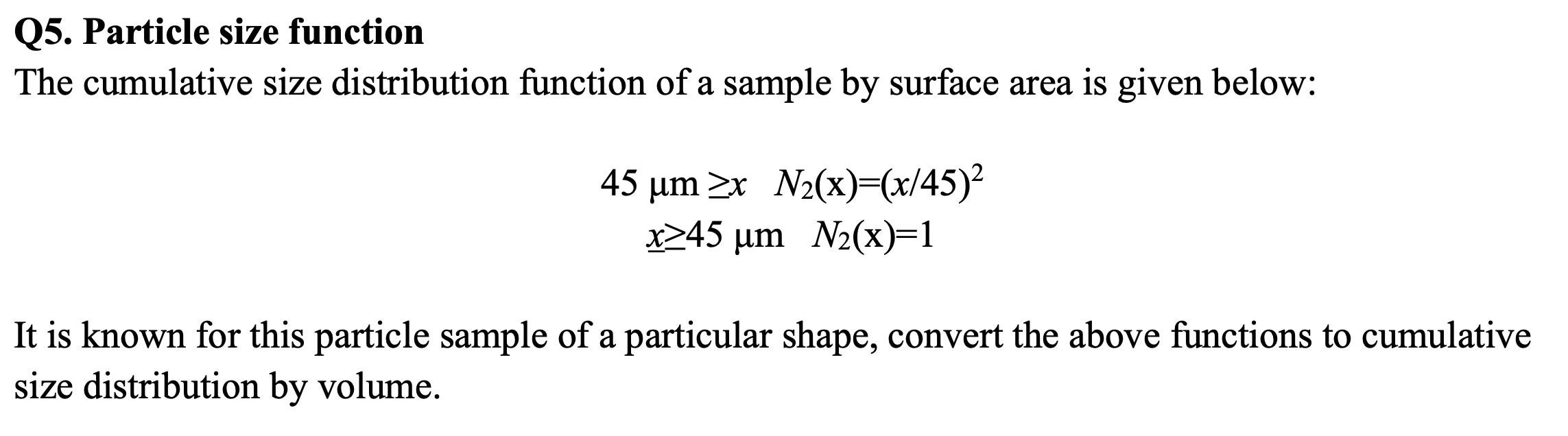
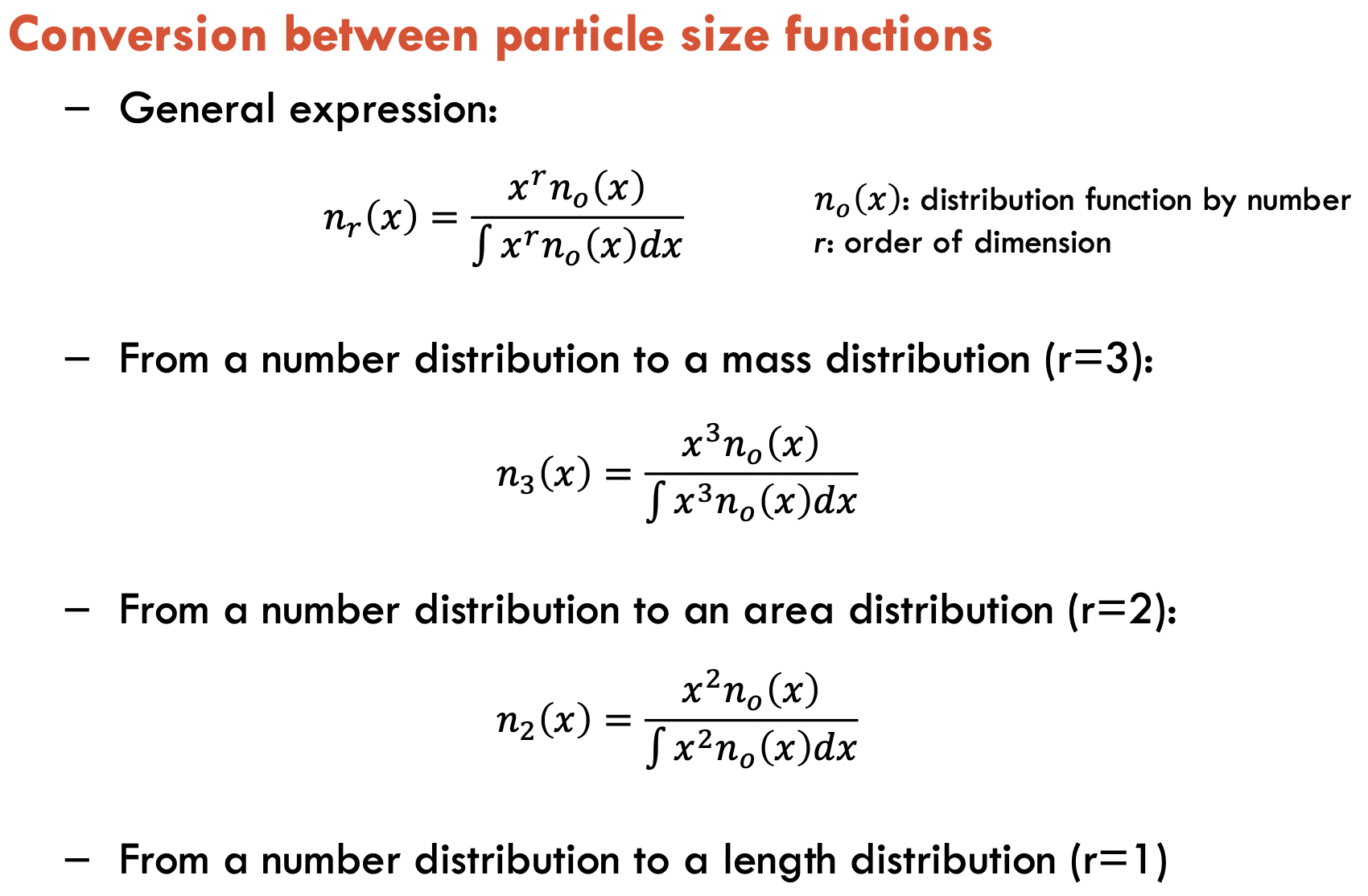
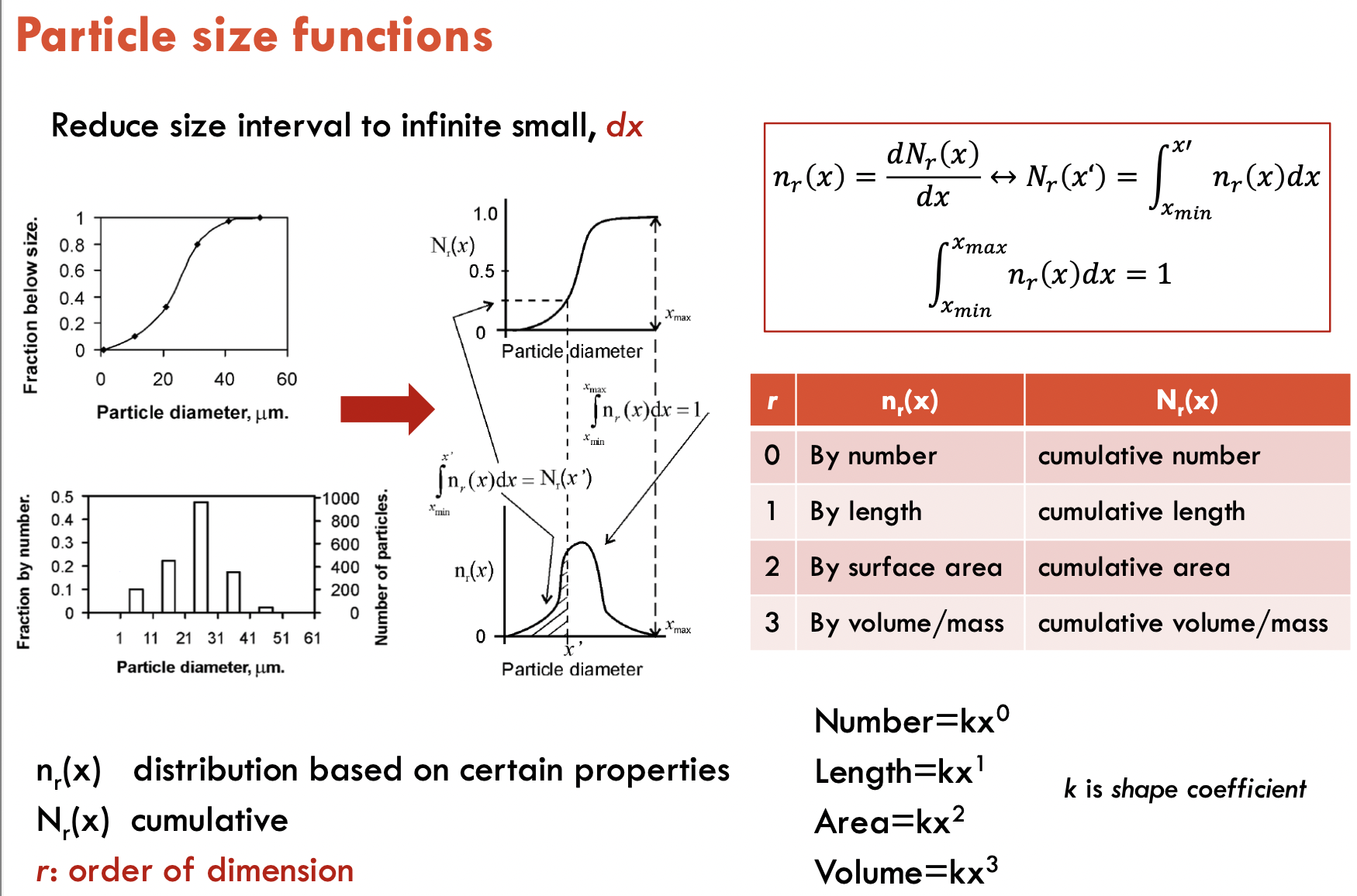
Q5. Particle size function The cumulative size distribution function of a sample by surface area is given below: 45 um >x No(x)=(x/45)* x>45 um N> (x)=1 It is known for this particle sample of a particular shape, convert the above functions to cumulative size distribution by volume. Conversion between particle size functions - General expression: x'no (x) nr (x) = no (x): distribution function by number Sxno(x)dx r: order of dimension - From a number distribution to a mass distribution (r=3): x3no(x) n3 (x) = S x3no (x)dx - From a number distribution to an area distribution (r=2): x2no (x) n2 (x) = S x2n. (x)dx - From a number distribution to a length distribution (r=1)Particle size functions Reduce size interval to infinite small, dx dNr (x) nr (X = " Ny (x') = nr(x)dx dx 1.0 Xmin 0.8 N.(x) Xmax ).6 0.5 nr(x) dx = 1 .4 Fraction below size. 0.2 *max Xmin 0 O Particle diameter 0 20 40 60 Particle diameter, um. In, (x)dr =1, r n,(x) N,(x) * min 0 By number [n, (x) de = N.(x ' ) cumulative number 0.5 1000 0.4 * min 800 1 By length cumulative length 600 Fraction by number. 400 Number of particles 2 By surface area cumulative area 200 0 1 11 21 31 41 51 61 3 By volume /mass cumulative volume/mass Particle diameter, um. Particle diameter Number=kxo n,(x) distribution based on certain properties Length=kx' k is shape coefficient N,(x) cumulative Area=kx2 r: order of dimension Volume=kx3
Step by Step Solution
There are 3 Steps involved in it

Get step-by-step solutions from verified subject matter experts
 Study Help