







Question: Q8Q10 are based on the context described here - A local winery wants to sell its wine through a grocery retailer. On average, 1000
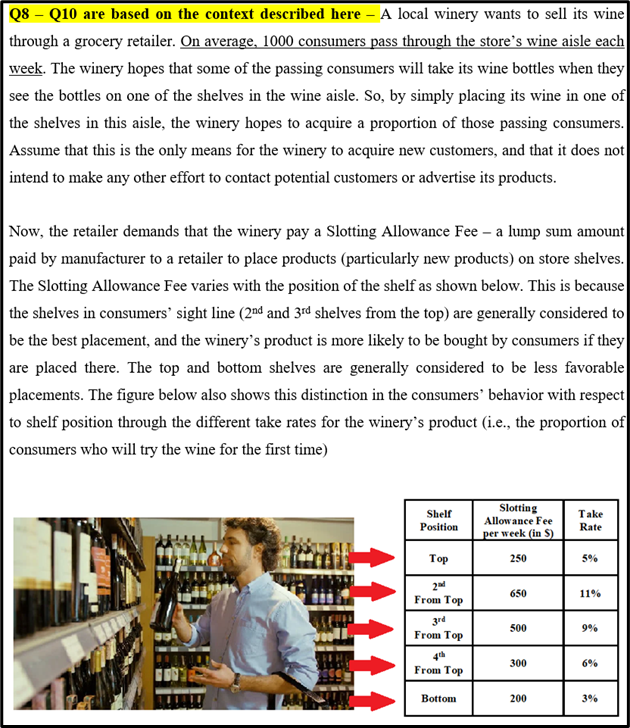
Q8Q10 are based on the context described here - A local winery wants to sell its wine through a grocery retailer. On average, 1000 consumers pass through the store's wine aisle each week. The winery hopes that some of the passing consumers will take its wine bottles when they see the bottles on one of the shelves in the wine aisle. So, by simply placing its wine in one of the shelves in this aisle, the winery hopes to acquire a proportion of those passing consumers. Assume that this is the only means for the winery to acquire new customers, and that it does not intend to make any other effort to contact potential customers or advertise its products. Now, the retailer demands that the winery pay a Slotting Allowance Fee - a lump sum amount paid by manufacturer to a retailer to place products (particularly new products) on store shelves. The Slotting Allowance Fee varies with the position of the shelf as shown below. This is because the shelves in consumers' sight line (2nd and 3rd shelves from the top) are generally considered to be the best placement, and the winery's product is more likely to be bought by consumers if they are placed there. The top and bottom shelves are generally considered to be less favorable placements. The figure below also shows this distinction in the consumers' behavior with respect to shelf position through the different take rates for the winery's product (i.e., the proportion of consumers who will try the wine for the first time) Shelf Position Slotting Allowance Fee Take Rate per week (in S) Top 250 5% 2nd 650 11% From Top 3rd 500 9% From Top 300 6% From Top Bottom 200 3%
Step by Step Solution
There are 3 Steps involved in it

Get step-by-step solutions from verified subject matter experts
 Study Help