







Question: QBE Queries: Using Microsoft Access QBE, create and run new queries to answer the questions that follow. Save each query using the query name format
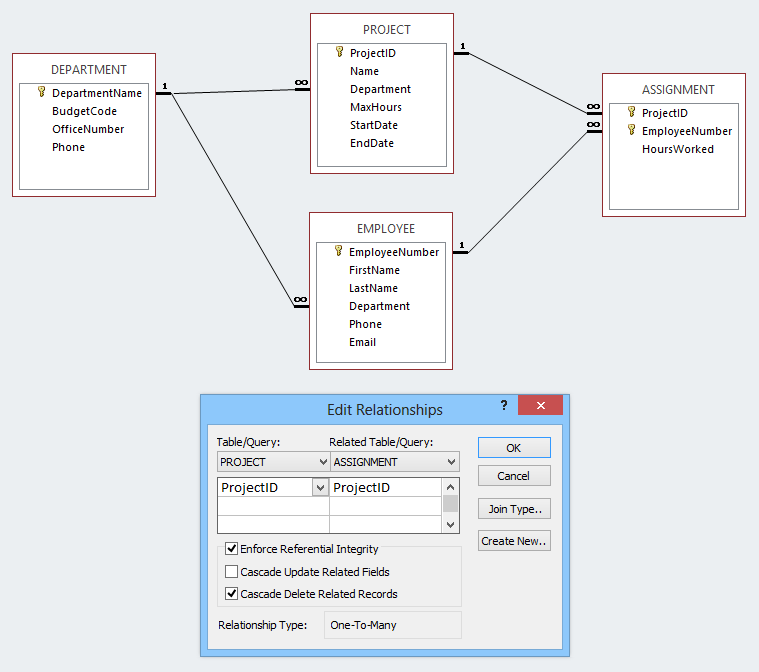
QBE Queries: Using Microsoft Access QBE, create and run new queries to answer the questions that follow. Save each query using the query name format QBEQuery-#, where the # sign is replaced by the letter of the question.
Who are the employees assigned to each project? Show ProjectID, ProjectName, Department (from the PROJECT table), EmployeeNumber, LastName, FirstName, and Phone. Create, run, and save this QBE query as QBEQuery-F.
Hint: QBE queries for questions G and H require more effort to produce the same results as the SQL queries.
Who are the employees assigned to each project? Show ProjectID, ProjectName, Department (from the PROJECT table), Department Phone, EmployeeNumber, LastName, FirstName, and Employee Phone. Sort by ProjectID, in ascending order. Create, run, and save this QBE query as QBEQuery-G. (continued on next page)
Who are the employees assigned to projects run by the marketing department? Show ProjectID, ProjectName, Department (from the PROJECT table), Department Phone, EmployeeNumber, LastName, FirstName, and Employee Phone. Sort by ProjectID, in ascending order. Create, run, and save this QBE query as QBEQuery-H.
PROJECT ProjectID Name Department MaxHours StartDate EndDate DEPARTMENT ASSIGNMENT DepartmentName BudgetCode OfficeNumber Phone ProjectID EmployeeNumber HoursWorked EMPLOYEE EmployeeNumber FirstName LastName Department Phone Email Edit Relationships Table/Query: Related Table/Query: OK PROJECT ASSIGNMENT Cancel ProjectID Project!D Join Type Create New Enforce Referential Integrity Cascade Update Related Fields Cascade Delete Related Records Relationship Type: One-To-Many
Step by Step Solution
There are 3 Steps involved in it

Get step-by-step solutions from verified subject matter experts
 Study Help