





Question: Question 1 (19) Read the case study below and answer the questions that follow: . SOUTH AFRICAN BREWERIES South African Breweries Limited (informally SAB) is
Question 1 (19) Read the case study below and
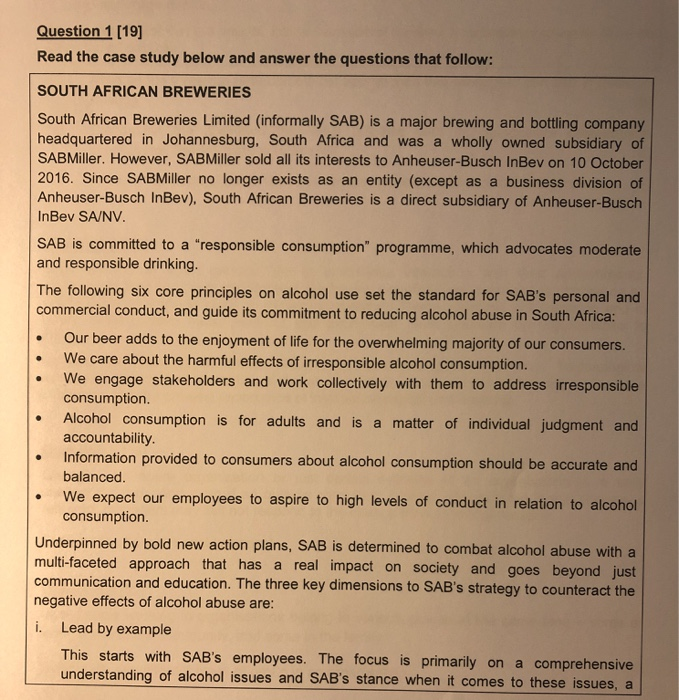
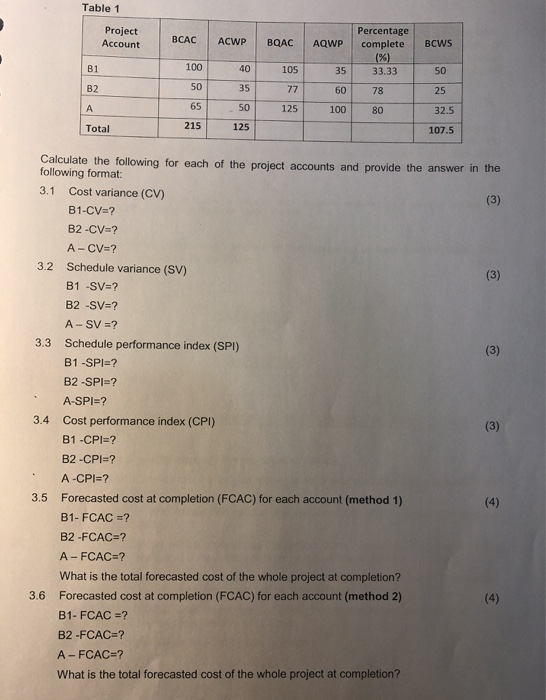
Question 1 (19) Read the case study below and answer the questions that follow: . SOUTH AFRICAN BREWERIES South African Breweries Limited (informally SAB) is a major brewing and bottling company headquartered in Johannesburg, South Africa and was a wholly owned subsidiary of SABMiller. However, SABMiller sold all its interests to Anheuser-Busch InBev on 10 October 2016. Since SABMiller no longer exists as an entity (except as a business division of Anheuser-Busch InBev), South African Breweries is a direct subsidiary of Anheuser-Busch InBev SA/NV. SAB is committed to a "responsible consumption" programme, which advocates moderate and responsible drinking. The following six core principles on alcohol use set the standard for SAB's personal and commercial conduct, and guide its commitment to reducing alcohol abuse in South Africa: Our beer adds to the enjoyment of life for the overwhelming majority of our consumers. We care about the harmful effects of irresponsible alcohol consumption. We engage stakeholders and work collectively with them to address irresponsible consumption. Alcohol consumption is for adults and is a matter of individual judgment and accountability. Information provided to consumers about alcohol consumption should be accurate and balanced. We expect our employees to aspire to high levels of conduct in relation to alcohol consumption. Underpinned by bold new action plans, SAB is determined to combat alcohol abuse with a multi-faceted approach that has a real impact on society and goes beyond just communication and education. The three key dimensions to SAB's strategy to counteract the negative effects of alcohol abuse are: i. Lead by example This starts with SAB's employees. The focus is primarily on a comprehensive understanding of alcohol issues and SAB's stance when it comes to these issues, a Table 1 Project Account BCAC ACWP BQAC AQWP Percentage complete BCWS B1 100 40 105 35 33.33 50 B2 50 35 77 60 78 25 65 50 125 100 80 32.5 Total 215 125 107.5 Calculate the following for each of the project accounts and provide the answer in the following format: 3.1 Cost variance (CV) (3) B1-CV=? B2-CV=? A-CV=? 3.2 Schedule variance (SV) (3) B1 -SV=? B2 -SV=? A-SV =? 3.3 Schedule performance index (SPI) (3) B1 -SPIE? B2-SPI? A-SPI=? 3.4 Cost performance index (CPI) (3) B1-CPIE? B2-CPI=? A-CPI? 3.5 Forecasted cost at completion (FCAC) for each account (method 1) B1- FCAC = ? B2-FCAC=? A-FCAC=? What is the total forecasted cost of the whole project at completion? 3.6 Forecasted cost at completion (FCAC) for each account (method 2) B1- FCAC = ? B2-FCAC=? A-FCAC=? What is the total forecasted cost of the whole project at completion? (4) 4)

Step by Step Solution

There are 3 Steps involved in it

1 Expert Approved Answer
Step: 1 Unlock blur-text-image

Question Has Been Solved by an Expert!

Get step-by-step solutions from verified subject matter experts

Step: 2 Unlock
Step: 3 Unlock

Students Have Also Explored These Related General Management Questions!