







Question: Question 1 ( 2 5 Points ) : table [ [ Iteration , Step,Multiplier,Multiplicand,Product ] , [ 0 , Initial values, 0 0 1
Question Points: tableIterationStep,Multiplier,Multiplicand,ProductInitial values,a: Prod Prod Mcand,: Shift left Multiplicand,: Shift right Multiplier,a: Prod Prod Mcand,: Shift left Multiplicand,: Shift right Multiplier,: No operation,: Shift left Multiplicand,: Shift right Multiplier,: No operation,: Shift left Multiplicand,: Shift right Multiplier,
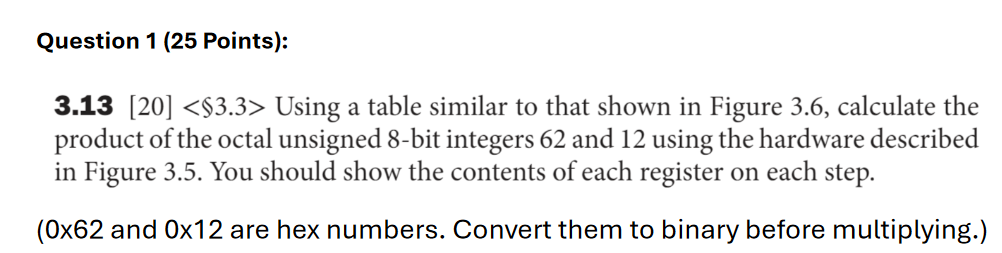
Using a table similar to that shown in Figure calculate the
product of the octal unsigned bit integers and using the hardware described
in Figure You should show the contents of each register on each step.
and are hex numbers. Convert them to binary before multiplying.
Step by Step Solution
There are 3 Steps involved in it
1 Expert Approved Answer
Step: 1 Unlock

Question Has Been Solved by an Expert!
Get step-by-step solutions from verified subject matter experts
Step: 2 Unlock
Step: 3 Unlock
 Study Help