







Question: Question #1: 2 x + 7 (1 point) Consider the graph of y = 2 4. x _ Find the x- and y-intercepts: The x-intercept
Question #1:
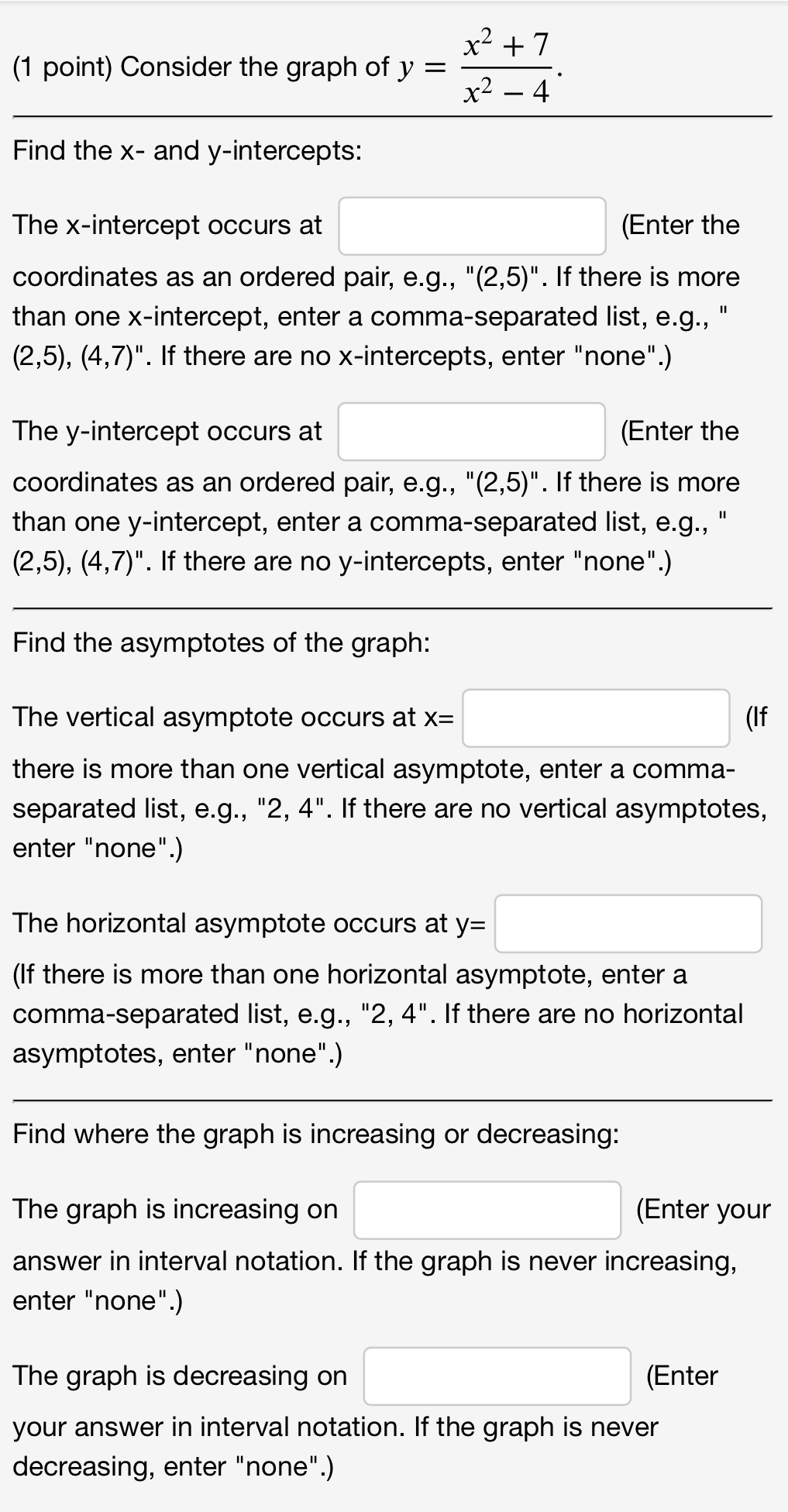
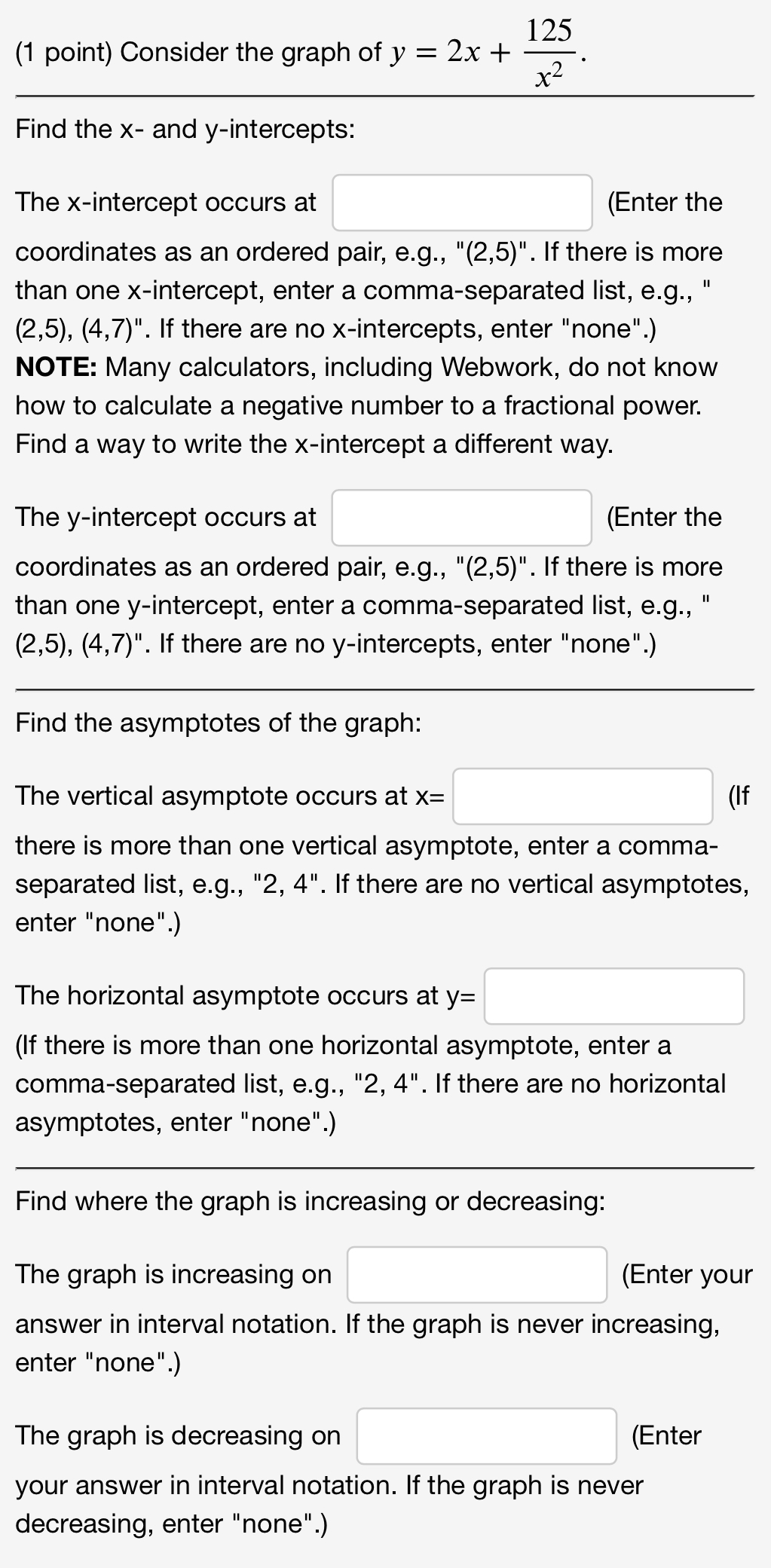
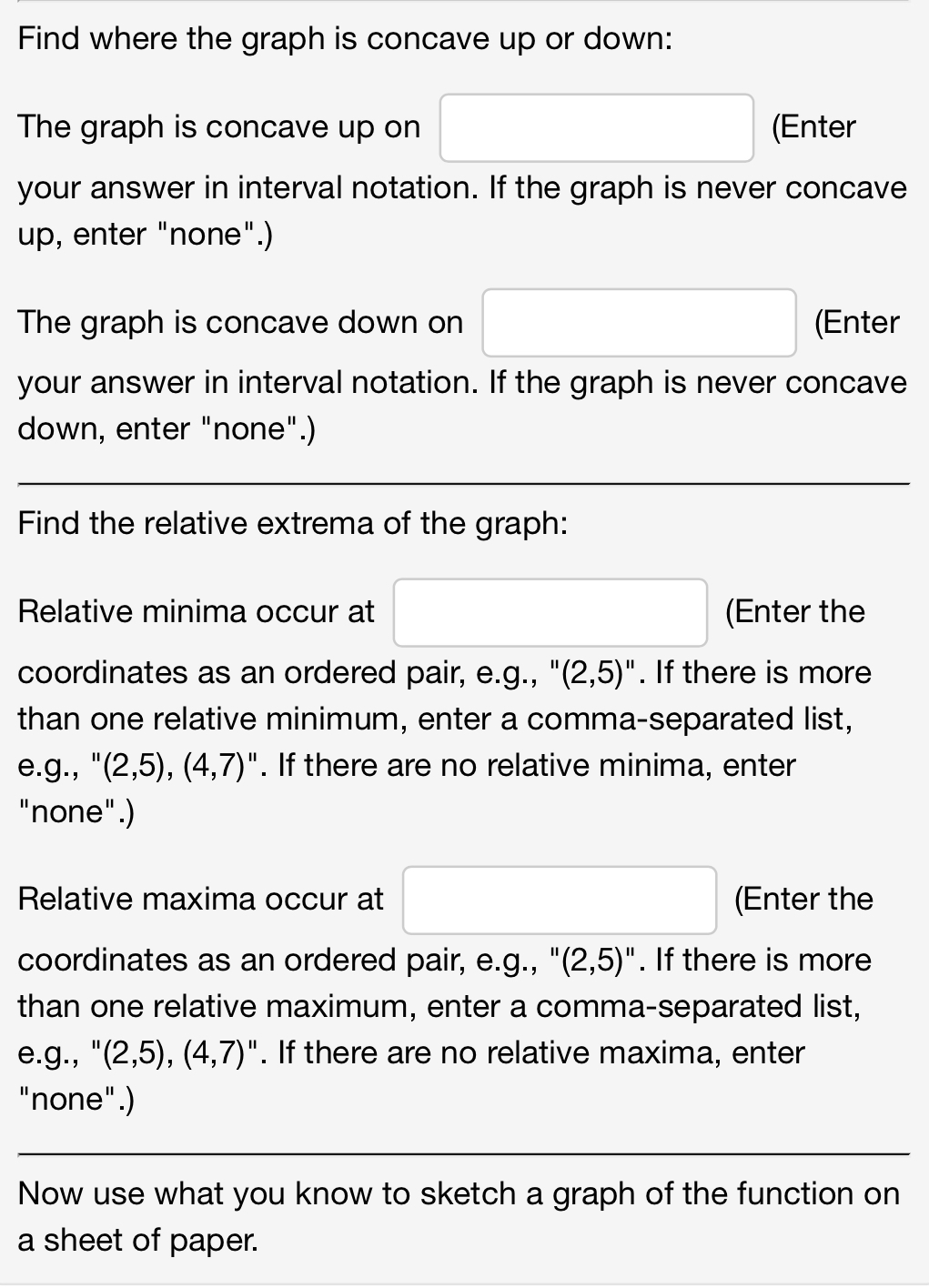
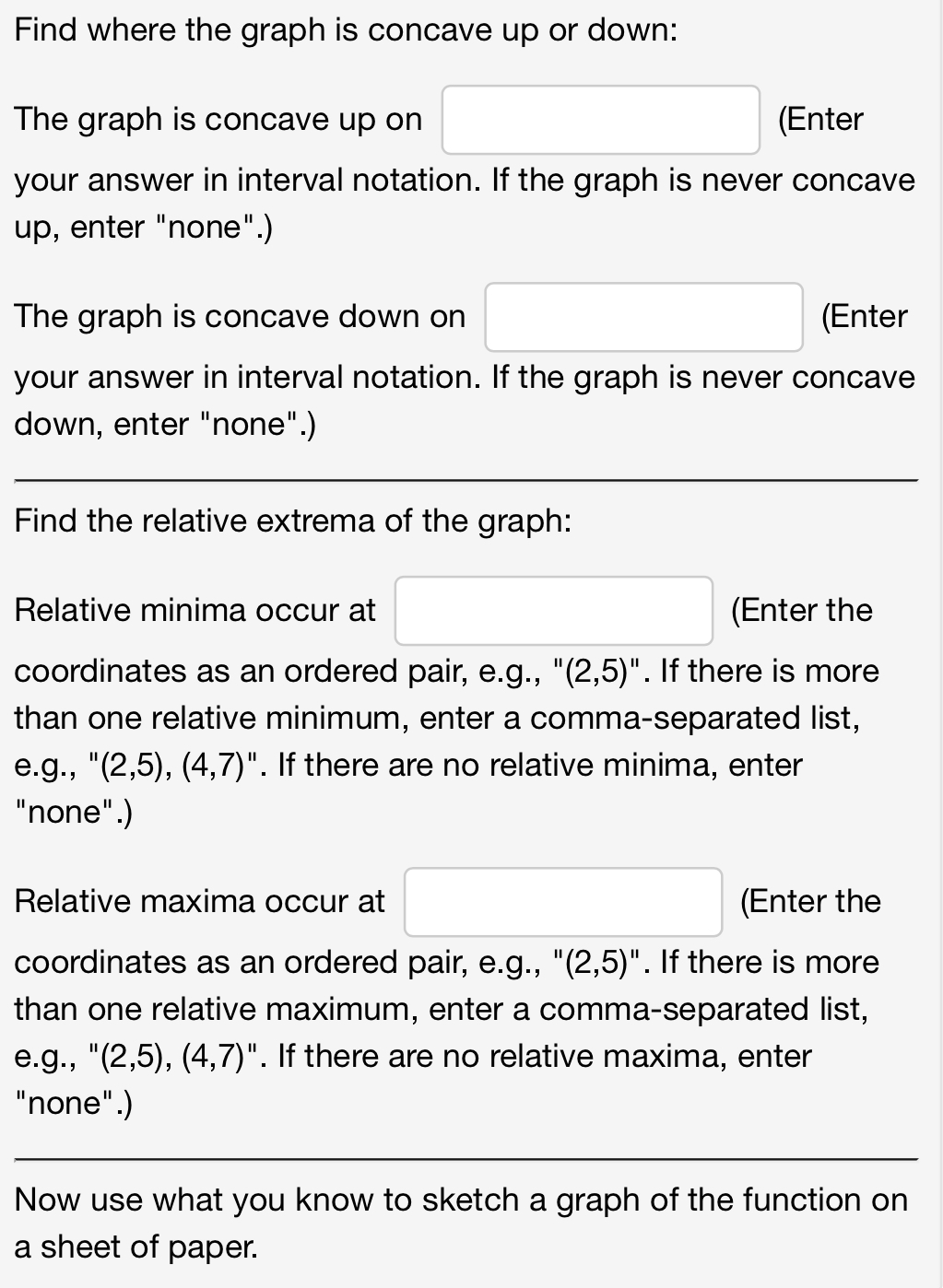
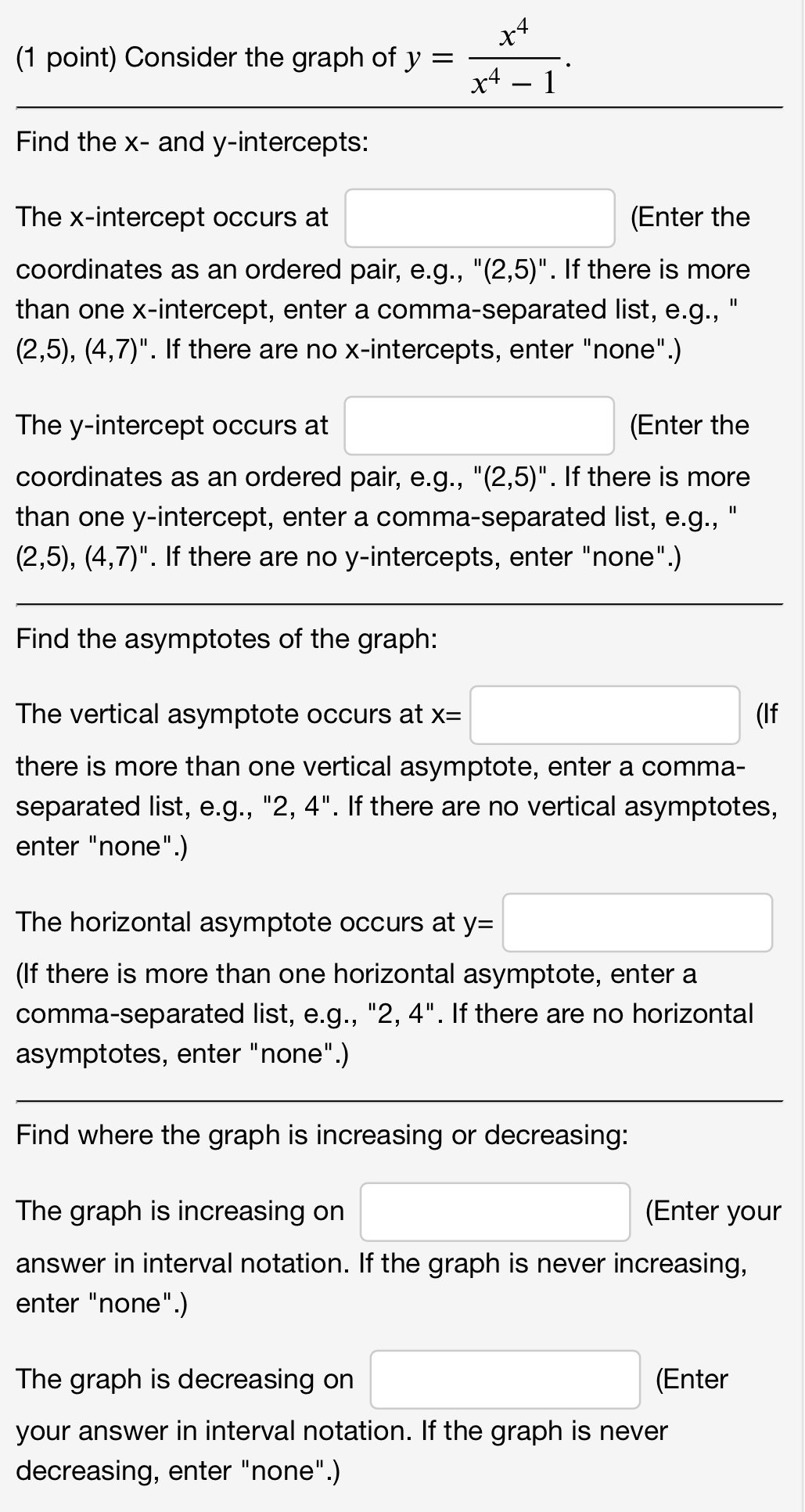
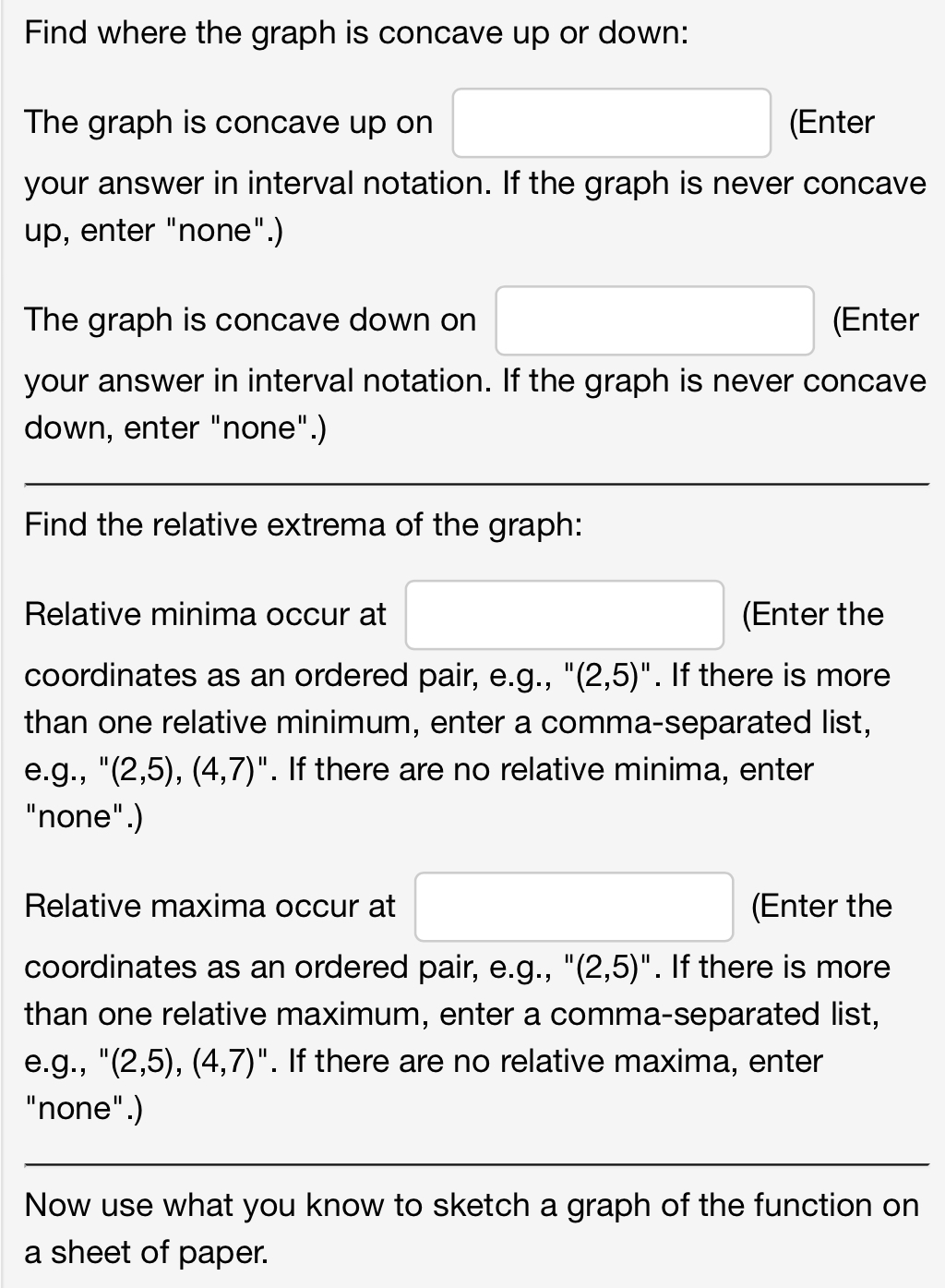
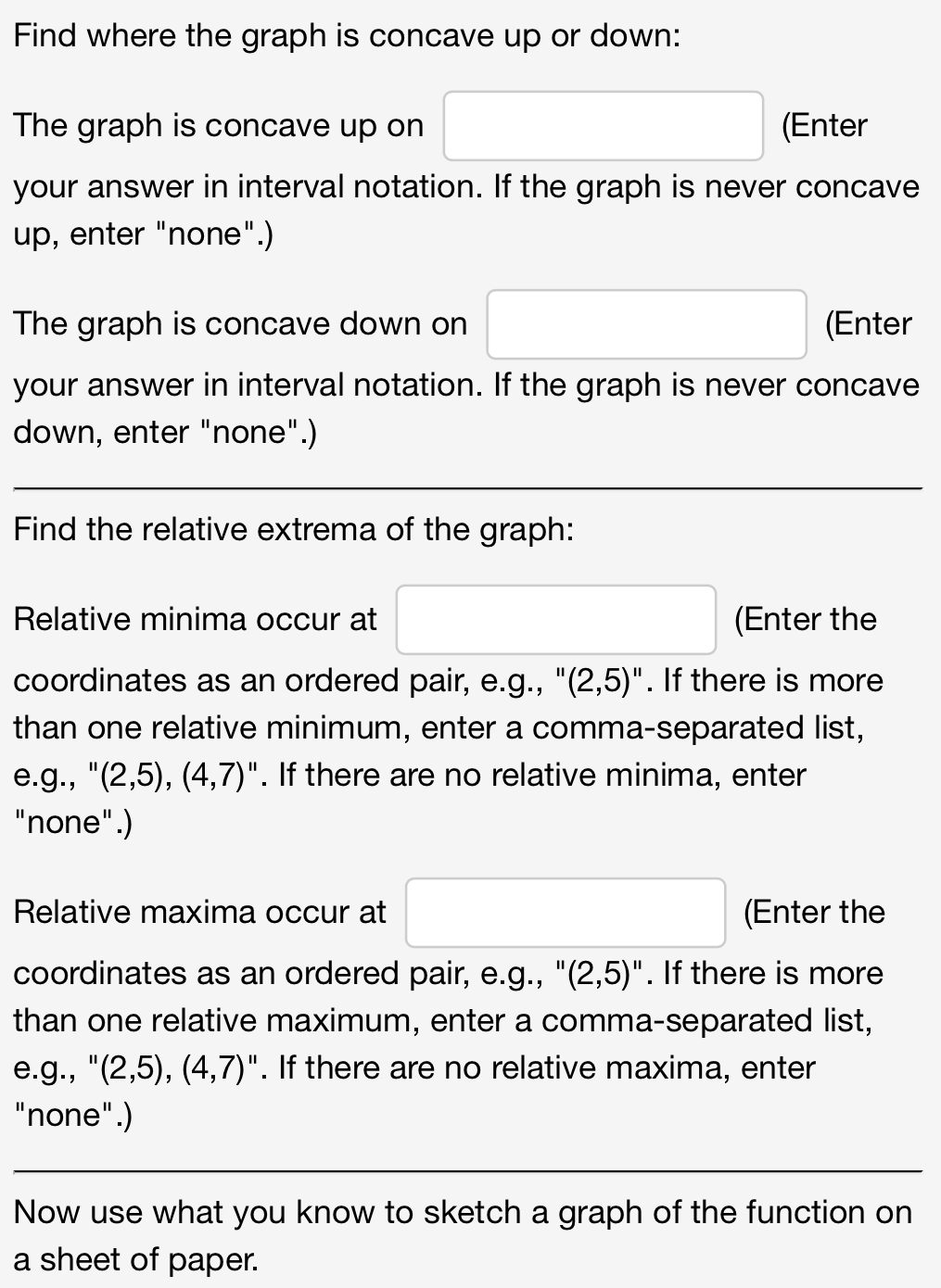
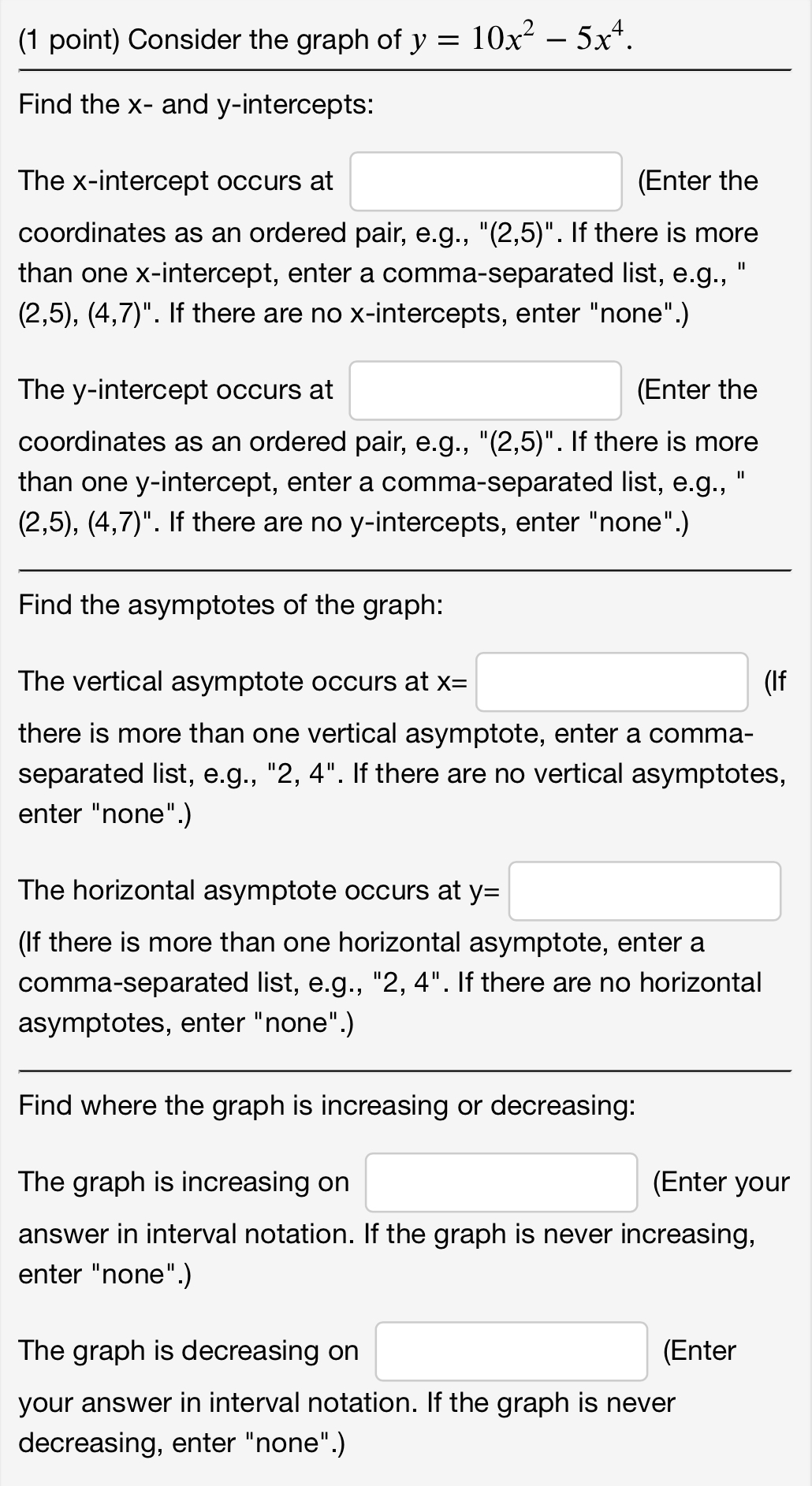
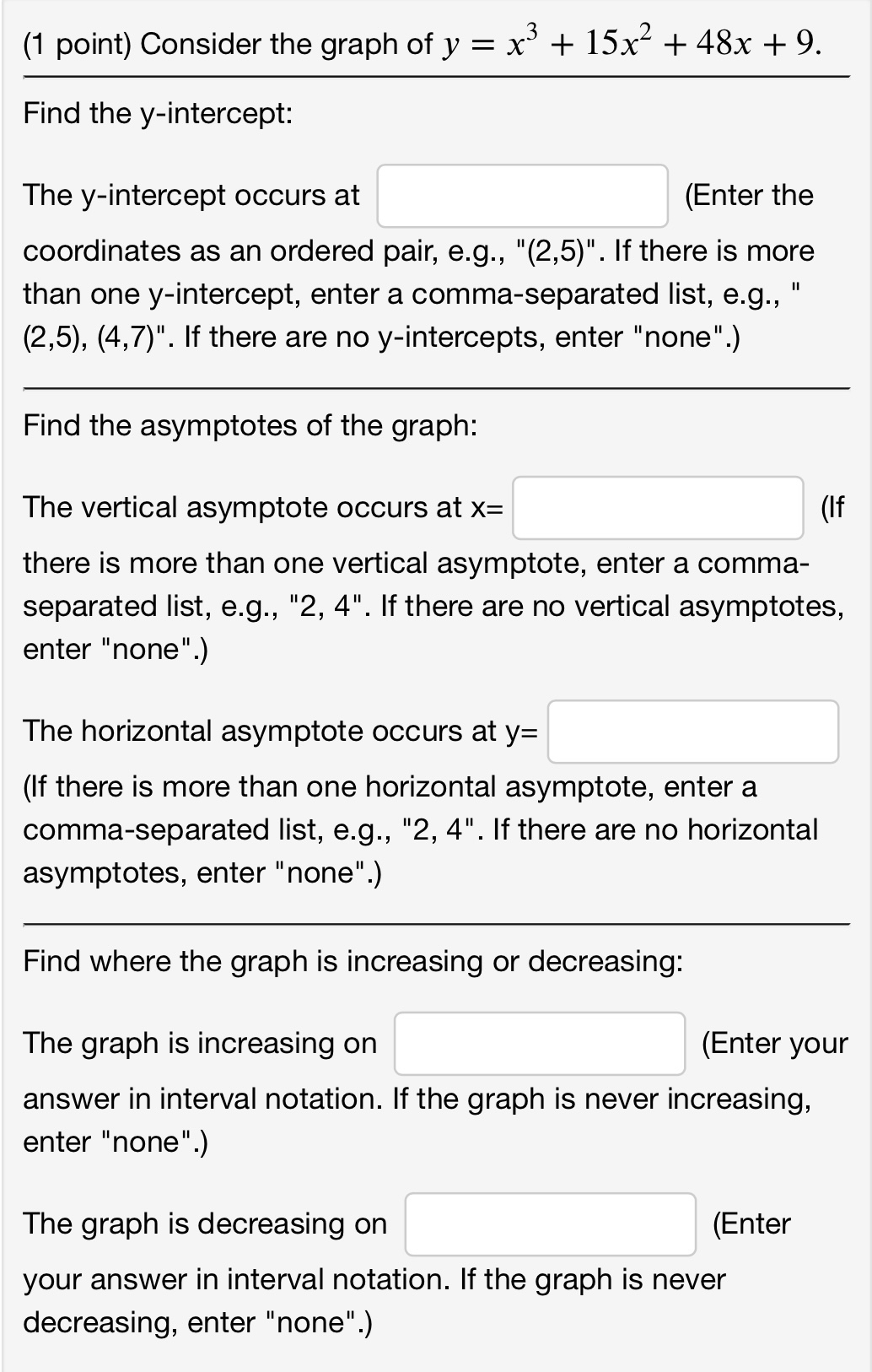
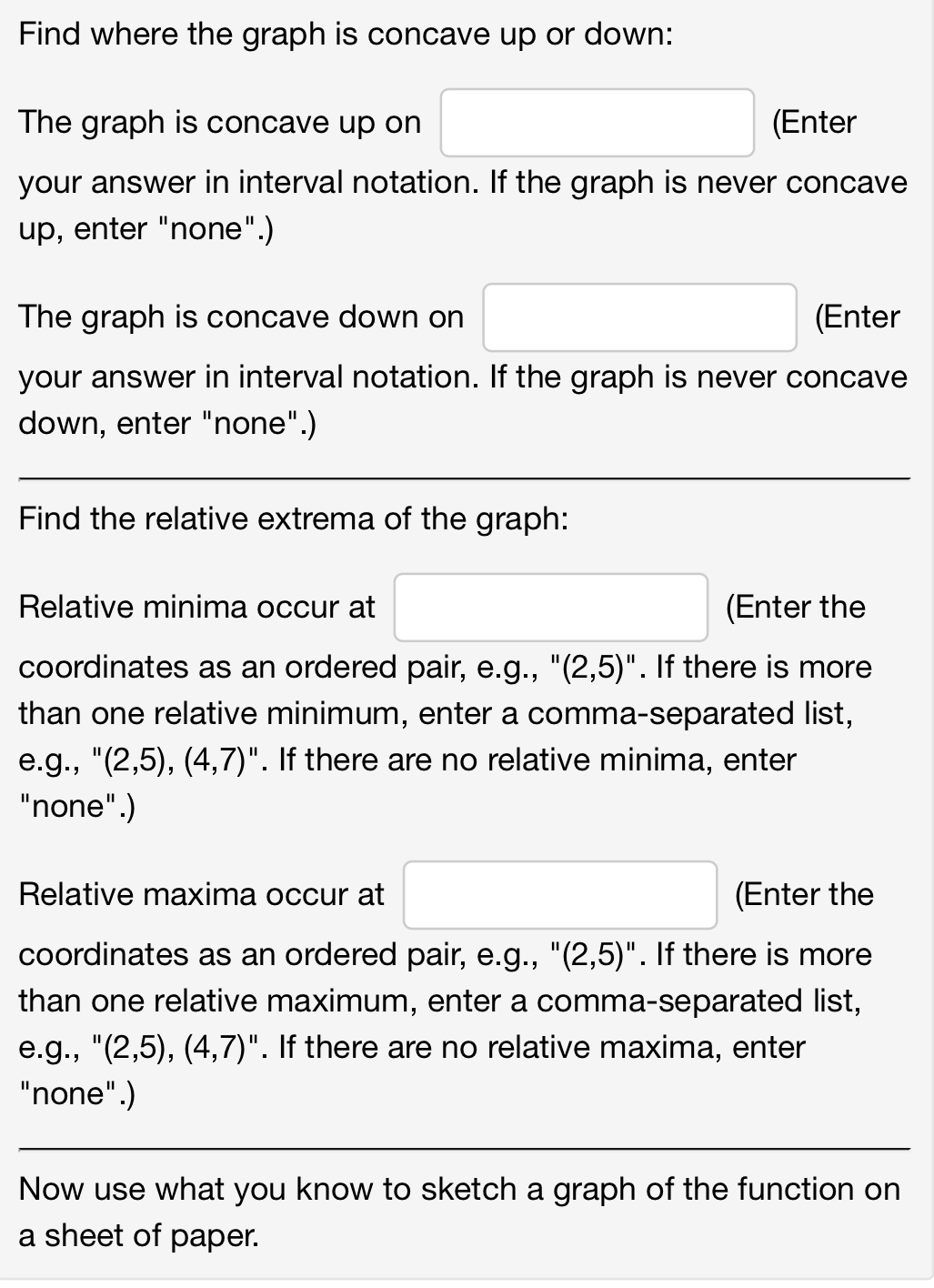
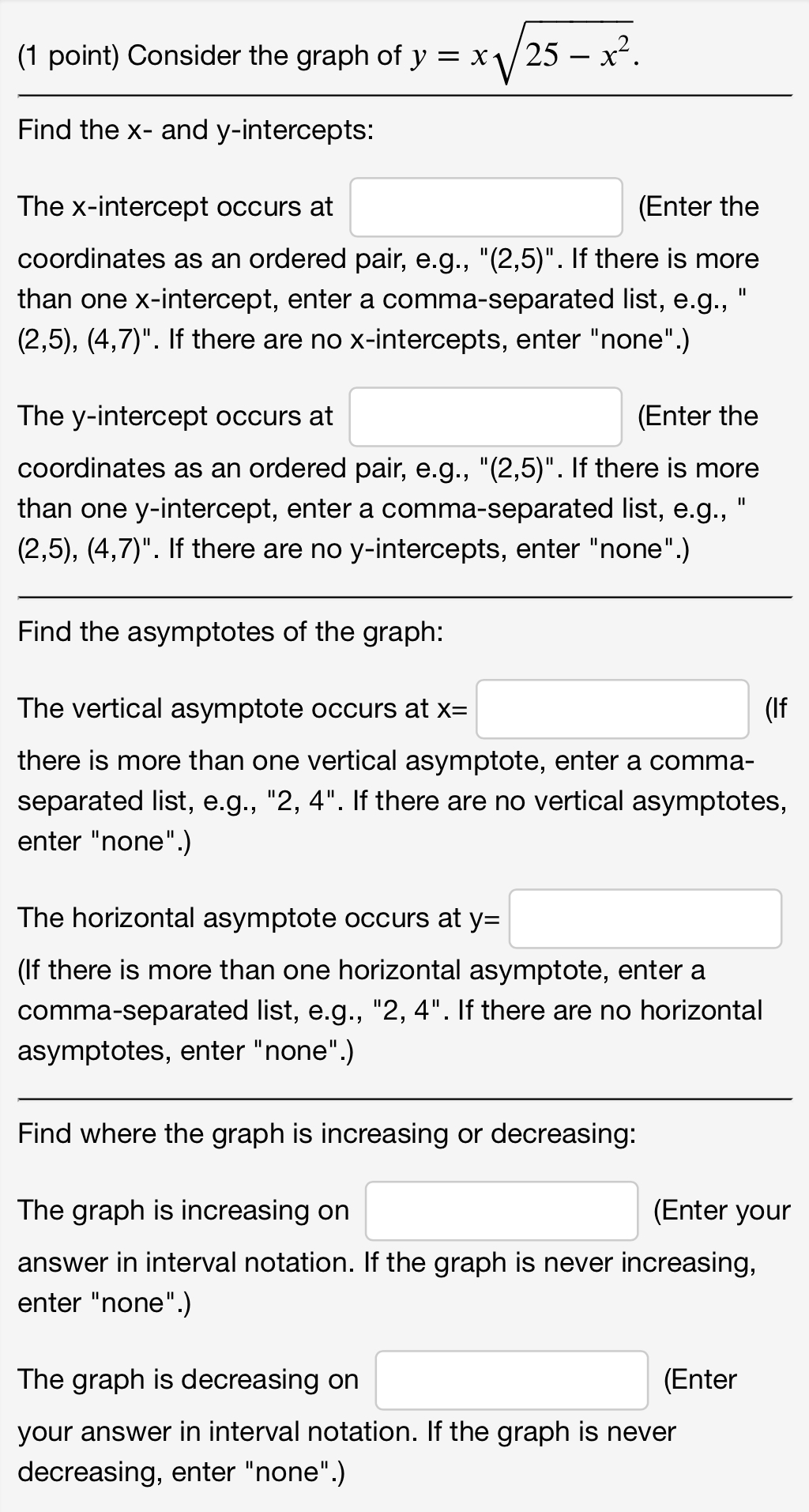
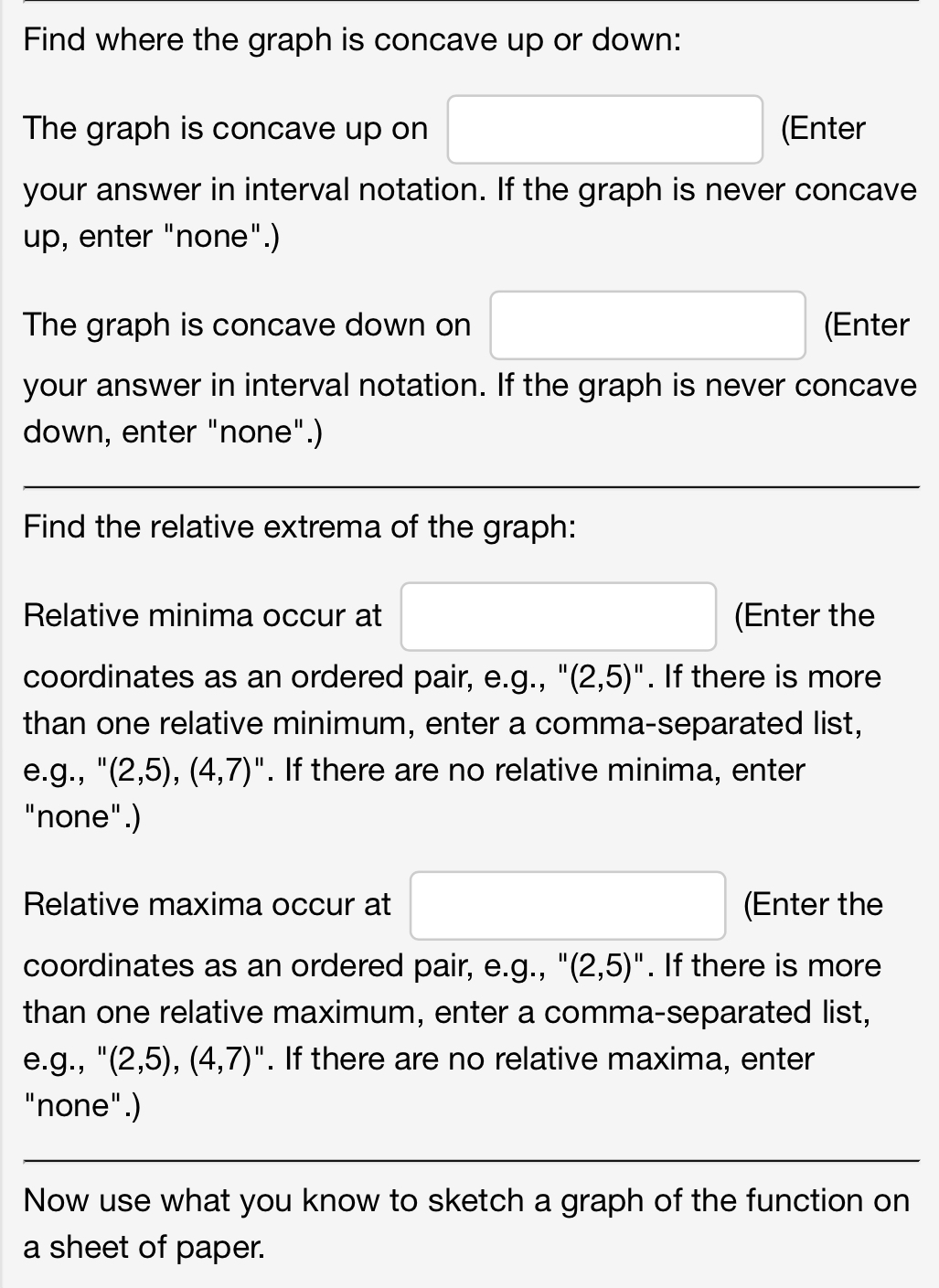
2 x + 7 (1 point) Consider the graph of y = 2 4. x _ Find the x- and y-intercepts: The x-intercept occurs at (Enter the coordinates as an ordered pair, e.g., "(2,5)". If there is more than one x-intercept, enter a comma-separated list, e.g., " (2,5), (4,7)". If there are no x-intercepts, enter "none".) The y-intercept occurs at (Enter the coordinates as an ordered pair, e.g., "(2,5)". If there is more than one y-intercept, enter a comma-separated list, e.g., " (2,5), (4,7)". If there are no y-intercepts, enter "none".) Find the asymptotes of the graph: The vertical asymptote occurs at x: (If there is more than one vertical asymptote, enter a comma- separated list, e.g., "2, 4". If there are no vertical asymptotes, enter "none".) The horizontal asymptote occurs at y: (If there is more than one horizontal asymptote, enter a comma-separated list, e.g., "2, 4". If there are no horizontal asymptotes, enter "none".) Find where the graph is increasing or decreasing: The graph is increasing on (Enter your answer in interval notation. If the graph is never increasing, enter "none".) The graph is decreasing on (Enter your answer in interval notation. If the graph is never decreasing, enter "none".) . . 125 (1 pomt) ConSIder the graph of y = 2x + 2. x Find the x- and y-intercepts: The x-intercept occurs at (Enter the coordinates as an ordered pair, e.g., "(2,5)". If there is more than one x-intercept, enter a comma-separated list, e.g., " (2,5), (4,7)". If there are no x-intercepts, enter "none".) NOTE: Many calculators, including Webwork, do not know how to calculate a negative number to a fractional power. Find a way to write the x-intercept a different way. The y-intercept occurs at (Enter the coordinates as an ordered pair, e.g., "(2,5)". If there is more than one y-intercept, enter a comma-separated list, e.g., " (2,5), (4,7)". If there are no y-intercepts, enter "none".) Find the asymptotes of the graph: The vertical asymptote occurs at x: (If there is more than one vertical asymptote, enter a comma- separated list, e.g., "2, 4". If there are no vertical asymptotes, enter "none".) The horizontal asymptote occurs at y: (If there is more than one horizontal asymptote, enter a comma-separated list, e.g., "2, 4". If there are no horizontal asymptotes, enter "none".) Find where the graph is increasing or decreasing: The graph is increasing on (Enter your answer in interval notation. If the graph is never increasing, enter "none".) The graph is decreasing on (Enter your answer in interval notation. If the graph is never decreasing, enter "none".) Find where the graph is concave up or down: The graph is concave up on (Enter your answer in interval notation. If the graph is never concave up, enter "none".) The graph is concave down on (Enter your answer in interval notation. If the graph is never concave down, enter "none".) Find the relative extrema of the graph: Relative minima occur at (Enter the coordinates as an ordered pair, e.g., "(2,5)". If there is more than one relative minimum, enter a comma-separated list, e.g., "(2,5), (4,7)". If there are no relative minima, enter "none"J Relative maxima occur at (Enter the coordinates as an ordered pair, e.g., "(2,5)". If there is more than one relative maximum, enter a comma-separated list, e.g., "(2,5), (4,7)". If there are no relative maxima, enter "none"J Now use what you know to sketch a graph of the function on a sheet of paper. Find where the graph is concave up or down: The graph is concave up on (Enter your answer in interval notation. If the graph is never concave up, enter "none".) The graph is concave down on (Enter your answer in interval notation. If the graph is never concave down, enter "none".) Find the relative extrema of the graph: Relative minima occur at (Enter the coordinates as an ordered pair, e.g., "(2,5)". If there is more than one relative minimum, enter a comma-separated list, e.g., "(2,5), (4,7)". If there are no relative minima, enter "none"J Relative maxima occur at (Enter the coordinates as an ordered pair, e.g., "(2,5)". If there is more than one relative maximum, enter a comma-separated list, e.g., "(2,5), (4,7)". If there are no relative maxima, enter "none") Now use what you know to sketch a graph of the function on a sheet of paper. 4 x (1 point) Consider the graph of y = 4 1 . x _ Find the x- and y-intercepts: The x-intercept occurs at (Enter the coordinates as an ordered pair, e.g., "(2,5)". If there is more than one x-intercept, enter a comma-separated list, e.g., " (2,5), (4,7)". If there are no x-intercepts, enter "none".) The y-intercept occurs at (Enter the coordinates as an ordered pair, e.g., "(2,5)". If there is more than one y-intercept, enter a comma-separated list, e.g., " (2,5), (4,7)". If there are no y-intercepts, enter "none".) Find the asymptotes of the graph: The vertical asymptote occurs at x: (If there is more than one vertical asymptote, enter a comma- separated list, e.g., "2, 4". If there are no vertical asymptotes, enter "none".) The horizontal asymptote occurs at y: (If there is more than one horizontal asymptote, enter a comma-separated list, e.g., "2, 4". If there are no horizontal asymptotes, enter "none".) Find where the graph is increasing or decreasing: The graph is increasing on (Enter your answer in interval notation. If the graph is never increasing, enter "none".) The graph is decreasing on (Enter your answer in interval notation. If the graph is never decreasing, enter "none".) Find where the graph is concave up or down: The graph is concave up on (Enter your answer in interval notation. If the graph is never concave up, enter "none".) The graph is concave down on (Enter your answer in interval notation. If the graph is never concave down, enter "none".) Find the relative extrema of the graph: Relative minima occur at (Enter the coordinates as an ordered pair, e.g., "(2,5)". If there is more than one relative minimum, enter a comma-separated list, e.g., "(2,5), (4,7)". If there are no relative minima, enter "none") Relative maxima occur at (Enter the coordinates as an ordered pair, e.g., "(2,5)". If there is more than one relative maximum, enter a comma-separated list, e.g., "(2,5), (4,7)". If there are no relative maxima, enter "none") Now use what you know to sketch a graph of the function on a sheet of paper. Find where the graph is concave up or down: The graph is concave up on (Enter your answer in interval notation. If the graph is never concave up, enter "none".) The graph is concave down on (Enter your answer in interval notation. If the graph is never concave down, enter "none".) Find the relative extrema of the graph: Relative minima occur at (Enter the coordinates as an ordered pair, e.g., "(2,5)". If there is more than one relative minimum, enter a comma-separated list, e.g., "(2,5), (4,7)". If there are no relative minima, enter "none"J Relative maxima occur at (Enter the coordinates as an ordered pair, e.g., "(2,5)". If there is more than one relative maximum, enter a comma-separated list, e.g., "(2,5), (4,7)". If there are no relative maxima, enter "none"J Now use what you know to sketch a graph of the function on a sheet of paper. (1 point) Consider the graph of y = 10x2 5x4. Find the x- and y-intercepts: The x-intercept occurs at (Enter the coordinates as an ordered pair, e.g., "(2,5)". If there is more than one x-intercept, enter a comma-separated list, e.g., " (2,5), (4,7)". If there are no x-intercepts, enter "none".) The y-intercept occurs at (Enter the coordinates as an ordered pair, e.g., "(2,5)". If there is more than one y-intercept, enter a comma-separated list, e.g., " (2,5), (4,7)". If there are no y-intercepts, enter "none".) Find the asymptotes of the graph: The vertical asymptote occurs at x: (If there is more than one vertical asymptote, enter a comma- separated list, e.g., "2, 4". If there are no vertical asymptotes, enter "none".) The horizontal asymptote occurs at y: (If there is more than one horizontal asymptote, enter a comma-separated list, e.g., "2, 4". If there are no horizontal asymptotes, enter "none".) Find where the graph is increasing or decreasing: The graph is increasing on (Enter your answer in interval notation. If the graph is never increasing, enter "none".) The graph is decreasing on (Enter your answer in interval notation. If the graph is never decreasing, enter "none".) (1 point) Consider the graph of y = x3 + 15362 + 4806 + 9. Find the y-intercept: The y-intercept occurs at (Enter the coordinates as an ordered pair, e.g., "(2,5)". If there is more than one y-intercept, enter a comma-separated list, e.g., " (2,5), (4,7)". If there are no y-intercepts, enter "none".) Find the asymptotes of the graph: The vertical asymptote occurs at x: (If there is more than one vertical asymptote, enter a comma- separated list, e.g., "2, 4". If there are no vertical asymptotes, enter "none".) The horizontal asymptote occurs at y: (If there is more than one horizontal asymptote, enter a comma-separated list, e.g., "2, 4". If there are no horizontal asymptotes, enter "none".) Find where the graph is increasing or decreasing: The graph is increasing on (Enter your answer in interval notation. If the graph is never increasing, enter "none".) The graph is decreasing on (Enter your answer in interval notation. If the graph is never decreasing, enter "none".) Find where the graph is concave up or down: The graph is concave up on (Enter your answer in interval notation. If the graph is never concave up, enter "none".) The graph is concave down on (Enter your answer in interval notation. If the graph is never concave down, enter "none".) Find the relative extrema of the graph: Relative minima occur at (Enter the coordinates as an ordered pair, e.g., "(2,5)". If there is more than one relative minimum, enter a comma-separated list, e.g., "(2,5), (4,7)". If there are no relative minima, enter "none"J Relative maxima occur at (Enter the coordinates as an ordered pair, e.g., "(2,5)". If there is more than one relative maximum, enter a comma-separated list, e.g., "(2,5), (4,7)". If there are no relative maxima, enter "none") Now use what you know to sketch a graph of the function on a sheet of paper. (1 point) Consider the graph of y = x} / 25 x2. Find the x- and y-intercepts: The x-intercept occurs at (Enter the coordinates as an ordered pair, e.g., "(2,5)". If there is more than one x-intercept, enter a comma-separated list, e.g., " (2,5), (4,7)". If there are no x-intercepts, enter "none".) The y-intercept occurs at (Enter the coordinates as an ordered pair, e.g., "(2,5)". If there is more than one y-intercept, enter a comma-separated list, e.g., " (2,5), (4,7)". If there are no y-intercepts, enter "none".) Find the asymptotes of the graph: The vertical asymptote occurs at x: (If there is more than one vertical asymptote, enter a comma- separated list, e.g., "2, 4". If there are no vertical asymptotes, enter "none".) The horizontal asymptote occurs at y: (If there is more than one horizontal asymptote, enter a comma-separated list, e.g., "2, 4". If there are no horizontal asymptotes, enter "none".) Find where the graph is increasing or decreasing: The graph is increasing on (Enter your answer in interval notation. If the graph is never increasing, enter "none".) The graph is decreasing on (Enter your answer in interval notation. If the graph is never decreasing, enter "none".) Find where the graph is concave up or down: The graph is concave up on (Enter your answer in interval notation. If the graph is never concave up, enter "none".) The graph is concave down on (Enter your answer in interval notation. If the graph is never concave down, enter "none".) Find the relative extrema of the graph: Relative minima occur at (Enter the coordinates as an ordered pair, e.g., "(2,5)". If there is more than one relative minimum, enter a comma-separated list, e.g., "(2,5), (4,7)". If there are no relative minima, enter "none"J Relative maxima occur at (Enter the coordinates as an ordered pair, e.g., "(2,5)". If there is more than one relative maximum, enter a comma-separated list, e.g., "(2,5), (4,7)". If there are no relative maxima, enter "none"J Now use what you know to sketch a graph of the function on a sheet of paper
Step by Step Solution
There are 3 Steps involved in it

Get step-by-step solutions from verified subject matter experts
 Study Help