







Question: Question 1 3 2 pts How does habitual decision making differ from extended problem solving? Consumers who are seeking to develop their loyalty to a
Question
pts
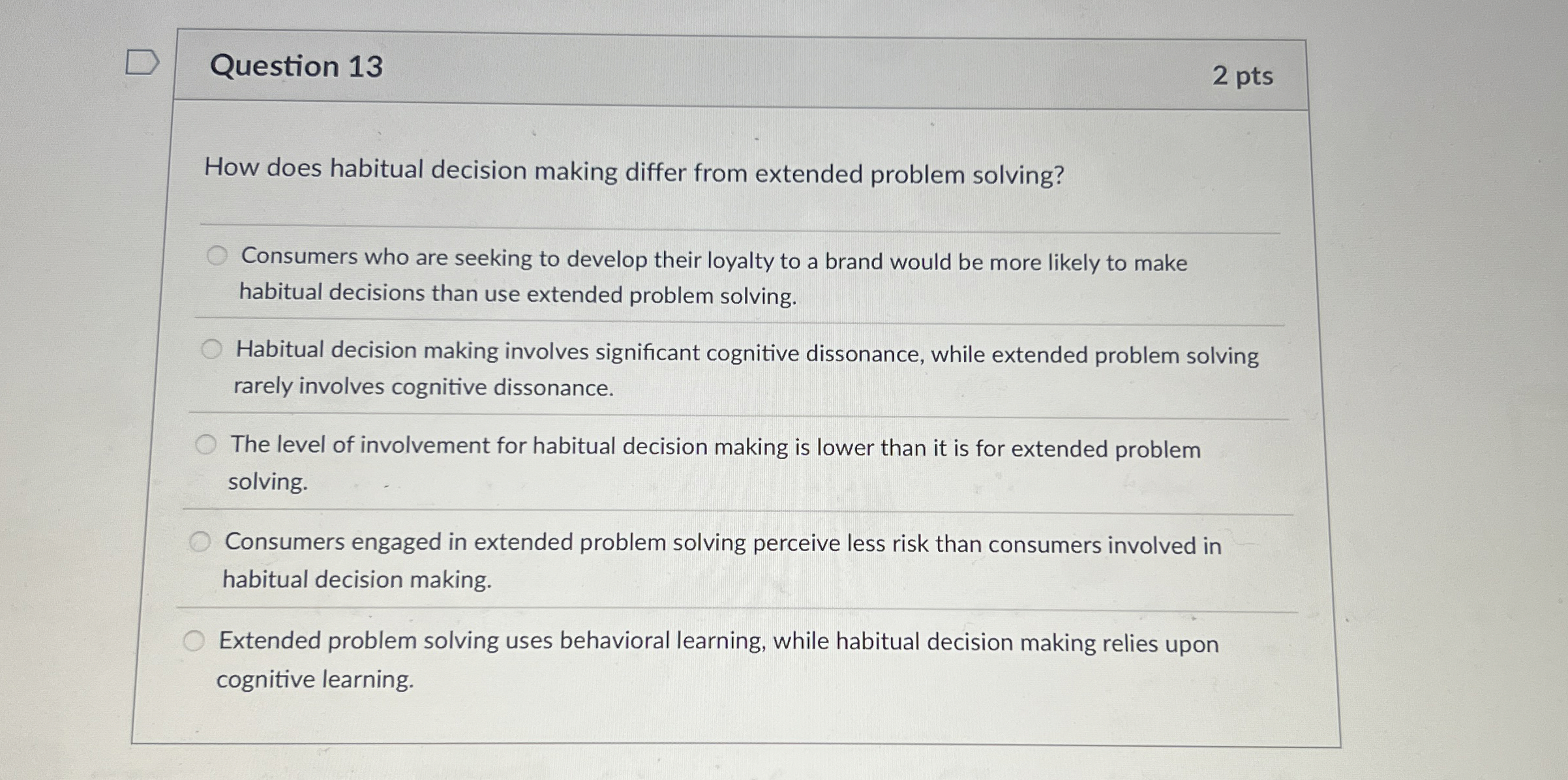
How does habitual decision making differ from extended problem solving?
Consumers who are seeking to develop their loyalty to a brand would be more likely to make habitual decisions than use extended problem solving.
Habitual decision making involves significant cognitive dissonance, while extended problem solving rarely involves cognitive dissonance.
The level of involvement for habitual decision making is lower than it is for extended problem solving.
Consumers engaged in extended problem solving perceive less risk than consumers involved in habitual decision making.
Extended problem solving uses behavioral learning, while habitual decision making relies upon cognitive learning.
Step by Step Solution
There are 3 Steps involved in it
1 Expert Approved Answer
Step: 1 Unlock

Question Has Been Solved by an Expert!
Get step-by-step solutions from verified subject matter experts
Step: 2 Unlock
Step: 3 Unlock
 Study Help