Question: QUESTION 1 (30 Marks) Read the following case extract and answer ALL the questions that follow. A few years ago, PPC, South Africa's largest cement
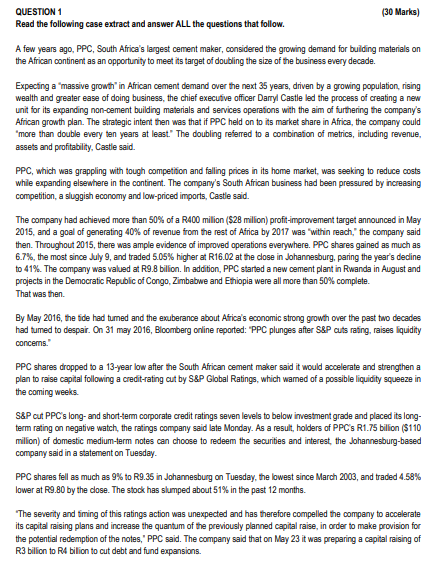
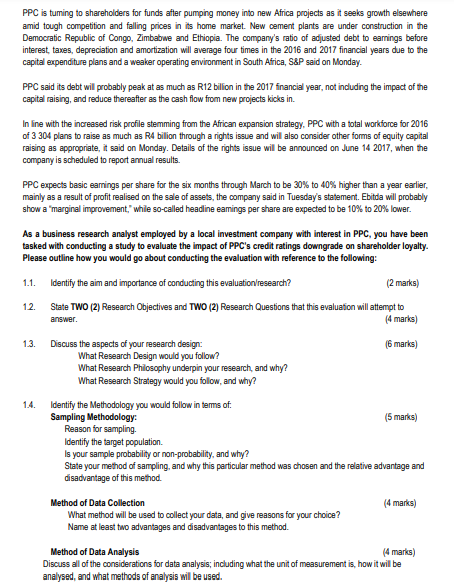

QUESTION 1 (30 Marks) Read the following case extract and answer ALL the questions that follow. A few years ago, PPC, South Africa's largest cement maker, considered the growing demand for building materials on the African continent as an opportunity to meet its target of doubling the size of the business every decade. Expecting a massive growth" in African cement demand over the next 35 years, driven by a growing population, rising wealth and greater ease of doing business, the chief executive officer Darryl Castle led the process of creating a new unit for its expanding non-cement building materials and services operations with the aim of furthering the company's African growth plan. The strategic intent then was that if PPC held on to its market share in Africa, the company could "more than double every ten years at least. The doubling referred to a combination of metrics, including revenue, assets and profitability, Castle said. PPC, which was grappling with tough competition and falling prices in its home market, was seeking to reduce costs while expanding elsewhere in the continent. The company's South African business had been pressured by increasing competition, a sluggish economy and low-priced imports, Castle said. The company had achieved more than 50% of a R400 million ($28 million) profit-improvement target announced in May 2015, and a goal of generating 40% of revenue from the rest of Africa by 2017 was within reach the company said then. Throughout 2015, there was ample evidence of improved operations everywhere. PPC shares gained as much as 6.7%, the most since July 9, and traded 5.05% higher at R16.02 at the close in Johannesburg, paring the year's dedine to 41%. The company was valued at R9.8 billion. In addition, PPC started a new cement plant in Rwanda in August and projects in the Democratic Republic of Congo, Zimbabwe and Ethiopia were all more than 50% complete. That was then By May 2016, the tide had tumed and the exuberance about Africa's economic strong growth over the past two decades had tumed to despair. On 31 may 2016, Bloomberg online reported: "PPC plunges after S&P cuts rating, raises liquidity concerns. PPC shares dropped to a 13-year low after the South African cement maker said it would accelerate and strengthen a plan to raise capital following a credit-rating cut by S&P Global Ratings, which wamed of a possible liquidity squeeze in the coming weeks S&P cut PPC's long and short-term corporate credit ratings seven levels to below investment grade and placed its long- term rating an negative watch, the ratings company said late Monday. As a result, holders of PPC's R1.75 billion ($110 million) of domestic medium-term nates can choose to redeem the securities and interest, the Johannesburg-based company said in a statement on Tuesday PPC shares fell as much as 9% to R9.35 in Johannesburg on Tuesday, the lowest since March 2003, and traded 4.58% lower at R9.80 by the close. The stock has slumped about 51% in the past 12 months "The severity and timing of this ratings action was unexpected and has therefore compelled the company to accelerate its capital raising plans and increase the quantum of the previously planned capital raise, in order to make provision for the potential redemption of the notes," PPC said. The company said that on May 23 it was preparing a capital raising of R3 bilion to Ra bilion to cut debt and fund expansions. PPC is tuming to shareholders for funds after pumping money into new Africa projects as it seeks growth elsewhere amid tough competition and falling prices in its home market. New cement plants are under construction in the Democratic Republic of Congo, Zimbabwe and Ethiopia. The company's ratio of adjusted debt to earnings before interest, taxes, depreciation and amortization will average four times in the 2016 and 2017 financial years due to the capital expenditure plans and a weaker operating environment in South Africa, S&P said on Monday. PPC said its debt will probably peak at as much as R12 billion in the 2017 financial year, not including the impact of the capital raising, and reduce thereafter as the cash flow from new projects kicks in. In line with the increased risk profile stemming from the African expansion strategy, PPC with a total workforce for 2016 of 3 304 plans to raise as much as R4 billion through a rights issue and will also consider other forms of equity capital raising as appropriate, it said on Monday. Details of the rights issue will be announced on June 14 2017, when the company is scheduled to report annual results. PPC expects basic earnings per share for the six months through March to be 30% to 40% higher than a year earlier, mainly as a result of profit realised on the sale of assets, the company said in Tuesday's statement. Ebitda will probably show a 'marginal improvement," while so-called headline eamings per share are expected to be 10% to 20% lower. As a business research analyst employed by a local investment company with interest in PPC, you have been tasked with conducting a study to evaluate the impact of PPC's credit ratings downgrade on shareholder loyalty. Please outline how you would go about conducting the evaluation with reference to the following: 1.1. Identify the aim and importance of conducting this evaluation research? (2 marks) 12. State TWO (2) Research Objectives and TWO (2) Research Questions that this evaluation will attempt to (4 marks) answer. 1.3. 16 marks) Discuss the aspects of your research design: What Research Design would you follow? What Research Philosophy underpin your research, and why? What Research Strategy would you follow, and why? 1.4. Identify the Methodology you would follow in terms of Sampling Methodology: (5 marks) Reason for sampling Identify the target population Is your sample probability or non-probability, and why? State your method of sampling, and why this particular method was chosen and the relative advantage and disadvantage of this method Method of Data Collection (4 marks) What method will be used to collect your data, and give reasons for your choice? Name at least two advantages and disadvantages to this method. Method of Data Analysis (4 marks) Discuss all of the considerations for data analysis, including what the unit of measurement is, how it will be analysed, and what methods of analysis will be used. 1.5. Critically discuss how you will ensure that your study adheres to the ethical requisites expected of a management business enquiry? (5 marks) QUESTION 1 (30 Marks) Read the following case extract and answer ALL the questions that follow. A few years ago, PPC, South Africa's largest cement maker, considered the growing demand for building materials on the African continent as an opportunity to meet its target of doubling the size of the business every decade. Expecting a massive growth" in African cement demand over the next 35 years, driven by a growing population, rising wealth and greater ease of doing business, the chief executive officer Darryl Castle led the process of creating a new unit for its expanding non-cement building materials and services operations with the aim of furthering the company's African growth plan. The strategic intent then was that if PPC held on to its market share in Africa, the company could "more than double every ten years at least. The doubling referred to a combination of metrics, including revenue, assets and profitability, Castle said. PPC, which was grappling with tough competition and falling prices in its home market, was seeking to reduce costs while expanding elsewhere in the continent. The company's South African business had been pressured by increasing competition, a sluggish economy and low-priced imports, Castle said. The company had achieved more than 50% of a R400 million ($28 million) profit-improvement target announced in May 2015, and a goal of generating 40% of revenue from the rest of Africa by 2017 was within reach the company said then. Throughout 2015, there was ample evidence of improved operations everywhere. PPC shares gained as much as 6.7%, the most since July 9, and traded 5.05% higher at R16.02 at the close in Johannesburg, paring the year's dedine to 41%. The company was valued at R9.8 billion. In addition, PPC started a new cement plant in Rwanda in August and projects in the Democratic Republic of Congo, Zimbabwe and Ethiopia were all more than 50% complete. That was then By May 2016, the tide had tumed and the exuberance about Africa's economic strong growth over the past two decades had tumed to despair. On 31 may 2016, Bloomberg online reported: "PPC plunges after S&P cuts rating, raises liquidity concerns. PPC shares dropped to a 13-year low after the South African cement maker said it would accelerate and strengthen a plan to raise capital following a credit-rating cut by S&P Global Ratings, which wamed of a possible liquidity squeeze in the coming weeks S&P cut PPC's long and short-term corporate credit ratings seven levels to below investment grade and placed its long- term rating an negative watch, the ratings company said late Monday. As a result, holders of PPC's R1.75 billion ($110 million) of domestic medium-term nates can choose to redeem the securities and interest, the Johannesburg-based company said in a statement on Tuesday PPC shares fell as much as 9% to R9.35 in Johannesburg on Tuesday, the lowest since March 2003, and traded 4.58% lower at R9.80 by the close. The stock has slumped about 51% in the past 12 months "The severity and timing of this ratings action was unexpected and has therefore compelled the company to accelerate its capital raising plans and increase the quantum of the previously planned capital raise, in order to make provision for the potential redemption of the notes," PPC said. The company said that on May 23 it was preparing a capital raising of R3 bilion to Ra bilion to cut debt and fund expansions. PPC is tuming to shareholders for funds after pumping money into new Africa projects as it seeks growth elsewhere amid tough competition and falling prices in its home market. New cement plants are under construction in the Democratic Republic of Congo, Zimbabwe and Ethiopia. The company's ratio of adjusted debt to earnings before interest, taxes, depreciation and amortization will average four times in the 2016 and 2017 financial years due to the capital expenditure plans and a weaker operating environment in South Africa, S&P said on Monday. PPC said its debt will probably peak at as much as R12 billion in the 2017 financial year, not including the impact of the capital raising, and reduce thereafter as the cash flow from new projects kicks in. In line with the increased risk profile stemming from the African expansion strategy, PPC with a total workforce for 2016 of 3 304 plans to raise as much as R4 billion through a rights issue and will also consider other forms of equity capital raising as appropriate, it said on Monday. Details of the rights issue will be announced on June 14 2017, when the company is scheduled to report annual results. PPC expects basic earnings per share for the six months through March to be 30% to 40% higher than a year earlier, mainly as a result of profit realised on the sale of assets, the company said in Tuesday's statement. Ebitda will probably show a 'marginal improvement," while so-called headline eamings per share are expected to be 10% to 20% lower. As a business research analyst employed by a local investment company with interest in PPC, you have been tasked with conducting a study to evaluate the impact of PPC's credit ratings downgrade on shareholder loyalty. Please outline how you would go about conducting the evaluation with reference to the following: 1.1. Identify the aim and importance of conducting this evaluation research? (2 marks) 12. State TWO (2) Research Objectives and TWO (2) Research Questions that this evaluation will attempt to (4 marks) answer. 1.3. 16 marks) Discuss the aspects of your research design: What Research Design would you follow? What Research Philosophy underpin your research, and why? What Research Strategy would you follow, and why? 1.4. Identify the Methodology you would follow in terms of Sampling Methodology: (5 marks) Reason for sampling Identify the target population Is your sample probability or non-probability, and why? State your method of sampling, and why this particular method was chosen and the relative advantage and disadvantage of this method Method of Data Collection (4 marks) What method will be used to collect your data, and give reasons for your choice? Name at least two advantages and disadvantages to this method. Method of Data Analysis (4 marks) Discuss all of the considerations for data analysis, including what the unit of measurement is, how it will be analysed, and what methods of analysis will be used. 1.5. Critically discuss how you will ensure that your study adheres to the ethical requisites expected of a management business enquiry









 Study Help