







Question: Question 1. Exhibit Table: Question 2. Exhibit Table: (part B) Next 190 units Units 60% 65% 70% 75% 80% 85% 90% 95% Exhibit table: (Part
Question 1.
Exhibit Table: 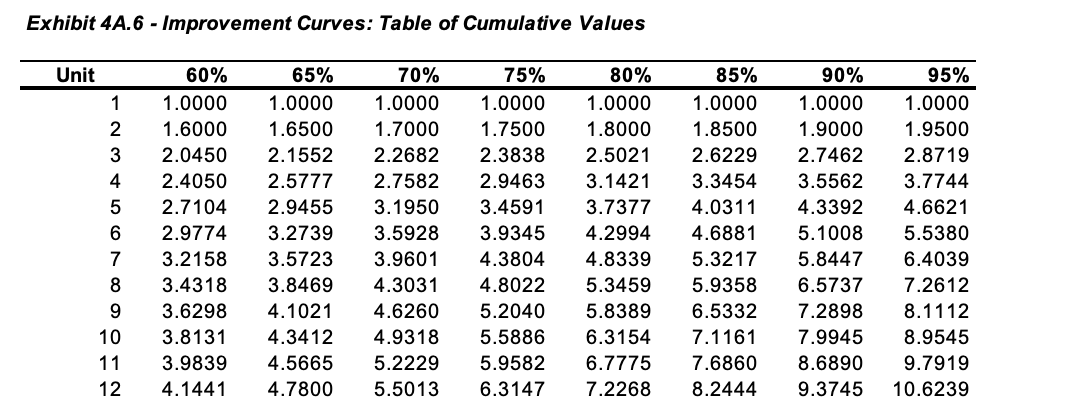
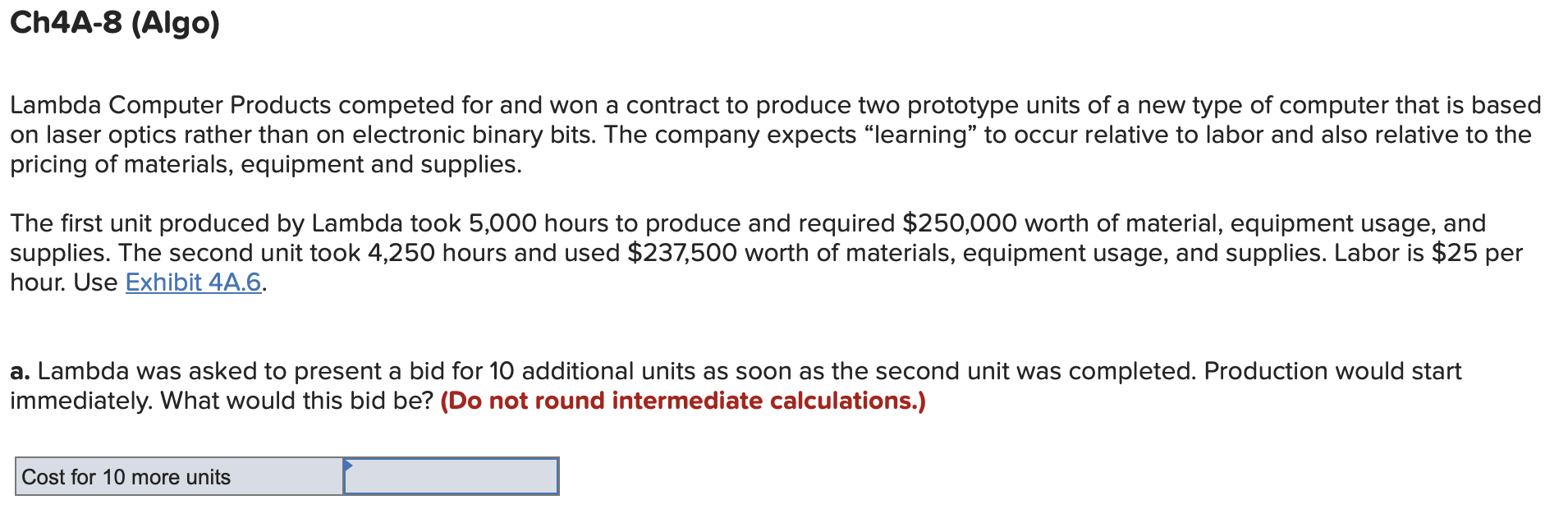
Question 2.
Exhibit Table: (part B) Next 190 units
Units 60% 65% 70% 75% 80% 85% 90% 95%
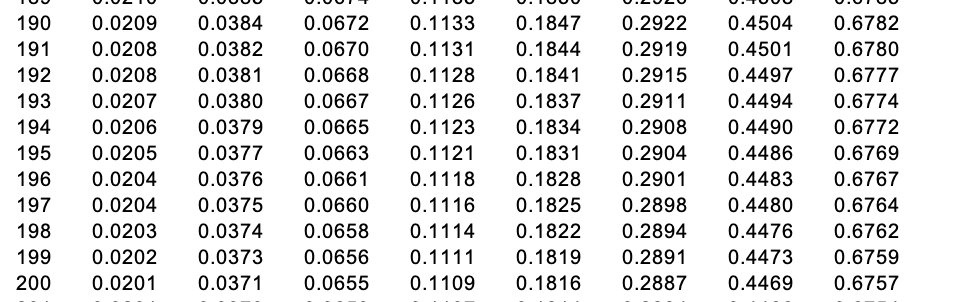
Exhibit table: (Part C) 1000th unit
Units 60% 65% 70% 75% 80% 85% 90% 95%

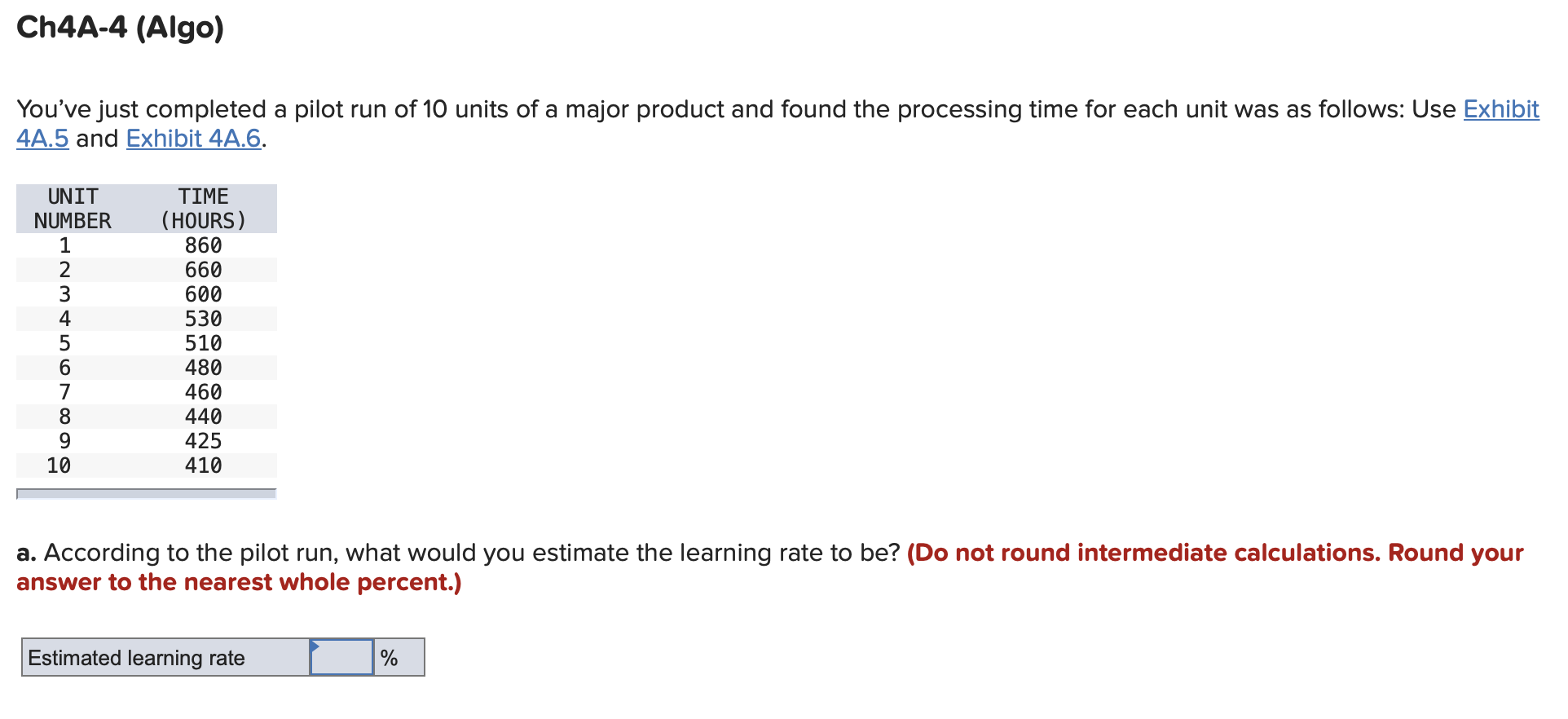
please answer 1, and 2 and I promise to upvote. Thank you!
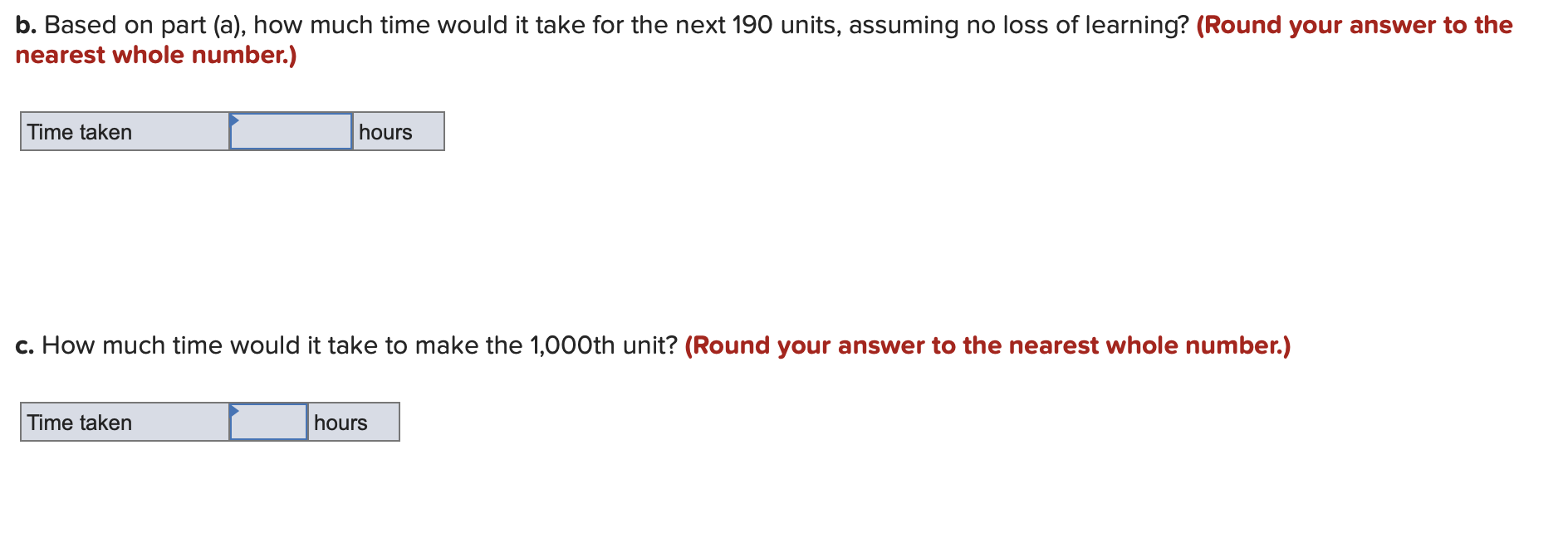
Exhibit 4A. 6 - Improvement Curves: Table of Cumulative Values Unit 60% 65% 70% 90% 95% 1 1.0000 1.0000 80% 1.0000 1.8000 85% 1.0000 1.8500 1.0000 1.0000 1.9000 2 1.6500 1.9500 3 2.1552 1.7000 2.2682 2.7582 2.5021 2.6229 2.7462 1.0000 1.6000 2.0450 2.4050 2.7104 2.9774 2.8719 4 2.5777 75% 1.0000 1.7500 2.3838 2.9463 3.4591 3.9345 4.3804 4.8022 3.1421 3.3454 2.9455 3.7377 4.0311 3.5562 4.3392 5.1008 4.2994 4.6881 LOOOOO 3.1950 3.5928 3.9601 4.3031 3.7744 4.6621 5.5380 6.4039 7.2612 3.2158 4.8339 5.3217 5.8447 3.4318 5.3459 5.9358 6.5737 3.2739 3.5723 3.8469 4.1021 4.3412 4.5665 3.6298 4.6260 5.2040 5.8389 6.5332 7.2898 8.1112 10 4.9318 5.5886 6.3154 7.1161 7.9945 8.9545 11 3.8131 3.9839 4.1441 5.2229 7.6860 8.6890 9.7919 5.9582 6.3147 6.7775 7.2268 12 4.7800 5.5013 8.2444 9.3745 10.6239 Ch4A-8 (Algo) Lambda Computer Products competed for and won a contract to produce two prototype units of a new type of computer that is based on laser optics rather than on electronic binary bits. The company expects learning to occur relative to labor and also relative to the pricing of materials, equipment and supplies. The first unit produced by Lambda took 5,000 hours to produce and required $250,000 worth of material, equipment usage, and supplies. The second unit took 4,250 hours and used $237,500 worth of materials, equipment usage, and supplies. Labor is $25 per hour. Use Exhibit 4A.6. a. Lambda was asked to present a bid for 10 additional units as soon as the second unit was completed. Production would start immediately. What would this bid be? (Do not round intermediate calculations.) Cost for 10 more units 0.0209 0.0384 0.0672 0.1847 0.2922 0.4504 0.6782 190 191 192 0.0208 0.0382 0.0670 0.1844 0.2919 0.4501 0.6780 0.0208 0.1841 0.2915 0.4497 0.6777 0.0381 0.0380 0.0668 0.0667 0.1837 0.2911 0.4494 0.6774 193 194 0.0207 0.0206 0.1133 0.1131 0.1128 0.1126 0.1123 0.1121 0.1118 0.1116 0.0379 0.0665 0.1834 0.2908 0.4490 0.6772 195 0.0205 0.0663 0.1831 0.2904 0.4486 0.0377 0.0376 196 0.0204 0.0661 0.1828 0.2901 0.4483 197 0.0204 0.0375 0.0660 0.1825 0.2898 0.4480 0.6769 0.6767 0.6764 0.6762 0.6759 0.6757 198 0.0203 0.0374 0.0658 0.1114 0.1822 0.2894 0.4476 199 0.0202 0.0656 0.1111 0.4473 0.0373 0.0371 0.1819 0.1816 0.2891 0.2887 200 0.0201 0.0655 0.1109 0.4469 995 0.0062 0.0137 0.0287 0.1084 0.6000 0.0570 0.0570 0.1982 0.1982 0.0062 0.0287 0.1083 996 997 0.0137 0.0137 0.3502 0.3502 0.3501 0.3500 0.0062 0.0286 0.0569 0.1083 0.1981 0.6000 0.5999 0.5999 0.5998 998 0.0062 0.0137 0.0286 0.0569 0.1083 0.1981 999 0.0062 0.0286 0.0569 0.1082 0.1980 0.3500 0.0137 0.0137 1000 0.0062 0.0286 0.0569 0.1082 0.1980 0.3499 0.5998 Ch4A-4 (Algo) You've just completed a pilot run of 10 units of a major product and found the processing time for each unit was as follows: Use Exhibit 44.5 and Exhibit 4A.6. UNIT NUMBER 1 2 3 4. 5 6 7 8 9 10 TIME (HOURS) 860 660 600 530 510 480 460 440 425 410 a. According to the pilot run, what would you estimate the learning rate to be? (Do not round intermediate calculations. Round your answer to the nearest whole percent.) Estimated learning rate % b. Based on part (a), how much time would it take for the next 190 units, assuming no loss of learning? (Round your answer to the nearest whole number.) Time taken hours c. How much time would it take to make the 1,000th unit? (Round your answer to the nearest whole number.) Time taken hoursStep by Step Solution
There are 3 Steps involved in it
1 Expert Approved Answer
Step: 1 Unlock

Question Has Been Solved by an Expert!
Get step-by-step solutions from verified subject matter experts
Step: 2 Unlock
Step: 3 Unlock
 Study Help