







Question: If you have a stack that contains 2000 integers, you need to see if it contains the number 1135. What is the worst-case scenario
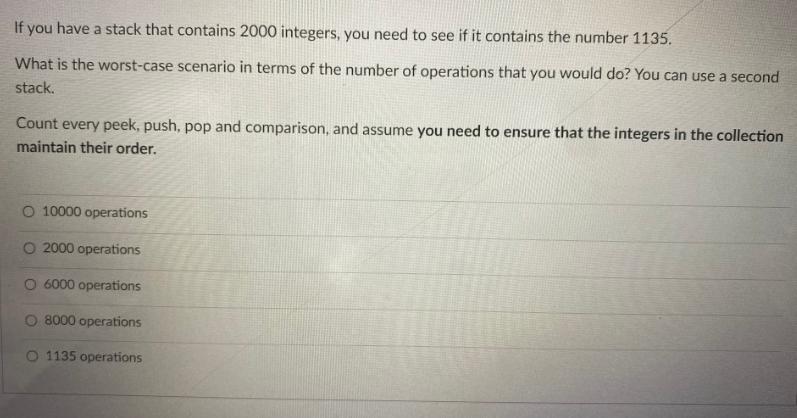
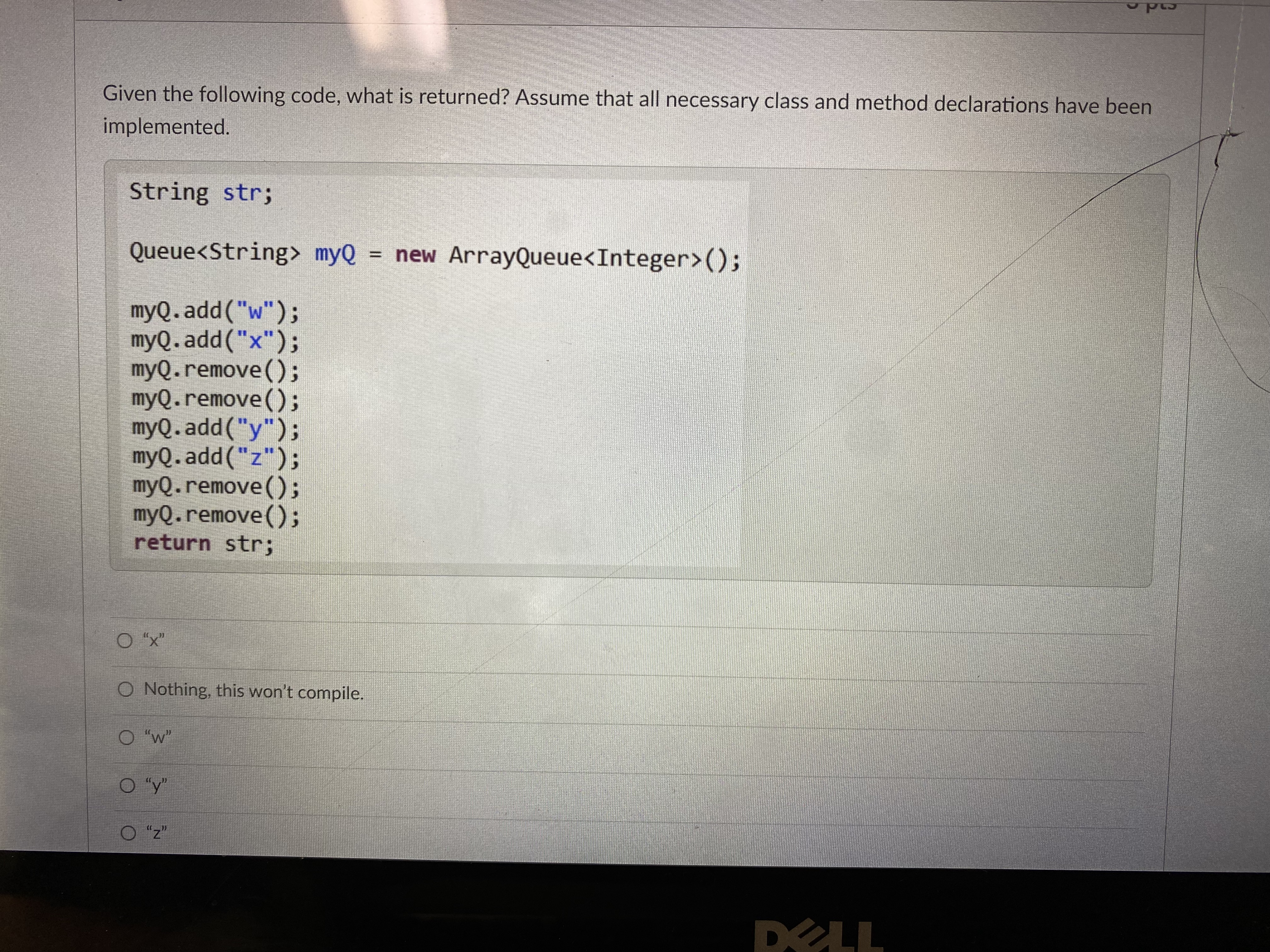
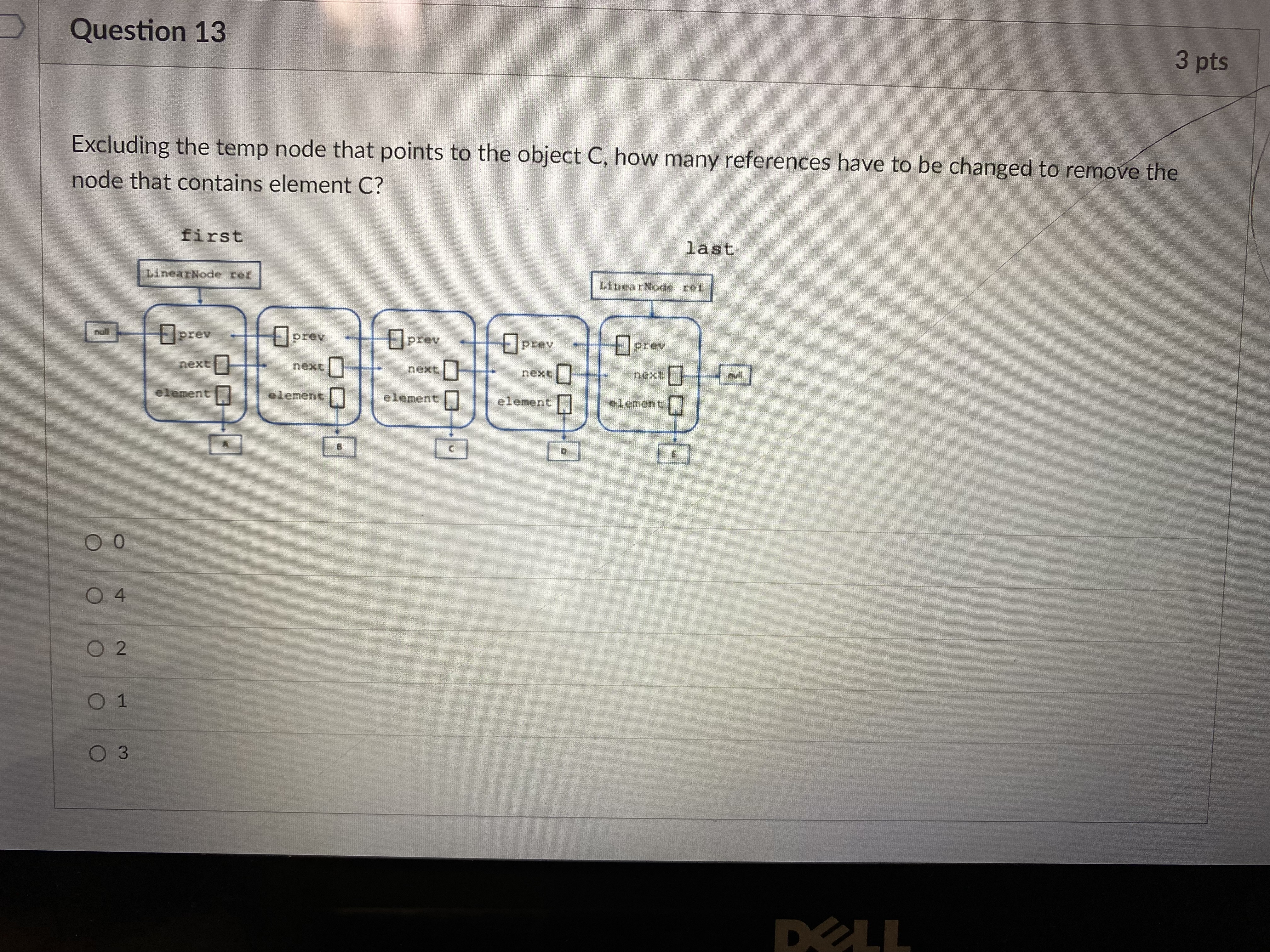
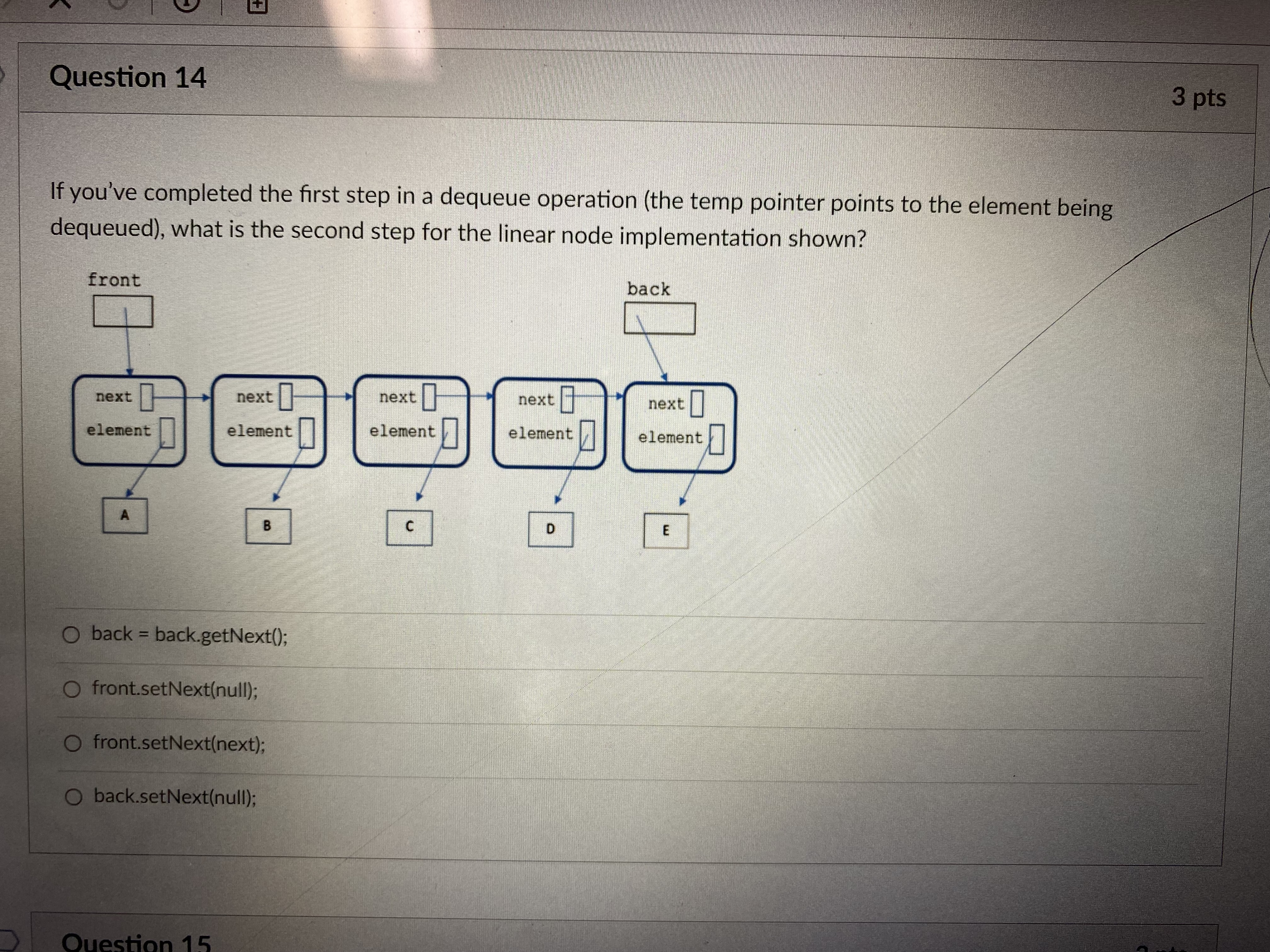
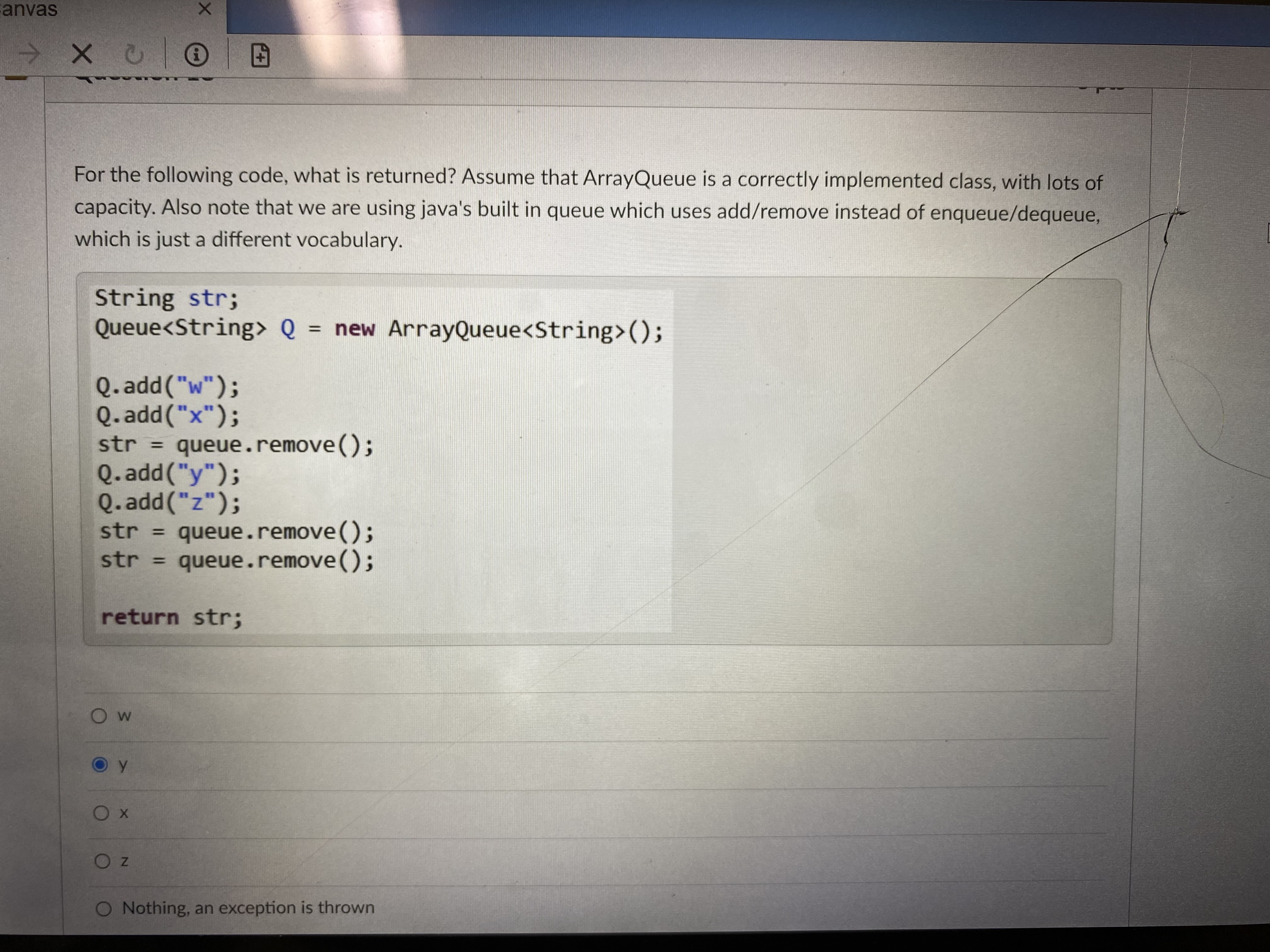
If you have a stack that contains 2000 integers, you need to see if it contains the number 1135. What is the worst-case scenario in terms of the number of operations that you would do? You can use a second stack. Count every peek, push, pop and comparison, and assume you need to ensure that the integers in the collection maintain their order. O 10000 operations O 2000 operations 6000 operations O 8000 operations O 1135 operations Given the following code, what is returned? Assume that all necessary class and method declarations have been implemented. String str; Queue myQ = new ArrayQueue (); myQ.add("w"); myQ.add("x"); myQ.remove(); myQ.remove(); myQ.add("y"); myQ.add("z"); myQ.remove(); myQ.remove(); return str; O "x" O Nothing, this won't compile. O "w" O "y" O "z" Pl DELL Question 13 Excluding the temp node that points to the object C, how many references have to be changed to remove the node that contains element C? O 0 O4 O2 O 1 O 3 first LinearNode ref Oprev next element 0 prev next element Oprev next element prev next element D LinearNode ref OP prev last element 3 pts Question 14 If you've completed the first step in a dequeue operation (the temp pointer points to the element being dequeued), what is the second step for the linear node implementation shown? front next element A next element O back = back.getNext(); O front.setNext(null); B O front.setNext(next); O back.setNext(null); Question 15 next element C next element D back wanneer mana mazu next element E 3 pts anvas > XO For the following code, what is returned? Assume that ArrayQueue is a correctly implemented class, with lots of capacity. Also note that we are using java's built in queue which uses add/remove instead of enqueue/dequeue, which is just a different vocabulary. X String str; Queue Q = new ArrayQueue (); t Q.add("w"); Q.add("x"); str = queue.remove(); Q.add("y"); Q.add("z"); str = queue.remove(); str = queue.remove(); Ow return str; y Ox O z Z O Nothing, an exception is thrown BAURE
Step by Step Solution
There are 3 Steps involved in it
Solutions NOTE Below is the answer for the given question Hope you understand it well If you have an... View full answer

Get step-by-step solutions from verified subject matter experts
 Study Help