







Question: Question (10 points): The WAID allow older transactions two deadlock avoidance rules (WAIT-DIE and WOUND- avoi killed. Thus, both rules prefer older they prefer younger
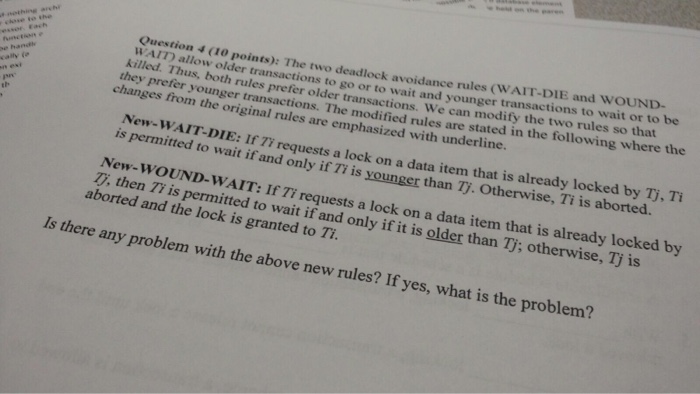
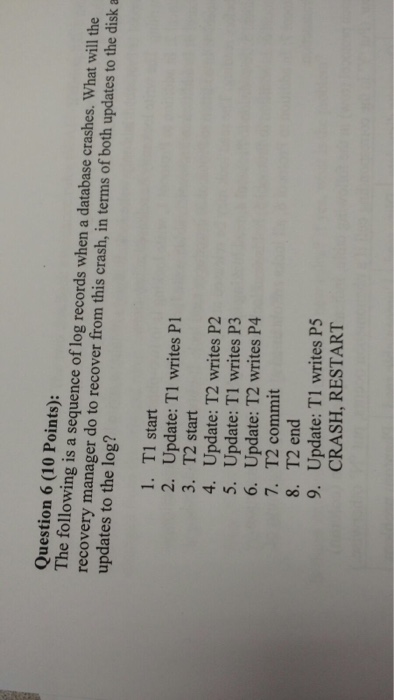
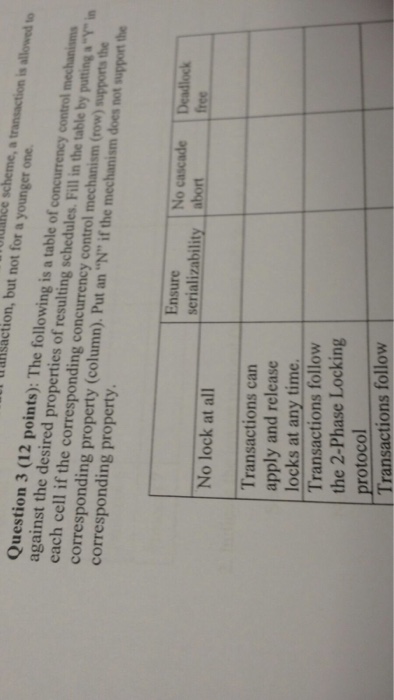
Question (10 points): The WAID allow older transactions two deadlock avoidance rules (WAIT-DIE and WOUND- avoi killed. Thus, both rules prefer older they prefer younger transactions. to go or to wait and younger transactions to wait or to be transactions. We can modify the two rules so that ally (o The modified rules are stated in the following where the changes from the original rules are emphasized with underli ne. New-WAIT-DIE: IfTi requests a lock on a data item that is alread is permitted to wait if and only if T7 is younger than T). Otherwise, Ti New-WOUND-WAIT: If 77 reques Tz, then Ti is permitted to wait if and only if it is older than Tj; otherwise, Tj is ts a lock on a data item that is already locked by aborted and the lock is granted to Ti. Is there any problem with the above new rules? If yes, what is the
Step by Step Solution
There are 3 Steps involved in it

Get step-by-step solutions from verified subject matter experts
 Study Help