Question: Question 12 (1 point) A manager named Bob asks an employee named Caroline for data. Which of the following responses by Caroline shows an effective
Question 12 (1 point) A manager named Bob asks an

Question 12 (1 point) A manager named Bob asks an

Question 12 (1 point) A manager named Bob asks an

Question 12 (1 point) A manager named Bob asks an

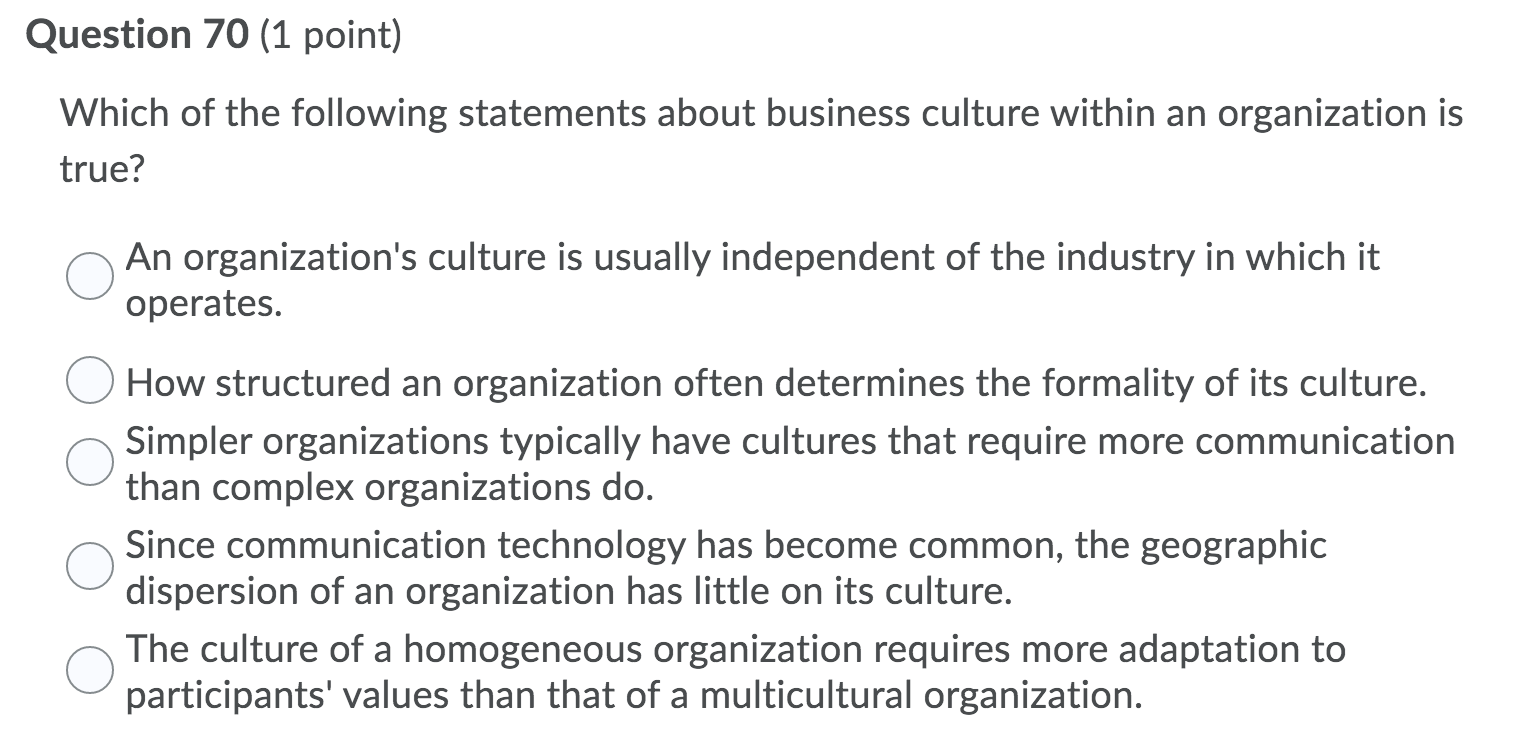
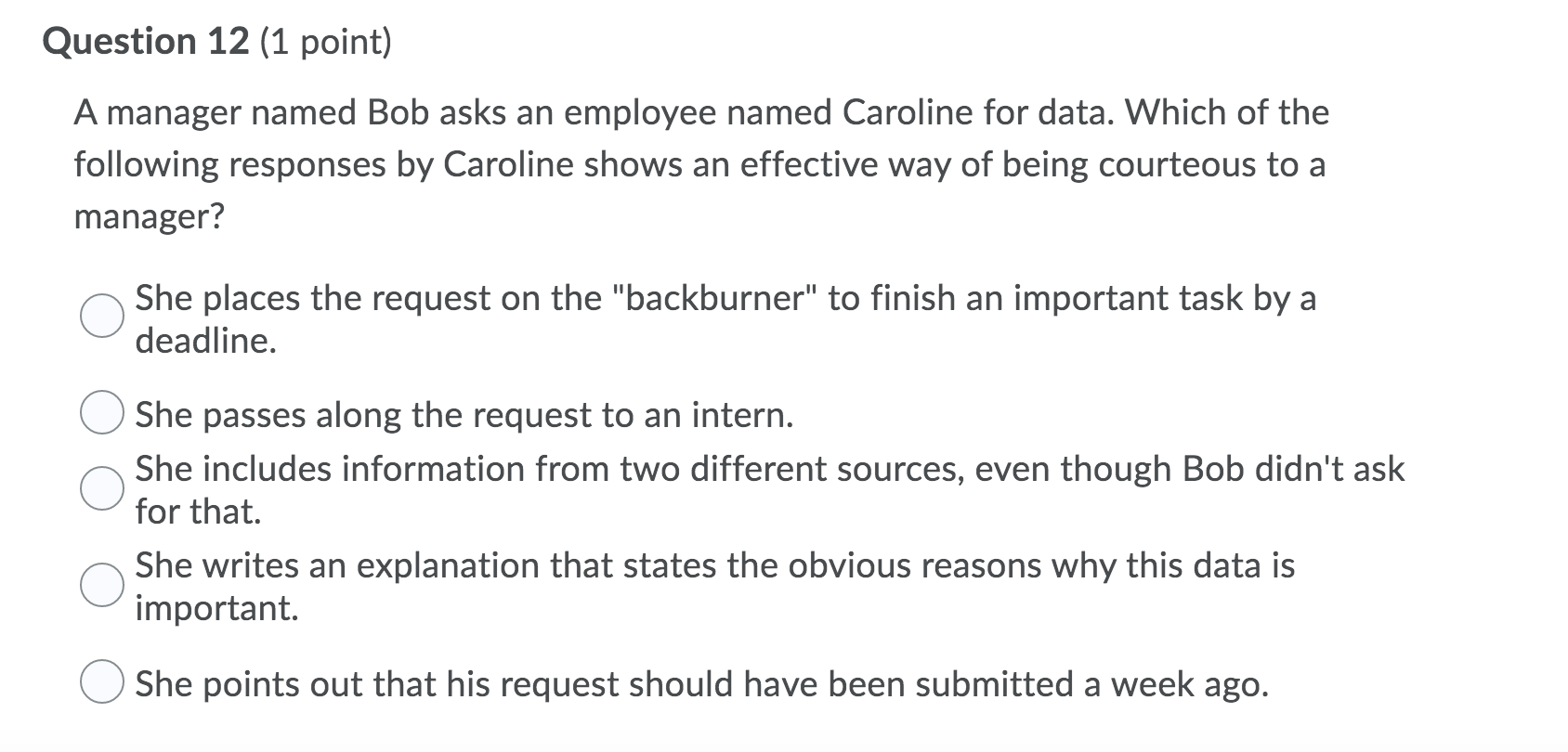
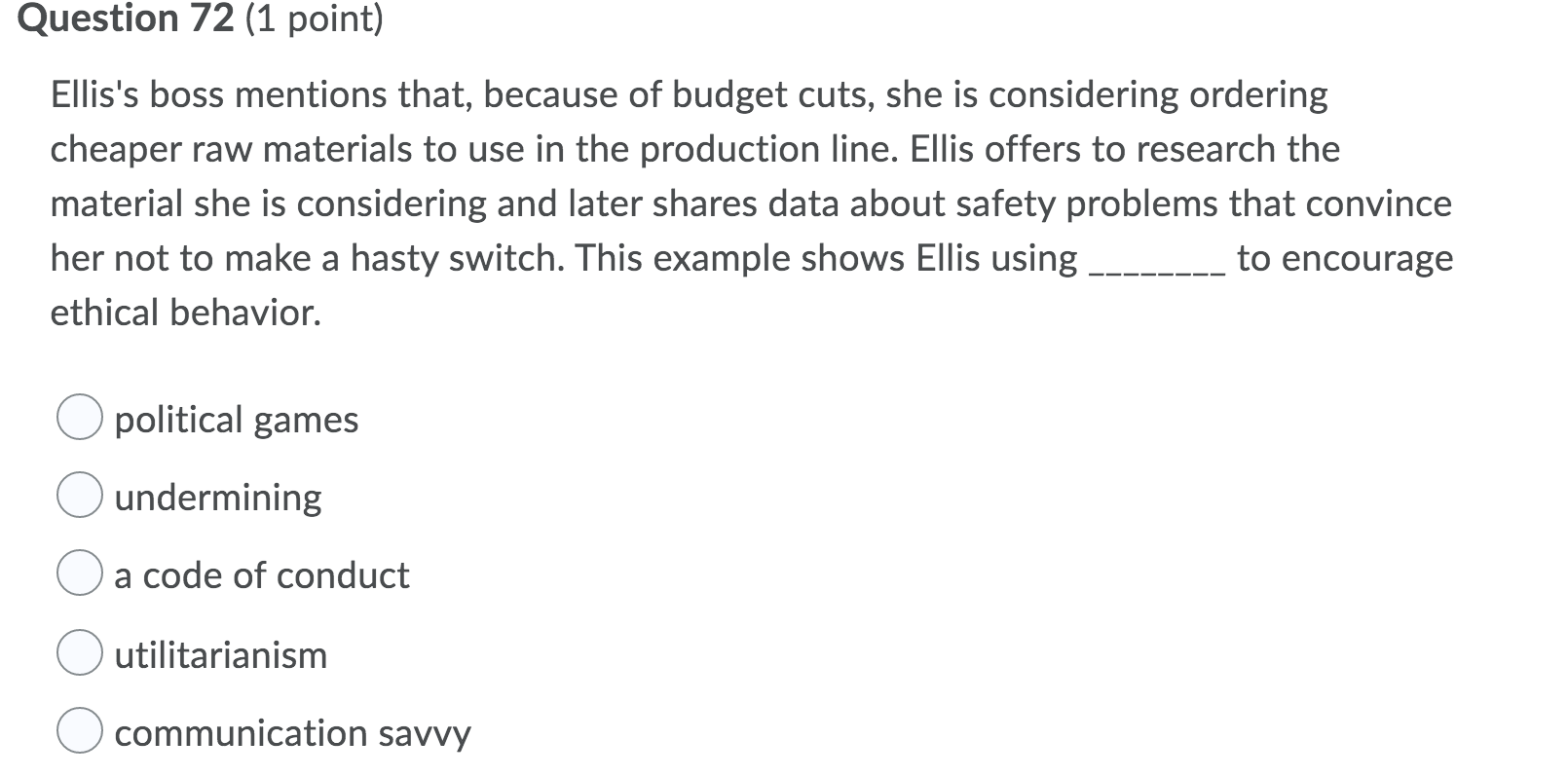
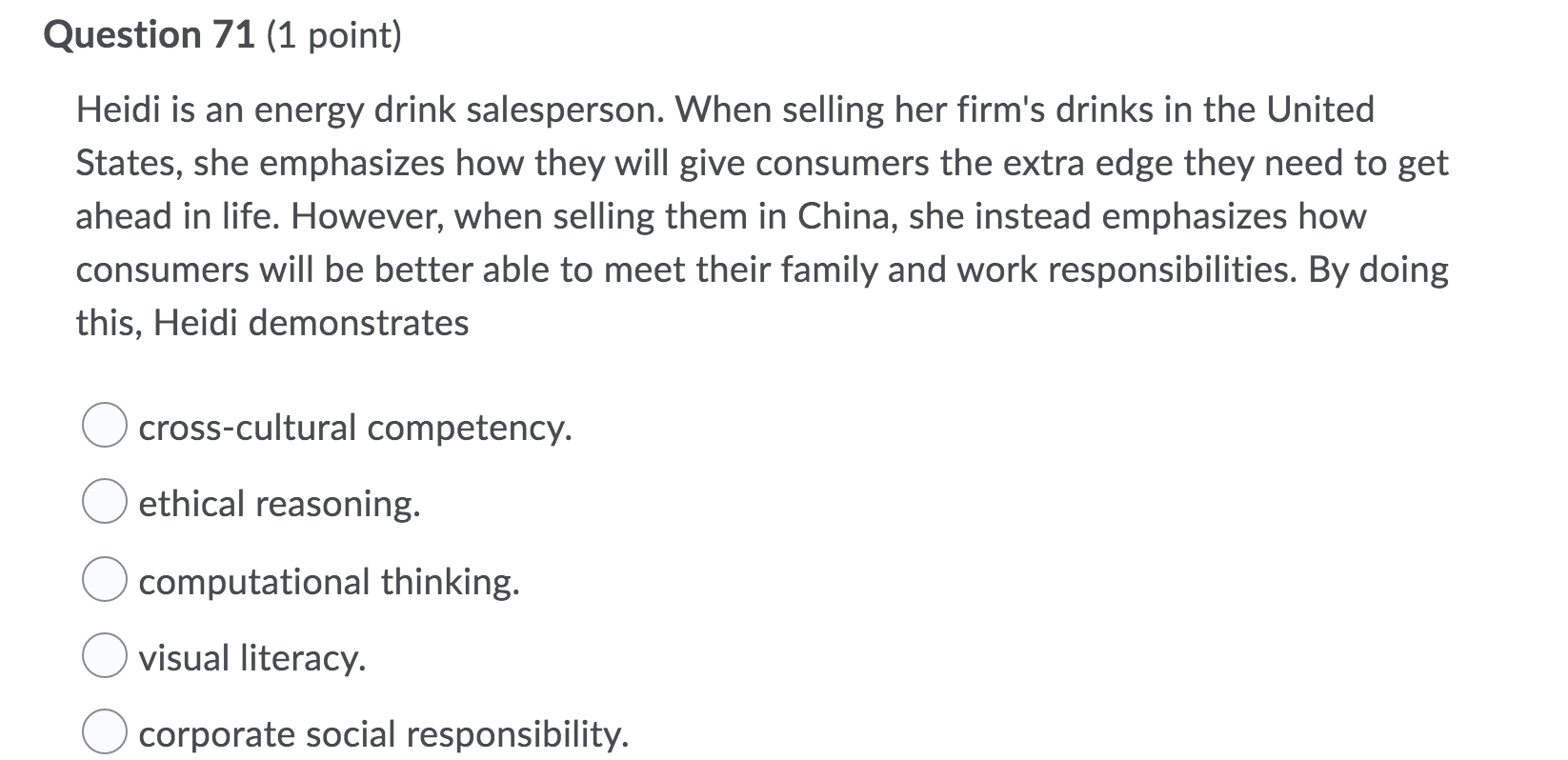
Question 12 (1 point) A manager named Bob asks an employee named Caroline for data. Which of the following responses by Caroline shows an effective way of being courteous to a manager? She places the request on the "backburner" to finish an important task by a deadline. She passes along the request to an intern. She includes information from two different sources, even though Bob didn't ask for that. She writes an explanation that states the obvious reasons why this data is important. She points out that his request should have been submitted a week ago. Question 72 (1 point) Ellis's boss mentions that, because of budget cuts, she is considering ordering cheaper raw materials to use in the production line. Ellis offers to research the material she is considering and later shares data about safety problems that convince her not to make a hasty switch. This example shows Ellis using to encourage ethical behavior. political games undermining a code of conduct utilitarianism communication savvy Question 71 (1 point) Heidi is an energy drink salesperson. When selling her firm's drinks in the United States, she emphasizes how they will give consumers the extra edge they need to get ahead in life. However, when selling them in China, she instead emphasizes how consumers will be better able to meet their family and work responsibilities. By doing this, Heidi demonstrates cross-cultural competency. ethical reasoning. computational thinking. visual literacy. corporate social responsibility. Question 70 (1 point) Which of the following statements about business culture within an organization is true? An organization's culture is usually independent of the industry in which it operates. How structured an organization often determines the formality of its culture. Simpler organizations typically have cultures that require more communication than complex organizations do. Since communication technology has become common, the geographic dispersion of an organization has little on its culture. The culture of a homogeneous organization requires more adaptation to participants' values than that of a multicultural organization
Step by Step Solution

There are 3 Steps involved in it

1 Expert Approved Answer
Step: 1 Unlock blur-text-image

Question Has Been Solved by an Expert!

Get step-by-step solutions from verified subject matter experts

Step: 2 Unlock
Step: 3 Unlock

Students Have Also Explored These Related General Management Questions!