





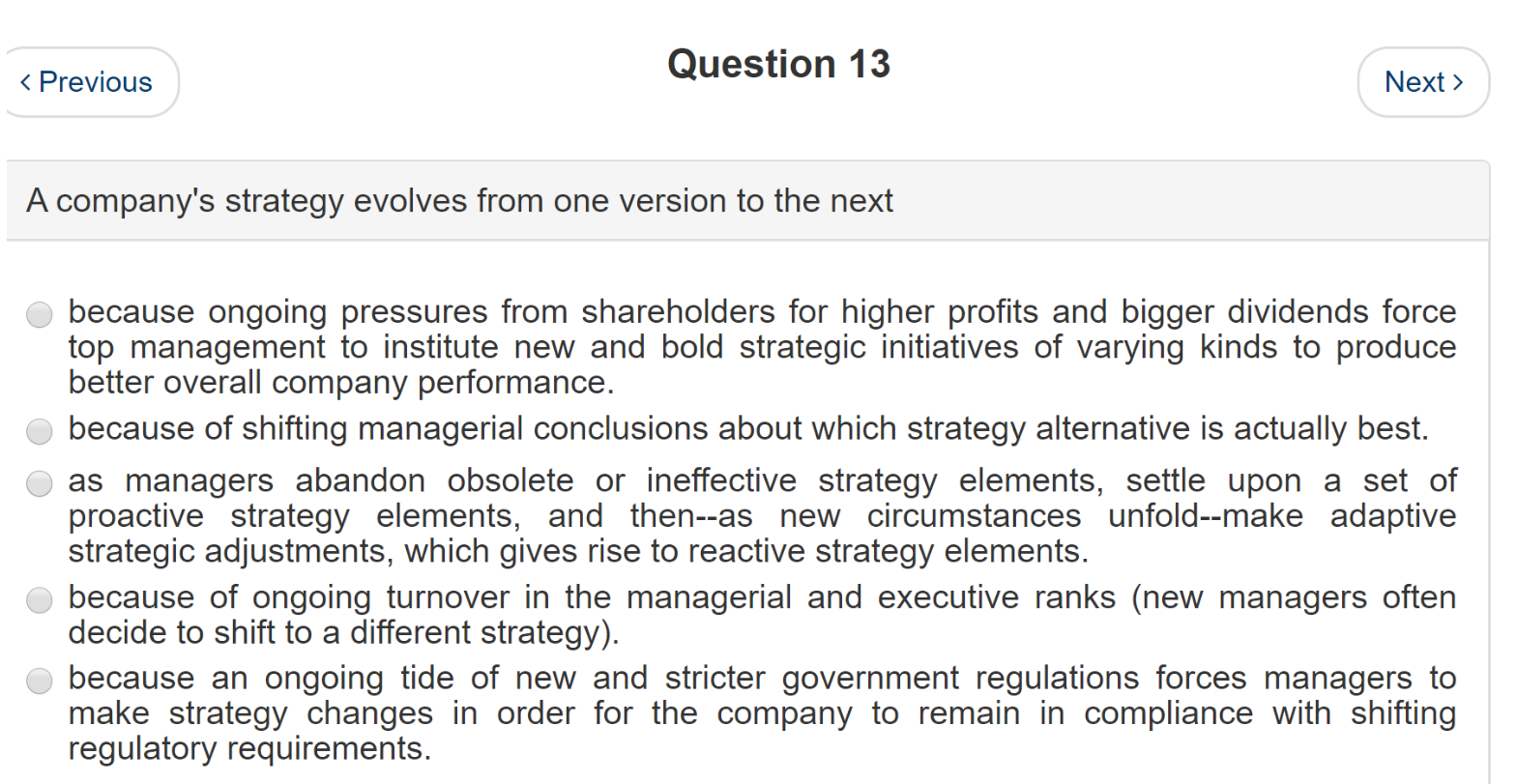
Question: Question 13 A company's strategy evolves from one version to the next because ongoing pressures from shareholders for higher profits and bigger dividends force top
Question 13 < Previous Next > A company'sQuestion 13 < Previous Next > A company'sQuestion 13 < Previous Next > A company's

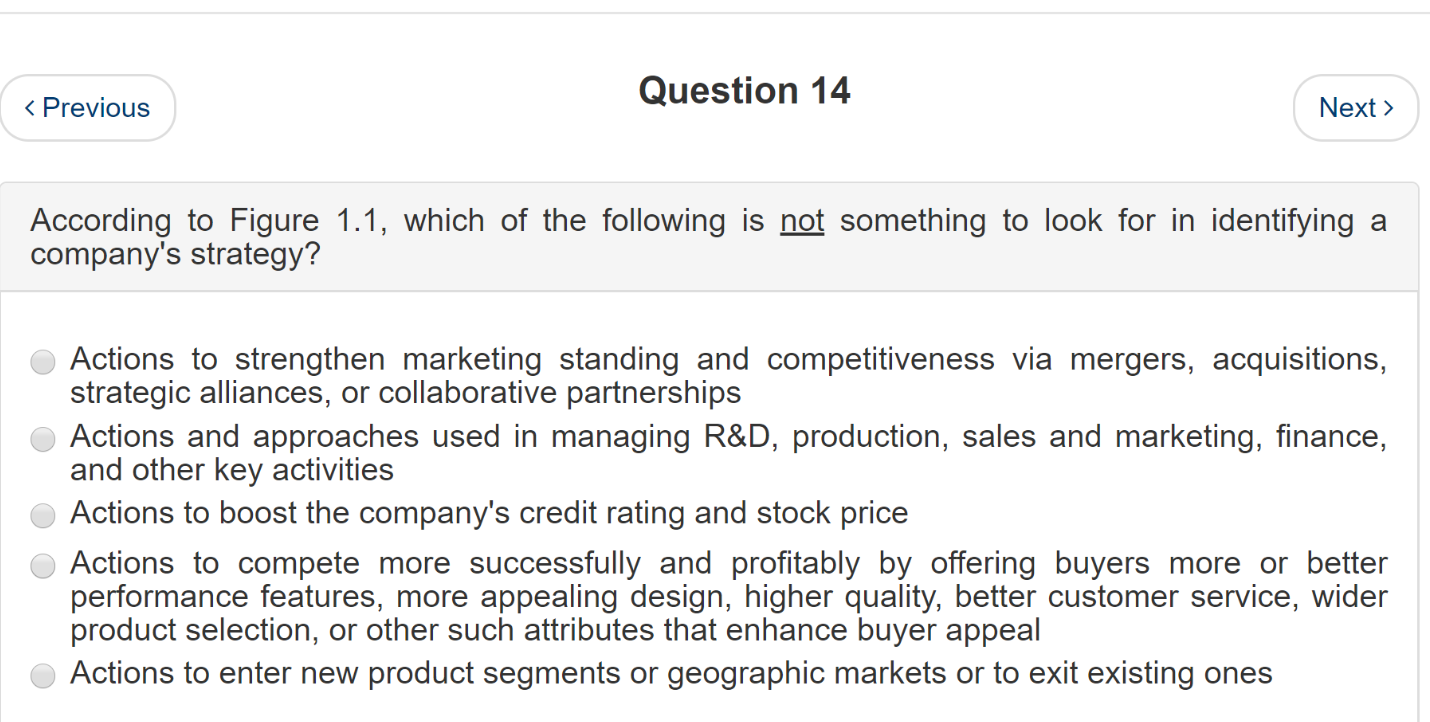
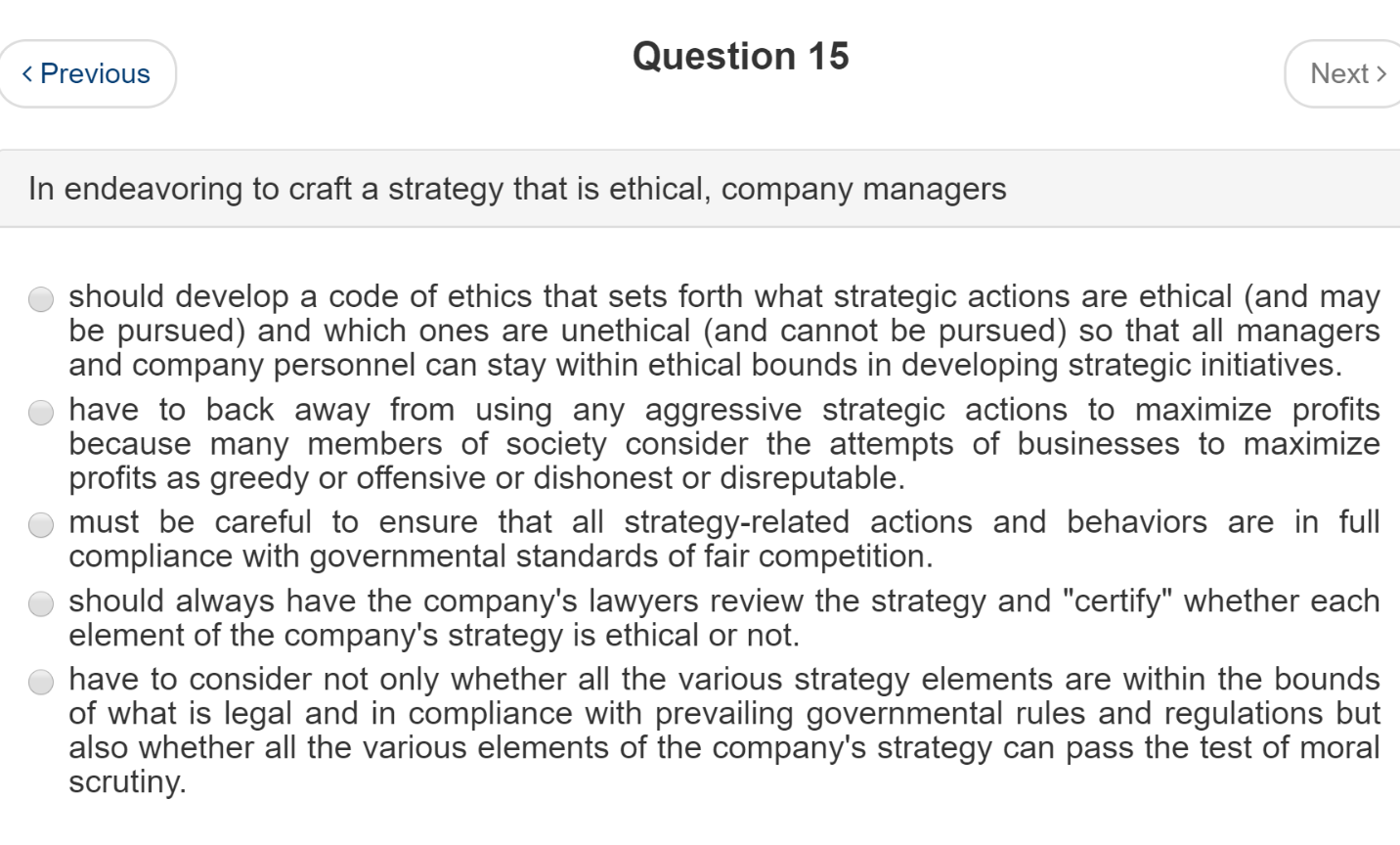
Question 13 A company's strategy evolves from one version to the next because ongoing pressures from shareholders for higher profits and bigger dividends force top management to institute new and bold strategic initiatives of varying kinds to produce better overall company performance. because of shifting managerial conclusions about which strategy alternative is actually best. as managers abandon obsolete or ineffective strategy elements, settle upon a set of proactive strategy elements, and then--as new circumstances unfold--make adaptive strategic adjustments, which gives rise to reactive strategy elements. because of ongoing turnover in the managerial and executive ranks (new managers often decide to shift to a different strategy). because an ongoing tide of new and stricter government regulations forces managers to make strategy changes in order for the company to remain in compliance with shifting regulatory requirements. Question 14 According to Figure 1.1, which of the following is not something to look for in identifying a company's strategy? Actions to strengthen marketing standing and competitiveness via mergers, acquisitions, strategic alliances, or collaborative partnerships Actions and approaches used in managing R&D, production, sales and marketing, finance, and other key activities Actions to boost the company's credit rating and stock price Actions to compete more successfully and profitably by offering buyers more or better performance features, more appealing design, higher quality, better customer service, wider product selection, or other such attributes that enhance buyer appeal Actions to enter new product segments or geographic markets or to exit existing ones Question 15 In endeavoring to craft a strategy that is ethical, company managers should develop a code of ethics that sets forth what strategic actions are ethical (and may be pursued) and which ones are unethical (and cannot be pursued) so that all managers and company personnel can stay within ethical bounds in developing strategic initiatives. have to back away from using any aggressive strategic actions to maximize profits because many members of society consider the attempts of businesses to maximize profits as greedy or offensive or dishonest or disreputable. must be careful to ensure that all strategy-related actions and behaviors are in full compliance with governmental standards of fair competition. should always have the company's lawyers review the strategy and "certify" whether each element of the company's strategy is ethical or not. have to consider not only whether all the various strategy elements are within the bounds of what is legal and in compliance with prevailing governmental rules and regulations but also whether all the various elements of the company's strategy can pass the test of moral scrutiny
Step by Step Solution

There are 3 Steps involved in it

1 Expert Approved Answer
Step: 1 Unlock blur-text-image

Question Has Been Solved by an Expert!

Get step-by-step solutions from verified subject matter experts

Step: 2 Unlock
Step: 3 Unlock

Students Have Also Explored These Related General Management Questions!