



Question: Question 19 to 23: An article that appeared in the British Medical Journal (2010) presented the results of a randomized experiment conducted by researcher Jeremy
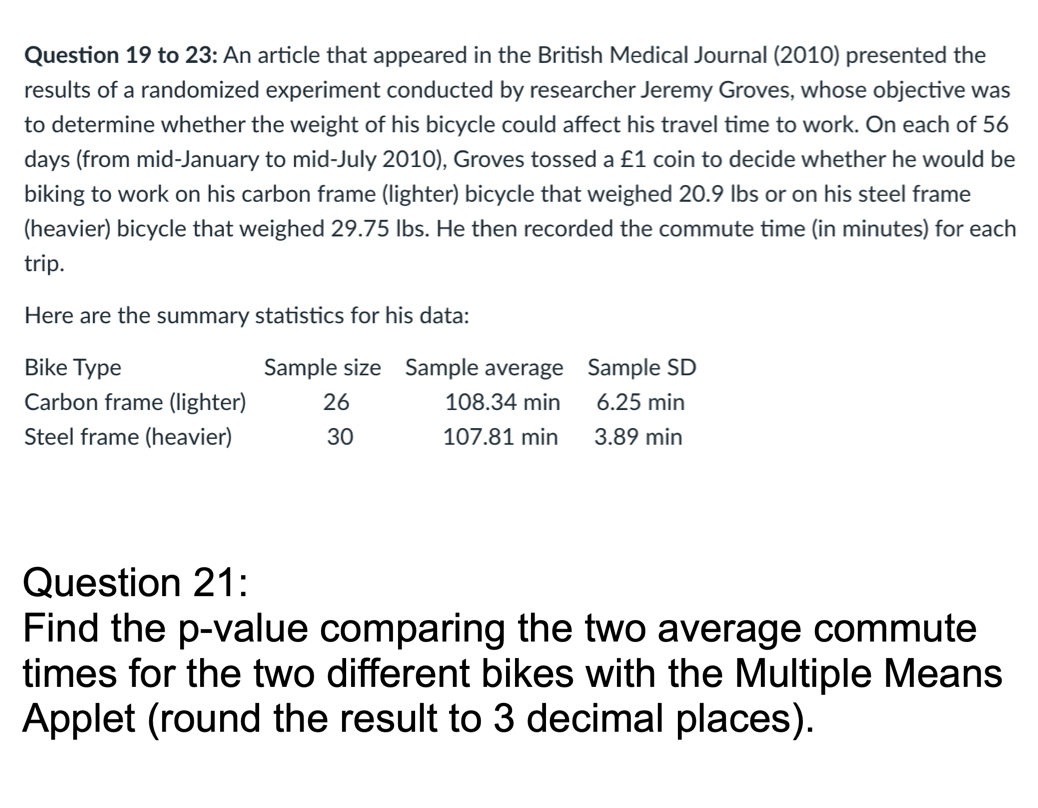
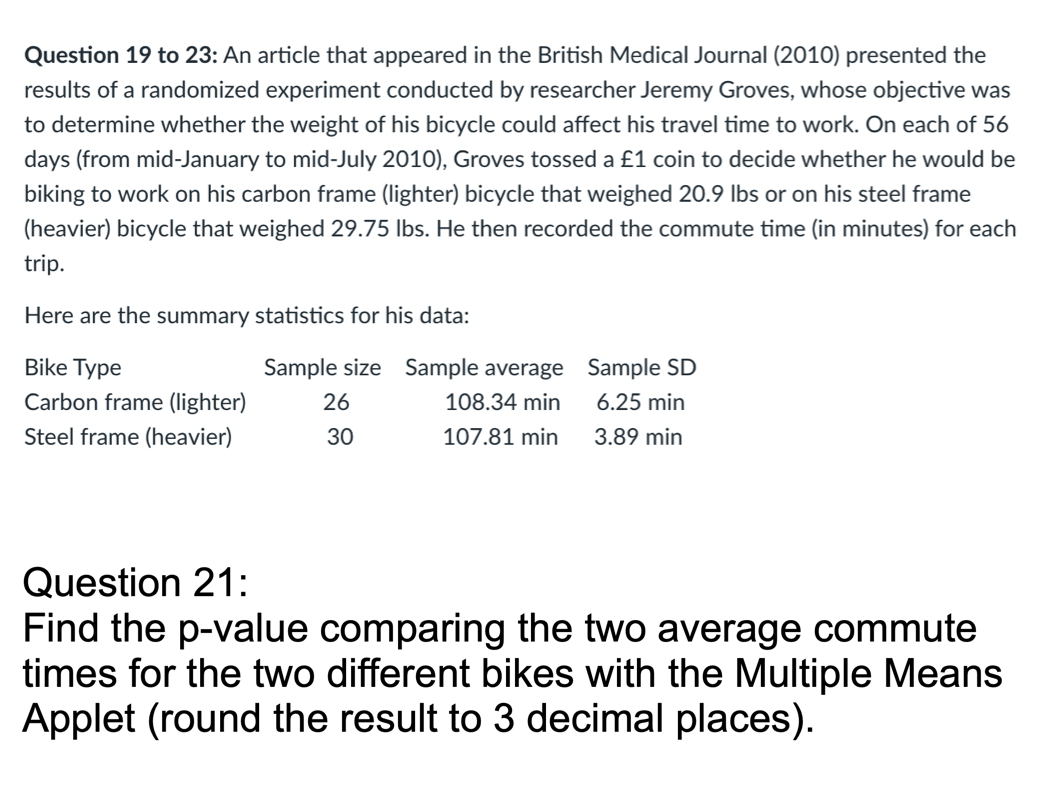
Question 19 to 23: An article that appeared in the British Medical Journal (2010) presented the results of a randomized experiment conducted by researcher Jeremy Groves, whose objective was to determine whether the weight of his bicycle could affect his travel time to work. On each of 56 days (from mid-January to mid-July 2010), Groves tossed a 1 coin to decide whether he would be biking to work on his carbon frame (lighter) bicycle that weighed 20.9 lbs or on his steel frame (heavier) bicycle that weighed 29.75 lbs. He then recorded the commute time (in minutes) for each trip. Here are the summary statistics for his data: Bike Type Sample size Sample average Sample SD Carbon frame (lighter) 26 108.34 min 6.25 min Steel frame (heavier) 30 107.81 min 3.89 min Question 21: Find the p-value comparing the two average commute times for the two different bikes with the Multiple Means Applet (round the result to 3 decimal places)
Step by Step Solution
There are 3 Steps involved in it

Get step-by-step solutions from verified subject matter experts