







Question: Question 2 DAS-DAD Model [16 points] Dynamic ASAD model. The current recession caused by the COVID19 pandemic has reduced demand for Australian goods. Your task
![Question 2 DAS-DAD Model [16 points] Dynamic ASAD model. The current](https://s3.amazonaws.com/si.experts.images/answers/2024/06/6674e0f651e91_7986674e0f61562d.jpg)
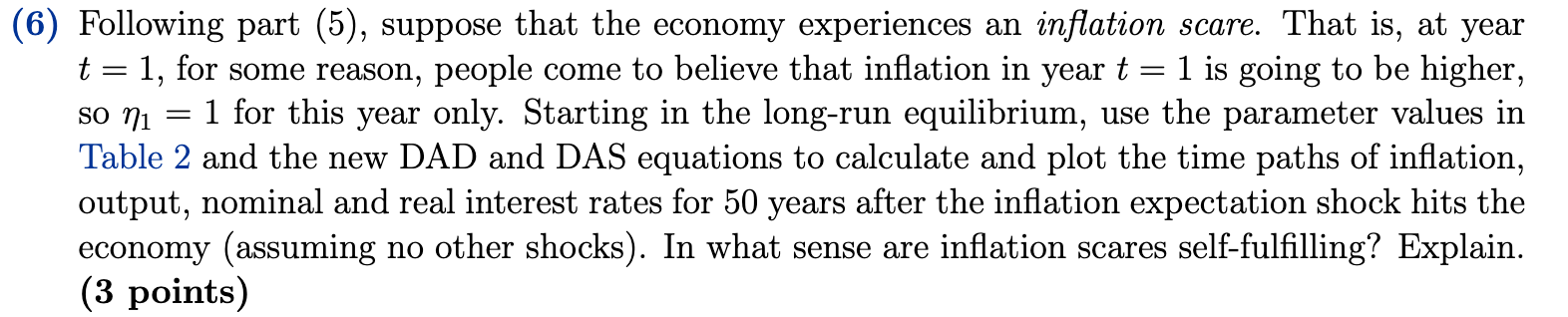
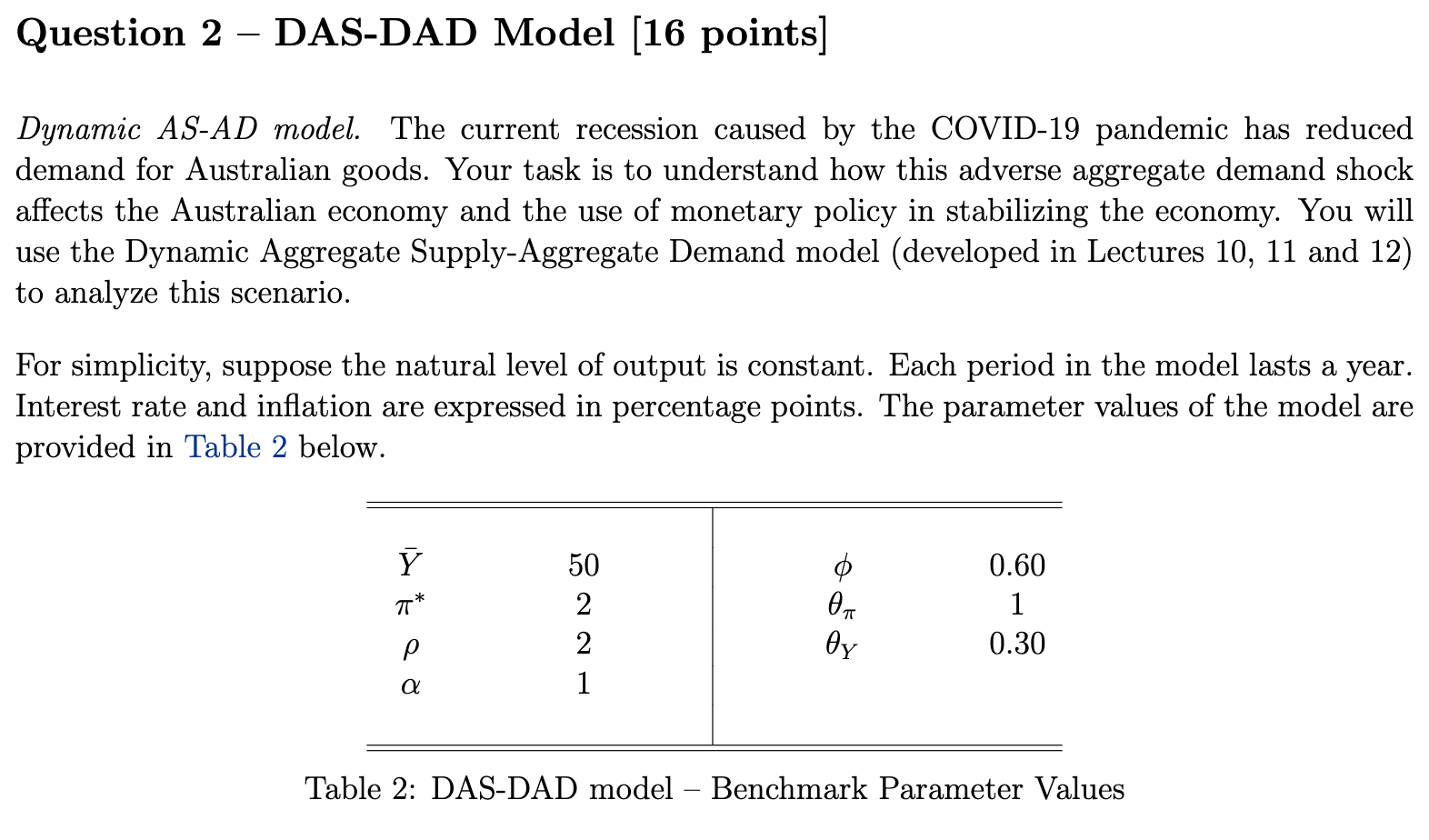
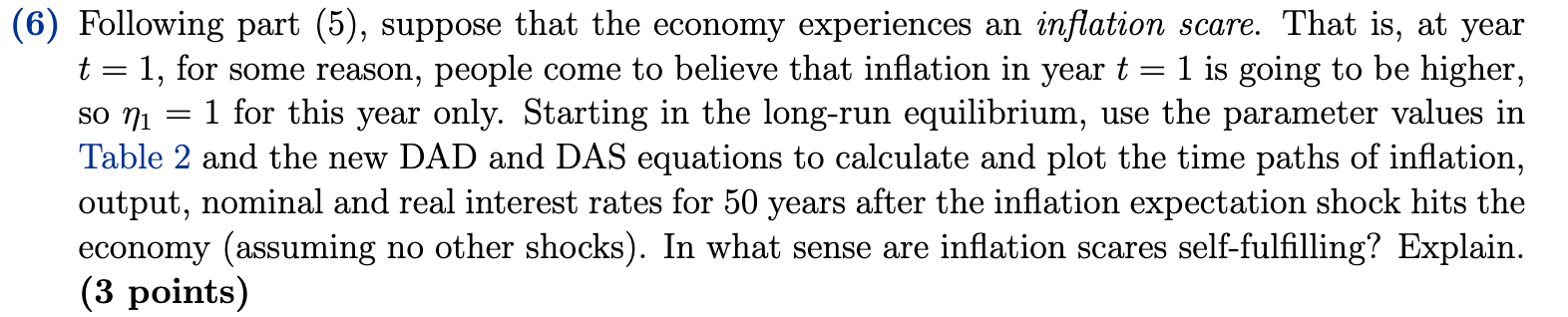
Question 2 DAS-DAD Model [16 points] Dynamic ASAD model. The current recession caused by the COVID19 pandemic has reduced demand for Australian goods. Your task is to understand how this adverse aggregate demand shock affects the Australian economy and the use of monetary policy in stabilizing the economy. You will use the Dynamic Aggregate SupplyAggregate Demand model (developed in Lectures 10, 11 and 12) to analyze this scenario. For simplicity, suppose the natural level of output is constant. Each period in the model lasts a year. Interest rate and ination are expressed in percentage points. The parameter values of the model are provided in Table 2 below. l7 50 gb 0.60 77* 2 91: 1 p 2 6y 0.30 a 1 Table 2: DASDAD model Benchmark Parameter Values (6) Following part (5), suppose that the economy experiences an inflation scare. That is, at year t = 1, for some reason, people come to believe that inflation in year t = 1 is going to be higher, so m1 = 1 for this year only. Starting in the long-run equilibrium, use the parameter values in Table 2 and the new DAD and DAS equations to calculate and plot the time paths of inflation, output, nominal and real interest rates for 50 years after the inflation expectation shock hits the economy (assuming no other shocks). In what sense are inflation scares self-fulfilling? Explain. (3 points)
Step by Step Solution
There are 3 Steps involved in it

Get step-by-step solutions from verified subject matter experts
 Study Help