







Question: Question 2 We assume that - One end item needs 2 units L,1 unit C and 3 units K. - One unit L needs 2
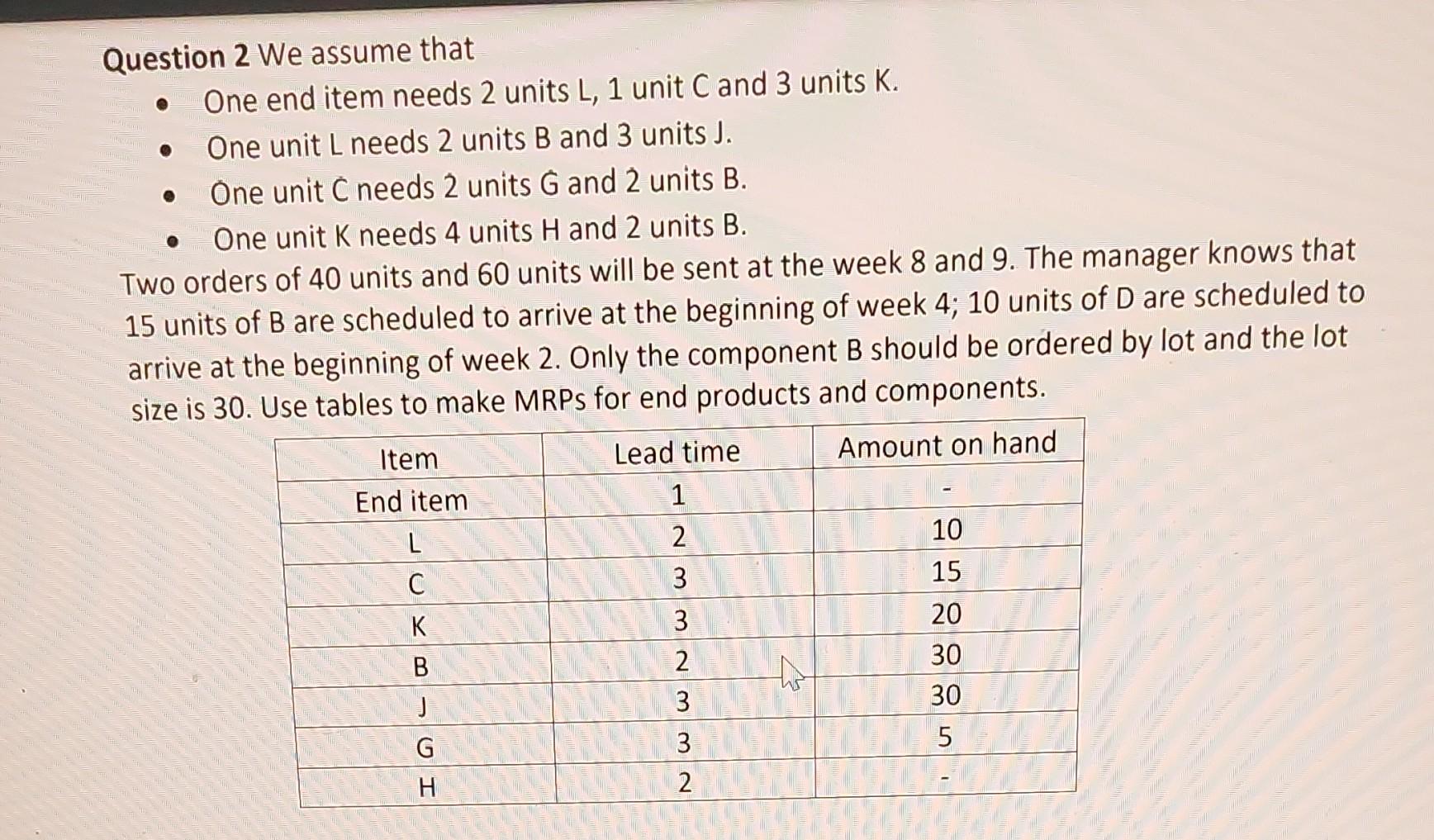
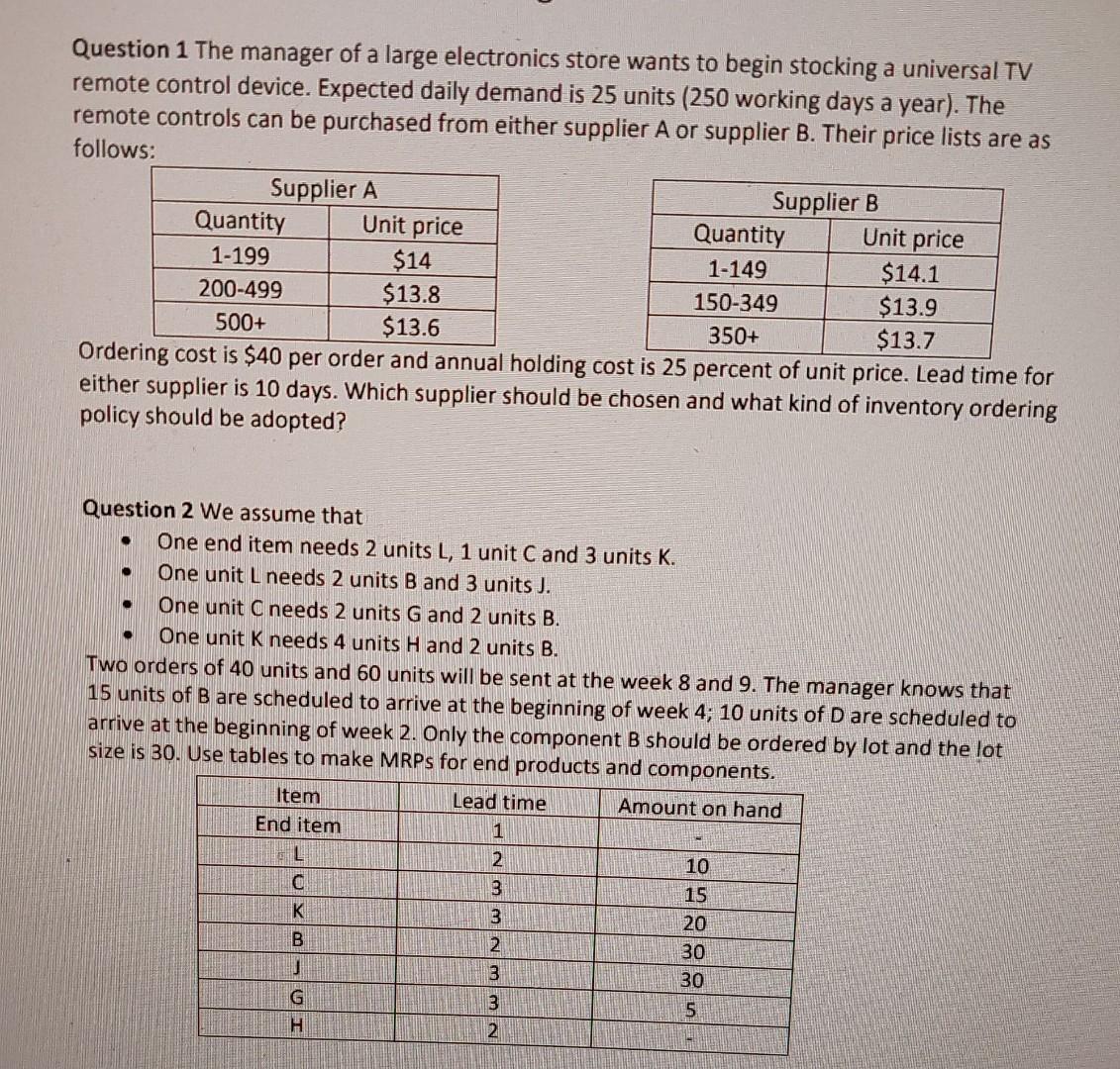
Question 2 We assume that - One end item needs 2 units L,1 unit C and 3 units K. - One unit L needs 2 units B and 3 units J. - One unit C needs 2 units G and 2 units B. - One unit K needs 4 units H and 2 units B. Two orders of 40 units and 60 units will be sent at the week 8 and 9. The manager knows that 15 units of B are scheduled to arrive at the beginning of week 4;10 units of D are scheduled to arrive at the beginning of week 2 . Only the component B should be ordered by lot and the lot size is 30 . Use tables to make MRPs for end products and components. Question 1 The manager of a large electronics store wants to begin stocking a universal TV remote control device. Expected daily demand is 25 units ( 250 working days a year). The remote controls can be purchased from either supplier A or supplier B. Their price lists are as follows: Ordering cost is $40 per order and annual holding cost is 25 percent of unit price. Lead time for either supplier is 10 days. Which supplier should be chosen and what kind of inventory ordering policy should be adopted? Question 2 We assume that - One end item needs 2 units L,1 unit C and 3 units K. - One unit Lneeds 2 units B and 3 units J. - One unit C needs 2 units G and 2 units B. - One unit K needs 4 units H and 2 units B. Two orders of 40 units and 60 units will be sent at the week 8 and 9 . The manager knows that 15 units of B are scheduled to arrive at the beginning of week 4;10 units of D are scheduled to arrive at the beginning of week 2 . Only the component B should be ordered by lot and the lot size is 30. Use tables to make MRPs for end products and components
Step by Step Solution
There are 3 Steps involved in it

Get step-by-step solutions from verified subject matter experts
 Study Help