







Question: Question 26 1 pts A researcher determines that students study an average of 80 and SD of 20 minutes per week. Assuming these data are
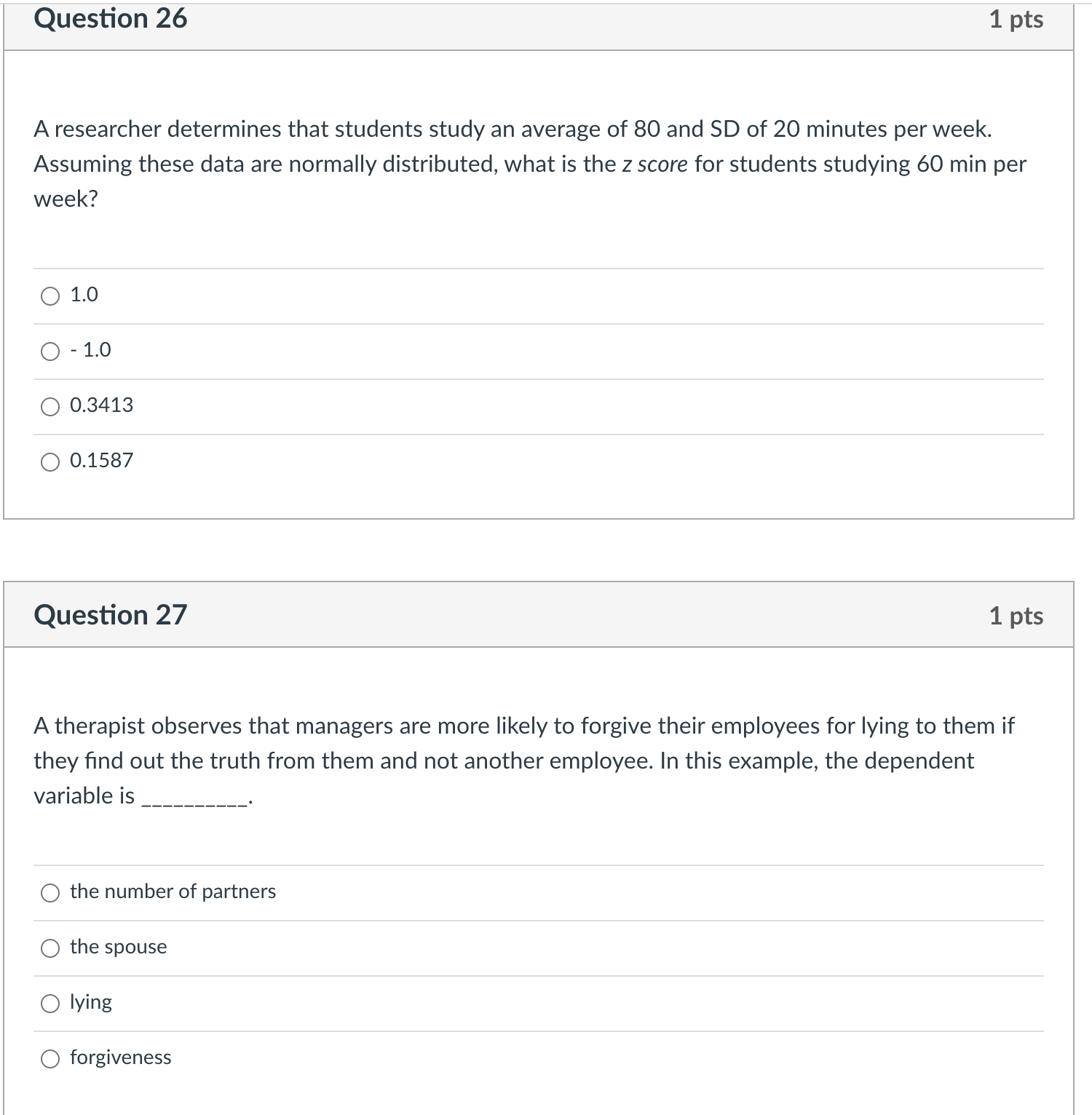
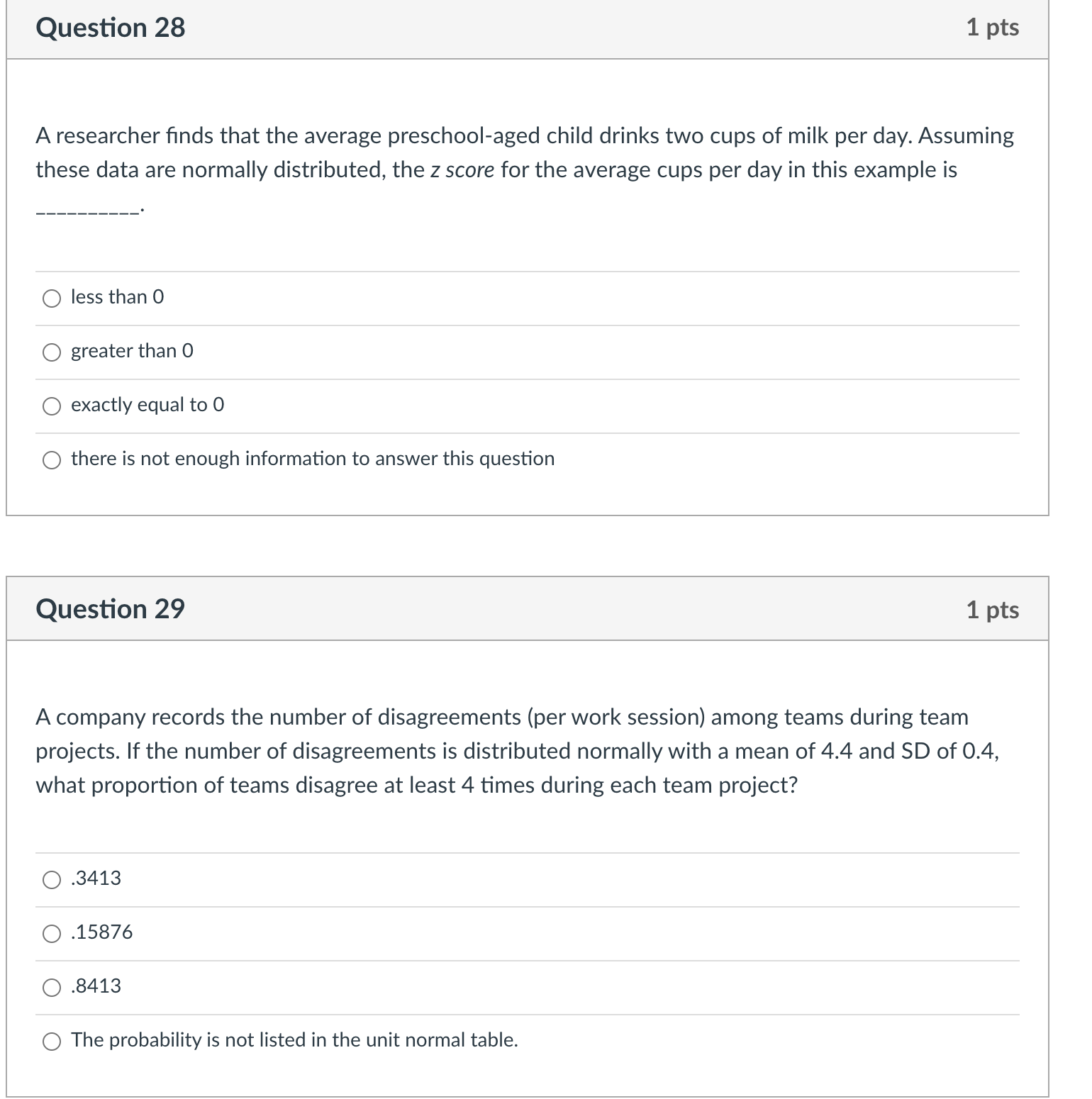
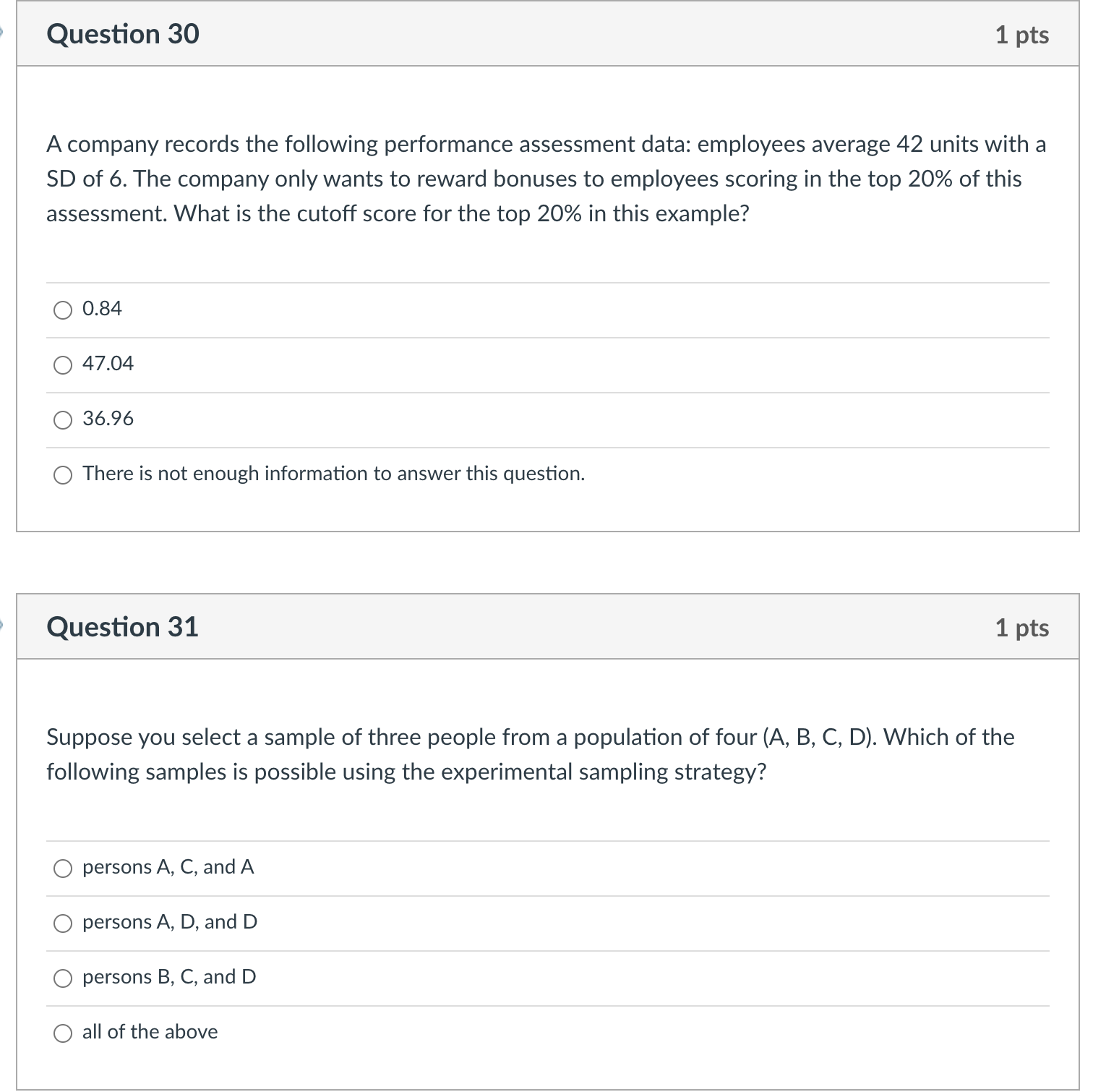
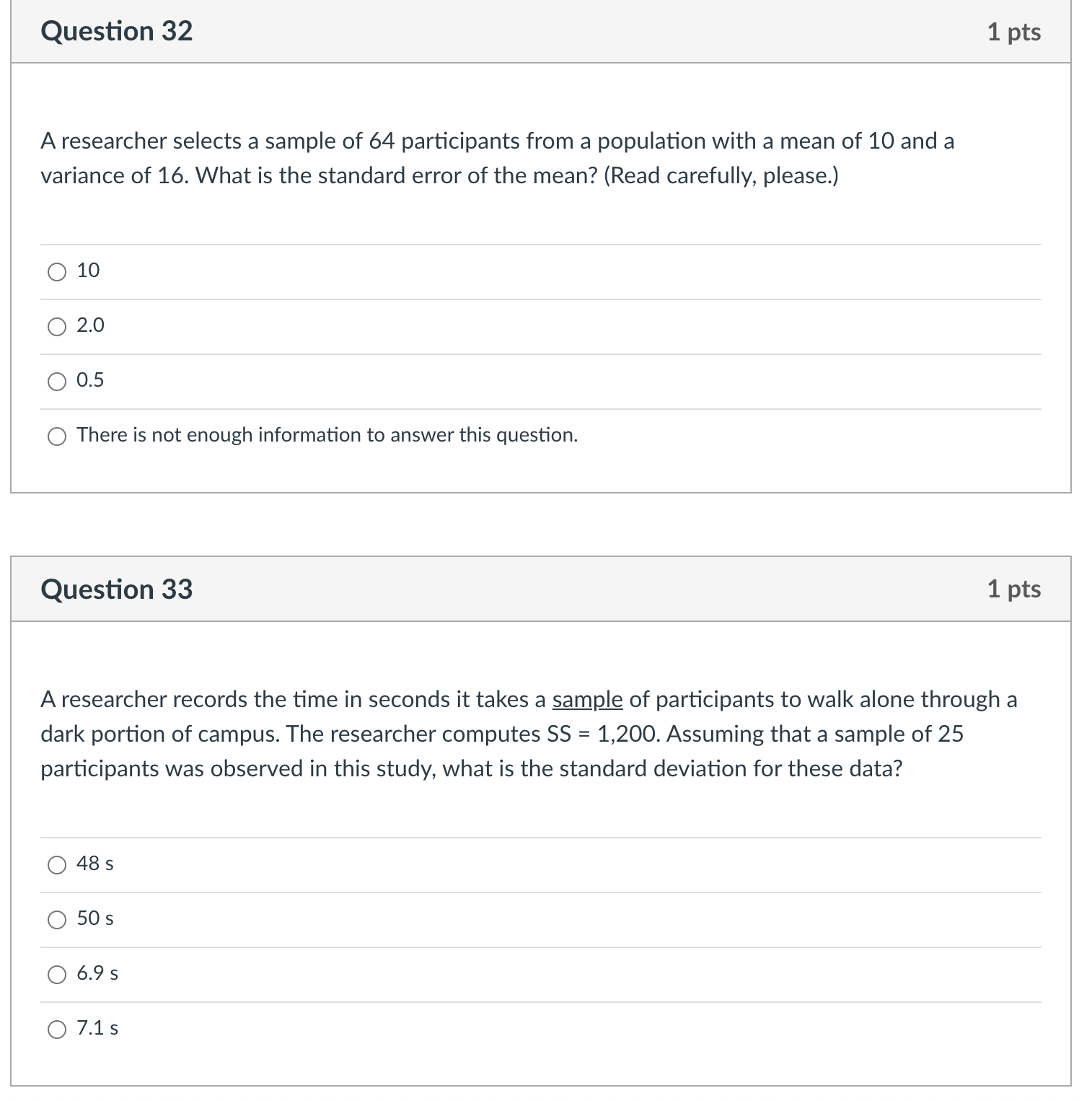
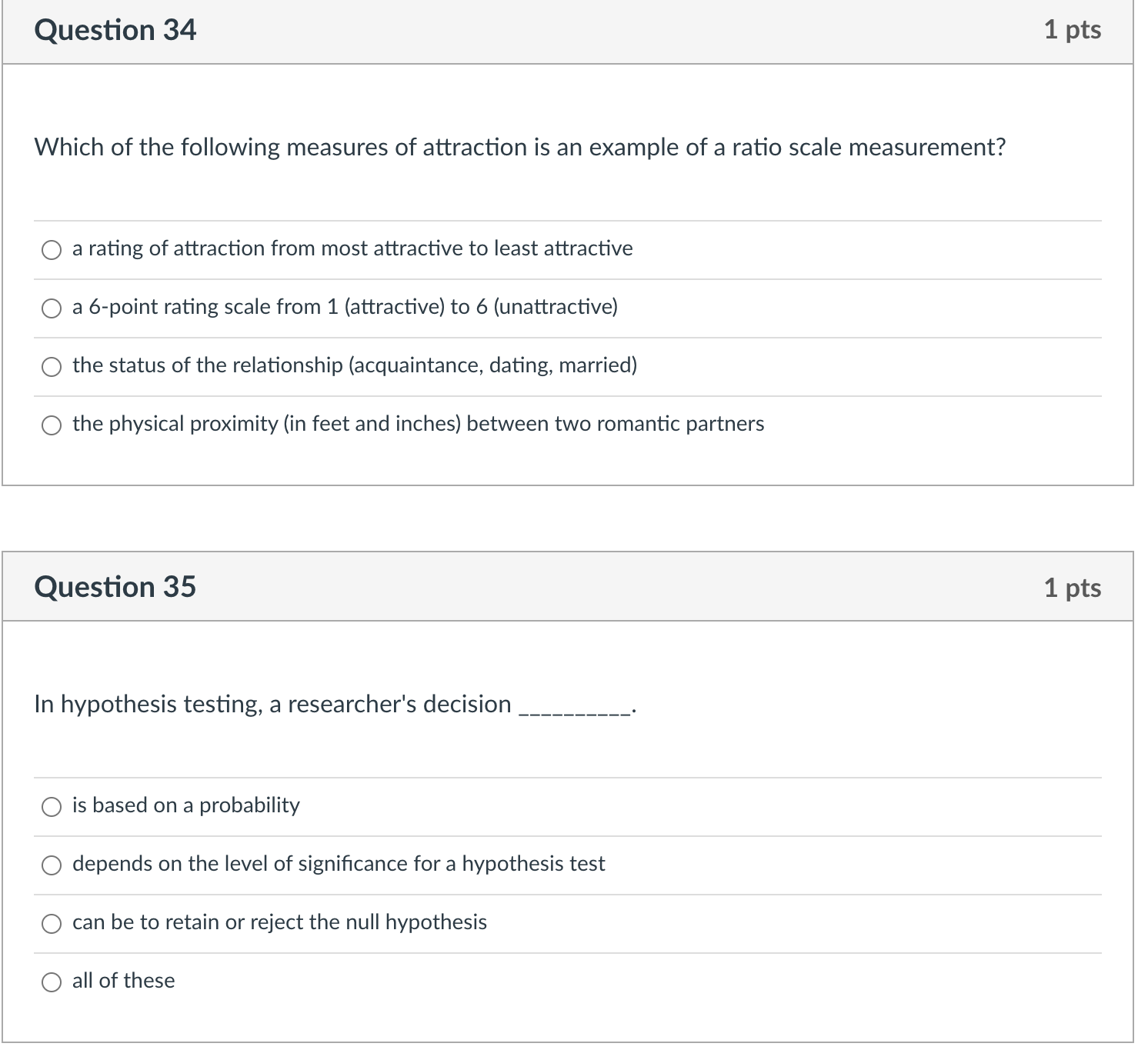
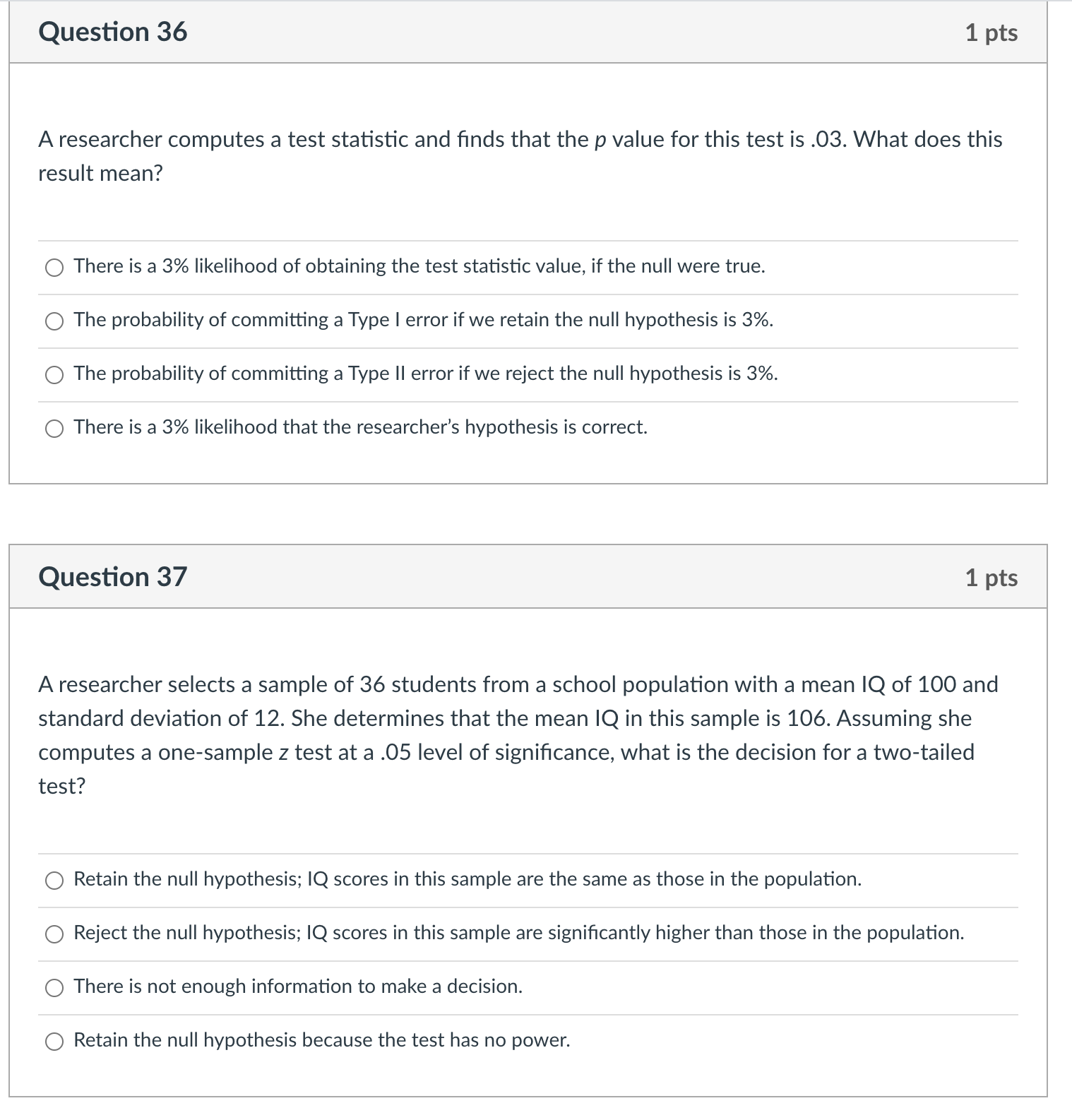
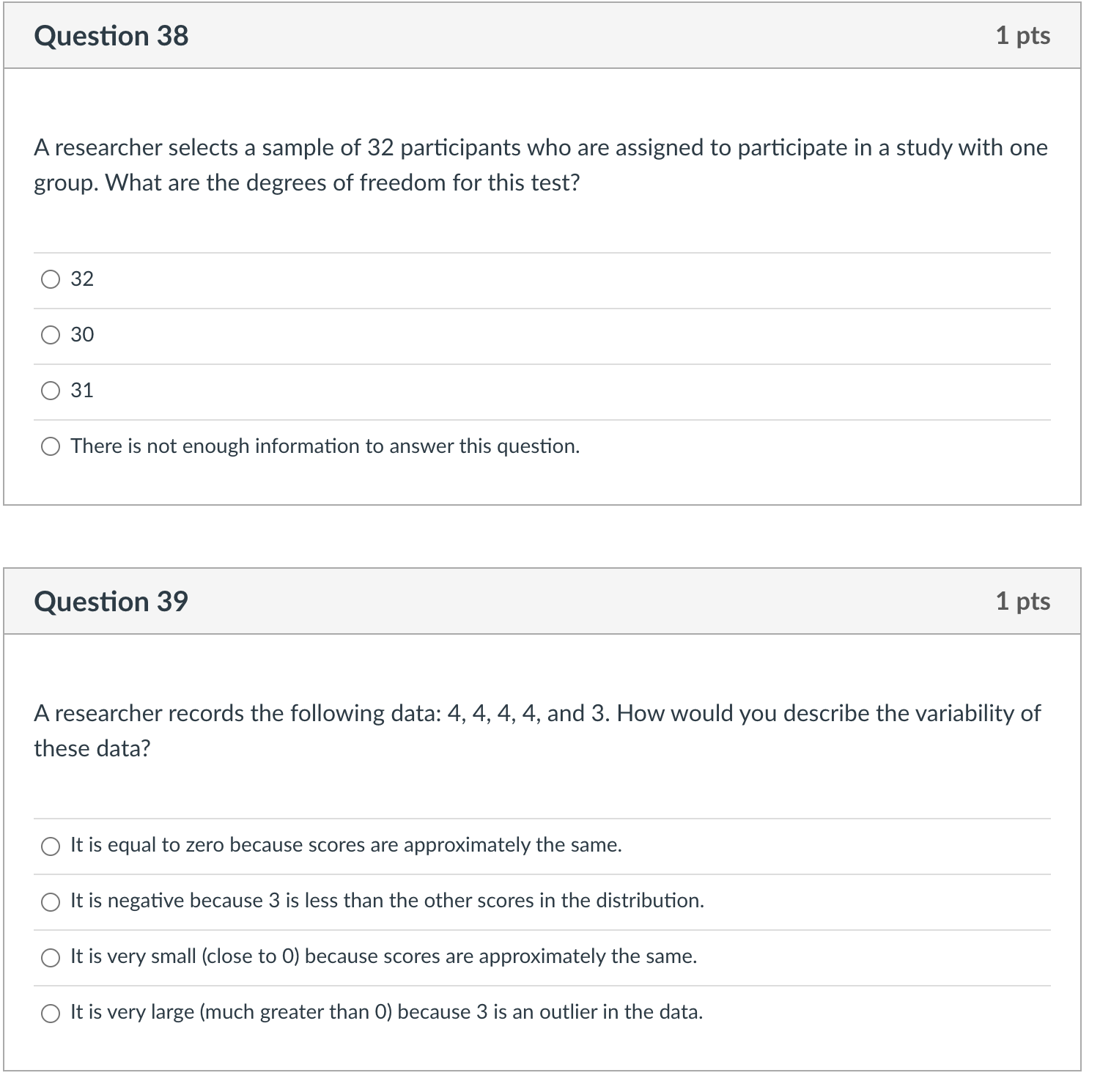
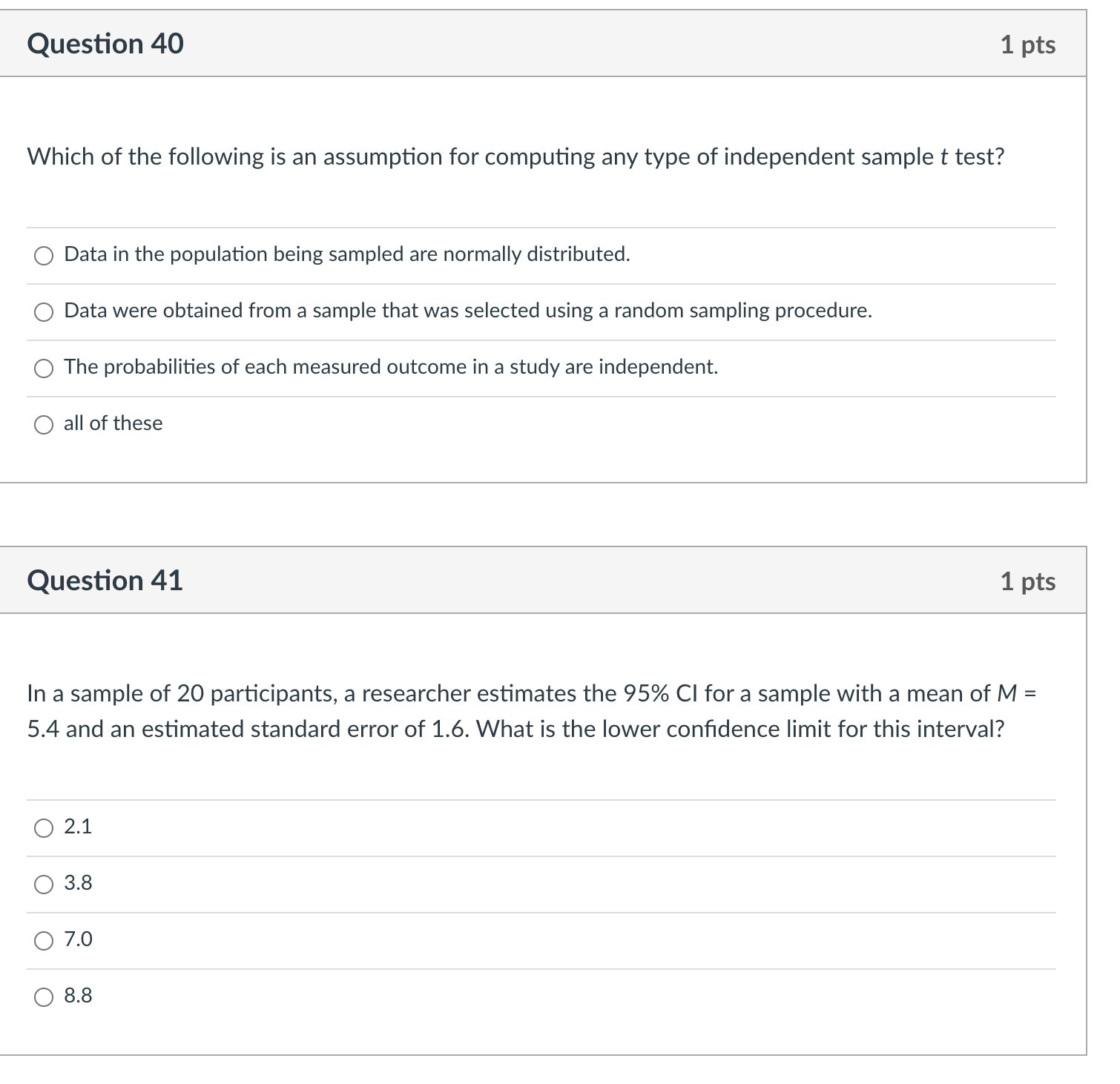
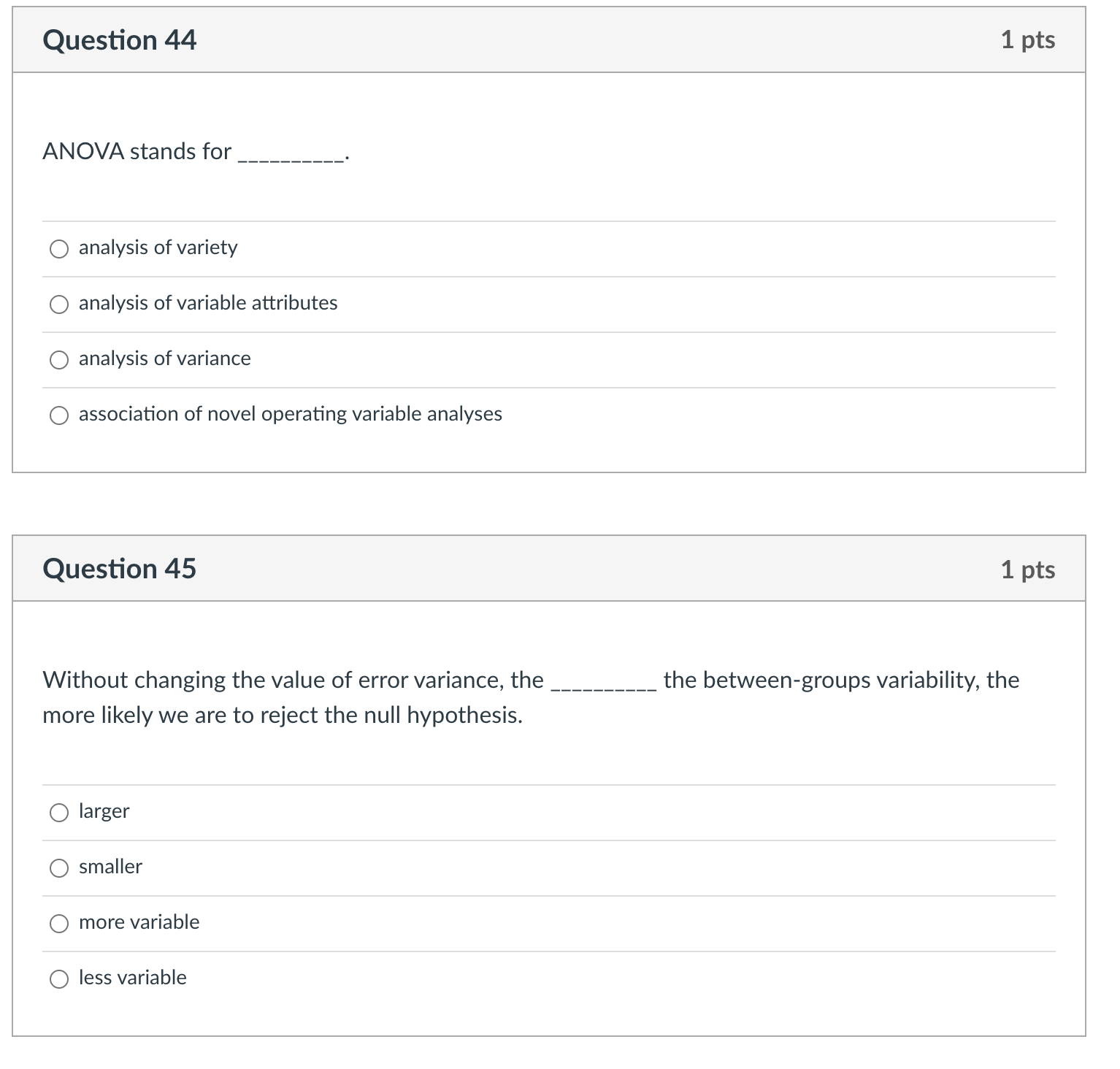
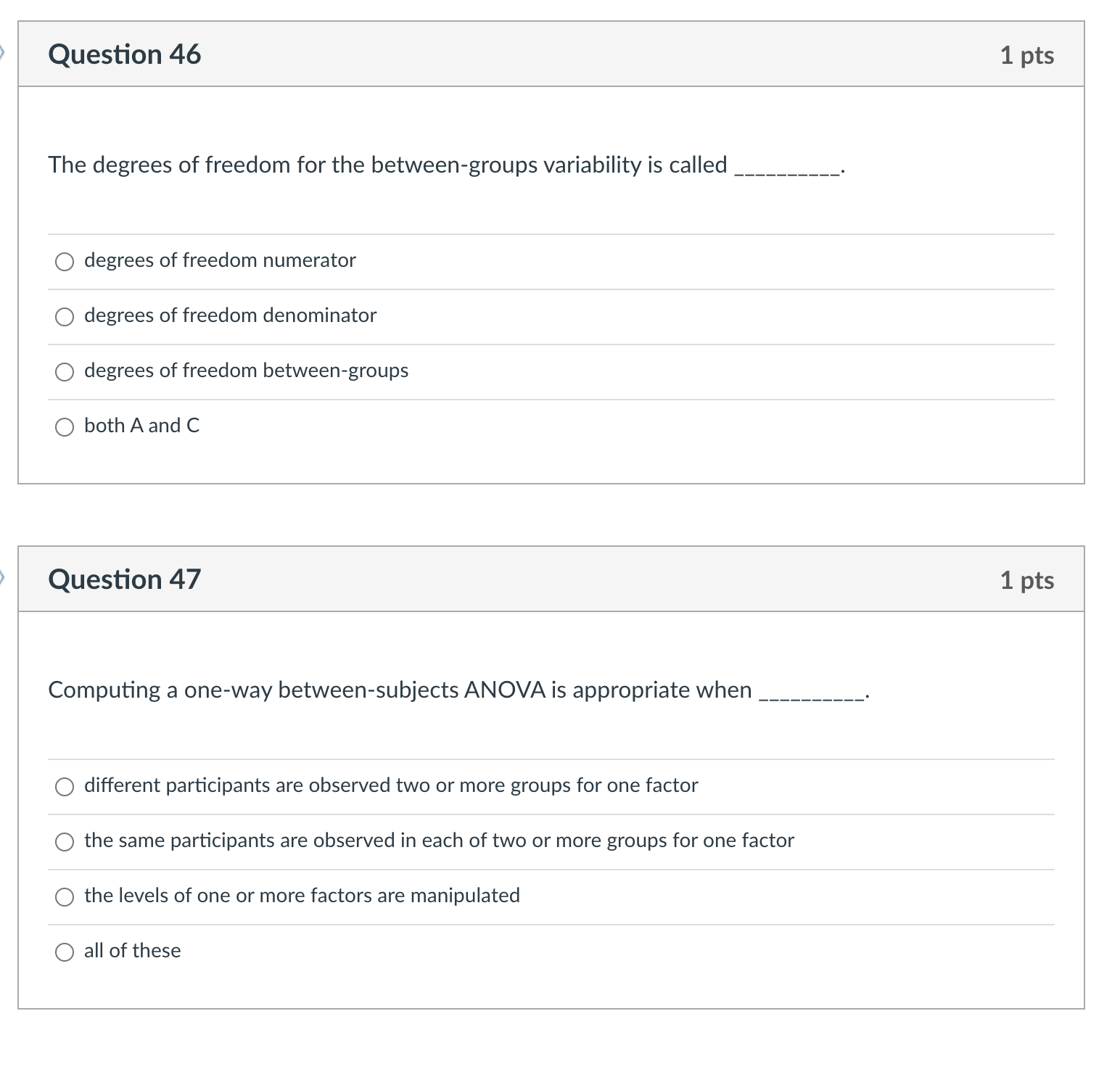
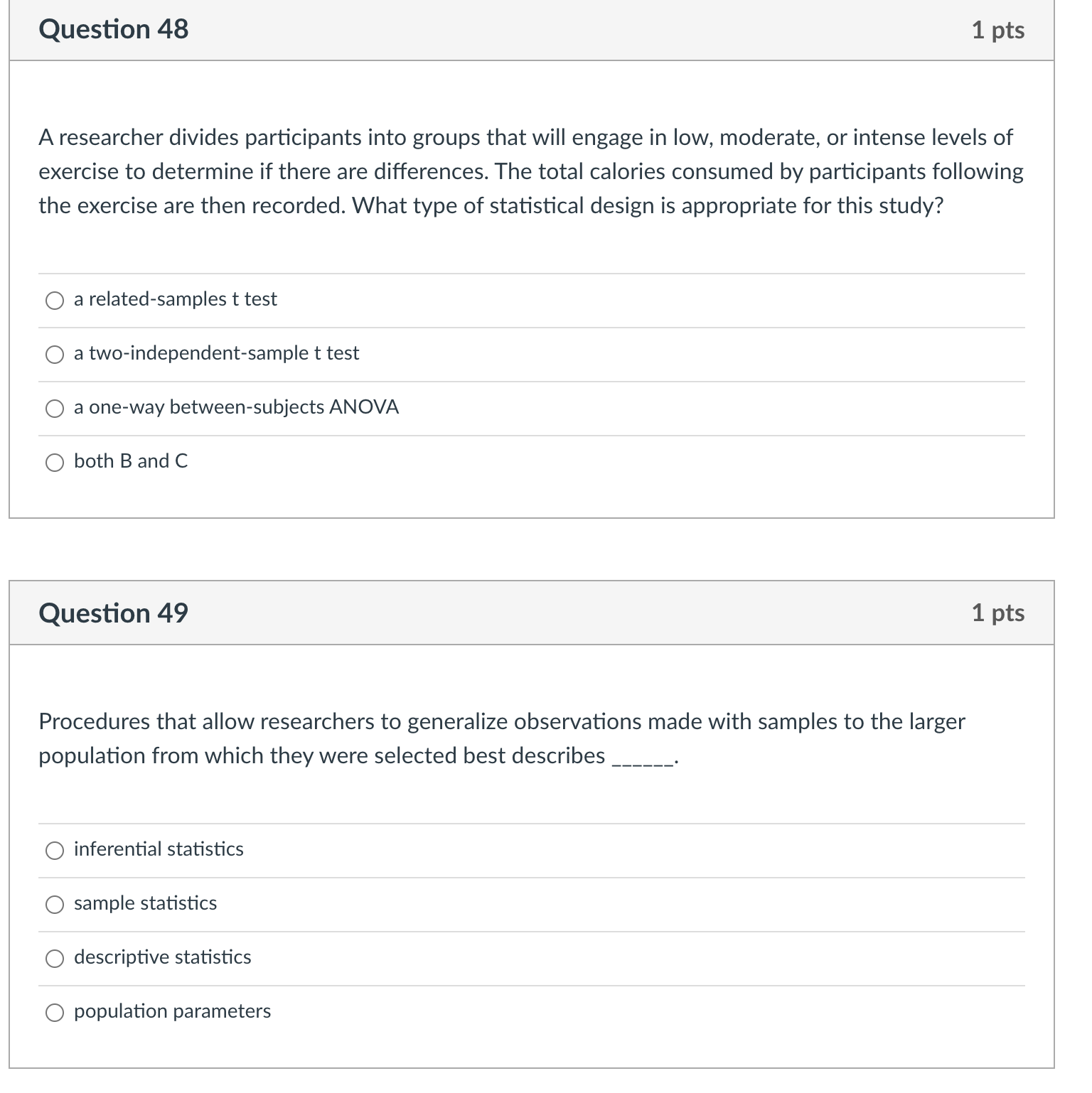
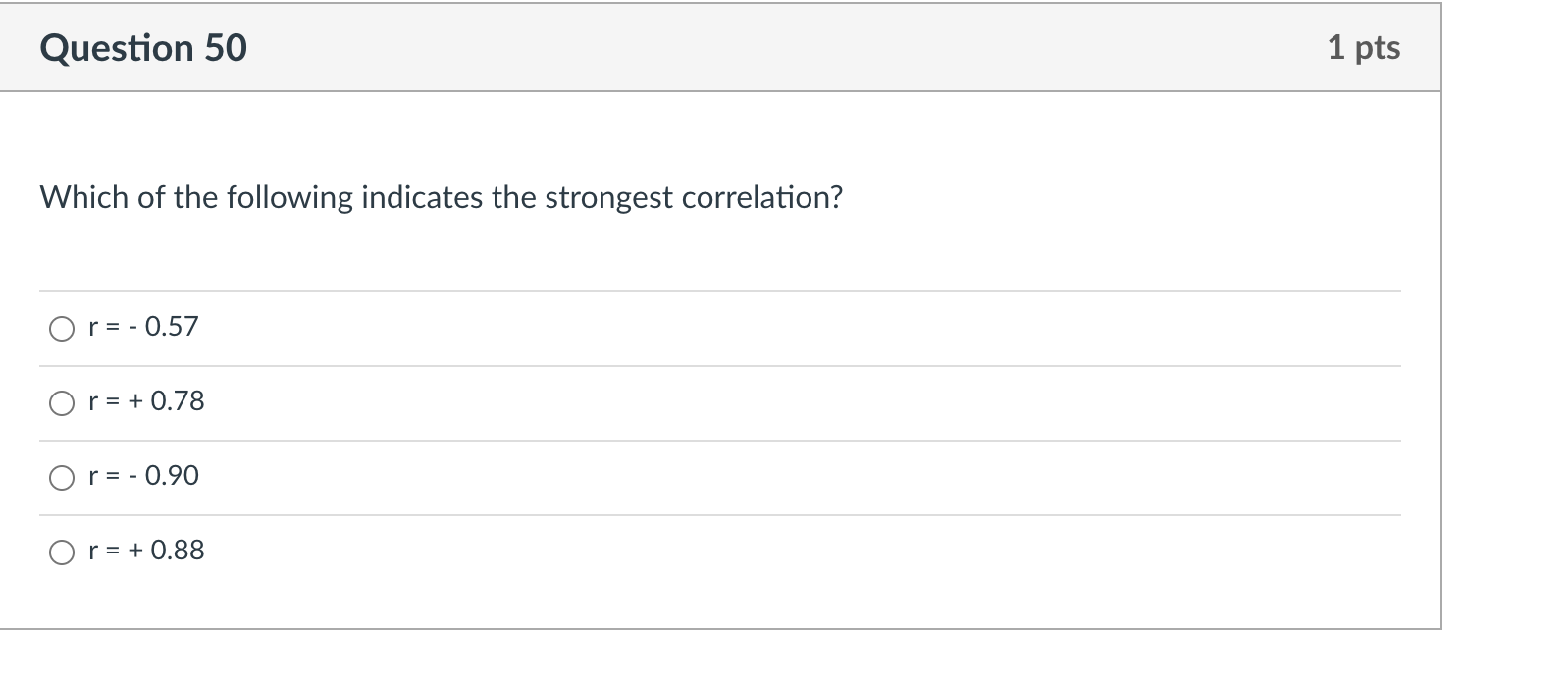
Question 26 1 pts A researcher determines that students study an average of 80 and SD of 20 minutes per week. Assuming these data are normally distributed, what is the z score for students studying 60 min per week? 0 1.0 O - 1.0 0 0.3413 0 0.1587 Question 27 1 pts Atherapist observes that managers are more likely to forgive their employees for lying to them if they nd out the truth from them and not another employee. In this example, the dependent variable is O the number of partners 0 the spouse 0 lying O forgiveness Question 28 1 pts A researcher nds that the average preschool-aged child drinks two cups of milk per day. Assuming these data are normally distributed, the z score for the average cups per day in this example is 0 less than 0 O greater than 0 O exactly equal to 0 0 there is not enough information to answer this question Question 29 1 pts A company records the number of disagreements (per work session) among teams during team projects. If the number of disagreements is distributed normally with a mean of 4.4 and SD of 0.4, what proportion of teams disagree at least 4 times during each team project? 0 .3413 0 .15876 o .8413 O The probability is not listed in the unit normal table. Question 30 1 pts A company records the following performance assessment data: employees average 42 units with a SD of 6. The company only wants to reward bonuses to employees scoring in the top 20% of this assessment. What is the cutoff score for the top 20% in this example? 0 0.84 O 47.04 0 36.96 0 There is not enough information to answer this question. Question 31 1 pts Suppose you select a sample of three people from a population of four (A, B, C, D). Which of the following samples is possible using the experimental sampling strategy? 0 persons A, C, and A 0 persons A, D, and D 0 persons B, C, and D 0 all of the above Question 32 1 pts A researcher selects a sample of 64 participants from a population with a mean of 10 and a variance of 16. What is the standard error of the mean? (Read carefully, please.) 0 10 o 2.0 O 0.5 Q There is not enough information to answer this question. Question 33 1 pts A researcher records the time in seconds it takes a mpLe of participants to walk alone through a dark portion of campus. The researcher computes 55 = 1,200. Assuming that a sample of 25 participants was observed in this study, what is the standard deviation for these data? 0485 0505 06.95 C) 7.15 Question 34 1 pts Which of the following measures of attraction is an example of a ratio scale measurement? 0 a rating of attraction from most attractive to least attractive O a 6-point rating scale from 1 (attractive) to 6 (unattractive) O the status of the relationship (acquaintance, dating, married) 0 the physical proximity (in feet and inches) between two romantic partners Question 35 1 pts In hypothesis testing, a researcher's decision ___ O is based on a probability 0 depends on the level of signicance for a hypothesis test 0 can be to retain or reject the null hypothesis 0 all of these Question 36 1 pts A researcher computes a test statistic and nds that the p value for this test is .03. What does this result mean? 0 There is a 3% likelihood of obtaining the test statistic value, if the null were true. 0 The probability of committing a Type I error if we retain the null hypothesis is 3%. O The probability of committing a Type II error if we reject the null hypothesis is 3%. Q There is a 3% likelihood that the researcher's hypothesis is correct. Question 37 1 pts A researcher selects a sample of 36 students from a school population with a mean IQ of 100 and standard deviation of 12. She determines that the mean IQ in this sample is 106. Assuming she computes a one-sample 2 test at a .05 level of signicance, what is the decision for a two-tailed test? 0 Retain the null hypothesis; IQ scores in this sample are the same as those in the population. 0 Reject the null hypothesis; IQ scores in this sample are signicantly higher than those in the population. 0 There is not enough information to make a decision. 0 Retain the null hypothesis because the test has no power. Question 38 1 pts A researcher selects a sample of 32 participants who are assigned to participate in a study with one group. What are the degrees of freedom for this test? 032 030 031 Q There is not enough information to answer this question. Question 39 1 pts A researcher records the following data: 4, 4, 4, 4, and 3. How would you describe the variability of these data? C) It is equal to zero because scores are approximately the same. 0 It is negative because 3 is less than the other scores in the distribution. 0 It is very small (close to 0) because scores are approximately the same. 0 It is very large (much greater than 0) because 3 is an outlier in the data. Question 40 1 pts Which of the following is an assumption for computing any type of independent sample t test? 0 Data in the population being sampled are normally distributed. 0 Data were obtained from a sample that was selected using a random sampling procedure. 0 The probabilities of each measured outcome in a study are independent. 0 all of these Question 41 1 pts In a sample of 20 participants, a researcher estimates the 95% CI for a sample with a mean of M = 5.4 and an estimated standard error of 1.6. What is the lower condence limit for this interval? 0 2.1 O 3.8 O 7.0 O 8.8 Question 44 1 pts ANOVA stands for 0 analysis of variety 0 analysis of variable attributes 0 analysis of variance 0 association of novel operating variable analyses Question 45 1 pts Without changing the value of error variance, the __________ the between-groups variability, the more likely we are to reject the null hypothesis. 0 larger 0 smaller 0 more variable 0 less variable Question 46 1 pts The degrees of freedom for the between-groups variability is called __________ . 0 degrees of freedom numerator 0 degrees of freedom denominator 0 degrees of freedom between-groups 0 both A and C Question 47 1 pts Computing a one-way between-subjects ANOVA is appropriate when __ 0 different participants are observed two or more groups for one factor 0 the same participants are observed in each of two or more groups for one factor Q the levels of one or more factors are manipulated 0 all of these Question 48 1 pts A researcher divides participants into groups that will engage in low, moderate, or intense levels of exercise to determine if there are differences. The total calories consumed by participants following the exercise are then recorded. What type of statistical design is appropriate for this study? 0 a related-samples t test 0 a two-independent-sample t test 0 a one-way between-subjects ANOVA 0 both B and C Question 49 1 pts Procedures that allow researchers to generalize observations made with samples to the larger population from which they were selected best describes ______ . O inferential statistics 0 sample statistics 0 descriptive statistics 0 population parameters Question 50 1 pts Which of the following indicates the strongest correlation? Or=-0.57 Or=+0_78 Or=-0.90 O r=+0.88
Step by Step Solution
There are 3 Steps involved in it

Get step-by-step solutions from verified subject matter experts
 Study Help